

When I revisit Plasma with fresh eyes, what becomes clearer over time is that its design is less about innovation in the abstract and more about accepting a reality that already exists. I don’t approach it as a project trying to redefine what money should be on-chain. I see it as infrastructure that quietly acknowledges that stablecoins are already functioning as money for millions of people. That framing matters to me because it explains why Plasma feels measured and deliberate rather than expressive. It is not trying to persuade users to adopt new habits. It is trying to support the habits they already have.
If you look at how stablecoins are actually used today, the pattern is remarkably consistent. People rely on them for transfers that need to be predictable, fast, and emotionally uneventful. Whether it’s small retail payments, cross-border transfers, or institutional settlement, the underlying expectation is the same: the transaction should feel boring. When money movement feels dramatic or uncertain, users lose confidence quickly. Plasma’s focus on stablecoin settlement reads as a direct response to that expectation. It treats reliability as the core product, not as a feature layered on top of something else.
Sub-second finality is a good example of this mindset. In isolation, speed is an easy thing to market, but in practice its value is psychological. Users don’t measure finality in milliseconds; they feel it in the absence of doubt. When a transfer completes quickly and consistently, the system starts to resemble familiar financial tools rather than experimental infrastructure. Plasma’s consensus design seems aimed at shrinking that mental gap between action and confirmation, which is often where user anxiety lives.
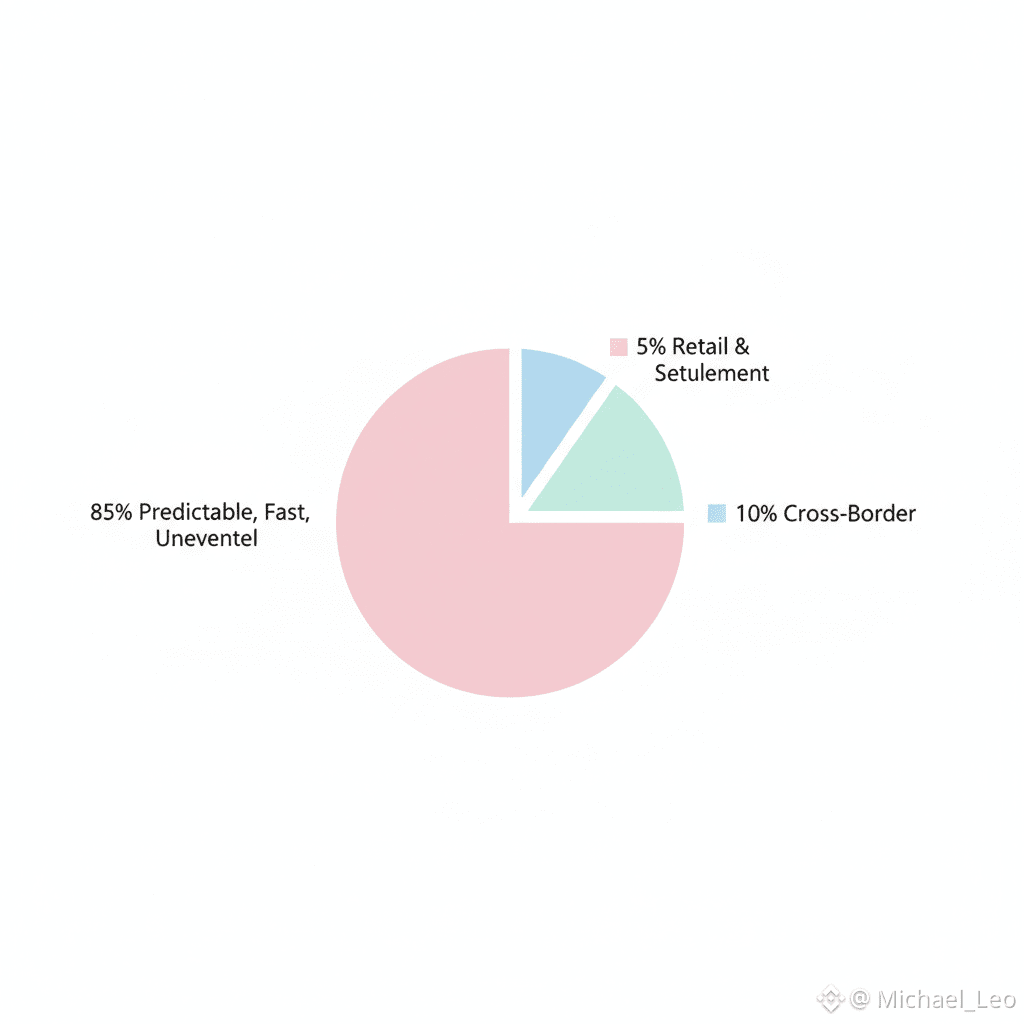 The decision to enable gasless USDT transfers and stablecoin-first gas is another reflection of how closely the system is aligned with real behavior. Most stablecoin users do not want to manage multiple assets just to move value. Needing a separate token to pay for transactions introduces friction that feels arbitrary from their point of view. By removing that requirement, Plasma simplifies the experience without asking users to understand why it works. That simplicity is not accidental. It is a trade-off that prioritizes usability over flexibility.
What stands out to me most is how Plasma consistently chooses to hide complexity rather than showcase it. Full EVM compatibility through Reth is a meaningful choice for developers, but its real impact is invisible to end users. Applications can be built using familiar tools, while users interact with them without ever encountering that technical layer. The same is true of Bitcoin-anchored security. Anchoring introduces a deeper assurance around neutrality and resistance to interference, but Plasma does not ask users to care about that mechanism. It absorbs the complexity internally and delivers the benefit quietly. That is often how durable infrastructure behaves.
This approach does come with constraints. Designing a chain around stablecoin settlement narrows the scope of what the system optimizes for. It limits experimentation in some directions and forces discipline around performance and cost. But those constraints also create clarity. Plasma is not promising to be everything to everyone. It is promising that moving stable value will remain simple, predictable, and accessible even as usage grows. In environments where financial reliability matters, that clarity can be more valuable than optionality.
When I think about how Plasma will be tested in practice, I don’t think in terms of announcements or partnerships. I think in terms of operational stress. Payment flows, remittances, and institutional settlement expose weaknesses quickly. They reveal how systems behave under uneven demand, during congestion, or when assumptions fail. A chain built for these scenarios has to perform consistently across all of those conditions. Success here is not loud. It shows up as an absence of incidents, an absence of user confusion, and an absence of surprises.
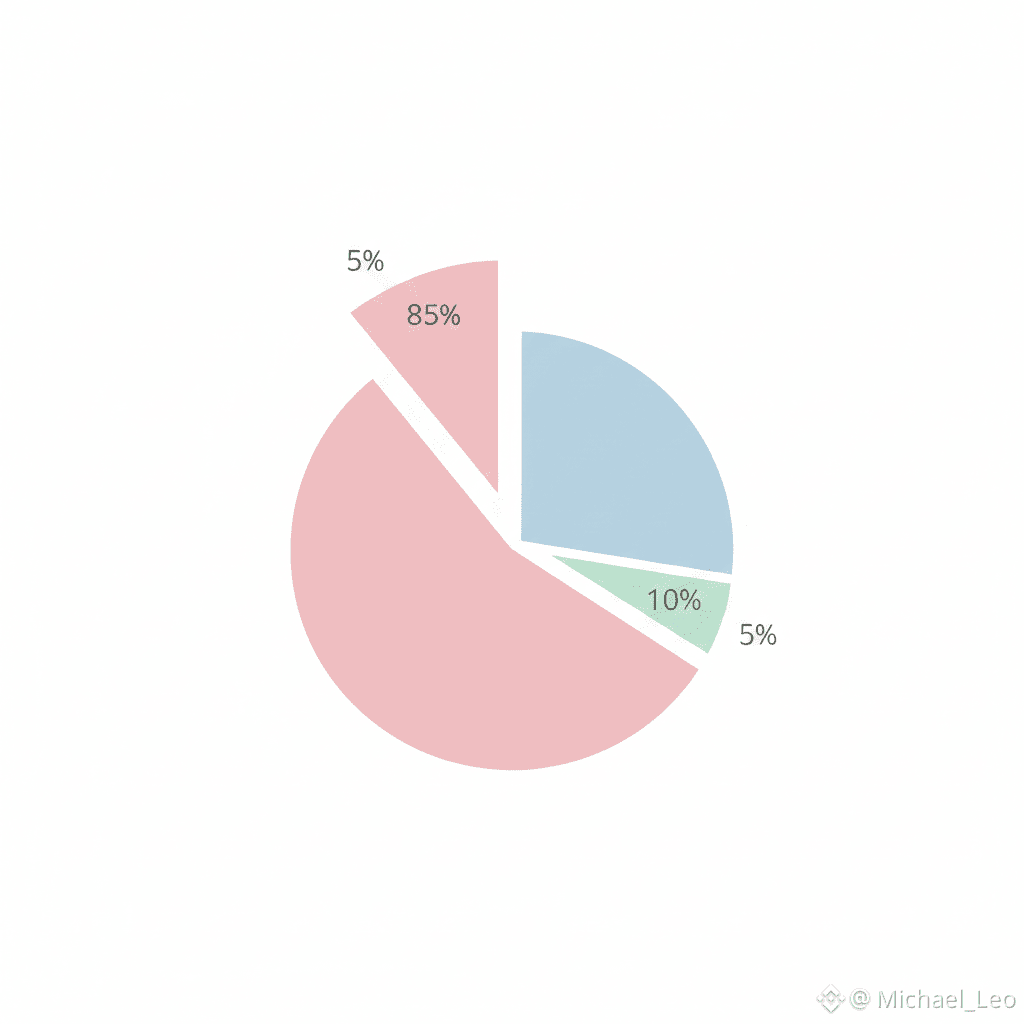 The role of the token fits neatly into this philosophy. It exists to support usage, align incentives, and sustain the network’s operation. It is not designed to be the center of attention. In fact, the more invisible it becomes to everyday users, the better the system is probably working. When users focus on outcomes rather than mechanics, infrastructure has done its job. That invisibility is not a weakness; it is a signal of maturity.
What I appreciate about Plasma is that it does not frame itself as an answer to theoretical debates. It frames itself as a response to lived behavior. People already use stablecoins as money. They already expect fast settlement, low friction, and predictable costs. Plasma accepts those expectations as fixed constraints rather than problems to argue against. Its design choices feel like practical answers to questions that users never explicitly ask but constantly imply through their actions.
Stepping back, Plasma suggests a future for blockchain infrastructure that is quieter and more grounded. One where success is measured by how little attention the system demands from its users. One where complexity is handled internally and surfaced only when absolutely necessary. I tend to trust systems built this way, not because they are ambitious in presentation, but because they are careful in execution. Over time, it is usually those systems that people come to rely on without thinking about them at all.
