

Plasma XPL handles governance differently. Most blockchain projects make a big deal out of it—votes everywhere, endless debates, and everyone arguing about the tiniest things. Plasma XPL skips the drama. Governance here isn’t about appearances. It’s just a tool to keep things stable, not a way to grab attention. The whole point is to make the network feel rock solid, maybe even a little dull, and really hard to mess with.
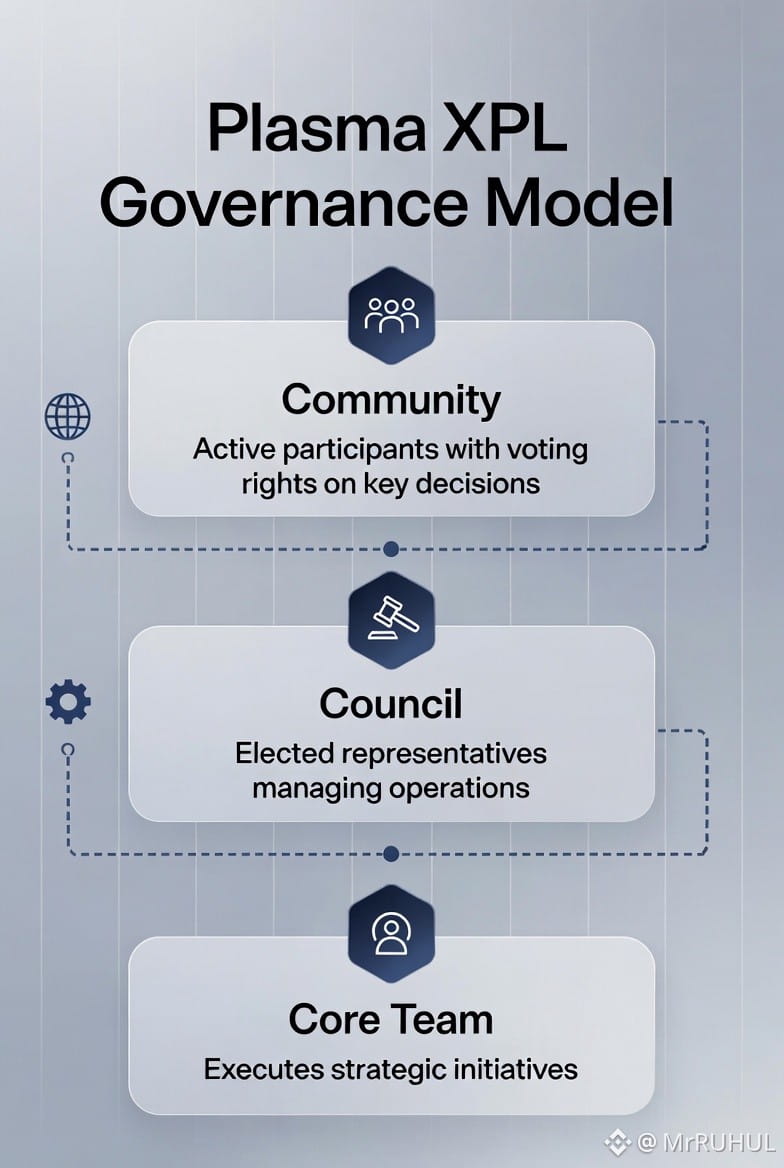
You notice right away: in most crypto networks, governance takes center stage. Token holders vote constantly—on protocols, on spending, on just about everything. It sounds decentralized, but honestly, it’s chaos. The rules keep changing, big players throw their weight around, and no one can say what things will look like in half a year.
Plasma XPL walks a quieter path. Governance isn’t some never-ending soap opera. It’s just there to protect the network for the long run, not to encourage endless experiments or political games.
They call this governance minimization. Most things are locked into the protocol, not up for regular votes. The core rules—how things run or stay secure—are treated like infrastructure. Once they’re set and tested, they’re meant to stick for a long time.
And this isn’t just window dressing. Governance risk is real in blockchains, but people tend to look the other way. If you’re building real stuff or running serious projects, you don’t want things shifting under your feet. It’s worth way more to know the rules will hold steady, instead of getting a say in every tiny detail.
Plasma XPL also keeps responsibilities clear. Protocol development is about making sure the tech works and stays secure. Running the network? That’s validators and infrastructure folks, following the rules. Big-picture planning? That’s long-term stuff, not a constant stream of community votes. By keeping these jobs separate, they steer clear of governance burnout. Not every issue needs a vote. Not everyone needs a say on every topic.
And just because you hold tokens doesn’t mean you get to run everything. Plasma XPL made that choice on purpose. If token votes run the show, the biggest holders always win. Here, tokens align incentives—they’re not political weapons. The goal is quieter, sturdier governance, not a popularity contest.
Upgrades aren’t flying in every week, either. They only change things when it’s really needed, after tons of testing, and only if people who know what’s going on are on board. No chasing fads. No hyped-up features for the sake of it. They care more about getting things right than being first.
When an upgrade does happen, it’s careful: research, testing, a real reason, and a slow rollout. It feels like routine maintenance, not chaos.
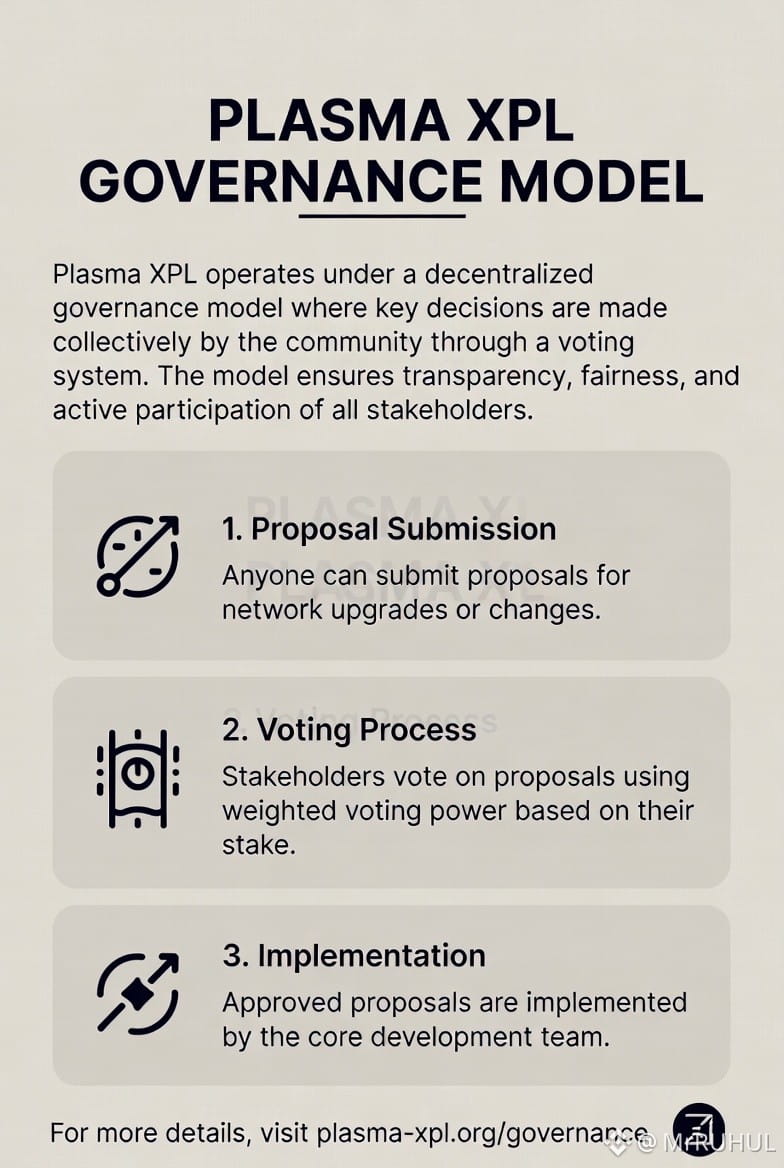
At the end of the day, Plasma XPL sees governance as risk management. Every system has its problems—people lose interest, big players manipulate things, decisions get rushed, and communities split up. By dialing back governance, Plasma XPL dodges a lot of those headaches.
That’s the point. It’s not about looking cool. It’s about being reliable. Developers can build without worrying about sudden changes. Institutions get steady rules and fewer regulatory surprises. The network gets fewer fights and more stability.
In the end, Plasma XPL treats governance like old-school infrastructure: you only notice it when it breaks. By keeping things minimal, thoughtful, and, sure, a little boring, Plasma XPL is built to last, not just to grab the spotlight.@Plasma #Plasma $XPL

