
MWhen I learned about @Walrus 🦭/acc Protocol's public bug bounty program launch in March 2025, I wondered about the timing. The program went live just a day after the mainnet rollout on March 27, 2025, offering rewards up to $100,000 for critical vulnerabilities. This strategic move reflects a deliberate effort to bolster security as the network transitions from testnet to production, where real user data and $WAL stakes are at risk.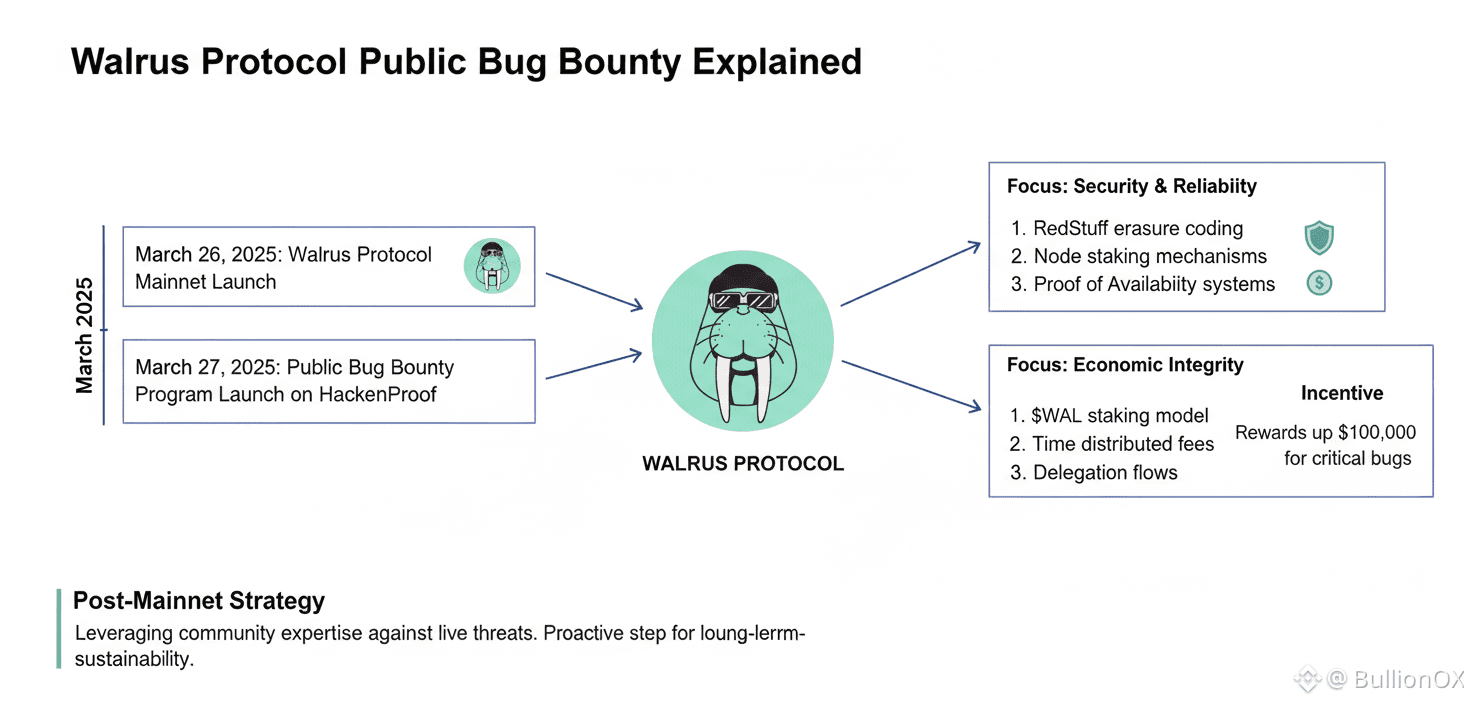
Bug bounties are common in blockchain projects, but Walrus's program emphasizes issues impacting security, reliability, and economic integrity. Hosted on HackenProof, it invites developers and researchers to report bugs in core components like RedStuff erasure coding, node staking mechanisms, or Proof of Availability systems. This focus aligns with the protocol's design, where distributed slivers and epoch based rewards must withstand attacks to maintain credible neutrality.
The timing makes sense post-mainnet because that's when the network faces live threats. During testnet, internal audits and developer previews handled early issues, but public operation exposes the system to global scrutiny. Launching the bounty now leverages community expertise to identify subtle vulnerabilities, such as those in the asynchronous challenge protocol or delegation flows, before they escalate.
Walrus's economic model, with WAL staking and time distributed fees, adds urgency. Critical bugs could undermine node incentives or data integrity, affecting user trust. By prioritizing submissions on economic model flaws or data tampering, the program targets high impact areas, ensuring long term sustainability. 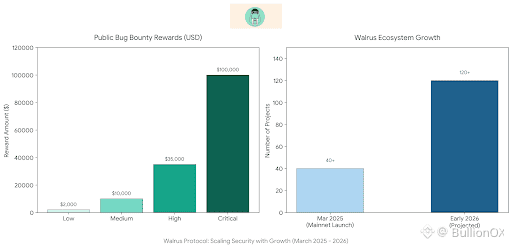
In my view, this proactive step shows Mysten Labs' commitment to maturity. Rather than waiting for exploits, the bounty program crowdsources security, fostering a robust ecosystem as adoption grows with over 120 projects by early 2026.

