
When I initially read about the @Walrus 🦭/acc Protocol solution to decentralized storage, I realised why the conventional cloud providers fail to achieve the real credible neutrality. Clouds such as AWS or Google Cloud are centralized and reliable and scaleable, but they are managed by one organization and are under corporate regulations, legal jurisdiction, and censorship. Walrus transforms this through distributing data over a permissionless network of independent nodes such that there is no single party capable of making changes, deleting data, or limiting access.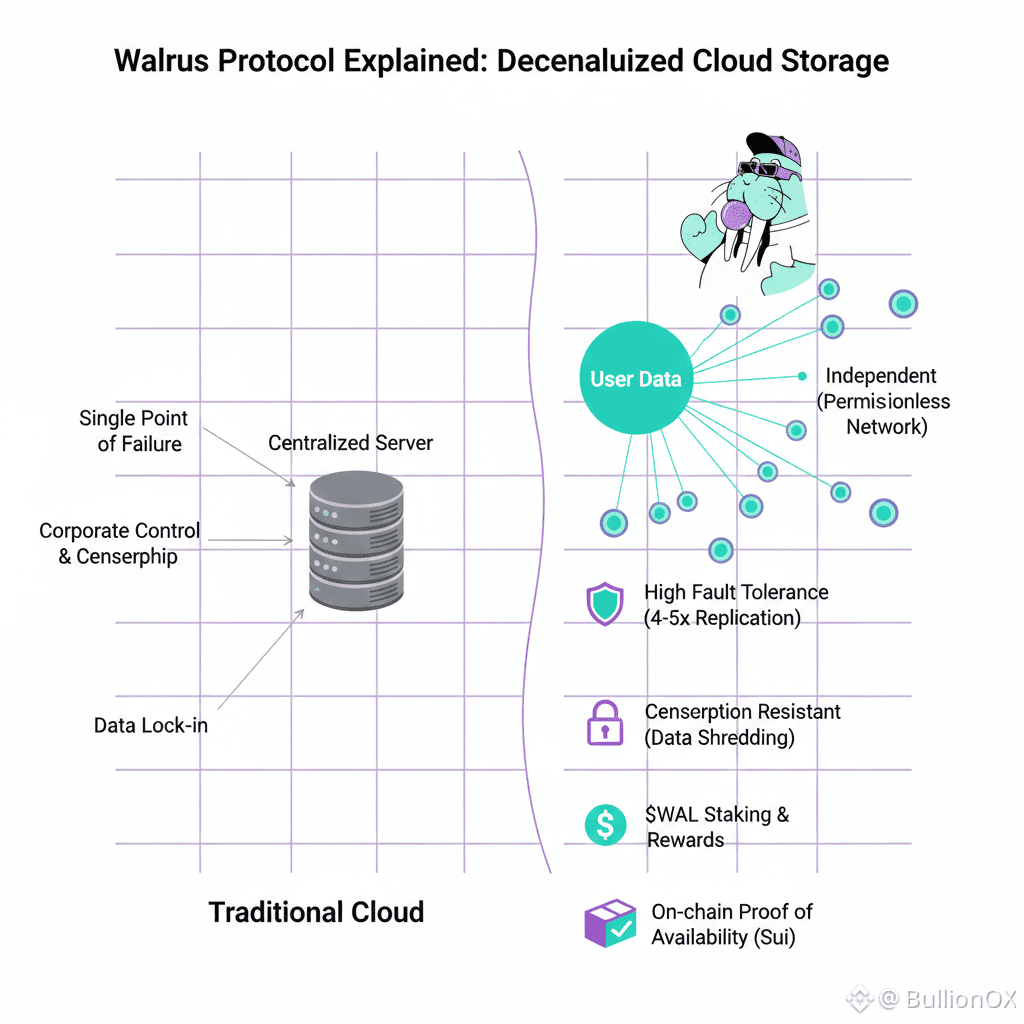
Walrus encodes big blobs in RedStuff, a 2D erasure coding scheme which divides information into slivers distributed among nodes. This and a replication factor of approximately 4x to 5x forms a fault tolerant replication, which can be reconstructed using a few slivers even in case a large number of nodes are offline or malicious.
The network is not governed by any central authority. Nodes are governed by nodes node committees they can join by staking $WAL and obtain the rewards of storage fees imposed on users over epochs proportional to demonstrated performance. This cryptoeconomic system sets incentives with availability as opposed to corporate priorities.
On chain Proof of Availability certificates on Sui are used to offer transparent assurance that information is stored and can be retrieved. Integrity is verifiable by the users using cryptographic evidence, without necessarily relying on a provider to tell the truth.
Censorship resistance is a result of distribution: there is no node in possession of the entire blob, and it is permissionless, so it is possible to participate worldwide. This helps prevent arbitrary takedowns or region blocking that is characteristic of centralized systems.
To support applications with long term trust (e.g. NFT media, AI datasets, or archival records), Walrus provides a neutral base with protocol rules and distributed incentives as the determining factors of availability instead of a company deciding to make it available.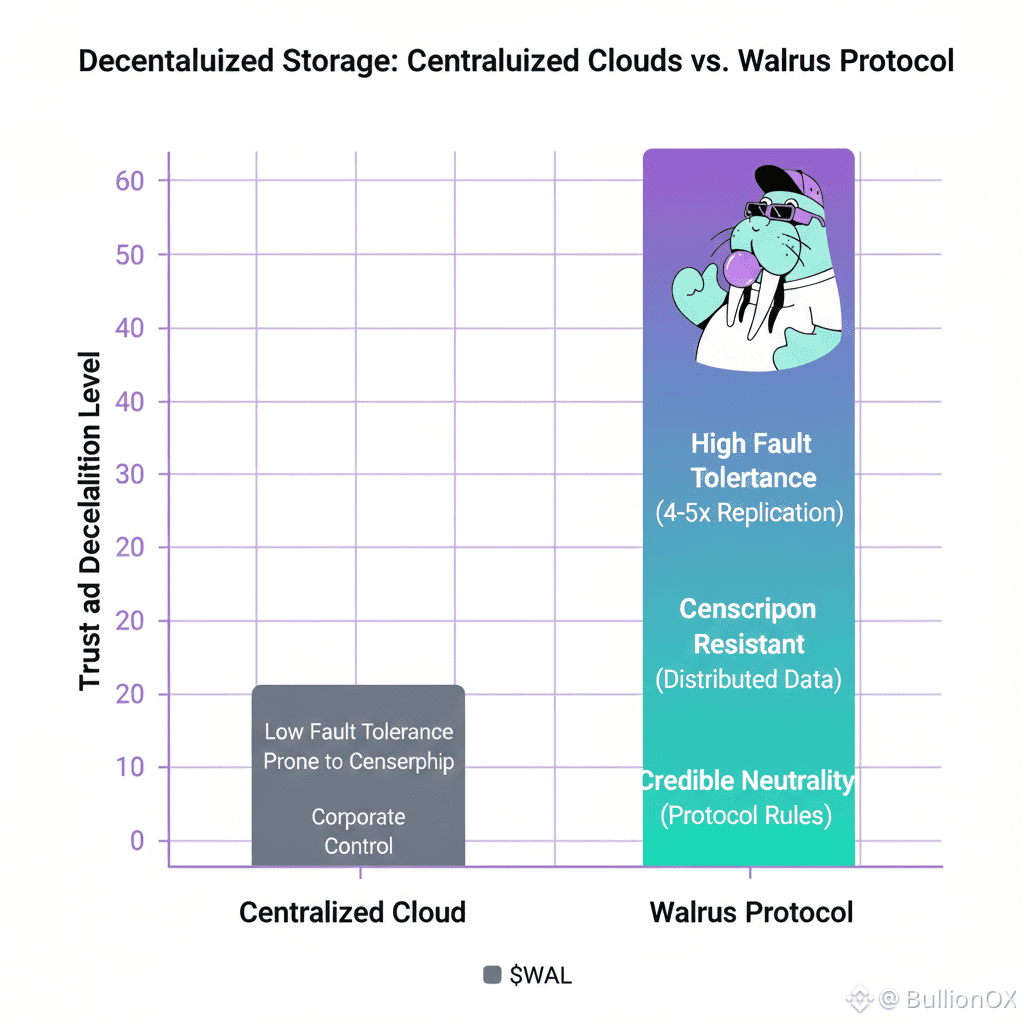
This believable impartiality is what makes me think that Walrus could proportionally be a real leap towards infrastructure control in Web3 providing users with equal opportunities to eliminate the weaknesses of the centralized trust model.

