
Ever think about how developers are quietly building the next wave of financial apps that don’t just skirt by regulators, but actually play by the rules? That’s where Dusk Network steps in. It’s a Layer-1 chain built to give developers a serious toolkit for creating bulletproof, regulation-friendly DeFi and real-world asset platforms—minus the constant headaches. Since 2018, Dusk has shaped itself into a kind of developer’s playground, mixing everything you like about Ethereum with some custom features that make on-chain compliant finance feel, well, easy. I’ve coded on more chains than I can count, and Dusk honestly feels different. It lets you launch apps that cover everything from tokenized bonds to automated settlements, all while staying secure and actually scaling.
The main attraction here is DuskEVM. It’s EVM-compatible and landed in early January 2026, which means you can run standard Solidity smart contracts right on their Layer-1. No need to start from scratch—just use your favorite tools like Hardhat or Truffle to launch dApps that settle instantly, thanks to Dusk’s Segregated Byzantine Agreement consensus. Blocks land in under 10 seconds and you get about 100-200 transactions per second on mainnet, so you’re not going to lose sleep over gas wars or bottlenecks. The Rusk VM upgrade from late 2025 brought in PLONK proofs, so your contracts run smoother and verify complex logic without blowing up the blockchain with extra data.
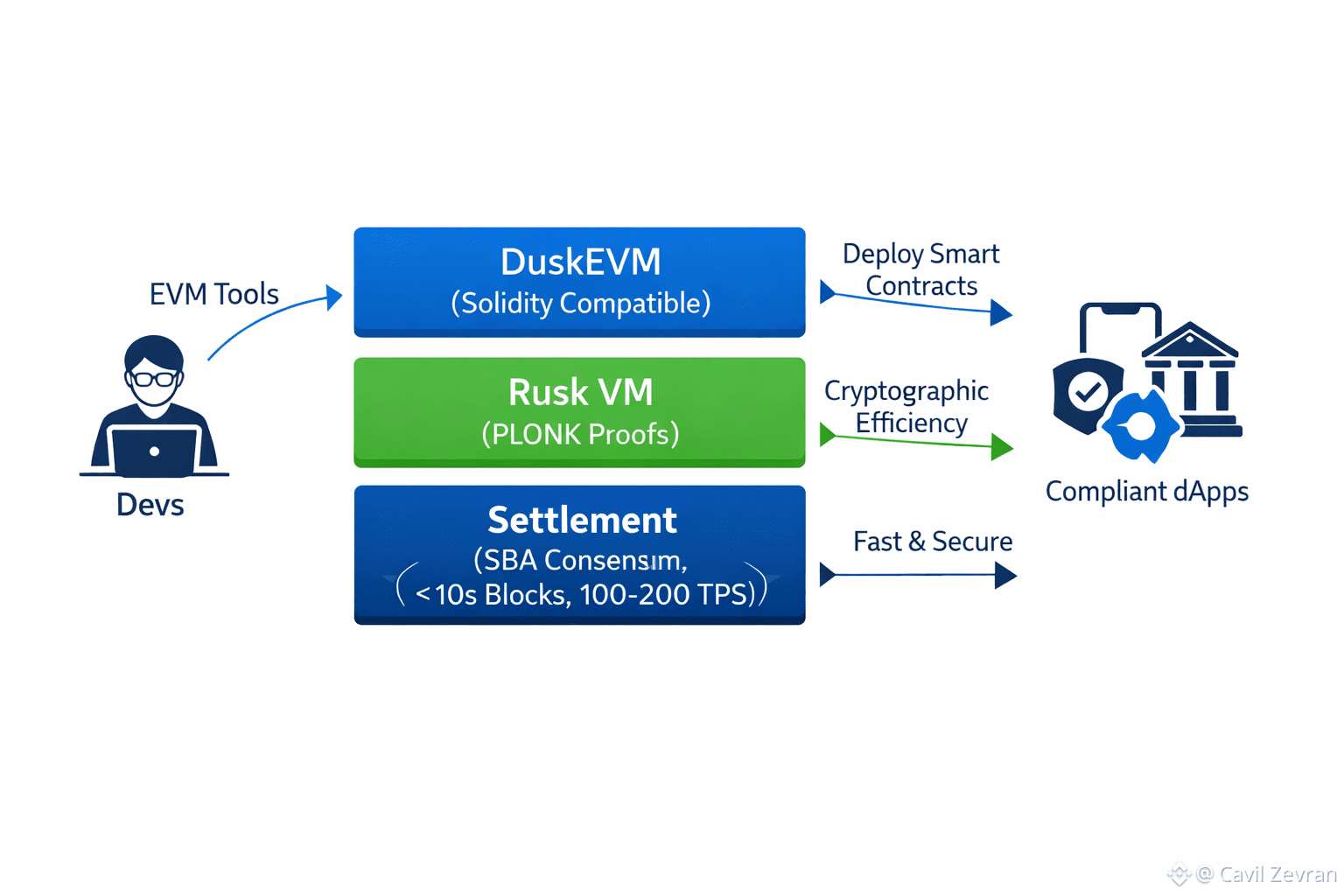
But honestly, the part that really makes Dusk stand out is the Piecrust VM. This thing basically lets you turn securities laws into code, so compliance is automatic. You can program rules for asset issuance, transfer locks, dividends, even governance voting—everything enforced right on-chain, no middlemen needed. It’s not just a tech stack; it’s a full toolkit for managing security tokens, handling minting, redemptions, you name it. Developers can actually focus on building new stuff, like lending pools where borrower info stays private but repayment proof is out in the open. And with Chainlink integrations (live since late 2025), you get real-time data feeds and cross-chain bridges, making it easy to move real-world assets between ecosystems. There’s already serious traction—think €200 million in assets flowing through partners like Quantoz’s EURQ stablecoin or Cordialsys custody solutions. This isn’t just vaporware; it’s happening now.
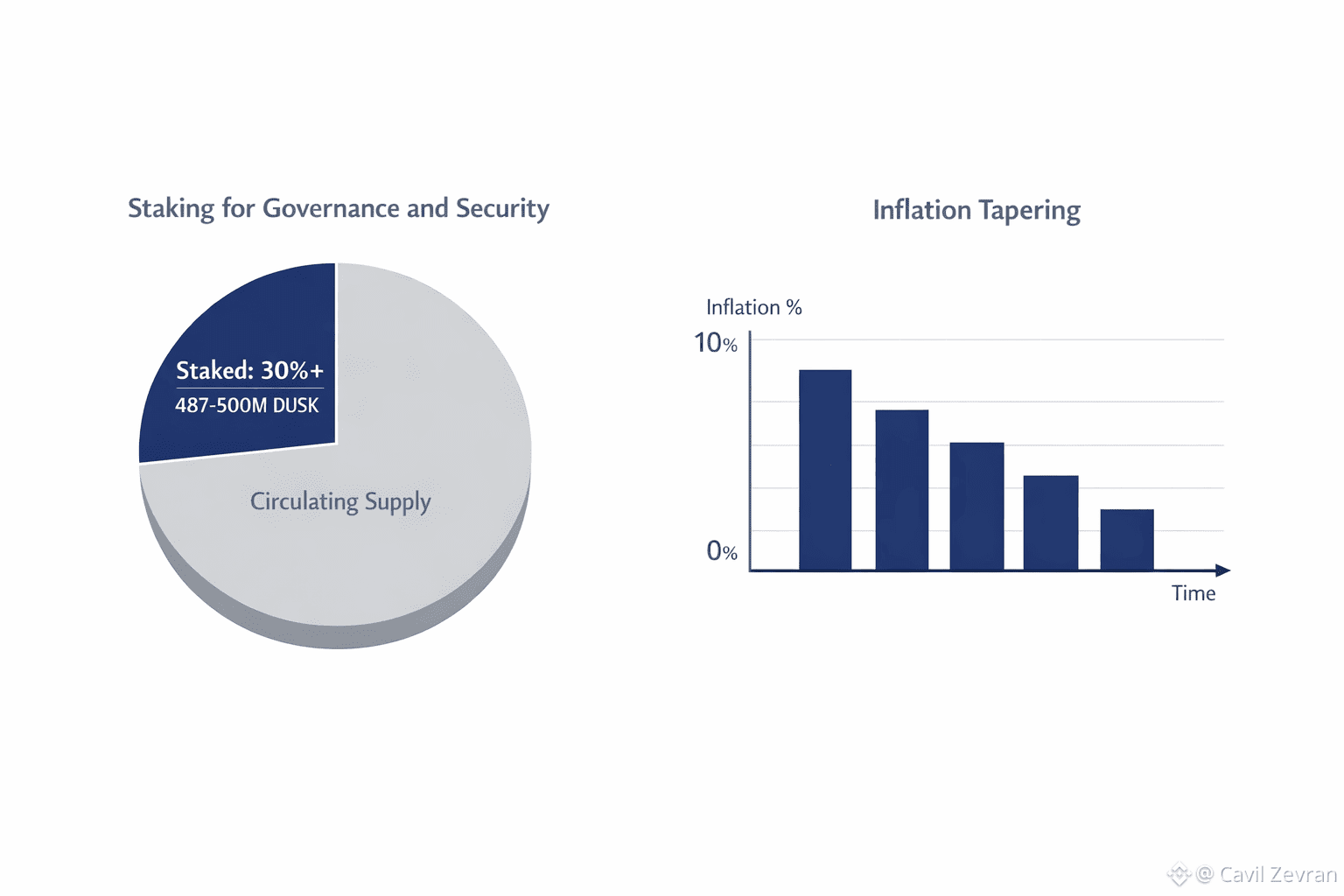
Staking ties the whole thing together. $DUSK holders don’t just sit on their tokens—they actually help run the network. By mid-January 2026, over 30% of the 487–500 million supply was staked, which means real people are securing the chain and voting on upgrades, whether it’s gas limits or node configurations. The token covers fees, gets burned to keep inflation in check (which is around 10% and dropping), and handles staking, consensus, and compute all in one shot. No juggling a bunch of tokens like on other chains. Community tools like DuskExplorer make it easy to track what’s happening without blowing up anyone’s privacy.
For institutions, this all adds up to dApps that cut out middlemen, slash costs, and hook assets up to global liquidity. Companies can tap into funding and trading without giving up custody, while users get hands-on control over a bunch of different tokens. Dusk’s modular setup—settlement at the base, compute on top—means it’s built to last, with regular updates like better APIs and wallet support dropping all the time. With trillions in real-world assets moving on-chain, Dusk’s developer-first approach is the engine making it happen, turning lines of code into compliant, real-world value.
