
Vanar is not trying to impress people with complex technical language or buzzwords. Instead, it starts with a very simple question: why does blockchain still feel hard for normal people? Games lag, wallets confuse users, fees change without warning, and most platforms feel like they are built for engineers rather than everyday users. Vanar exists because its team believes blockchain will only succeed when it feels as easy and natural as the apps people already use every day.
Vanar is a Layer-1 blockchain, which means it runs its own independent network with its own rules, validators, and native token called VANRY. But unlike many blockchains that were designed around trading and finance first, Vanar was shaped by people with experience in gaming, entertainment, and working with brands. That background matters. When you build for gamers, fans, and mainstream audiences, you think differently. You think about speed, smooth interactions, visuals, and user experience long before you think about charts and speculation.
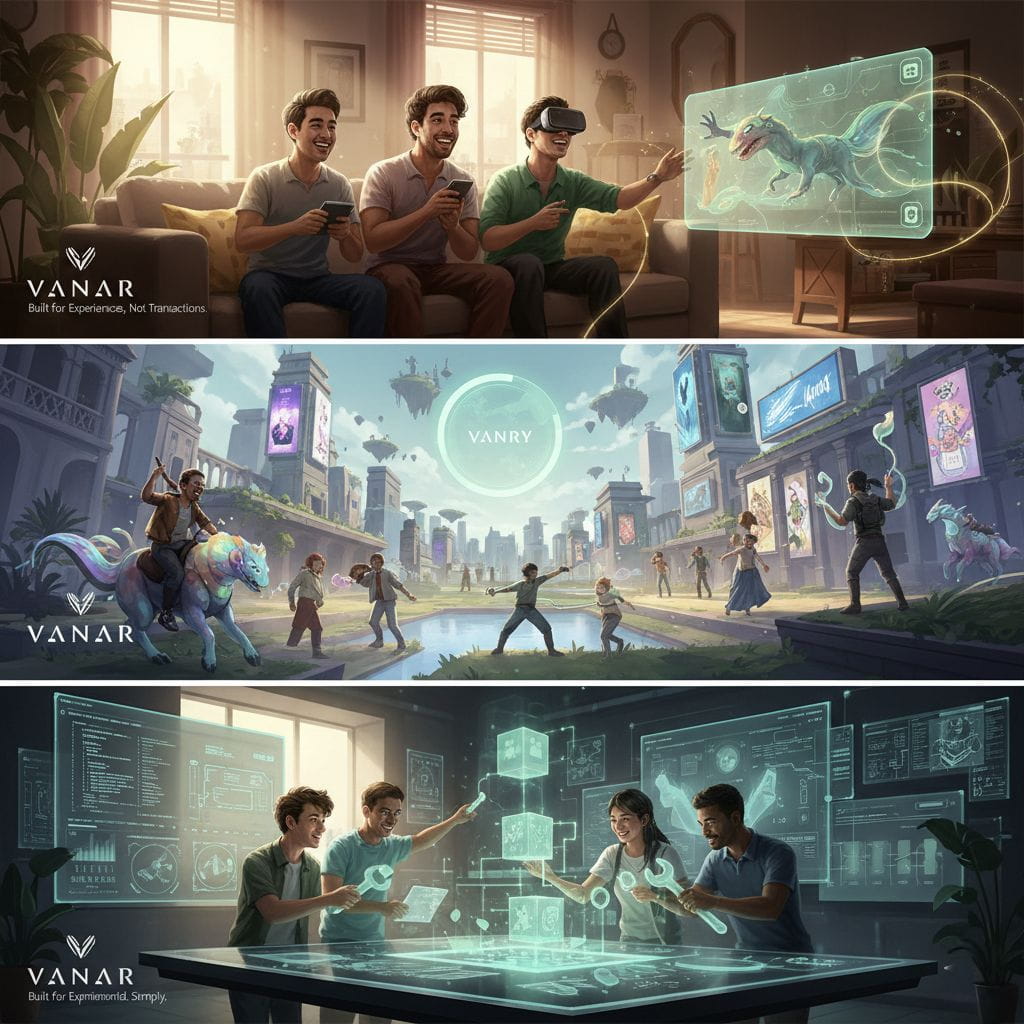
The core idea behind Vanar is simple and very human: people should be able to play, explore, collect, and interact without ever needing to understand what a blockchain is. Vanar assumes that most future users will not care about gas fees, private keys, or network settings. They just want things to work. Because of this, Vanar focuses heavily on low and predictable fees, fast transaction confirmations, and an architecture that can handle thousands of small actions without slowing down. This is especially important for games and virtual worlds, where users click, move, trade, and interact constantly.
What makes Vanar feel different is that it is built for experiences, not just transactions. Games, metaverses, and AI-powered apps are living systems. Characters change, items evolve, environments react, and users expect everything to feel instant. Vanar uses a modular design so that different parts of the system can focus on what they do best. The base layer keeps the network secure and decentralized, while other layers handle application logic, data, and intelligent behavior more efficiently. This helps developers build rich worlds without fighting against the limitations of the blockchain itself.
Another important part of Vanar’s vision is its connection to artificial intelligence. Instead of treating AI as something separate, Vanar is designed to support intelligent applications alongside blockchain logic. This opens the door to digital assets that change over time, game characters that behave more realistically, and virtual environments that respond to user behavior. In a future where AI and digital ownership come together, Vanar wants to be ready from the start.
The VANRY token quietly powers everything behind the scenes. It is used to pay transaction fees, reward validators who secure the network, and support economic activity inside applications. In games and marketplaces, VANRY can be used for purchases, rewards, and interactions. The token has a fixed maximum supply of 2.4 billion, which gives the ecosystem a clear economic structure. Instead of being designed only for speculation, VANRY is meant to move through the system naturally as people actually use applications built on Vanar.
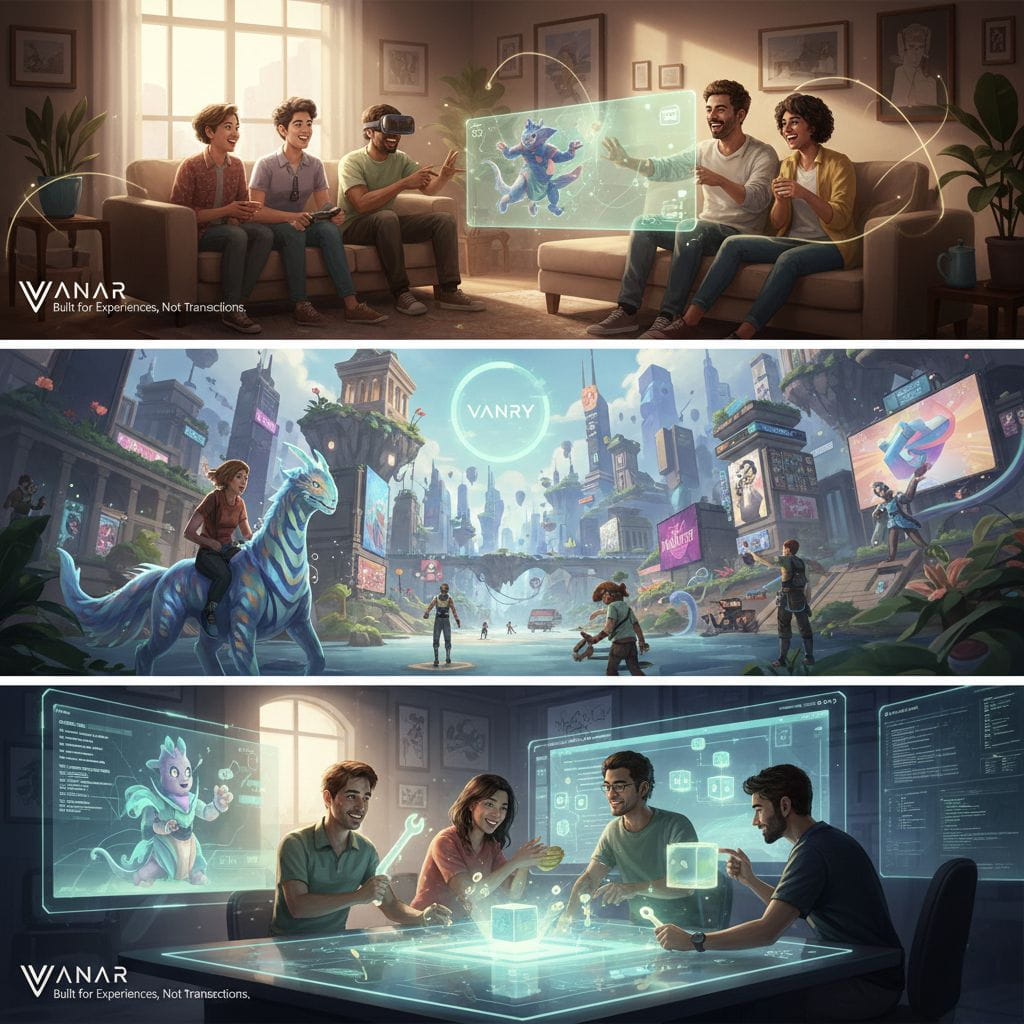
One of the strongest signs that Vanar is more than just an idea is that it already supports real products. The Virtua Metaverse is a digital world where users can explore immersive environments, own 3D digital assets, and interact with branded experiences. Virtua feels closer to a game or interactive platform than a typical crypto project, which is exactly the point. It shows how blockchain can exist in the background while users focus on creativity and exploration. Alongside Virtua, the VGN connects games and players in a way that feels familiar to gamers while still enabling real digital ownership and on-chain economies.
Vanar also looks beyond gaming. Brands, creators, and entertainment platforms can use the network to build interactive campaigns, loyalty systems, and digital experiences without forcing users into complicated crypto workflows. This flexibility across multiple mainstream areas—games, metaverse, AI, brands, and even eco-focused initiatives—gives Vanar a broader foundation than many single-use blockchains.
The project’s roadmap reflects this practical mindset. Instead of chasing hype, Vanar focuses on improving performance, making developer tools easier, simplifying wallet onboarding, and growing real user activity. The team talks more about usability and adoption than flashy promises. This slower, more grounded approach may not always grab headlines, but it aligns with the long-term goal of building something people actually use.
Of course, Vanar faces real challenges. The blockchain space is crowded, especially when it comes to gaming and metaverse platforms. Competing networks are also trying to attract developers and users. Vanar must continue proving that its technology works at scale and that people genuinely enjoy using the products built on it. There is also the ongoing balance between speed, low fees, and decentralization—something every high-performance blockchain must manage carefully. And like all crypto projects, Vanar exists in a market where prices can move faster than progress.
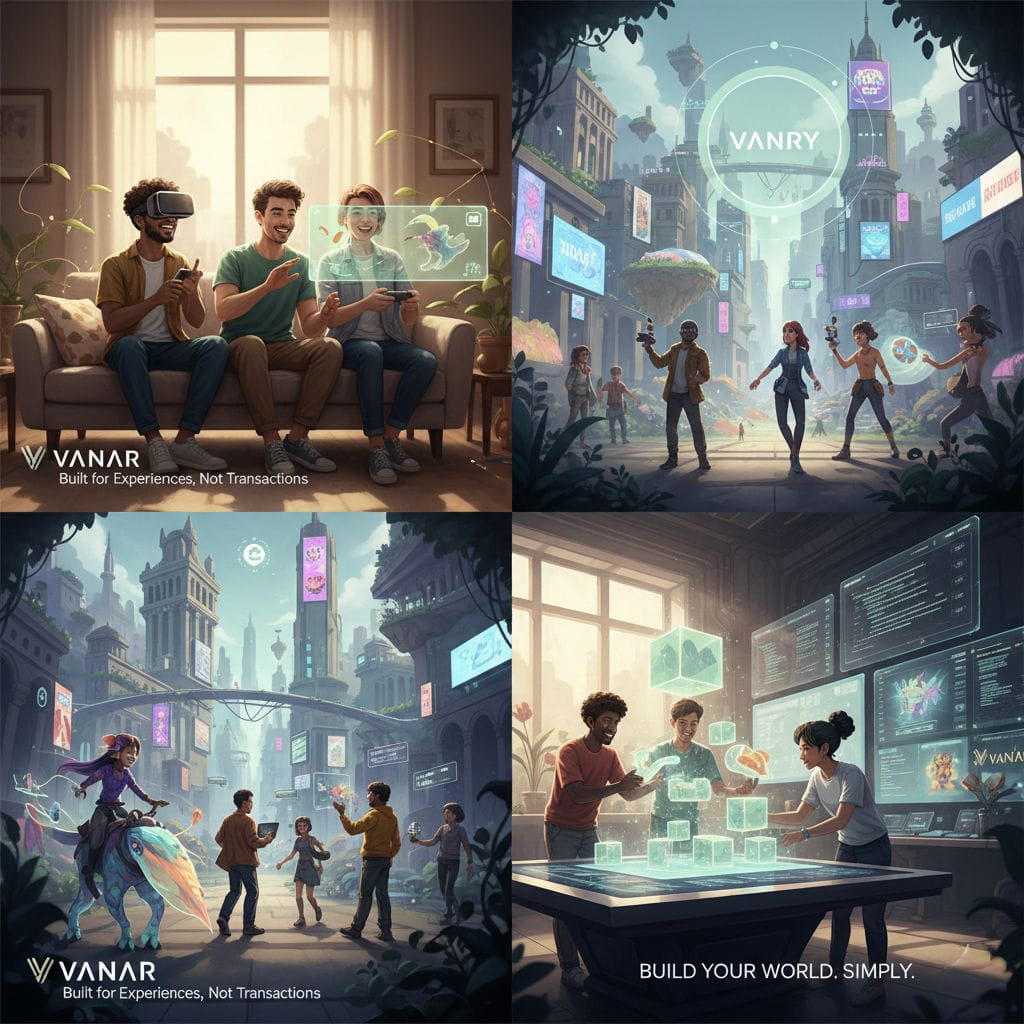
Still, Vanar represents an important shift in how blockchain is being designed. It treats people as humans first, not users who need to adapt to technology. By focusing on familiar experiences like games, virtual worlds, and intelligent digital spaces, Vanar tries to quietly bring blockchain into everyday life without forcing it into the spotlight. If Web3 truly becomes mainstream through entertainment, creativity, and AI-driven experiences, Vanar’s approach feels less like speculation and more like a natural next step.
In the end, Vanar is not asking people to learn blockchain. It is trying to make blockchain finally learn how people live, play, and interact online.
