
I want to welcome you to this talk about a really cool piece of technology. If you have been following the world of decentralized storage, you might have heard of a system called Walrus. It is built to keep huge amounts of data safe, but today I want to share something with you that most people don't think about. It is not just about how we save our files, but how we actually get them back when we need them.
We are going to look at the way Walrus handles what we call "Incentivized Reads." It sounds like a big term, but it really just means making sure the people holding your data have a good reason to send it to you quickly. Let's dive into how this works and why it matters for you and me.
How Walrus Keeps Your Files Safe
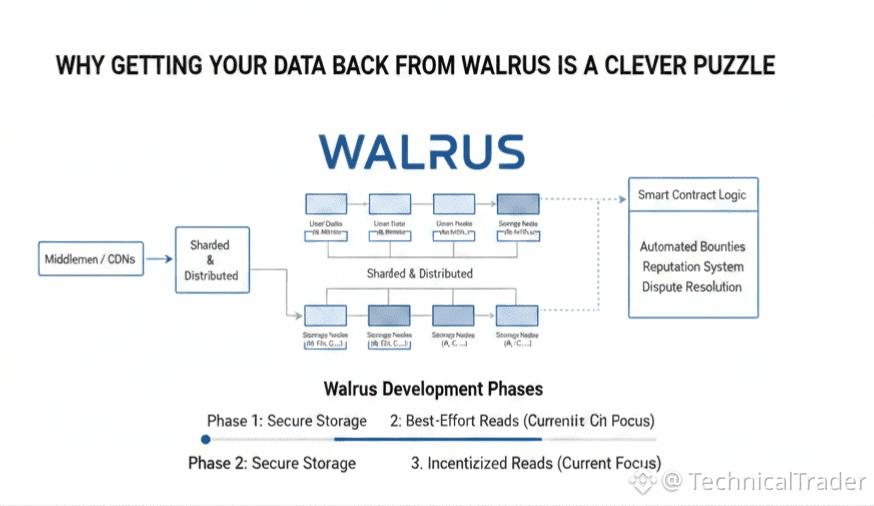
When I talk to people about Walrus, I always start with the basics. Its main job is to take your data, which we call "blobs," and make sure they are stored in a way that they can never be lost. It breaks your files into pieces and spreads them out across many different computers called storage nodes.
The system is incredibly strong when it comes to keeping things safe. However, Walrus was designed first and foremost for storage. Because of this focus, the engineers had to think long and hard about how to make sure the reading part of the system is just as good as the saving part.
The Challenge of Getting Data for Free
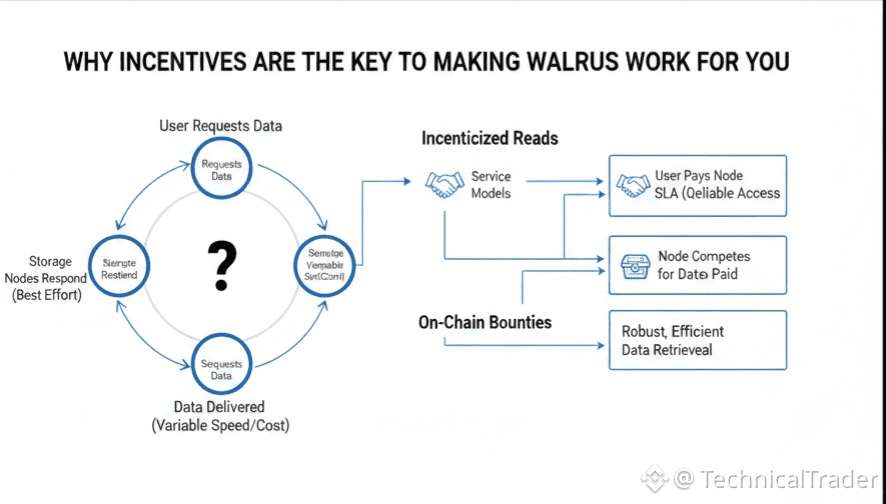
Now, here is something I want you to think about. Currently, Walrus encourages these storage nodes to give you your data fast and for free. But there is a little catch. There are no strict rules that force them to do this. It is basically a "best effort" system.
This works because most nodes want Walrus to be successful, so they play nice. But as we know, sometimes people or machines only do what is best for them. If a node feels like it is spending too much money on internet costs to send you files for free, it might just stop doing it.
Dealing with the Public Goods Problem
We can see how this might become a bit of a headache for all of us. If every node decides to be "rational" and save their own money by not sending files, the whole system could slow down. This is what we call a public goods problem.
If nobody wants to do the work because they aren't getting paid for that specific task, the system could break. We don't want to use a library where the books are locked away and nobody is willing to go get them for us. This is why we need extra incentives.
Using Node Service Models as a Fix
One solution that I find very interesting is the idea of service models. Imagine if you or a company could sign a simple contract with a storage node. You pay them a little bit, and in exchange, they promise to give you high quality and fast access to your data.
This changes everything because it turns a "favor" into a professional service. It means that writers who want their websites to load fast can pay a node to make sure that happens. It creates a professional bridge between the data and the person who needs to see it.
Why Your Reputation is Everything in Walrus
I think we can all agree that reputation matters in any business. In the Walrus world, nodes that don't follow through on their promises will get a bad reputation. If a node is slow or lazy, people simply won't want to do business with them in the future.
This creates a natural way to keep everyone honest. Nodes will compete to be the most reliable and the fastest because that is how they will win more business. It is a win for us because it means we get better service without needing to change the core code of Walrus.
The Role of Middlemen and CDNs
You might be thinking that negotiating with storage nodes sounds like a lot of work for a regular person. You are right. That is why we will likely see "middlemen" like Content Delivery Networks or CDNs step in to help.
These are companies that will sit between you and the Walrus nodes. They will handle all the complex stuff and the payments behind the scenes. For you and me, it will feel just like using the normal internet, but it will be powered by the robust storage of Walrus.
How On Chain Bounties Can Help
There is another clever way to solve this that I want to tell you about. It is called an on chain bounty. If you are trying to get a file and no one is sending it to you, you can put up a small reward on the blockchain.
Suddenly, those quiet storage nodes will have a very big reason to wake up. The first node to give you the data gets the reward. It turns the process of fetching data into a fast paced competition where the winner gets paid for being helpful.
Making Bounties Simple for Everyone
I know that managing bounties sounds like something only a programmer could do. But the beauty of this is that it can all be automated through smart contracts on the Sui network. You wouldn't have to do the math yourself.
If there is a dispute, the system can even check to see if the data was actually delivered. This protects the nodes from being cheated and protects you from paying for something you didn't get. It is a very fair way to make sure the system stays active.
Why This Flexible Approach Wins
I really like that Walrus doesn't force just one way of doing things. By allowing service models and bounties, it lets the community decide what works best. It keeps the system flexible as it grows bigger and more popular.
This means Walrus can stay simple at its core while still being very fast for the people using it. It is a smart way to build a system that can last for a long time. We are seeing the birth of a new kind of internet storage that is both safe and efficient.
Final Thoughts on Walrus Reads
I hope this gives you a better idea of how much thought goes into making these systems work for us. It is not just about the code. It is about understanding how people and businesses work together to share information.
Walrus is shaping up to be a very powerful tool, and these incentive models are the secret sauce that will make it usable for everyone.
I am excited to see how it continues to develop as more people start using it for their daily data needs.
what you think about this? don't forget to comment 💭
Follow for more content 🙂


