
One quiet truth from the early years is that blockchains learned how to move value long before they learned how to keep things safe over time. Applications spoke the language of decentralization, yet their memories often lived elsewhere, fragile and borrowed. What failed was not innovation, but endurance.
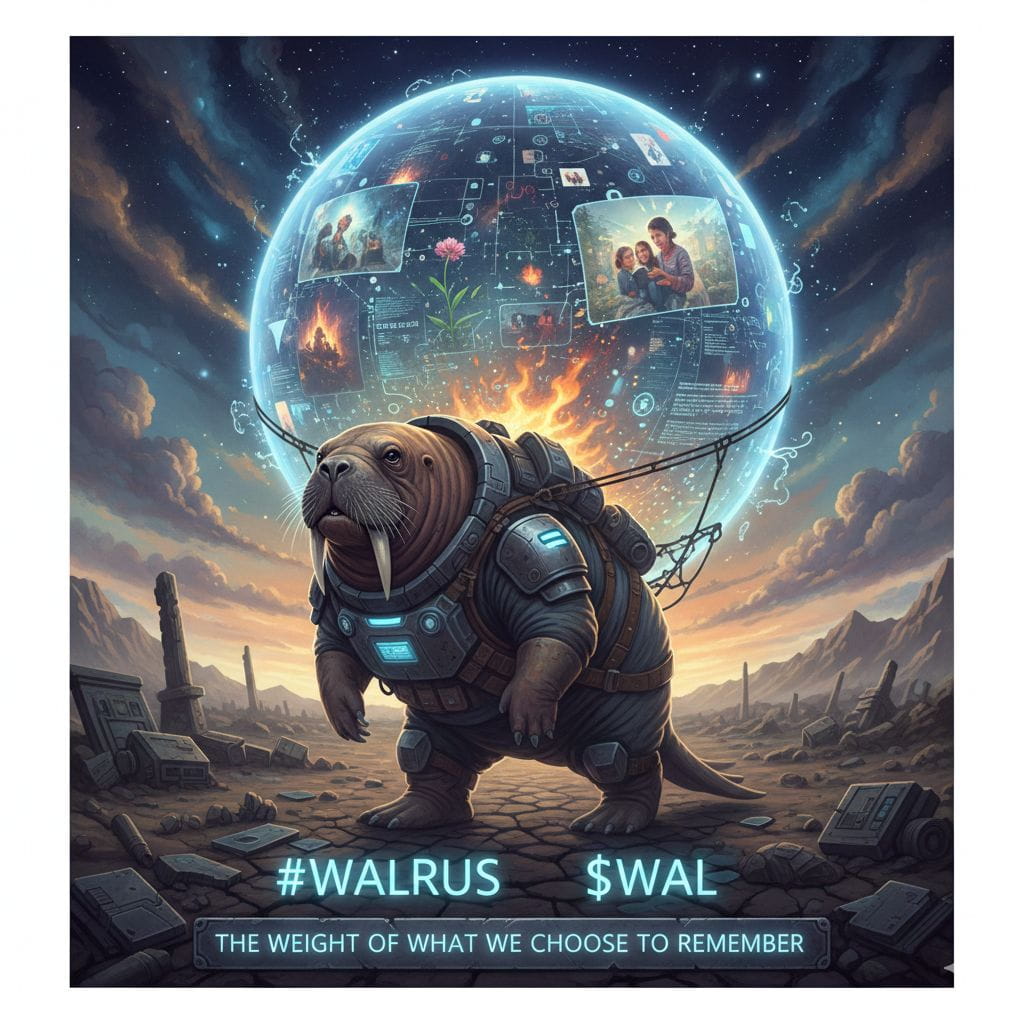
Walrus $WAL feels shaped by that long lesson. Built with an understanding that data is not temporary exhaust but shared history, Walrus approaches storage and privacy with the patience of something meant to last. It treats information less like a commodity and more like a responsibility, acknowledging that trust grows when systems respect what users leave behind.

Its relationship with $SUI gives Walrus a sense of continuity that feels natural rather than engineered. Data behaves like something owned and cared for, not endlessly copied and forgotten. This subtle shift changes how applications feel. Confidence comes not from speed or scale, but from knowing that what is stored today will remain intact tomorrow, without spectacle or drama.
Over time, such systems shape people. Incentives favor care instead of extraction. Governance leans toward preservation. Habits form around reliability rather than urgency. Walrus does not ask to be noticed; it asks to be trusted.

What truly endures, in technology as in life, is the quiet alignment of memory, responsibility, and patience. When systems honor these, permanence becomes possible.


