

Hello family, today I want to talk about a project that really caught my attention while I was spending time reading documents, discussions, and technical explanations. We see many projects every day, but not all of them leave an impression once you go deeper. I researched this one with patience, and in my knowledge, it deserves a proper conversation rather than a quick mention. I am talking about the Walrus Protocol, a name that keeps appearing whenever decentralized storage and next-generation infrastructure come up.
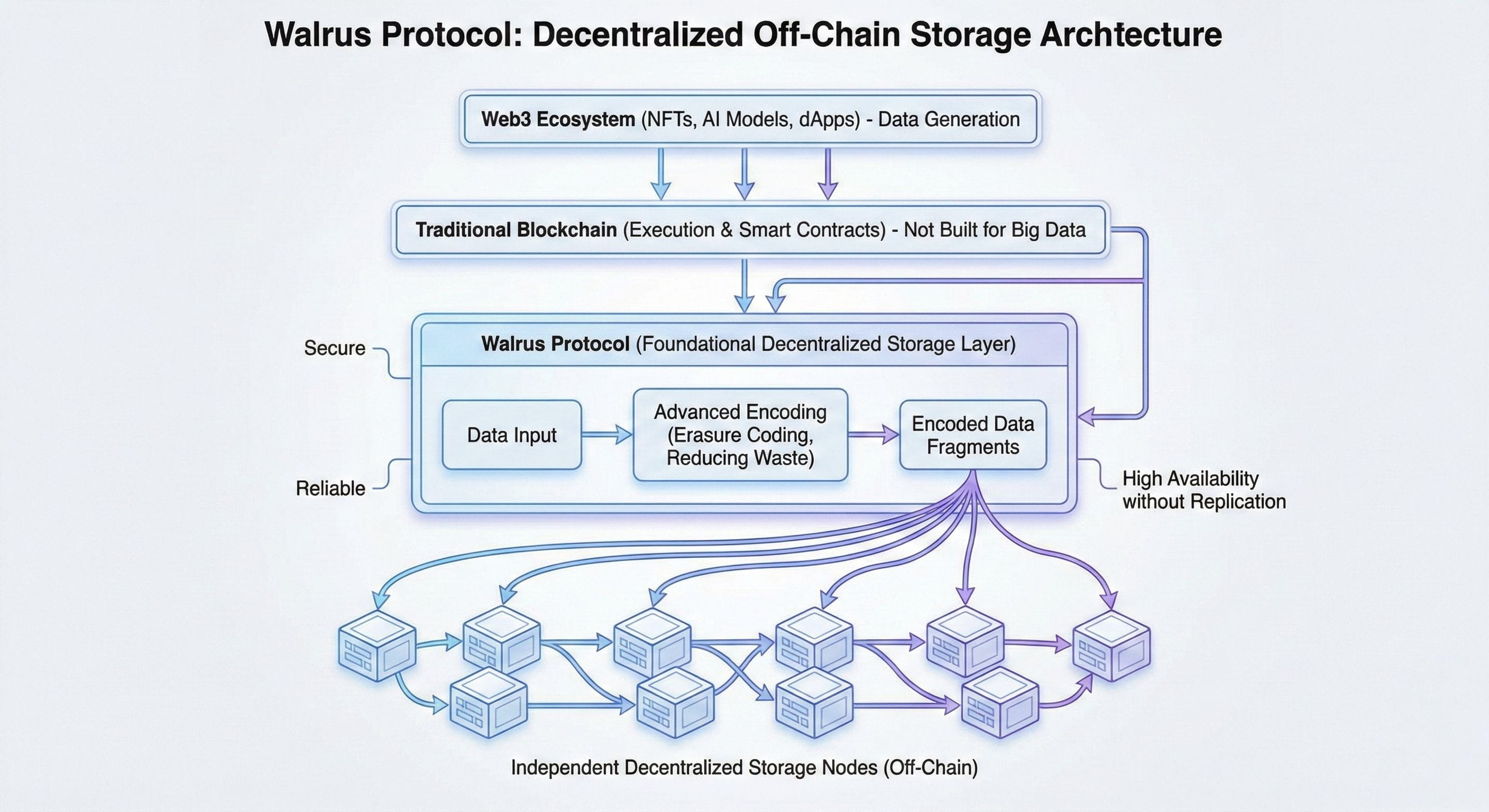
When I first started reading about it, I realized how big the problem actually is. We often focus on transactions, speed, and smart contracts, but we forget that all this innovation generates massive amounts of data. NFTs, AI models, and decentralized apps are all hungry for storage, and traditional blockchains are simply not built for that. As I read more, it became clear to me that Walrus was designed to sit exactly in this gap, not as a patch but as a foundation. They are not trying to force data on-chain where it does not belong. Instead, they are creating a system where data can live off-chain but still remain decentralized, secure, and reliable.
What I personally found interesting is how thoughtfully the system is designed. Walrus does not rely on old ideas like copying the same data everywhere and hoping it survives. From what I understand, they took a more efficient route, using advanced encoding to split data in a way that reduces waste while still keeping availability high. When I read about this, it felt less like hype and more like engineering discipline. They clearly asked the right questions first and then built the answers into the protocol.
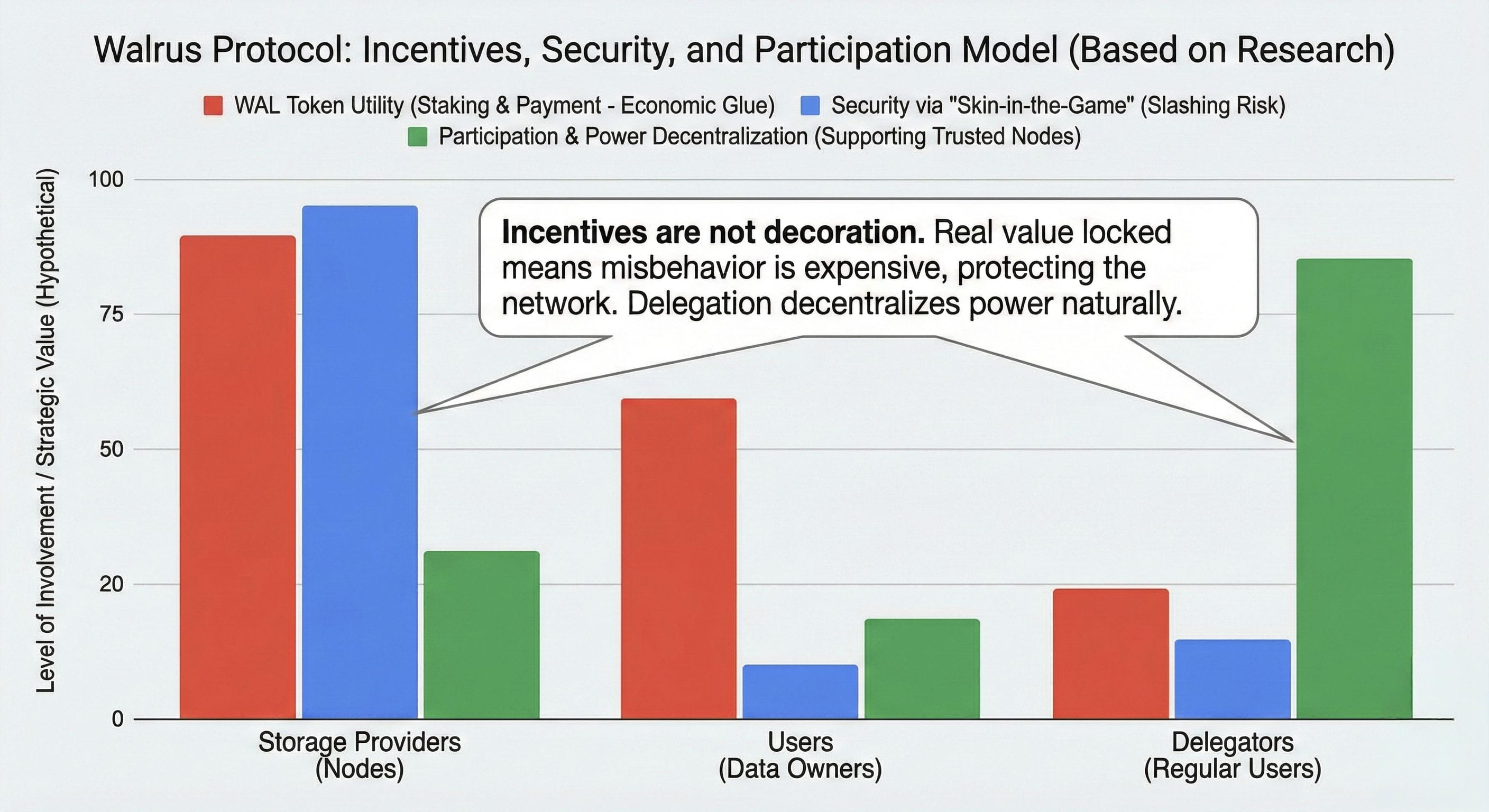
As I continued my research, I noticed that Walrus is not just about technology, it is about incentives. In decentralized systems, good intentions are never enough. People need reasons to behave honestly, and bad actors need reasons to think twice. This is where the WAL token plays a serious role. From what I see, it is not treated as a decoration or a speculative toy. It is the economic glue of the network. Storage providers stake it, users pay with it, and the system uses it to decide who gets responsibility and rewards.
What really stood out to me is how security is handled. Instead of pretending that attacks will not happen, Walrus assumes they will and designs around that reality. Storage nodes have real value locked inside the system, so misbehavior is expensive. If someone tries to cheat, they are not just breaking rules, they are risking their own capital. In my experience, this is one of the most effective ways to protect a decentralized network. Code matters, but incentives matter just as much.
I also like how regular users are not pushed aside. We often see systems where only large operators benefit, but here delegation changes the dynamic. People who do not run hardware can still participate by supporting nodes they trust. When I read about this, it felt like a natural way to decentralize power without sacrificing performance. Good nodes attract more support, bad ones slowly lose it. That kind of market-driven accountability usually works better than rigid control.
Looking at the bigger picture, I feel Walrus is positioning itself as infrastructure rather than a trend. They are not shouting for attention, and maybe that is why many people overlook them. But from what I have read and understood, the protocol has already faced real stress and kept working. That says more than any promise ever could. Data staying safe even when interfaces fail is exactly what decentralization is supposed to mean.
In the end, I tell you honestly, this project gave me the feeling of quiet confidence. Not loud claims, not flashy marketing, just a clear understanding of the problem and a solid attempt to solve it. We read about many ideas in this space, but only a few feel like they are built to last. From my research and my perspective, Walrus feels like one of those projects that may not move fast in the spotlight, but steadily builds the backbone of what comes next.

