
You might've seen headlines about Chainbase putting 300 terabytes on something called Walrus. If you're wondering what that actually means and why people care, here's a straightforward explanation.
First, What Are These Companies?
Chainbase processes and organizes data from over 220 different blockchains. Think of them as a massive data center that helps other crypto projects access the blockchain information they need.
@Walrus 🦭/acc is a decentralized storage platform—basically a way to store data across many different computers instead of on centralized servers like Amazon's AWS or Google Cloud.
Why Is This News?
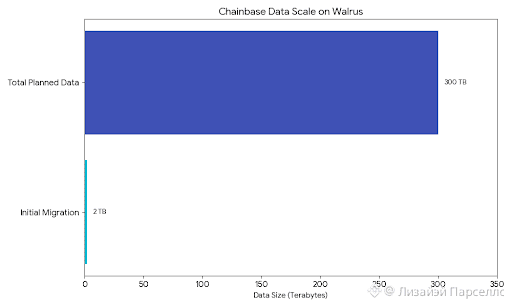
Storage might sound boring, but it's expensive and critical. When you're dealing with 300 terabytes (that's roughly 300,000 movies worth of data), where you store it matters a lot.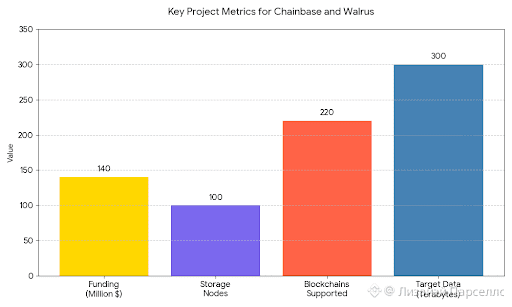
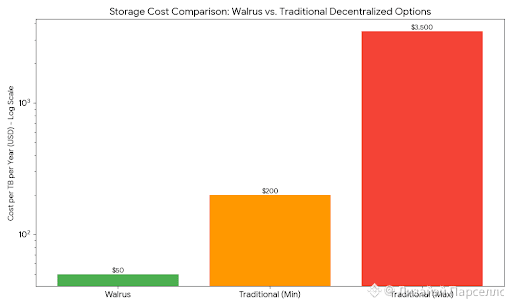
The interesting part is the cost comparison:
Traditional decentralized options: $200-$3,500 per terabyte per year
$WAL : Around $50 per terabyte per year
That's a significant difference when you're storing massive amounts of data.
How Does Walrus Do It Cheaper?
 They use a smart technical approach called erasure coding. Instead of making 25-100 complete copies of your data (which is what other platforms do), they only need 4-5 copies while maintaining the same security. Fewer copies means lower costs.
Is This Actually Working?
Walrus has real funding ($140 million from major crypto investors) and launched their main network in March 2025. They've got over 100 storage nodes running, and they've already tested with more than 80 terabytes of data.
Chainbase is being smart about this—they're starting with 2 terabytes first to make sure everything works before moving their full dataset.
Why Should Anyone Care?
If this works well, it could change how Web3 companies think about storing data. Projects working on AI, DeFi, NFTs, and gaming all need affordable, reliable storage. Chainbase is essentially testing whether Walrus can handle serious, enterprise-level needs.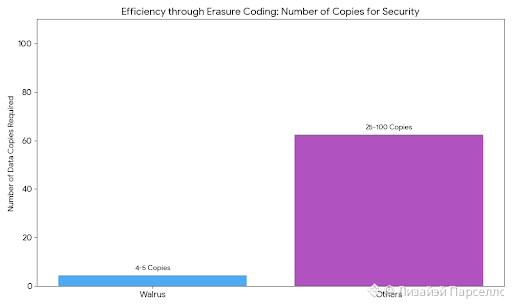
It's less about hype and more about whether decentralized storage can actually compete with traditional solutions in real-world applications. The next several months will show us if the promise matches reality.

