In the cryptocurrency world, timing is often more important than perfection. Many users discover new projects only after they have already gone viral, reached major exchanges, and experienced large price increases. By that time, the biggest opportunities are usually gone. This is why early-stage discovery platforms have become increasingly popular.
Binance Alpha was created to serve this exact purpose. It is designed to help users explore new and emerging Web3 projects before they become widely known. Instead of waiting for official exchange listings, users can interact with projects at a much earlier stage, when information is still forming and communities are still growing.
However, early access does not mean guaranteed success. Binance Alpha is not a promise of future listings, profits, or long-term viability. It is a discovery and learning environment where users can explore innovation, understand trends, and decide for themselves whether a project is worth their attention.
This article provides a complete overview of Binance Alpha. It explains what Binance Alpha is, how it works, how it differs from the Binance Exchange, how to access it, how trading and Alpha Points function, and how users can reduce trading fees through referral discounts. The goal is to give you a clear and practical understanding of how Binance Alpha fits into the modern crypto ecosystem.
What Is Binance Alpha?
Binance Alpha is a discovery platform built into Binance Wallet that highlights early-stage cryptocurrency projects with potential for growth. It functions as a pre-listing environment where users can explore tokens before they are officially listed on major centralized exchanges.
Instead of focusing on well-known assets like Bitcoin or Ethereum, Binance Alpha focuses on projects that are still in their early phases. These projects may be experimenting with new technologies, new economic models, or new ways of interacting with blockchain systems. This makes Alpha especially attractive to users who enjoy learning about innovation rather than simply trading popular coins.
One of the main purposes of Binance Alpha is education. It allows users to observe how early-stage markets behave, how communities form, and how narratives around new projects develop. This helps users build a deeper understanding of how the crypto ecosystem evolves.
The projects featured on Binance Alpha are selected using Binance’s internal expertise and market analysis. Factors such as community engagement, user growth, on-chain activity, and relevance to current trends play an important role. For example, if a project introduces a new use case in decentralized finance, artificial intelligence, or real-world asset tokenization, it may attract attention from the Alpha curation team.
It is extremely important to understand that being featured on Binance Alpha is not an endorsement. It does not mean that Binance believes the project will succeed. It does not mean that the token will be listed on the Binance Exchange. It does not mean that the price will increase. Alpha is about exposure, not approval.
This approach encourages responsibility. Users are expected to research projects on their own, analyze risks, and make informed decisions. Binance Alpha does not replace personal judgment—it simply provides earlier access to information.
Difference Between Binance Exchange and Binance Alpha
Although Binance Exchange and Binance Alpha are both part of the Binance ecosystem, they serve very different roles.
Binance Exchange
The Binance Exchange is a centralized trading platform. It focuses on providing access to officially listed cryptocurrencies. These tokens usually go through internal evaluations before becoming available for trading. While the exact process is not fully public, it typically includes technical, legal, and liquidity-related considerations.
On the Binance Exchange, users trade through a custodial account. This means Binance holds the assets on behalf of users. This structure makes trading simple and fast, but it also means users do not directly control their private keys.
The Exchange is built for:
High liquidity
Fast order execution
Advanced trading tools
Stable infrastructure
Lower relative risk compared to early-stage markets
This environment is ideal for beginners, professional traders, and institutions.
Binance Alpha
Binance Alpha, on the other hand, is focused on early discovery. Instead of offering fully established assets, it highlights projects that are still developing. These tokens often have smaller communities, less liquidity, and more experimental use cases.
Alpha usually operates through Binance Wallet, which is a non-custodial Web3 wallet. This means users control their own assets and interact directly with blockchain networks.
This structure provides more independence, but it also increases responsibility. Users must manage private keys, understand gas fees, and deal with on-chain risks.
Alpha is considered a high-risk environment. Prices can be highly volatile, liquidity can be thin, and some projects may fail completely. This is why Binance repeatedly emphasizes that Alpha is not meant to be a safe investment zone.
Binance Alpha 2.0
To make Alpha easier to use, Binance introduced Binance Alpha 2.0. This version integrates Alpha trading directly into the Binance Exchange interface.
With Alpha 2.0, users can trade early-stage tokens using their Spot or Funding balances without setting up a separate Web3 wallet. This reduces technical friction and allows more users to explore on-chain assets.
Alpha 2.0 acts as a bridge between centralized and decentralized environments. It combines the convenience of a centralized exchange with the access of a decentralized system.
Key Conceptual Differences
In simple terms:
Binance Exchange is about stability, liquidity, and established assets.
Binance Alpha is about exploration, innovation, and early-stage exposure.
The Exchange is where projects go after they mature.
Alpha is where projects appear while they are still forming.
Understanding this distinction is crucial. Many users mistakenly assume that Alpha tokens are “almost listed.” This assumption is dangerous. Alpha is not a guarantee of anything—it is a gateway to uncertainty.
How Binance Alpha Works
Binance Alpha is built around the idea of spotlighting early-stage projects for a limited period of time. Instead of permanently listing tokens, Alpha introduces them to users through short, focused showcase windows. This creates a discovery-based environment where attention is concentrated and users can quickly explore what a project is about.
Before a token becomes available, users will usually see a countdown timer on the Binance Alpha page. This countdown serves two purposes. First, it informs users about the exact time the token will go live. Second, it gives them time to prepare by ensuring they have enough funds and have completed their wallet setup.
Once the countdown ends, the token becomes available for trading inside the Alpha section. During this period, users can read about the project, examine basic details, and decide whether they want to participate.
These spotlight periods typically last around 24 hours. After this window closes, the token does not disappear. Instead, it remains visible in the Alpha section so users can continue tracking its price, volume, and on-chain activity. This allows users to observe how early-stage markets behave over time.
This approach reflects Binance Alpha’s philosophy: it is not about hype, but about structured discovery.
The Quick Buy Feature
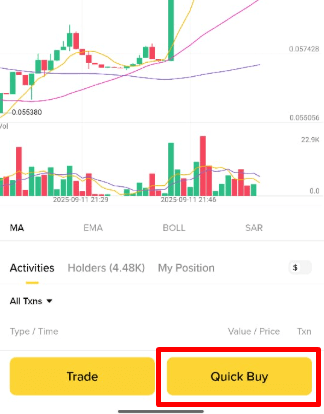
One of the most important tools inside Binance Alpha is the Quick Buy feature. It is designed to make on-chain token purchases easier and more efficient.
Early-stage tokens often launch on decentralized networks, where trading can be complicated for beginners. Users must choose the correct chain, set slippage manually, and deal with failed transactions. Quick Buy simplifies this entire process.
When a user selects a token through Binance Alpha, Quick Buy automatically:
Chooses the correct native chain token for the trade
Suggests a default amount based on the user’s wallet balance
Configures basic transaction settings
This reduces friction and saves time.
Slippage Adjustment
Another key feature of Quick Buy is automatic slippage adjustment.
In early-stage markets, liquidity is often low. This means prices can move quickly. If the price changes while a transaction is being processed, the transaction can fail. This leads to frustration and wasted time.
Quick Buy solves this by adjusting slippage automatically when a transaction fails. This increases the chance that the next attempt will succeed.
However, there is an important trade-off. Higher slippage increases the likelihood of execution, but it can also result in worse prices. Users may end up paying more than expected.
This is why Binance emphasizes that Quick Buy improves convenience, not price certainty.
Anti-MEV Protection
Another feature built into Binance Alpha is Anti-MEV protection.
MEV stands for “Maximal Extractable Value.” It refers to strategies used by bots or validators to reorder, insert, or manipulate transactions for profit. In simple terms, MEV can cause users to receive worse prices, especially during large or popular trades.
Binance Alpha’s Anti-MEV mechanism is designed to reduce the impact of these practices. It adds a layer of protection that helps prevent unfair price manipulation.
While this does not eliminate all risks, it improves fairness and transparency compared to many standard decentralized trading methods.
What Happens After the Spotlight Ends?
Once a token’s spotlight window ends, it is not removed from Binance Alpha. Instead, it remains in the Alpha section under the Markets tab.
Users can:
Continue tracking its price
Monitor volume and liquidity
Observe how the community develops
Study long-term behavior
This allows Binance Alpha to function as a learning environment rather than a temporary hype zone.
Some users discover that the most valuable insights come after the initial hype fades. Observing how projects behave weeks after their first spotlight can reveal much more than short-term price movements.
How to Access Binance Alpha
Accessing Binance Alpha is designed to be simple, but it still requires some preparation. Since Alpha focuses on early-stage, on-chain tokens, users must ensure their accounts and wallets are properly set up before trading.
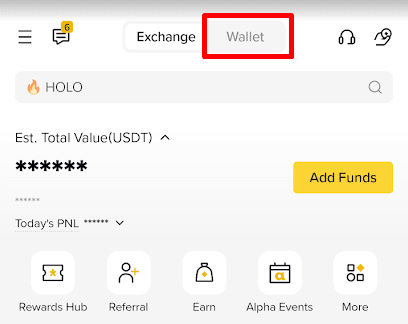
First, users need a Binance account. After logging into the Binance app, they should navigate to the Wallet section. From there, they can enter Binance Wallet, which is Binance’s non-custodial Web3 wallet.
Before using Binance Alpha, it is important to:
Back up the wallet securely
Store the recovery phrase in a safe place
Update the Binance app to the latest version
These steps are critical because Binance Wallet gives users full control over their assets. If the recovery phrase is lost, the funds cannot be recovered.
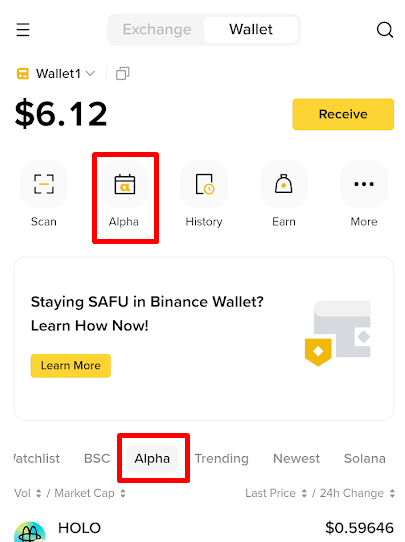
Once the wallet is set up, users can navigate to the Alpha section, usually found under the Markets or Alpha tab. This is where all spotlighted tokens, events, and Alpha-related activities are displayed.
To trade on Binance Alpha, users must also hold enough chain-native tokens. For example, if a token launches on the BNB Chain, users will need BNB to cover both the purchase and the network fees. The same applies to other networks like Ethereum or Solana.
Preparing in advance is important because Alpha tokens often attract strong attention during their spotlight windows.
How to Trade on Binance Alpha
Trading on Binance Alpha is intentionally designed to be faster and simpler than traditional on-chain trading.
Once a token becomes available, users can tap on it and review basic information such as the project description, token contract, and trading options.
The most common way to trade is by using the Quick Buy feature. With one click, users can:
Select the token
Confirm the amount
Execute the trade
This simplified flow removes many technical barriers that usually exist in decentralized trading.
However, it is important to understand that Alpha trades often happen in volatile conditions. Liquidity can be low, and prices can move quickly. This means users must always expect slippage and potential price differences between what they see and what they actually receive.
Trading on Binance Alpha is not the same as trading on the main Binance Exchange. It is closer to decentralized trading, where users interact directly with blockchain networks.
This means:
Transactions are irreversible
Network congestion can cause delays
Gas fees apply
Smart contract risks exist
Because of this, Binance clearly labels Alpha as a high-risk environment.
What Are Binance Alpha Points?

One of the most unique features of Binance Alpha is its points-based system.
Binance Alpha Points are designed to reward consistent participation. Instead of encouraging one-time actions, the system focuses on long-term engagement.
Points are typically calculated using a rolling time window. This means that what you do today affects your eligibility tomorrow, and what you did two weeks ago still matters.
Although the exact formula can change, points are usually influenced by:
The value of assets you hold
Your trading activity
Your overall participation in the Alpha ecosystem
This design encourages stability rather than impulsive behavior.
How Alpha Points Are Used
Alpha Points are not just numbers. They act as access keys to special events inside Binance Alpha.
These events can include:
Airdrops
Token Generation Events (TGEs)
Early-access campaigns
Community rewards
Each event has its own rules. Some require a minimum number of points just to participate. Others require users to spend a certain number of points to claim rewards.
This system creates a balance between access and scarcity.
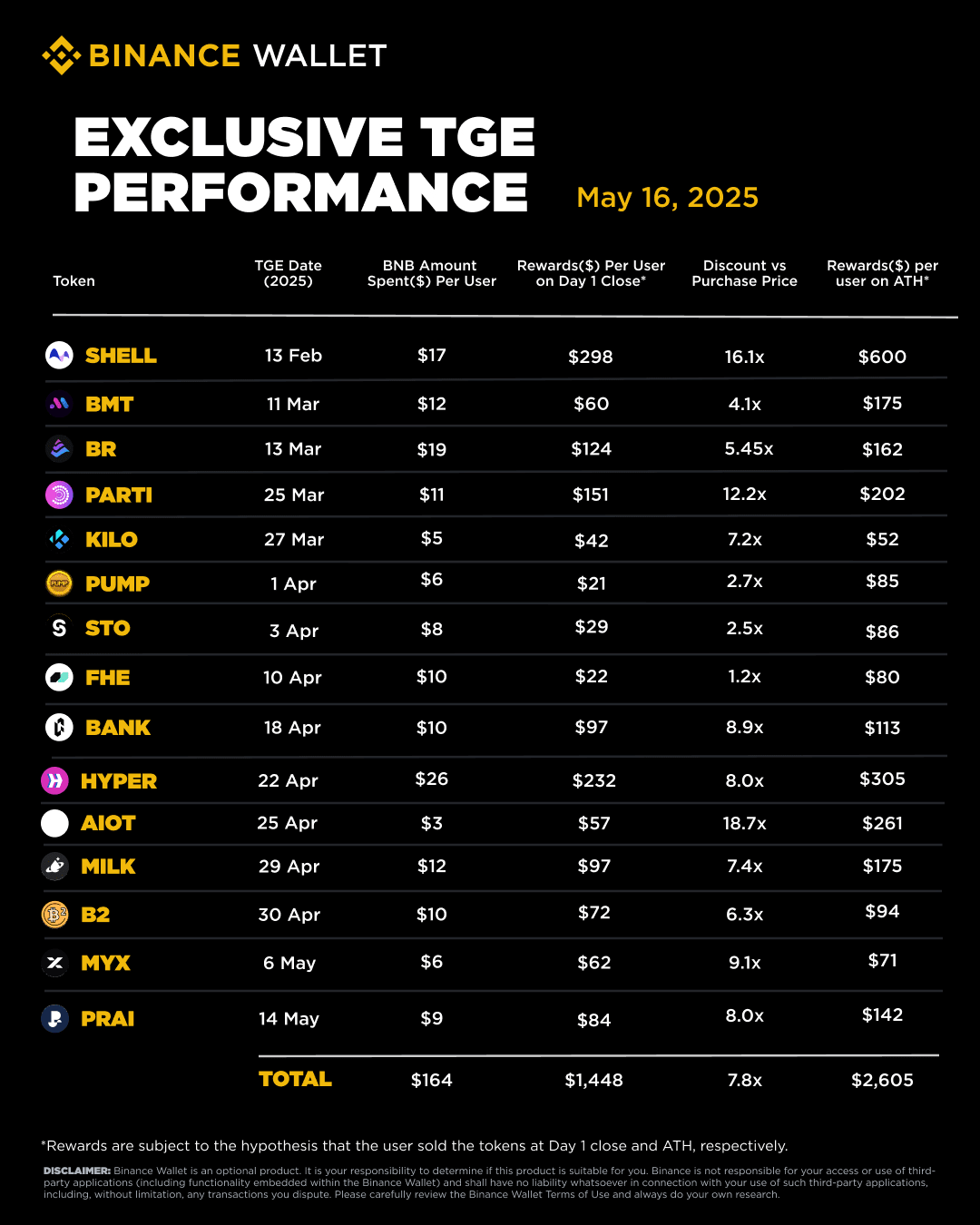
How Binance Alpha Airdrops Work
Airdrops are one of the most popular features in the crypto world. They allow users to receive tokens for free or at a discounted rate.
On Binance Alpha, airdrops are usually organized through the Alpha Events page. When a new airdrop becomes available, Binance announces it through official channels.
A typical airdrop process looks like this:
First, Binance opens a claim window. This window often lasts around 24 hours. During this time, users can check whether they meet the eligibility requirements.
Second, users must meet a minimum Alpha Points threshold. If they do not meet the requirement, they cannot claim the airdrop.
Third, users must confirm their claim. In many cases, claiming consumes a fixed number of points.
Finally, the tokens are distributed. Some airdrops follow a first-come, first-served model, while others use priority tiers.
Some events also include multiple phases. In the first phase, only users with higher point balances can participate. If rewards remain, a second phase may open with lower requirements.
This structure rewards long-term participants rather than short-term opportunists.
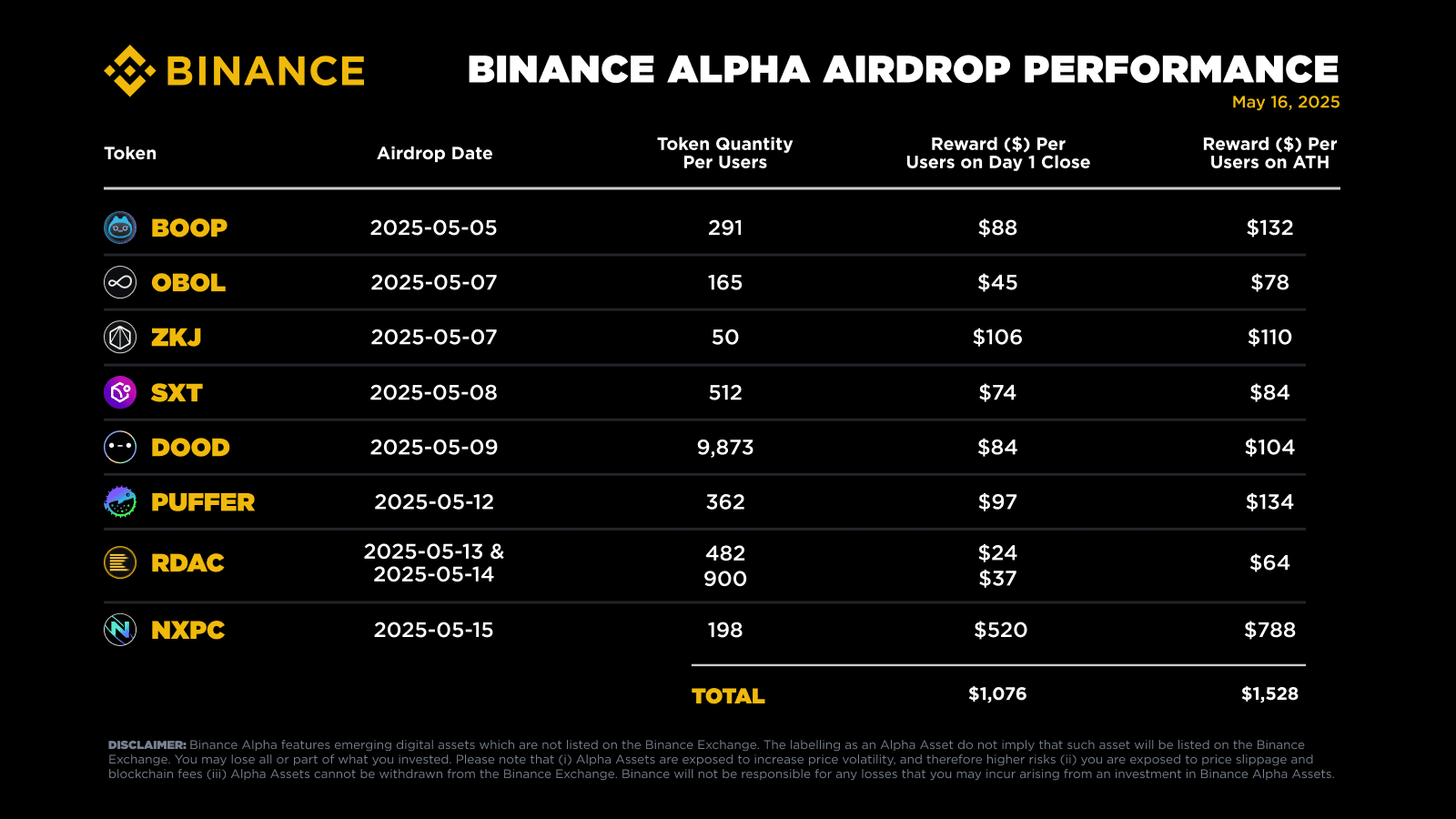
What Are Token Generation Events (TGEs)?
A Token Generation Event, or TGE, is the moment when a new token is officially distributed to the public.
On Binance Alpha, TGEs allow users to access tokens before they become widely available. This gives users early exposure to new ecosystems.
TGEs can follow different formats. Some allow users to subscribe at a fixed price. Others may use allocation systems based on points or balances.
Just like airdrops, TGEs often require Alpha Points for participation.
However, TGEs are not risk-free. Early-stage tokens can be extremely volatile. Some projects may fail completely. This is why Binance repeatedly emphasizes that Alpha is about discovery, not guaranteed profit.
Strategic Use of Alpha Points
Alpha Points introduce a strategic element into the ecosystem.
Users must decide:
Should they spend points on this event?
Should they save points for future opportunities?
Is the reward worth the opportunity cost?
Because points are accumulated over time, impulsive decisions can reduce future access.
This system encourages thoughtful participation rather than blind chasing of free tokens.
Risks and Considerations
Binance Alpha is explicitly designed for early-stage exploration. This means it comes with serious risks.
Some of the main risks include:
Extreme price volatility
Low liquidity
Smart contract vulnerabilities
Project abandonment
Rug pulls and scams
Network congestion
Slippage
Additionally, Alpha tokens may not be withdrawable in the same way as normal Exchange assets. Rules can vary depending on the trading format.
Users must also understand that being featured on Alpha does not guarantee a future Binance listing.
The responsibility always lies with the user.
Binance Alpha Earn Hub
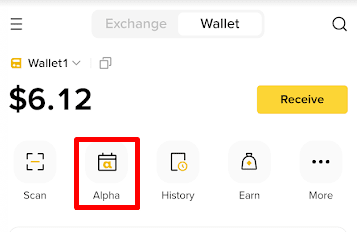
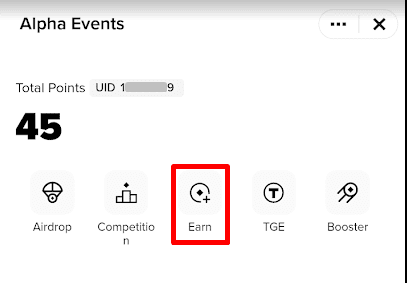
In addition to discovery and trading, Binance Alpha also offers an option for users who want to explore earning opportunities through decentralized finance. This feature is called the Binance Alpha Earn Hub.
The Alpha Earn Hub allows users to provide liquidity to selected pools on PancakeSwap V3 directly from their Binance Wallet interface. Instead of manually connecting wallets, switching platforms, and configuring pools, users can access liquidity options in a more streamlined way.
Liquidity provision is a fundamental concept in DeFi. Instead of simply holding tokens, users deposit pairs of assets into liquidity pools. These pools are then used by traders to swap tokens. In return, liquidity providers earn a share of the trading fees generated by the pool.
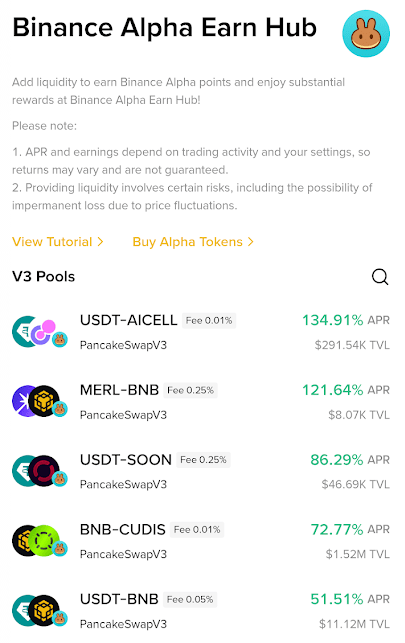
However, it is important to understand that liquidity provision is not the same as risk-free income. It involves several important risks.
Understanding the Risks of Liquidity Provision
One of the main risks of providing liquidity is something called impermanent loss. This happens when the price of the tokens in the pool changes relative to each other. If prices move significantly, liquidity providers may end up with less value than if they had simply held the tokens.
Another risk comes from smart contracts. Liquidity pools are powered by code. If a vulnerability is discovered, funds can be lost. Even well-audited protocols can experience issues.
There is also market risk. If a project fails, demand disappears, or liquidity dries up, it can become difficult or impossible to exit positions.
Because of these risks, the Alpha Earn Hub is designed for users who already understand DeFi mechanics or are willing to learn carefully.
Binance does not present the Earn Hub as guaranteed income. Instead, it is offered as an optional tool for users who want to explore decentralized financial systems.
Why Binance Alpha Exists
Binance Alpha is not just a product. It is a strategic experiment.
Crypto markets evolve quickly. New narratives, technologies, and ecosystems appear constantly. Traditional listing processes cannot always keep up with the speed of innovation.
By creating Alpha, Binance built a structured discovery layer. Instead of leaving early-stage exploration entirely to random social media trends, Alpha organizes attention in a more transparent and controlled way.
This benefits several groups:
Users get earlier access to new ideas
Builders gain exposure to a large audience
Binance observes how projects perform in real markets
This structure turns Alpha into a kind of laboratory for Web3.
Reffeeral discount section
Trading fees are often underestimated, but over time, they can have a significant impact on your overall performance. One of the simplest ways to improve long-term results is to reduce the amount you pay in fees.
If you register on Binance using my referral link or by entering my referral code DZI022 you may be eligible for exclusive trading fee discounts, depending on your region and Binance’s current referral program settings.
You can sign up using my link here:
Click here to register with my referral benefits
The intended benefits include:
Up to 30% discount on Spot trading fees
Up to 20% discount on Futures trading fees
These discounts are designed to lower your trading costs and help you keep more of your capital over time.
Please note that the exact discount may vary based on your location, account type, and Binance’s active referral conditions. Binance will clearly display the final fee structure before you complete your registration, so you can always verify the exact terms in advance.
Using a referral link does not change your trading experience, available features, or account functionality—it only affects the fees you pay.
Responsible Use of Binance Alpha
Binance Alpha offers powerful tools, but power always comes with responsibility.
Because Alpha focuses on early-stage tokens, it naturally attracts speculation. Prices can move quickly. Social media hype can distort judgment. Fear of missing out can override logic.
This is why Binance consistently emphasizes education and transparency.
If you choose to use Binance Alpha, you should:
Research every project carefully
Understand the risks of on-chain trading
Avoid emotional decisions
Never invest more than you can afford to lose
Treat Alpha as a learning environment, not a casino
Users who approach Alpha with patience and curiosity often gain more value than those who chase short-term gains.
Examples of Tokens Featured on Binance Alpha
One of the strongest indicators of Binance Alpha’s relevance is the quality of projects that have already been featured on the platform. Over time, several notable tokens have appeared in the Alpha section, showing how the platform can function as an early discovery layer for emerging Web3 ecosystems.
Some examples include $ASTER , $ORDER , and $OWL . These projects were introduced to users at an early stage, allowing the community to explore them before they gained wider exposure.
A particularly important case is ASTER. After being featured on Binance Alpha, ASTER was later officially listed on the Binance Exchange, including both Spot trading and Futures trading. This progression demonstrates how Binance Alpha can act as a pre-listing discovery environment, even though it does not guarantee that every featured project will follow the same path.
It is important to note that not all Alpha tokens will reach major exchanges. Many projects remain experimental, and some may never be listed. However, these examples show how Binance Alpha can give users early access to projects that later become more widely recognized.
By tracking how these tokens evolve over time, users can gain valuable insights into how early-stage Web3 projects grow, attract liquidity, and build communities—one of the core educational goals of Binance Alpha.
Final Conclusion
Binance Alpha is best understood as a discovery platform rather than a traditional exchange feature. It exists to introduce users to early-stage Web3 projects before they become mainstream.
Unlike the Binance Exchange, which focuses on listed assets, deep liquidity, and stability, Alpha focuses on innovation, exploration, and learning. It allows users to interact with projects at their earliest stages, when ideas are still forming and communities are still growing.
Through features like spotlight windows, Quick Buy, Anti-MEV protection, Alpha Points, airdrops, TGEs, and the Earn Hub, Binance Alpha creates a complete early-access ecosystem.
At the same time, Alpha is not safe. It is not predictable. And it is not guaranteed.
Its true value lies in understanding how new systems emerge—not in chasing fast profits.
If used responsibly, Binance Alpha can help users become more informed, more aware, and more prepared for the future of Web3.