
Web3 apps are becoming more serious. They’re no longer just demos or experiments—they’re handling real users, real content, and real value. As this shift happens, one requirement becomes unavoidable: reliable storage. Images, videos, datasets, user logs, and save files all need to load fast and stay available without relying on centralized servers. 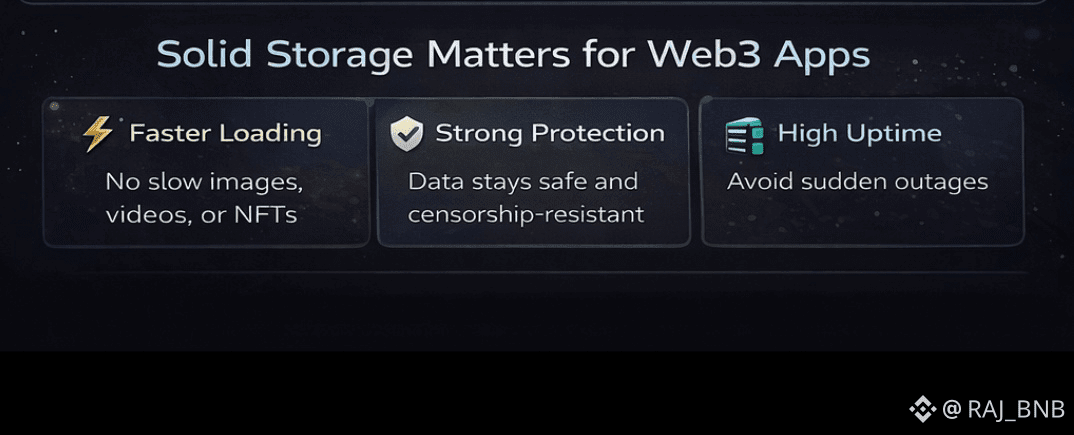
This is where Walrus Protocol fits in. Walrus is built on the Sui blockchain and is designed to store large, unstructured data using blob storage. Instead of keeping full copies everywhere, Walrus uses erasure coding—splitting files into pieces and distributing them across the network. Even if some pieces go missing, the data can still be reconstructed. That’s what makes decentralized storage practical under real-world pressure.
The $WAL token adds the economic layer that keeps the system running: storage payments, incentives for nodes, and governance for long-term decisions. Rather than chasing short-term attention, Walrus prioritizes durability, efficiency, and sustainability—qualities that real applications depend on. 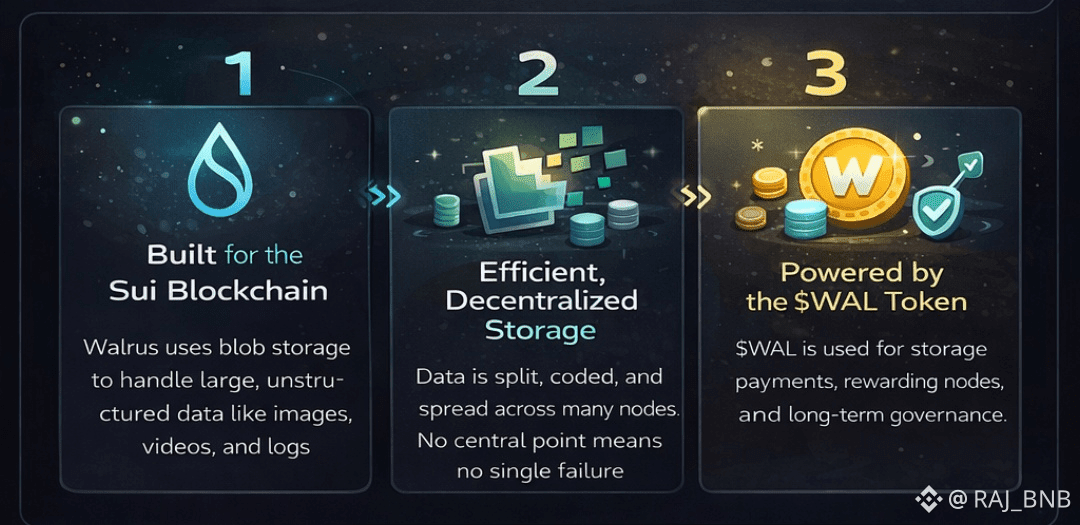
Infrastructure isn’t loud, but it’s what lasts. If Web3 is going to scale, it needs storage built for reality, not demos.
@Walrus 🦭/acc , track $WAL and see how #walrus is building the foundations of usable Web3.


