
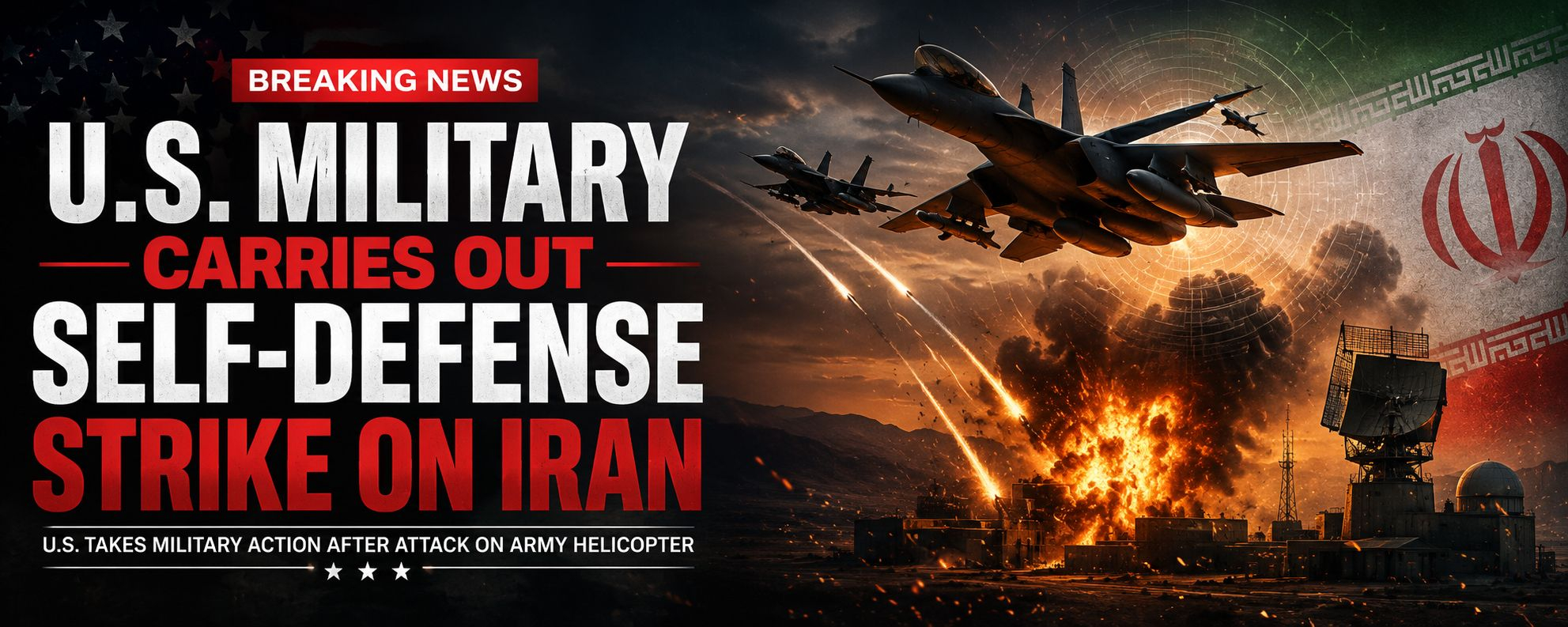
Tensions in the Middle East escalated sharply after the United States military confirmed that it had launched what it described as “self-defense” strikes against Iranian targets. The operation followed the reported downing of a U.S. Army Apache helicopter near the Strait of Hormuz, an incident Washington attributed to Iranian actions.
According to U.S. Central Command (CENTCOM), the strikes targeted Iranian air-defense systems, radar installations, and military infrastructure believed to pose a threat to American personnel and regional security. U.S. officials characterized the response as “measured” and “proportional,” emphasizing that the objective was to protect U.S. forces rather than initiate a broader conflict.
The strike marks one of the most significant direct military confrontations between the United States and Iran in recent months. The incident comes amid already heightened tensions surrounding maritime security in the Strait of Hormuz, a strategic waterway through which a substantial portion of the world's oil supply passes.
Iran has strongly condemned the attacks and warned that any further military action could provoke a decisive response. Reports indicate that regional military forces have been placed on heightened alert as fears grow over the possibility of a wider confrontation involving neighboring countries and allied groups.
Financial markets reacted quickly to the news, with oil prices moving higher as investors assessed the risk of supply disruptions in the Gulf region. Analysts warn that continued escalation could increase volatility across global energy and financial markets.
As diplomatic channels remain under pressure, the international community is closely monitoring developments, urging both Washington and Tehran to exercise restraint and avoid actions that could further destabilize the region. The coming days may prove crucial in determining whether the latest exchange remains limited or develops into a broader geopolitical crisis.