Over the past few weeks, I have been researching a number of AI related blockchain projects, and one thing became very clear to me:
Most AI crypto narratives are focused on hype, not infrastructure.
everyone talks about smarter models, AI agents, automation, and trillion dollar industries. but very few projects are actually addressing the economic structure behind artificial intelligence.
That is where OpenLedger caught my attention.
The more I studied the project, the more I realized OpenLedger is not trying to compete in the AI chatbot race. Instead, they seem focused on solving a much deeper problem:
Who actually gets paid when AI creates value?
I think this question will become one of the most important discussions in the entire AI industry over the next few years.
Today’s AI ecosystem is heavily centralized. Large companies train models using massive amounts of public and private data, but the people contributing to that intelligence rarely receive ownership, attribution, or long-term economic participation.
I checked how most AI systems operate today, and the structure is surprisingly one-sided. Data flows into centralized models, value gets extracted at scale, and contributors remain invisible.
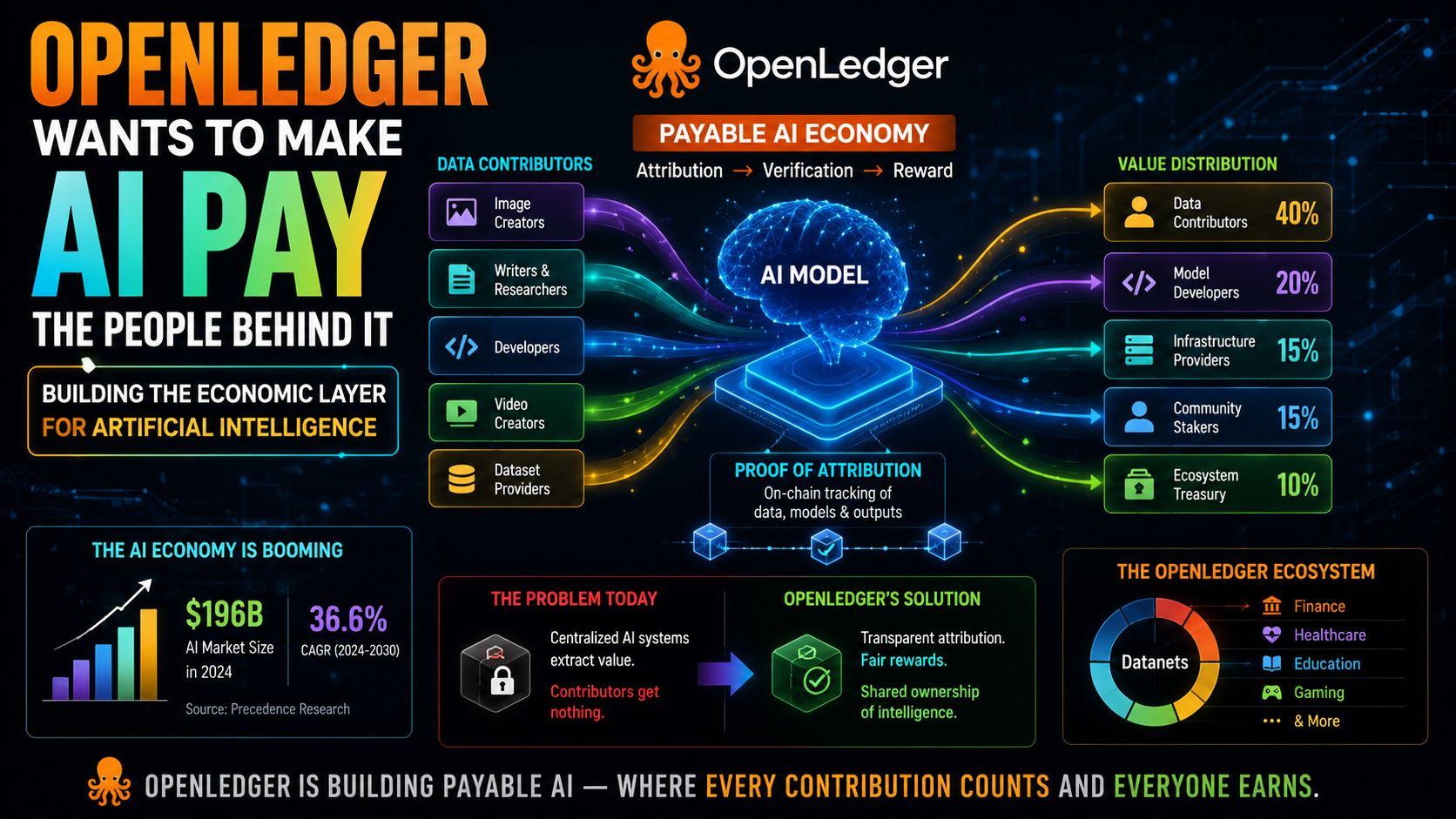
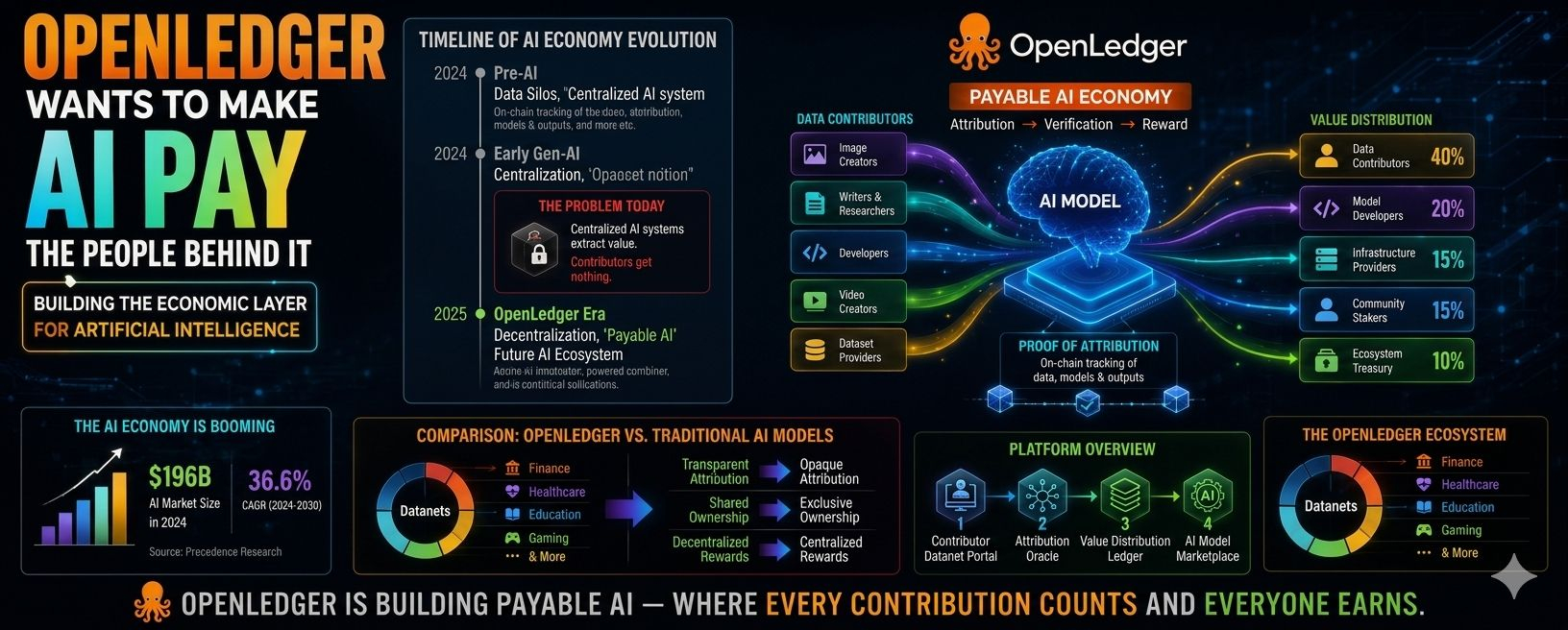
OpenLedger appears to be challenging that model through what they call “Payable AI.”
At first, I thought this was just another marketing phrase. But after going deeper into their architecture, I started understanding the bigger picture.
Their core idea revolves around Proof of Attribution a system designed to track where AI intelligence comes from and how value should be distributed. Instead of treating AI like a black box, OpenLedger wants datasets, contributors, model activity, and outputs to become traceable on-chain.
In simple terms, they are trying to build an economic layer for AI.
That distinction matters.
Most AI projects are competing for attention.
OpenLedger seems to be competing for infrastructure relevance.
From my perspective, this is where the project becomes genuinely interesting. AI models will continue evolving rapidly, but the long-term battle may not be about who builds the smartest model. It may be about who controls attribution, ownership, and economic participation.
I also looked into OpenLedger’s broader ecosystem design, especially its “Datanets” structure. The concept of community-owned datasets could become important if regulators and creators continue pushing for more transparency around AI training sources.
Right now, the AI industry benefits enormously from opacity. Most users have little visibility into how models are trained or who contributed to the intelligence behind them.
OpenLedger is attempting to introduce transparency into that system.
Of course, I’m not saying the project is guaranteed to succeed. The AI infrastructure sector is becoming increasingly competitive, and execution will matter far more than narrative alone. Adoption, developer activity, and real ecosystem usage will ultimately determine whether this model can scale.
But after researching the project closely, I think OpenLedger is targeting a real structural problem rather than simply attaching “AI” branding to blockchain technology.
My takeaway is this:
The next phase of AI may not be defined only by intelligence growth.
It may be defined by economic redesign.
And if the industry eventually moves toward attribution-based AI economies, projects building ownership infrastructure today could become significantly more relevant than the market currently realizes.