

The part I keep noticing with OpenLedger is not whether the trading agent can find a route.
It is what happens to that route while the system is still getting there.
A builder can vibe code an agent, launch it through OctoClaw, set the cloud config, and watch the agent choose a path that looks clean. The quote is fresh. The vault action looks reasonable. The bridge path makes sense. From the first screen, it feels like the agent has done the hard part.
But the route is not finished when the agent likes it.
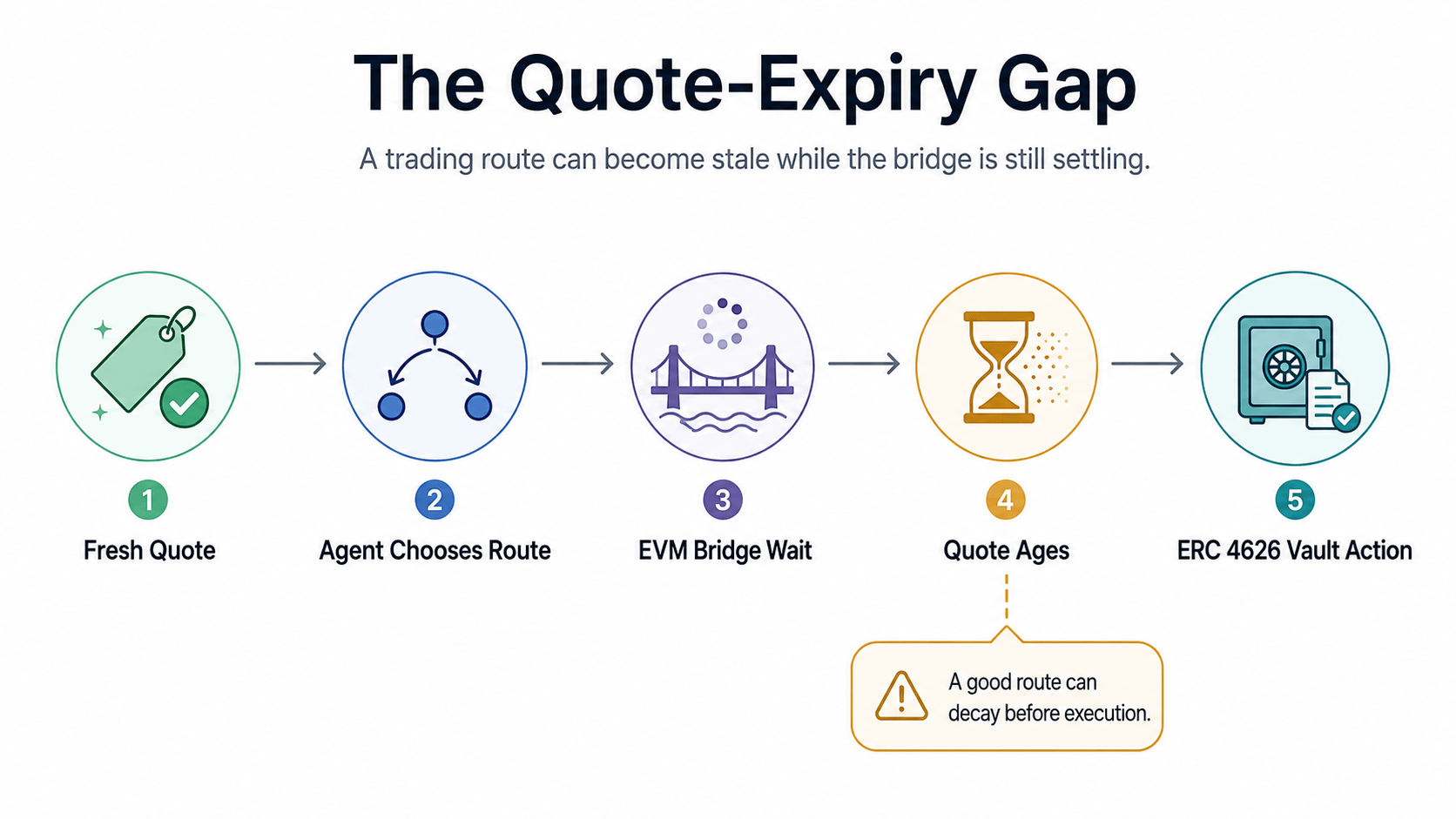
That is the gap I would watch. A trading agent can pick a route at one moment, then the EVM bridge adds waiting time before the capital is actually ready for the ERC 4626 vault action. During that wait, the original quote can stop being a real promise and become old context.
That is a small problem until the user sees the final position.
The agent may have chosen the route correctly when it started. The bridge may have behaved normally. The vault may have accepted the action. Still, the user can end up looking at a share result that does not feel like the route they approved.
That is not a dramatic failure. It is worse in a quieter way. Everything can look technically successful, but the user’s question is still valid: did the agent execute the route I saw, or did it execute what was left after the wait?
This is where OpenLedger feels more specific than a normal agent story. OctoClaw makes launch cleaner, but launch speed does not solve quote freshness. Cloud config can define limits, but limits do not mean much if the quote that informed the decision aged out before the vault move. ERC 4626 makes the final result harder for a normal user to read because the asset becomes shares after the route settles.
The visible consequence lands on the builder.
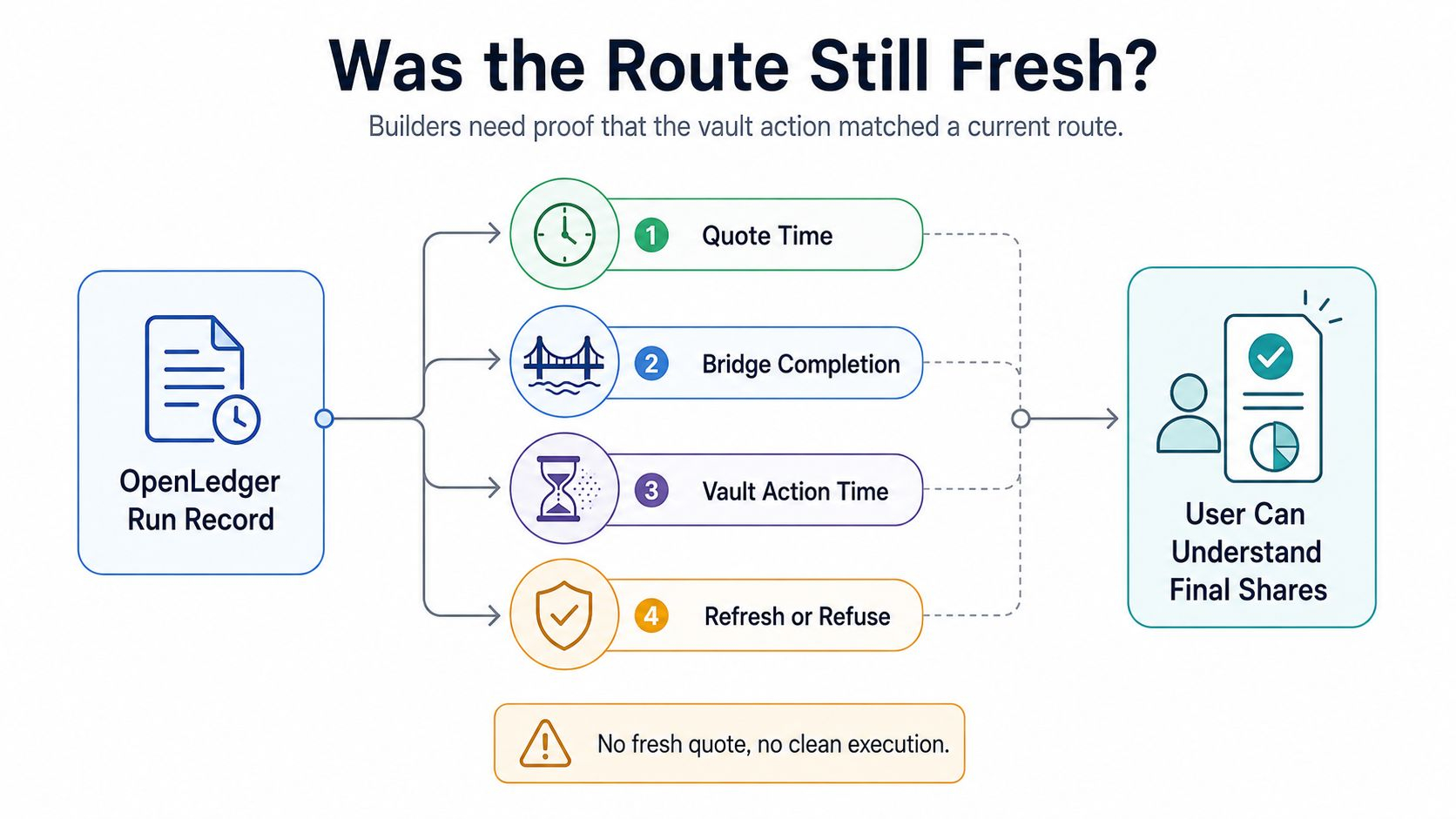
A user asks why the vault shares look different from the route preview. The builder has to answer without hiding behind the word “completed.” They need to show whether the quote was still valid when the bridge leg finished, whether the cloud config allowed execution after the delay, and whether the vault action used a refreshed view or the old one.
That should be a simple answer.
If it is not, the agent becomes harder to trust even when it behaved exactly as coded. The user does not care that the first quote was good. They care that the final action matched something current enough to defend.
This is why I think the quote-expiry gap matters. It is one of those boring production details that can decide whether a trading agent feels safe. A route can be good at 10:01 and not good enough at 10:04. The bridge wait is not just a delay. It is time where the reason for the trade can decay.
A serious OpenLedger run should make that decay visible. I would want the record to show the quote time, the bridge completion time, the vault action time, and whether the agent refreshed before touching the vault. Not a huge log. Just enough to prove the route did not survive on memory.
The harder part is refusal. If the quote goes stale, the agent should be able to stop cleanly even if everything else is ready. That can look annoying to the user because no position appears. But I would rather see a refused vault move than a completed run built on an expired view.
This is also where $OPEN fits only if it stays attached to the run record. If OpenLedger activity creates usage, cost, or attribution, the useful record should not only say the agent ran. It should show whether the paid agent work reached execution under a fresh route or stopped because the quote no longer matched the bridge and vault state.
That is the pressure line for me.
Once an OpenLedger trading agent waits on a bridge before touching an ERC 4626 vault, the quote is not background detail.
It is the thing that decides whether the final shares still belong to the route the user thought they were taking.