

Honestly, i think the most quietly significant thing openledger has shown publicly isnt a technical breakthrough or a major protocol upgrade.
it's a video of an intern building a working AI support agent. without writing serious code. just... vibing their way through it.
i spent yesterday afternoon sitting with what that actually means and i cant stop thinking about one specific thing the gap it closes.
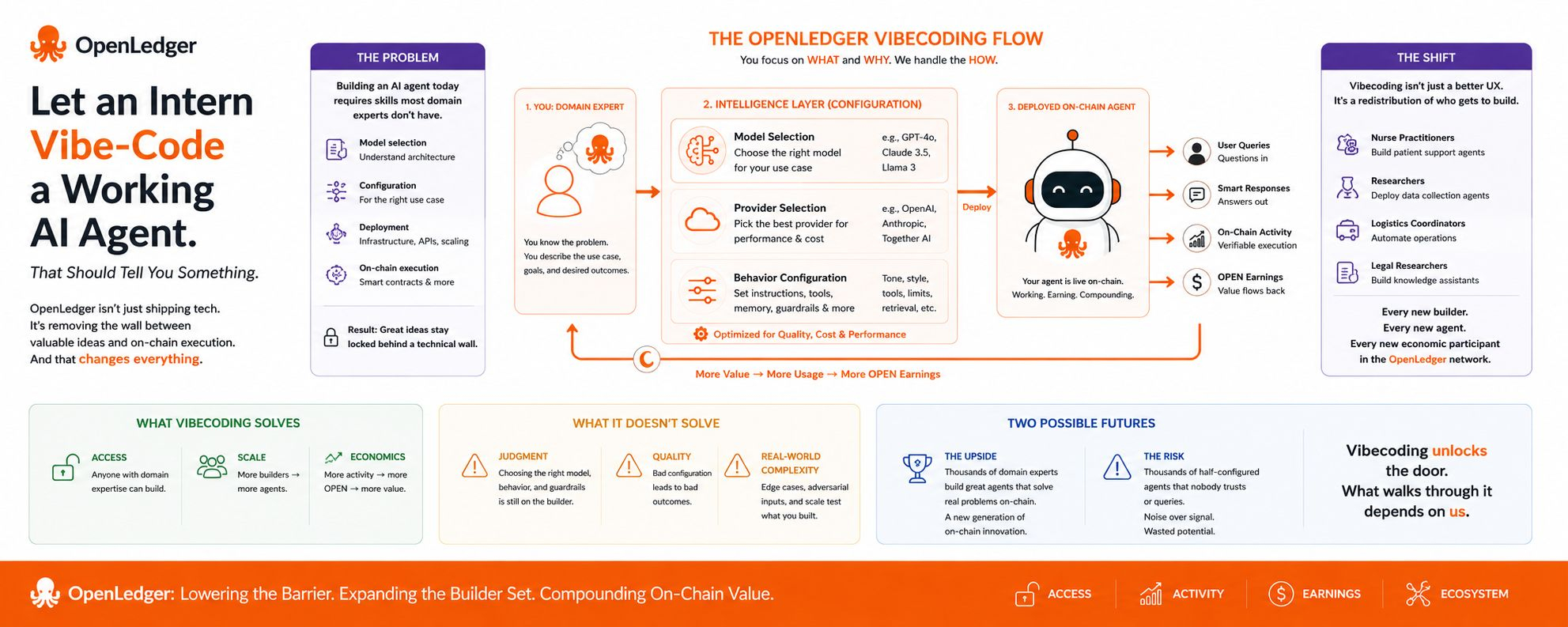
right now, building an AI agent that actually does something useful requires a very specific combination of skills. you need to understand model architecture well enough to choose the right one. you need to know how to configure it for your use case. you need to handle deployment, infrastructure, API calls, error handling. and if you want it on-chain which is where openledger lives you need to understand smart contract interactions on top of all of that.
most people with genuinely valuable domain knowledge dont have that skillset. a customer support specialist who knows exactly what a support agent should say and do... cant build one. a researcher who understands precisely what kind of data their field needs... cant deploy an agent to collect it. the idea exists. the execution stays locked behind a technical wall.
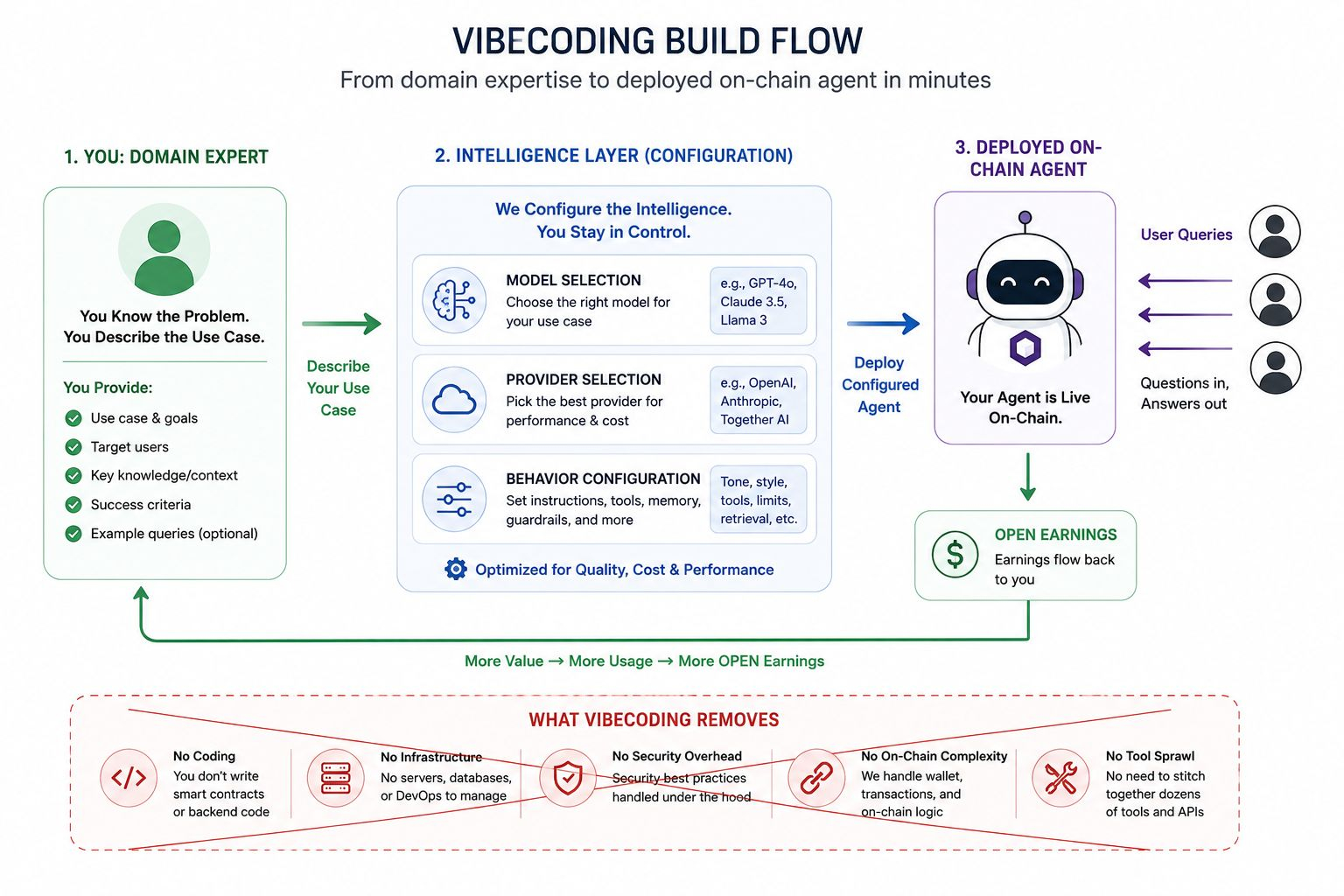
Vibecoding is openledger's answer to that wall.
the concept is simple. you describe what you want. you configure the intelligence layer — which model, which provider, what behavior. the platform handles the rest. deployment, on-chain execution, the infrastructure underneath. the builder focuses entirely on the what and the why. the platform handles the how.
what i find genuinely interesting here is that this isnt just a UX improvement. its a fundamental redistribution of who gets to build.
think about the ecosystem implications. right now the agents being deployed on any blockchain are built by developers. technical people. people who understand the stack. that's a small pool. if vibecoding actually works as described if a non-technical domain expert can genuinely deploy a working, useful agent that pool expands dramatically. suddenly the nurse practitioner, the logistics coordinator, the legal researcher... they all become potential agent builders. each one bringing domain expertise that no developer could replicate.
and because openledger's agents earn OPEN for their work on-chain, every new builder that vibecoding unlocks becomes a new economic participant in the protocol. more agents. more activity. more gas fees. more network value.
the compounding effect of lowering that barrier is real.
but here's the tension i've been sitting with since i watched that demo...
"building" an agent and building a good agent are two very different things. vibecoding lowers the barrier to the first one. it doesn't automatically solve the second.
an intern vibing their way to a support agent in a demo environment is one thing. that same agent handling real user queries, edge cases, adversarial inputs, high volume thats where the gap between "i built this in an afternoon" and "this is production ready" shows up fast.
the intelligence layer configuration matters enormously here. choosing the wrong model for your use case, setting the wrong behavioral parameters, failing to account for how the agent behaves when it hits a query it wasnt designed for none of that gets solved by making the building process easier. it just gets hidden until the agent is live and the failures start accumulating.
i dont think thats an argument against vibecoding. its an argument for being honest about what it solves and what it doesnt. it solves access. it doesnt solve judgment. and judgment knowing what a good agent actually needs to do and how to configure it to do that is still entirely on the builder.
the question i keep coming back to is whether the openledger ecosystem ends up with thousands of genuinely useful agents built by domain experts who finally have access... or thousands of half-configured agents built by people who had access but not enough context to use it well.
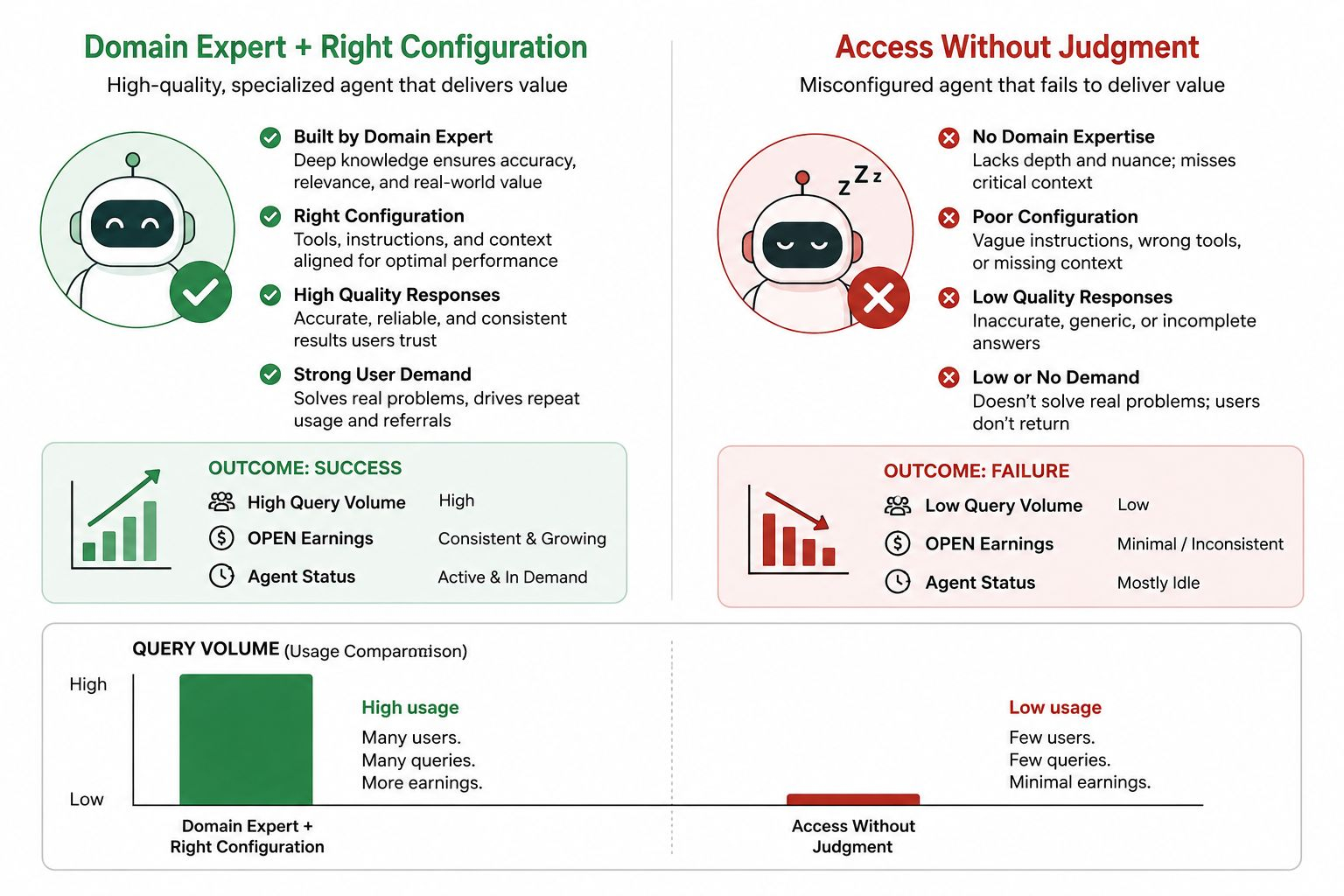
both outcomes are possible. and right now, only one of them gets talked about.
does vibecoding with OpenLedger unlock a generation of domain expert agent builders who transform what's possible on-chain, or does frictionless building just produce a long tail of underperforming agents that nobody queries??