
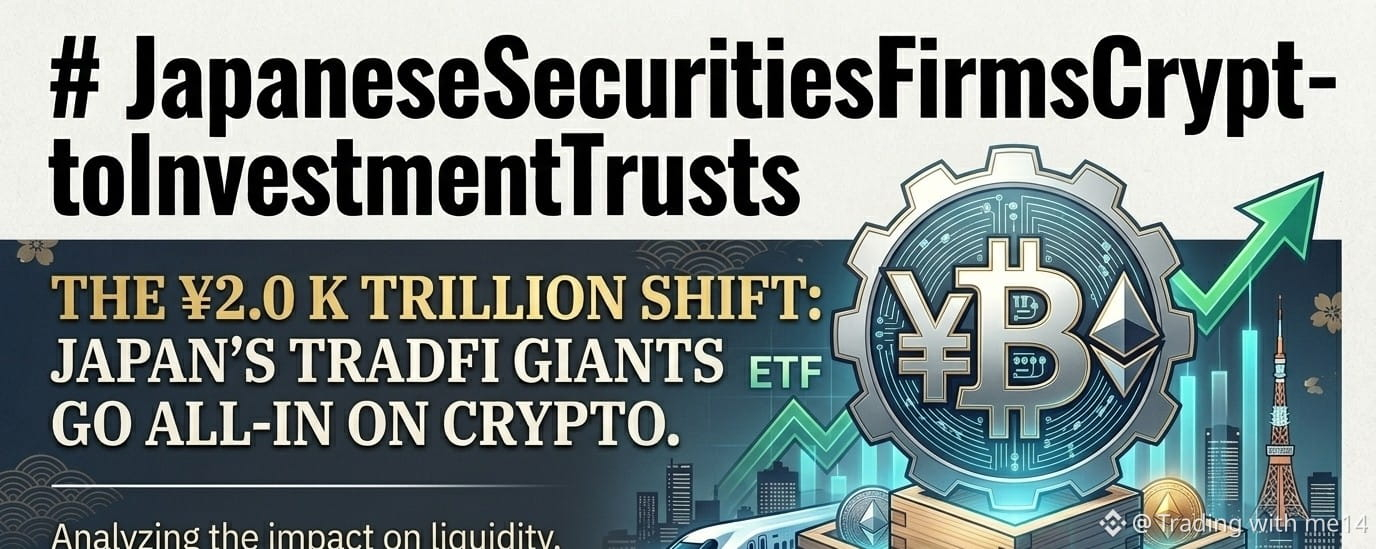
#JapaneseSecuritiesFirmsCryptoInvestmentTrusts This refers to the regulatory shift and market movement in Japan allowing traditional securities firms and institutional players to launch or invest in crypto-focused investment trusts (similar to ETFs or mutual funds). Japan, traditionally known for its strict and cautious approach to digital assets, is systematically opening the gates to institutional capital.
Here is a breakdown of why this topic is gaining major traction, the regulatory background, and the broader market implications.
1. The Core Catalyst: Regulatory Easing:
Historically, Japanese regulations under the Financial Services Agency (FSA) heavily restricted investment trusts from holding crypto assets directly. However, recent legislative pushes and economic strategies have paved the way for change:
•The "New Capitalism" Strategy: Japan’s government has actively integrated Web3 and digital transformation into its national economic strategy to spur growth.
•Permitting Direct Holdings: Regulatory revisions are systematically allowing certain investment funds and corporate entities to acquire and hold crypto assets directly, bridging the gap between traditional finance (TradFi) and digital markets.
2. Why Japanese Securities Firms are Moving In:
Major Japanese financial giants (such as SBI Holdings, Nomura, and Monex Group) are aggressively preparing for this shift for several key reasons:
•Massive Retail Savings: Japan sits on an immense pool of household financial assets (over ¥2,000 trillion, largely held in cash). Securities firms want to capture a slice of this capital by offering safe, regulated crypto exposure through familiar investment trust structures.
•Institutional Demand: Domestic corporate investors and pension funds face strict compliance mandates. They cannot hold raw crypto on a digital exchange, but they can invest in a regulated investment trust managed by a licensed securities firm.
•The Global ETF Domino Effect: Following the massive success of spot Bitcoin and Ethereum ETFs in the US, Hong Kong, and Europe, Japanese institutions are feeling a strong sense of FOMO (Fear Of Missing Out) and are pressuring local regulators to keep them competitive globally.
What to Watch Next:
Keep a close eye on the official announcements from Japan's FSA regarding the exact timeline for the first product approvals. The entry of Japanese mega-banks and brokerage houses into investment trusts will likely trigger a competitive race across Asia to capture institutional digital asset flows.
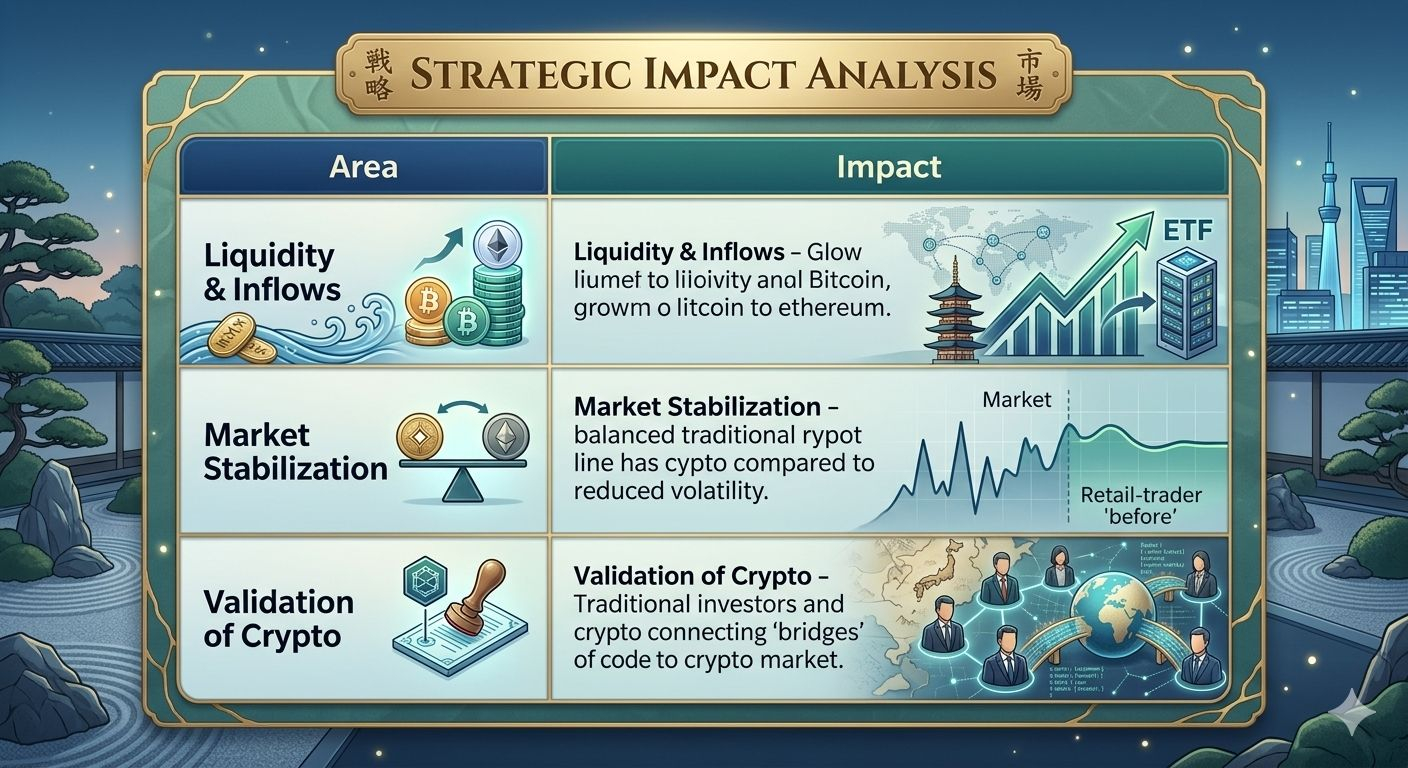
#JapaneseSecuritiesFirmsCryptoInvestmentTrusts #BerkshireHeavilyIncreasesAlphabetStake