


Crypto is no longer trading in isolation. What we are witnessing is a structural shift where macro forces, particularly geopolitics, are becoming the dominant drivers of volatility, liquidity, and overall market sentiment.
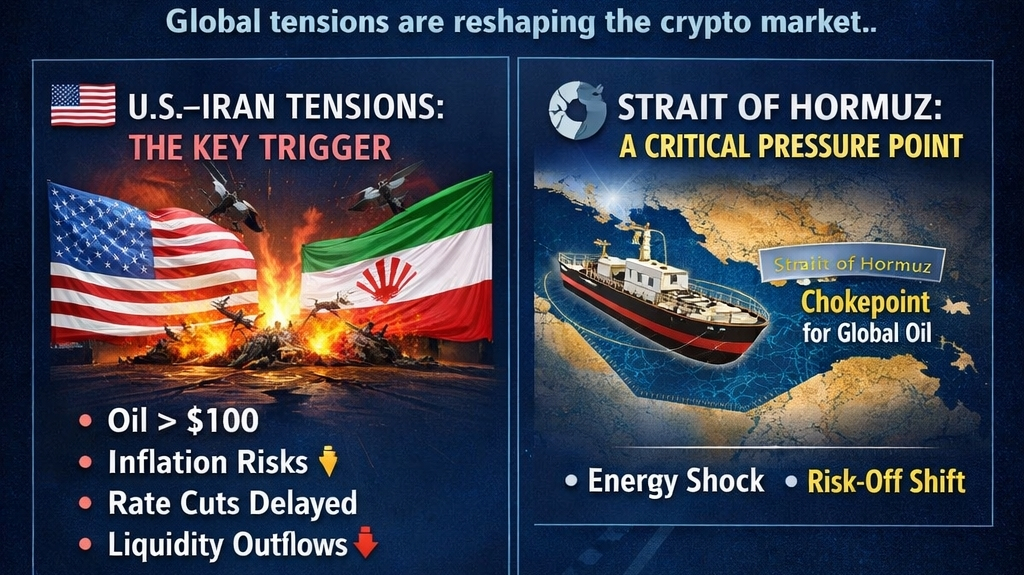
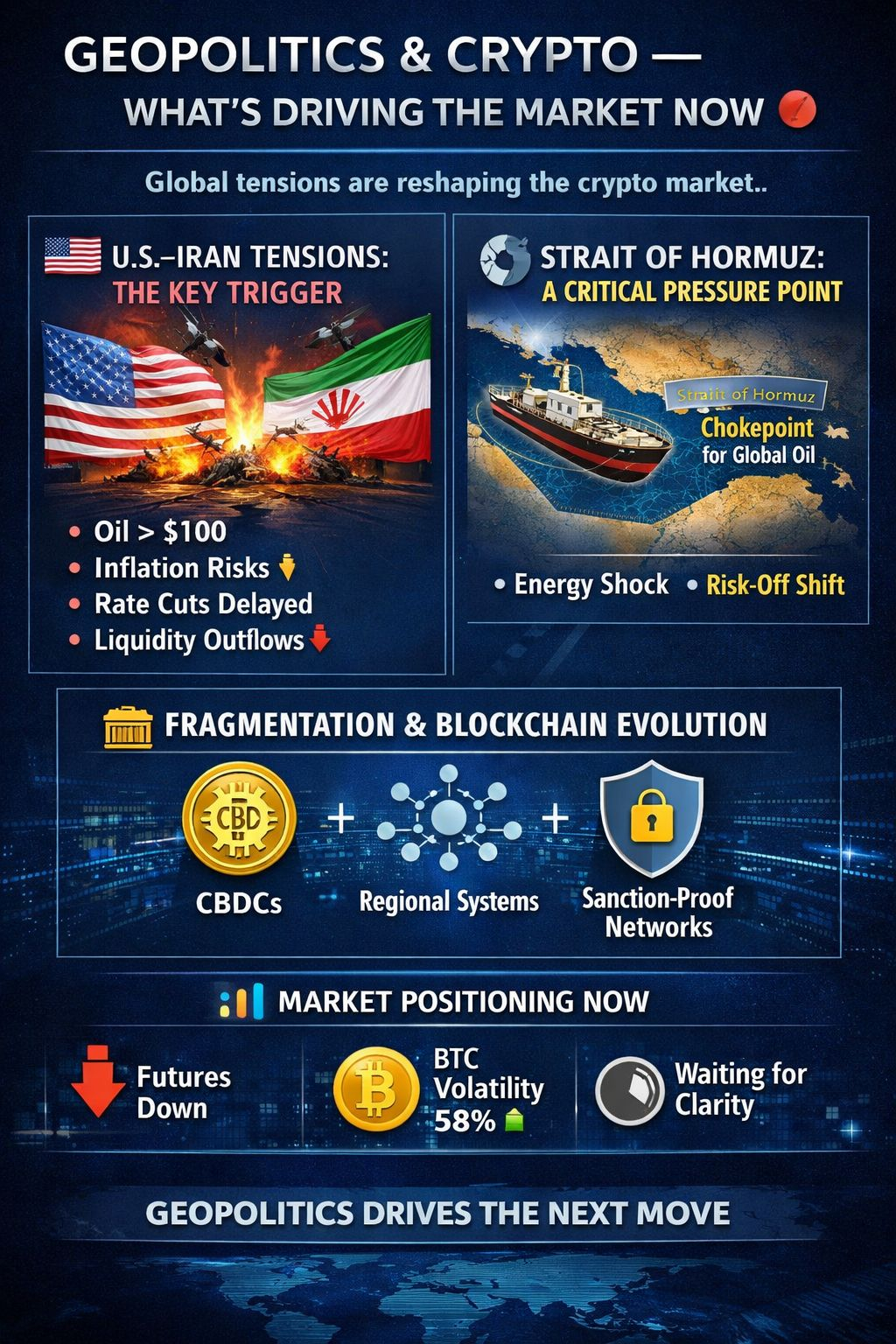
Rising tensions between the United States and Iran have introduced a new layer of uncertainty into global markets. This development goes beyond political headlines, as it directly influences capital flows and investor behavior. Any escalation in this dynamic has the potential to push energy prices higher, sustain inflationary pressure, delay expectations of monetary easing, and ultimately reduce liquidity available to risk assets such as cryptocurrencies.
At the center of this geopolitical sensitivity lies the Strait of Hormuz, a critical artery for global oil supply. Disruption in this region would likely trigger a rapid increase in energy prices, reinforcing inflation expectations and tightening financial conditions worldwide. In such an environment, markets typically shift toward a risk-off stance, where capital moves away from volatile assets, including crypto, in favor of more stable instruments.
Beyond immediate conflict risks, a deeper structural transformation is underway. Geopolitical fragmentation is accelerating the development of parallel financial systems, including central bank digital currencies, regional settlement networks, and sanctions-resistant payment infrastructure. This evolving landscape presents both opportunities and challenges for the crypto industry. On one hand, it strengthens the relevance of decentralized systems as alternatives to traditional finance. On the other, it introduces increasing regulatory fragmentation, which could reshape liquidity flows and market structure over time.
Current market signals already reflect a cautious stance among participants. A decline in futures open interest indicates reduced leverage and risk appetite, while Bitcoin’s implied volatility rising to around 58% highlights growing uncertainty. Price action remains relatively constrained, suggesting that the market is in a holding pattern, waiting for clearer direction from global developments.
The broader implication is clear: crypto is entering a phase where understanding macroeconomic and geopolitical dynamics is essential. Market behavior is no longer driven solely by internal factors such as adoption or technological progress, but increasingly by external forces including global liquidity conditions, energy markets, and geopolitical stability.
For now, the market appears to be recalibrating rather than retreating. Its next major move will likely be shaped by how these global tensions evolve and how financial conditions respond.
This content is for informational purposes only and does not constitute financial advice.
#USNFPExceededExpectations #USJoblessClaimsNearTwo-YearLow #ADPJobsSurge