
@MidnightNetwork ..I found myself scrolling late at night without a purpose, just passing time. The same cycle kept repeating; new chains, new tokens, new innovations that all begin to sound identical after enough exposure. After a while, the narratives blur together. Different names, same promises.
Then @MidnightNetwork appeared.
At first glance, it looked like something I had already seen many times before. Terms like zero-knowledge,data privacy, and ownership are everywhere in this space. They’re often used more as buzzwords than meaningful concepts. But this time, something felt slightly different. It didn’t try to grab attention aggressively. No loud claims. No exaggerated positioning. Just a quieter presence.
That alone made me pause.
Most blockchains today operate on full transparency. Every transaction, every interaction, every movement is visible by default. In theory, this transparency builds trust. If everything is visible, everything is verifiable. That idea made sense early on.
But reality is more complicated.
Not everyone wants their financial activity exposed. Businesses need confidentiality. Individuals don’t always understand the extent of what they reveal when interacting on-chain. We ended up building systems that are powerful, but also overly open.
@MidnightNetwork approaches this differently.
Its core idea revolves around zero-knowledge proofs, allowing users to verify information without revealing the underlying data. In simple terms, you can prove something is true without exposing what that something actually is. This preserves privacy while still enabling participation, transactions, and application development.
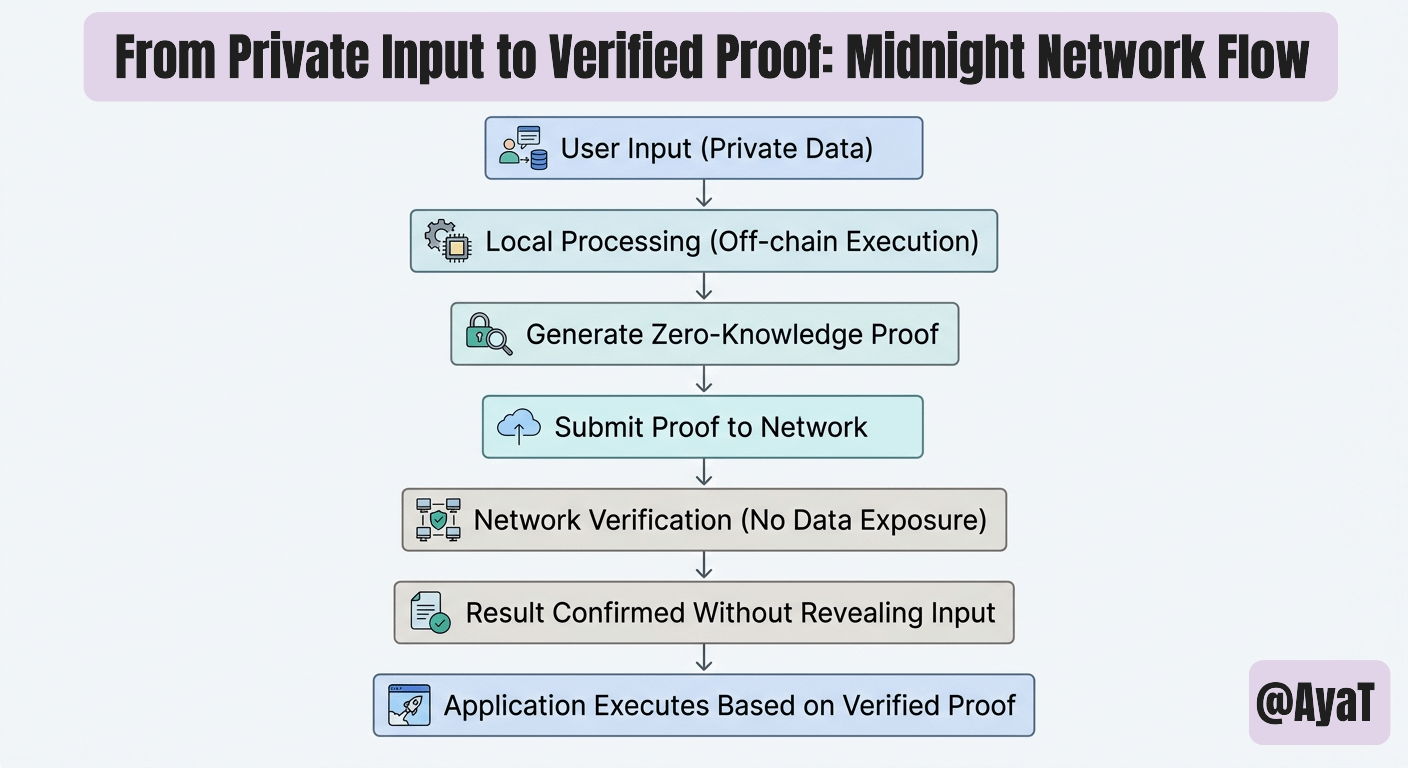
On a conceptual level, it’s clean. Almost elegant.
But crypto has never been driven purely by good design.
Over time, one pattern becomes clear: technically strong projects don’t always succeed. Some of them fail not because they lack merit, but because they never achieve meaningful adoption. That gap, between innovation and usage, is where many ideas quietly disappear.
@MidnightNetwork seems to sit directly in that gap.
Privacy is not a minor concern. It’s one of the most significant limitations in current blockchain systems. However, the real question isn’t whether the solution is valuable. The real question is whether users will actually make the switch.
And users, by nature, tend to resist change.
If something works well enough, most people stay with it. Even when better alternatives exist. Even when those alternatives offer stronger privacy or improved control. Convenience often outweighs improvement.
Then comes the network effect.
In crypto, ecosystems grow in cycles. Developers follow users. Users follow liquidity. Liquidity follows activity. Break that chain, and growth slows significantly. Without participants, even the most advanced system struggles to gain momentum.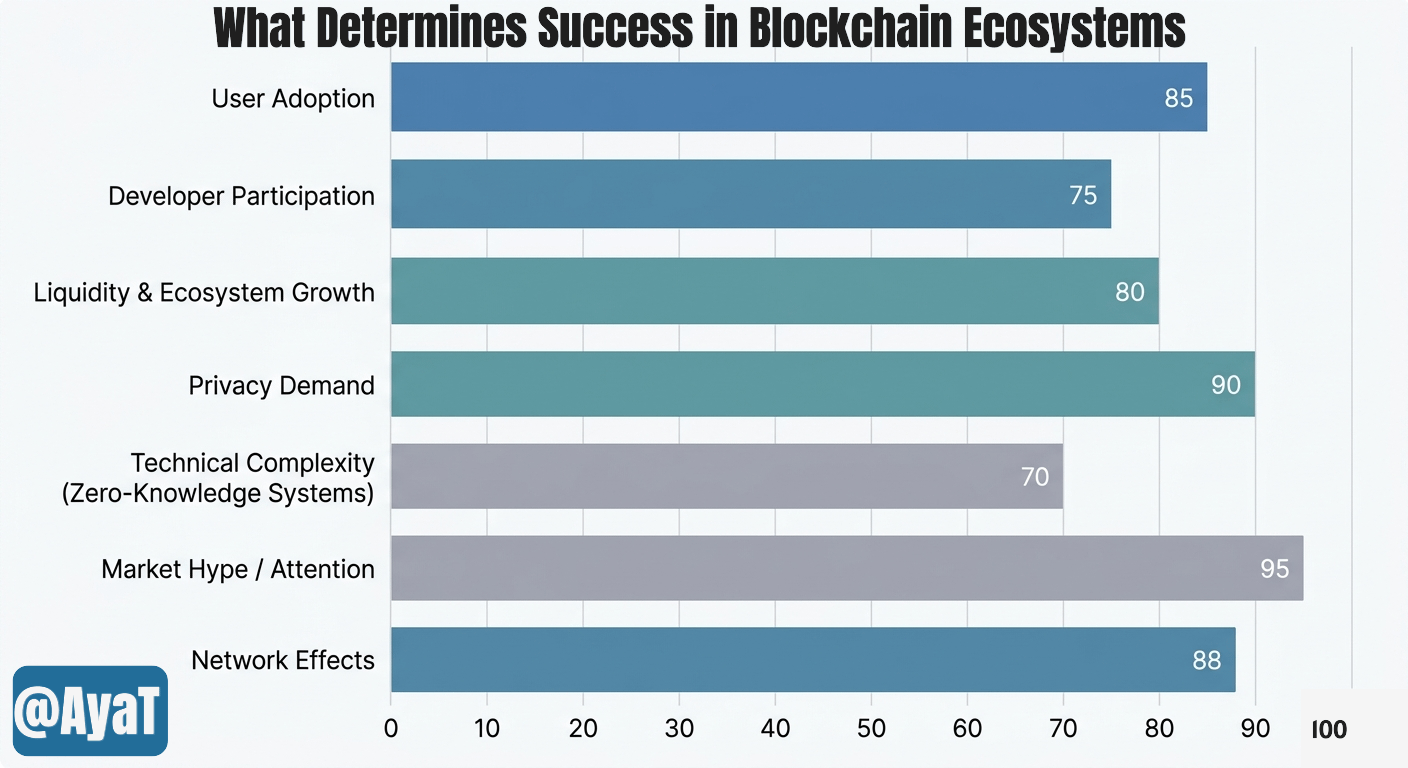
Midnight is entering this environment with that challenge in mind.
Being associated with the Card-ano ecosystem provides it with a certain level of structure and credibility. Card-ano is known for its research-driven approach, careful development, and slower pace. Some see that as a strength. Others see it as a limitation.
Midnight inherits that same measured, deliberate energy. It isn’t trying to rush into the spotlight. It’s building quietly.
But in a market dominated by hype cycles, silence can be a disadvantage.
Right now, attention is directed toward fast-moving narratives; AI tokens, meme-driven assets, and short-term speculation. In that environment, infrastructure-focused projects, especially those centered on privacy, rarely attract immediate interest. They don’t create excitement in the same way.
They matter, but they don’t shout.
And that makes visibility harder.
There’s also the technical reality to consider. Zero-knowledge systems are powerful, but they come with complexity. They demand computational resources, careful optimization, and real-world stress testing. Systems often behave differently under actual user load compared to controlled environments. Many networks have faced issues only after scaling beyond early usage.
Midnight will likely face similar pressures if it reaches that stage.
At the center of it all is one unavoidable factor: adoption.
Not design. Not theory. Not even capability. Just usage. Whether developers choose to build on it. Whether users decide to interact with it. Whether liquidity and activity begin to form around it.
Right now, that remains uncertain.
Still, there’s a sense that privacy will become more important over time, especially as blockchain systems integrate further with real-world applications. When that shift happens, solutions like Midnight may become more relevant than they appear today.
The timing, however, is unclear.
Being early can feel like building ahead of demand. Being late means competing in an already crowded space. Midnight currently feels early, positioned for a need that isn’t fully recognized yet.
That creates both opportunity and risk.
It doesn’t come across as hype-driven, nor does it feel insubstantial. In fact, it seems more grounded than many projects circulating today. But in crypto, being solid isn’t always enough. Progress often depends on attention, momentum, and timing.
And those are difficult to predict.
So the perspective stays somewhere in between.
The problem it addresses is real. The approach is thoughtful. The direction makes sense. But whether people will care enough to adopt it remains the open question.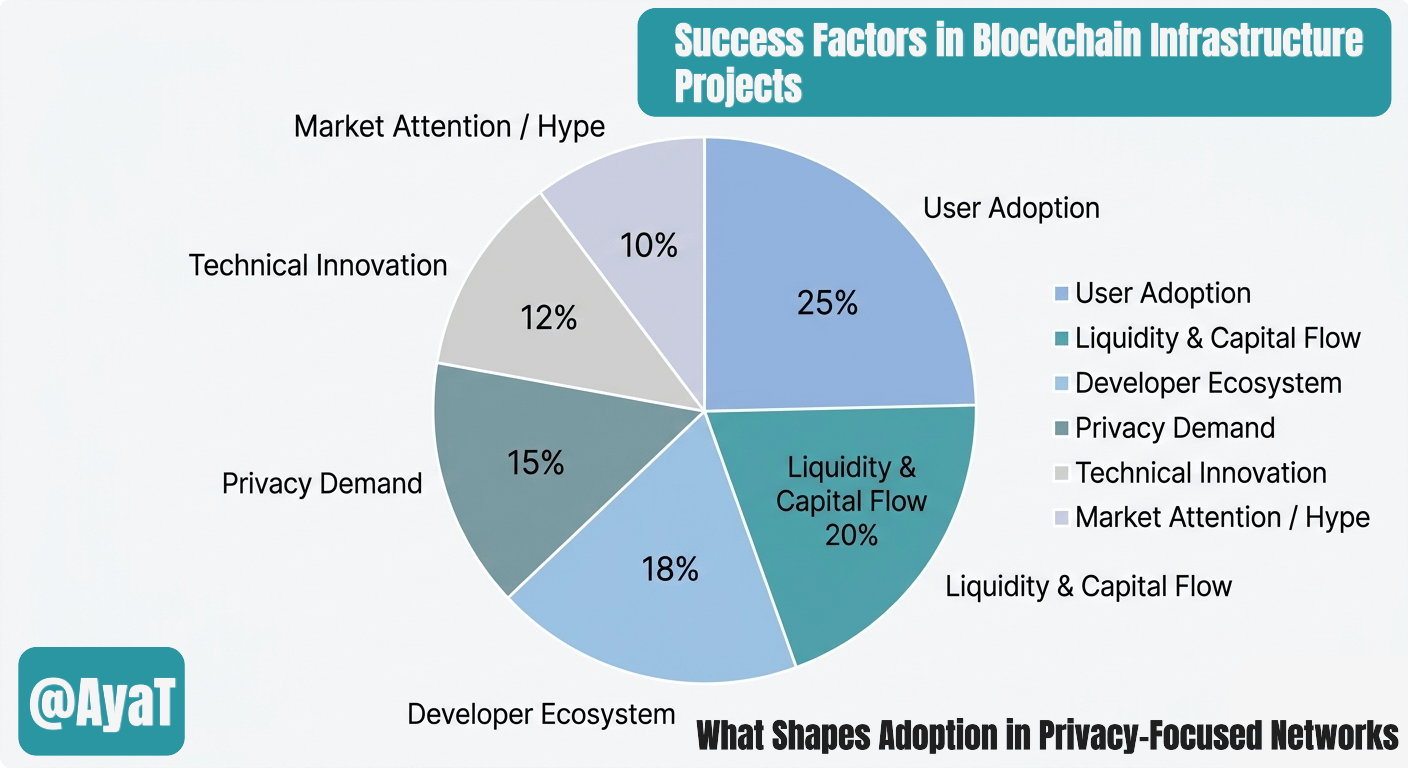
Because in the end, strong ideas don’t automatically rise to the top.
Visibility does. Liquidity does. Timing does.
@MidnightNetwork has the structure to matter. Whether it becomes widely used, or remains an underappreciated piece of infrastructure, depends on factors beyond its design.
That uncertainty is, perhaps, the most honest way to understand it.
It could quietly become part of the foundation of what comes next.
Or it could remain one of those well-built ideas that never fully found its audience.