
I keep coming back to how often the internet makes people repeat themselves.
Not literally with words, but with proof. You verify your identity in one place, confirm your wallet in another, reconnect accounts somewhere else, submit the same details again, and wait for another approval process that feels almost identical to the last one. For all the talk about speed in crypto, a surprising amount of the system still runs on repetition. That is the part of SIGN that feels more important to me than people usually make it sound.
Most people see SIGN and think of token campaigns, credential checks, or distribution tools. That is the easy interpretation, and it is not wrong. But I do not think it gets to the core of what is interesting here. What stands out to me is that SIGN is really addressing the cost of repeated trust. Not the fact that trust is hard, but the fact that it has to be rebuilt from scratch again and again.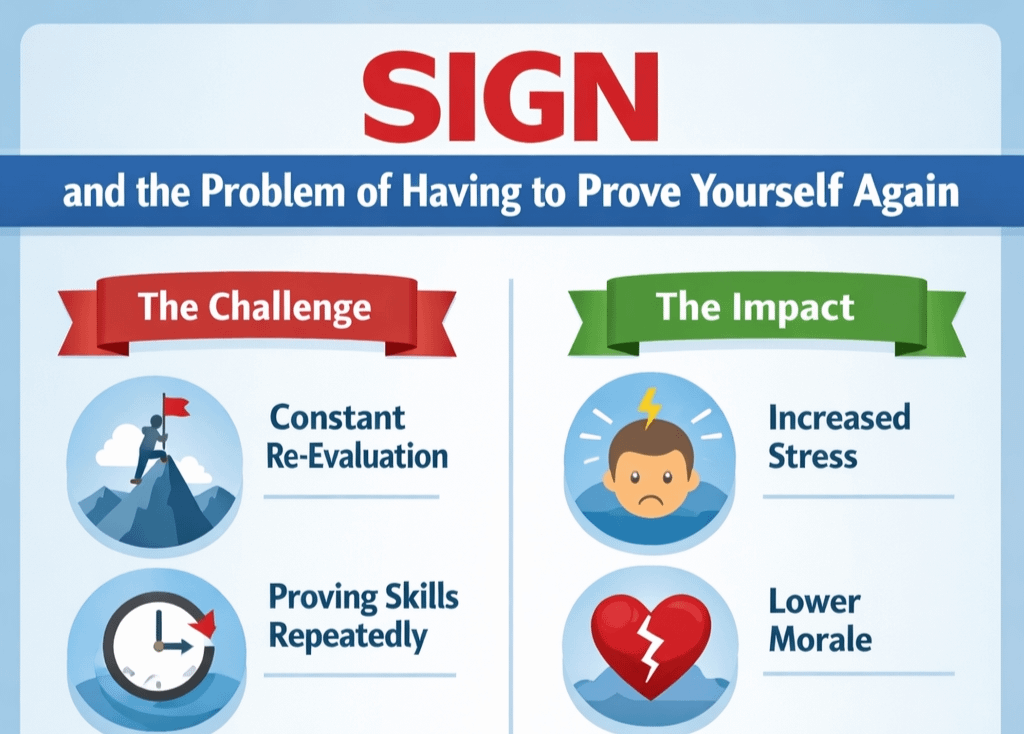
On the surface, the system looks straightforward. It lets someone create attestations, which is just a formal way of saying a record exists showing that some claim has already been checked. Maybe a person is eligible. Maybe a wallet belongs to a certain group. Maybe a user passed a requirement somewhere else. Another layer of the system helps turn that verified status into action, whether that means access, allocation, or distribution.
That sounds technical when people explain it too fast, but the idea itself is pretty simple. Instead of asking the same question every single time, the network tries to make a previous proof reusable. That changes more than convenience. It changes how digital systems coordinate. If trust can travel, even in limited ways, then platforms spend less time re-verifying the same people and more time actually doing something useful with that information.
That is where SIGN starts to feel bigger than its surface image. It is not just cleaning up workflow around tokens. It is trying to make trust portable. I think that matters because so much of digital infrastructure still behaves like every interaction is happening for the first time. A person may already be known somewhere, already checked somewhere, already validated somewhere, but none of that helps much if every new system forces the same starting line.
The token also makes a bit more sense from that angle. Usually I get skeptical the second a project starts talking about utility, because that word gets stretched beyond recognition in crypto. But here the role is at least easier to understand. If the network is being used to issue attestations, verify claims, store records, and coordinate how the system evolves, then a token can serve as the internal unit tied to that activity. Not just something sitting next to the product, but something meant to participate in its operation.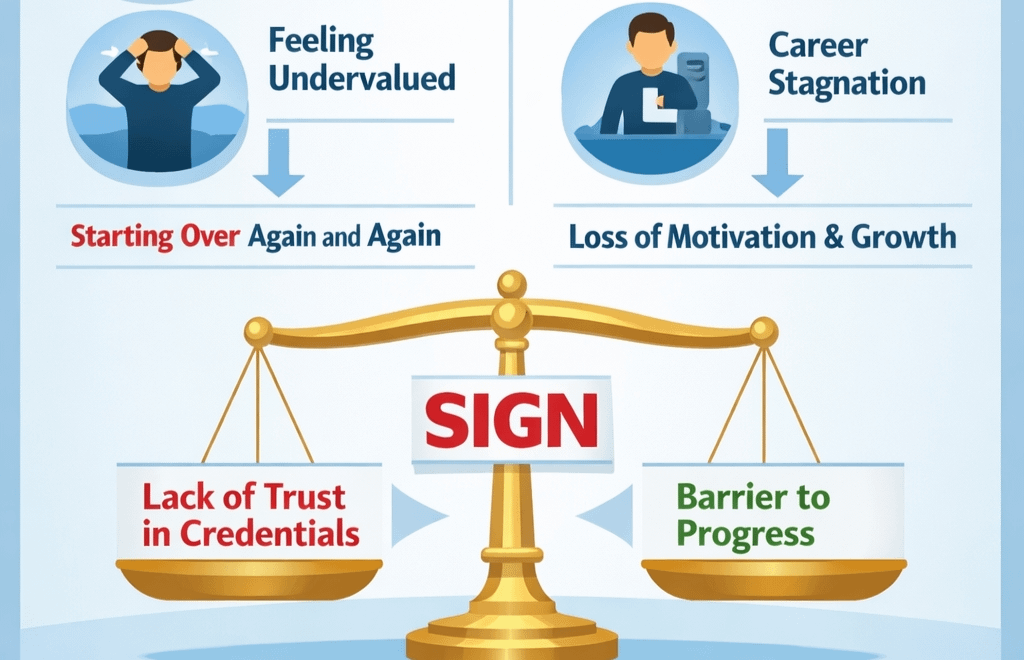 That does not automatically make the token strong or indispensable. There is still a real possibility that the infrastructure becomes useful while the token story ends up thinner than people hope. I think that is worth saying clearly. A system can matter without every part of its market narrative being equally durable.
What makes SIGN interesting right now is the wider shift happening around digital systems. More of the internet is moving toward environments where identity, access, compliance, reputation, and entitlement matter just as much as raw transactions. Stablecoins, tokenized assets, onchain communities, and even AI-linked systems all create the same pressure. They need ways to recognize trustworthy claims without redoing the entire trust process every time.
Still, this is not an uncomplicated good. The moment trust becomes portable, it can also become sticky. A reusable proof can reduce friction, but it can also harden categories around people in ways that are harder to escape. Who issues the proof starts to matter more. Who gets excluded matters more. What looks like efficiency can quietly become a new kind of gatekeeping if the rules behind it become too rigid.
That is probably the part I find most worth watching. SIGN is not just building a tool for smoother crypto operations. It is testing whether trust can move through digital systems with less repetition and less waste. That sounds almost boring at first, but I do not think it is. The internet got very good at moving information. It is still awkward at carrying proof from one place to another without asking people to start over. SIGN feels important because it is trying to work on that gap, and that gap is larger than it looks.