
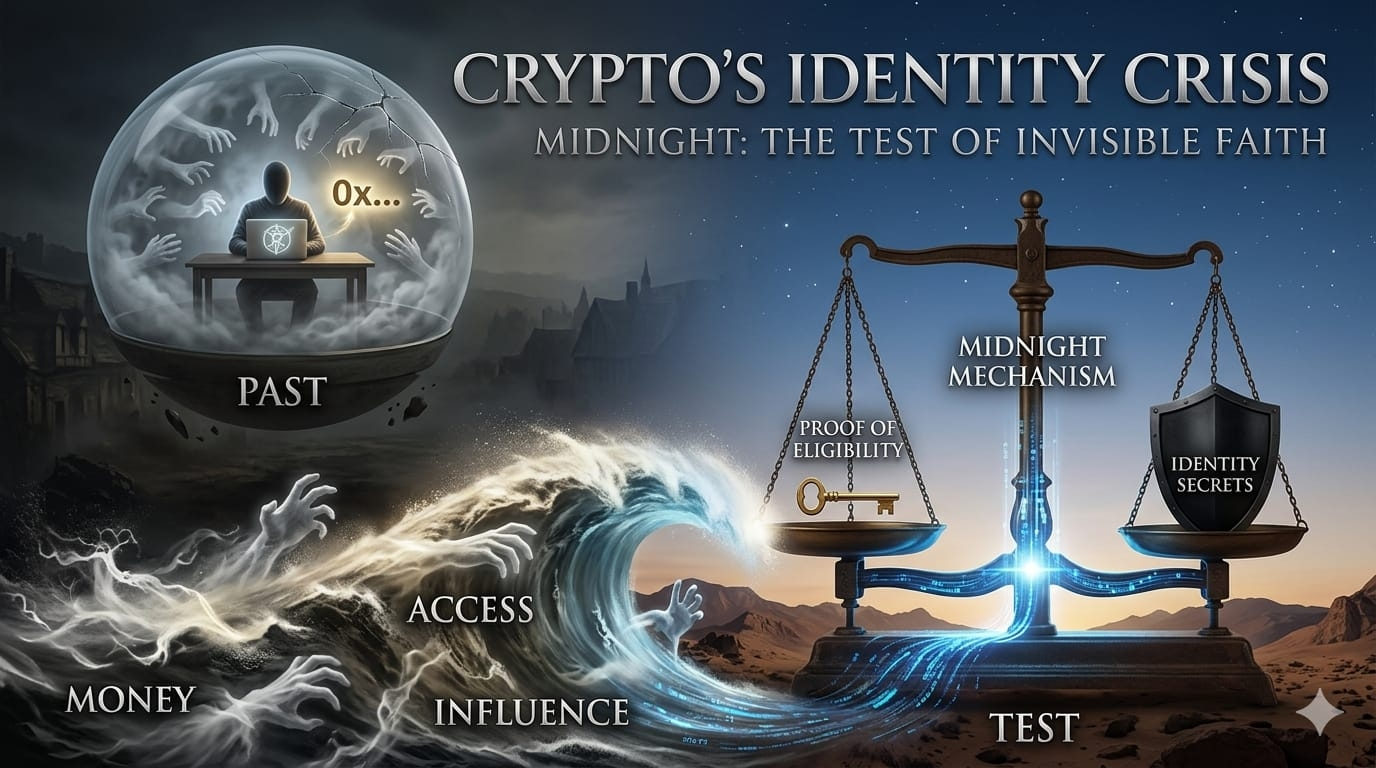
It’s weird… we talk so much about decentralization, ownership, privacy all the big words but when you actually use most systems, you still end up giving away more than you should. It’s almost like we didn’t really fix anything, we just changed the packaging.
That thought stuck in my head.
Later, I came across Midnight Network. At first, I didn’t think much of it. Another “privacy-focused” project… I’ve seen that story play out too many times. Either it’s too complicated to understand, or it sounds good but doesn’t really work when things get real.
So yeah, I was skeptical.
But I still gave it a few minutes.
And somewhere in the middle of reading about it, I realized it wasn’t really talking about privacy the same way others do. It wasn’t just “hide your data” or “encrypt everything.” It felt more like… rethinking why we share data in the first place.
That’s when it got interesting.
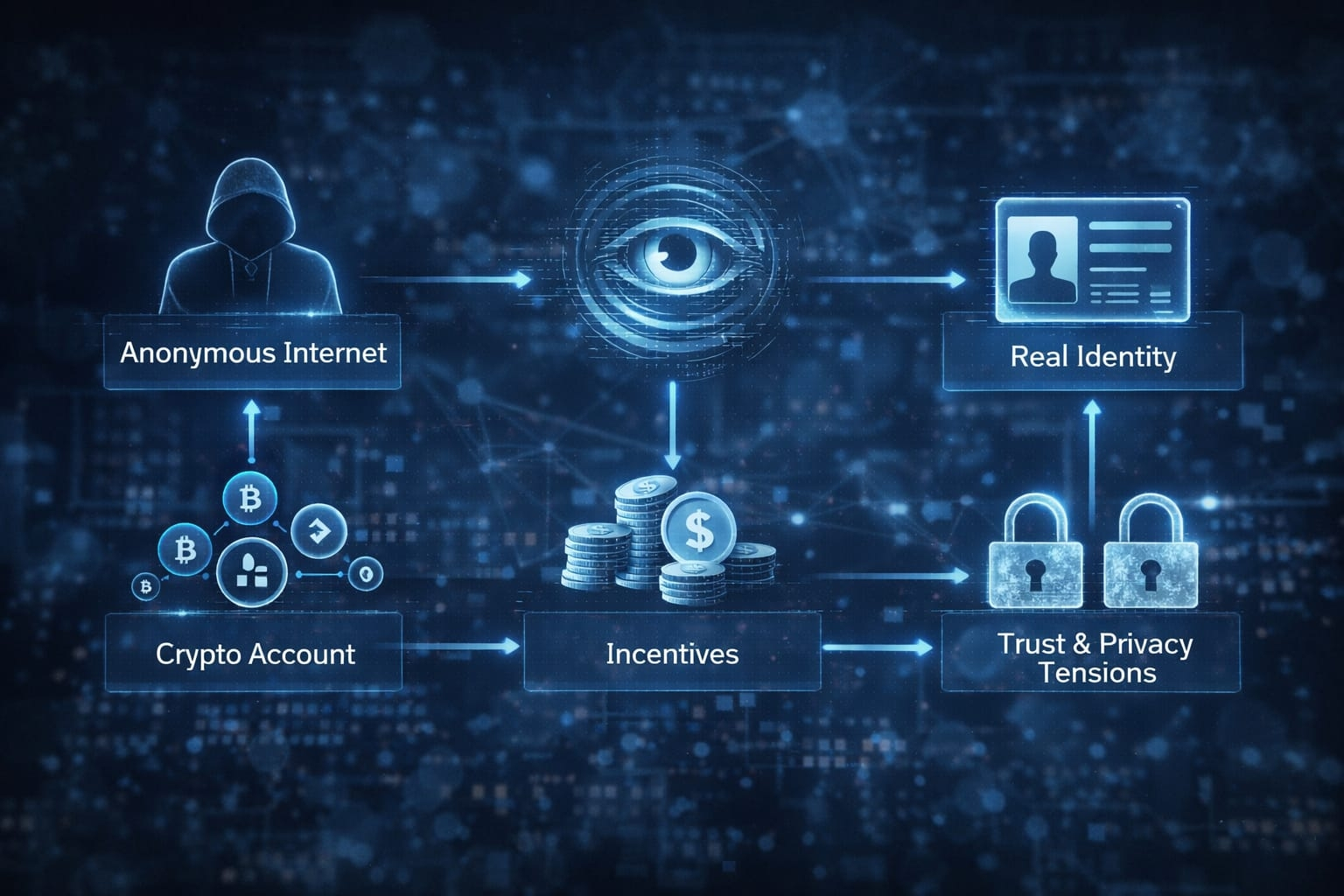
Because if you really think about it, most systems force you into a quiet trade-off. If you want something to work, you have to expose something about yourself. Identity, activity, history… something always goes on display.
We’ve just gotten used to it.
Like it’s normal.
But is it supposed to be?
That question kind of sat with me for a bit.
From what I understand so far, Midnight is trying to flip that idea. Instead of sharing actual data, you share proof about it. Not the details just the confirmation that those details meet certain conditions.
It sounds simple when you say it like that.

But it changes a lot.
Like imagine proving something is true without actually revealing what it is. That’s the core idea behind zero-knowledge tech, but here it doesn’t feel like a buzzword… it feels like the whole point.
And honestly, that made me pause.
Because when you look at how things work today, we expose way more than necessary. Signing up somewhere, verifying who you are, even basic interactions there’s always extra information being handed over that nobody really questions.
We just accept it.
Midnight feels like it’s quietly challenging that.
Not loudly. Not in a “this will change everything overnight” kind of way.
Just… differently.
From what I can tell, it’s building a system where apps can still run, transactions can still happen, and rules can still be checked but without forcing users to reveal everything behind the scenes.
You don’t open the whole book.
You just show the page that matters.
That idea stuck with me more than anything else.

I’m not fully sold on it yet, to be honest. Stuff like this always sounds clean in theory, but reality is messy. There are always issues speed, complexity, getting people to actually use it. And zero-knowledge systems aren’t exactly simple to build or scale.
So yeah, I’m still cautious.
But at the same time, I can’t ignore the shift in thinking here.
Because maybe the real problem was never “how do we protect data?”
Maybe it was…
why are we required to expose it at all?
If something like Midnight actually works the way it’s trying to, it could slowly change how we interact with digital systems. Not in a loud, hype-driven way, but in a quiet shift where people start expecting more control by default.
Less oversharing.
Less blind trust.
More intention behind what we reveal.
I don’t know where this goes yet.
But I do know it made me stop and rethink something I had stopped questioning a long time ago.
And usually, that’s a sign I should keep paying attention.