
So yesterday I talked about the Midnight City Simulation and Aliit Fellowship. Today I actually rolled up my sleeves and dove into the developer documentation .
Because let's be real – a blockchain is only as good as the tools it gives builders. And after spending hours reading through Midnight's technical docs, I found some fascinating details that most people aren't talking about.
Let me break down what I learned.
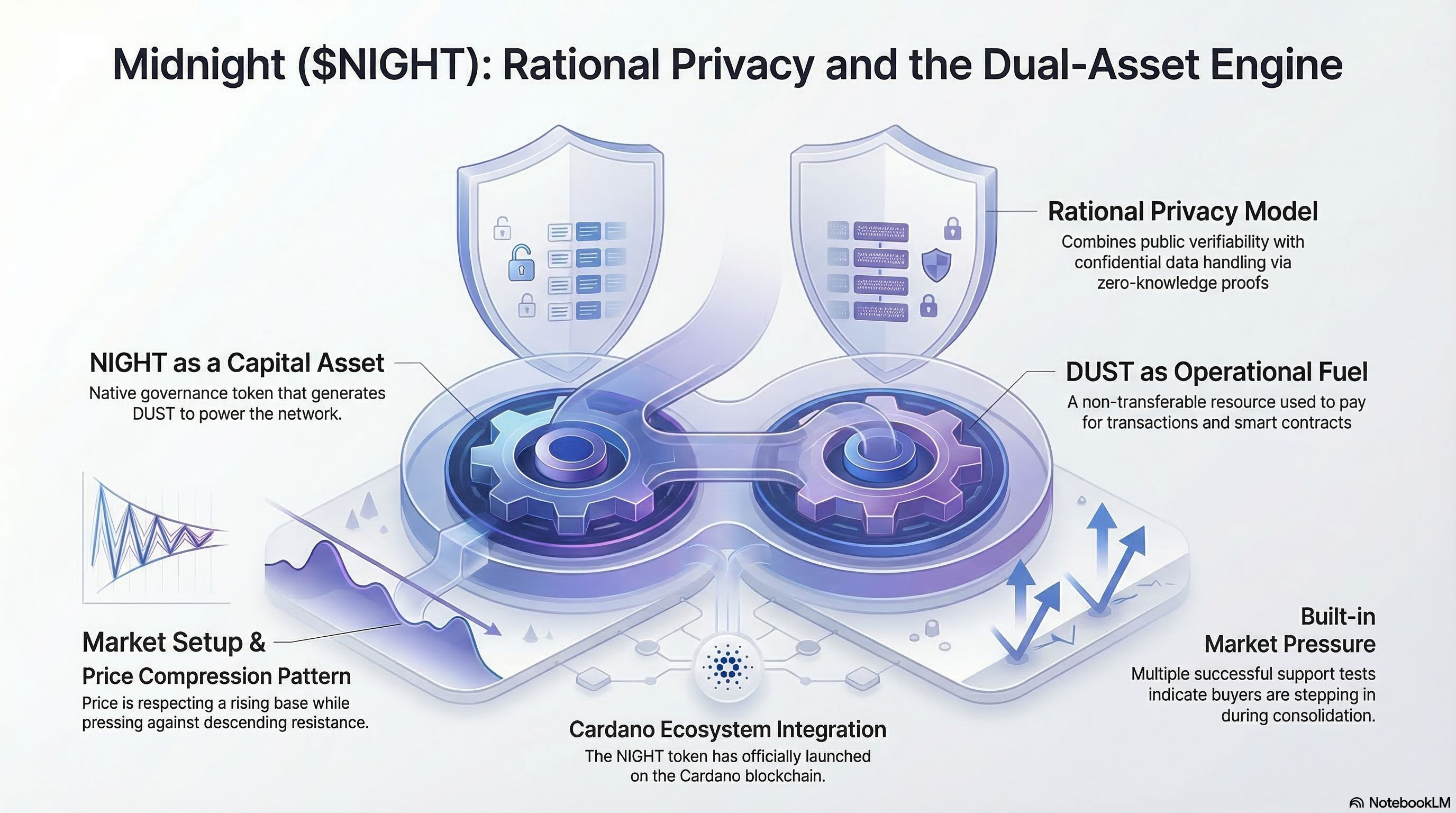
The Two-Token Model: NIGHT vs. DUST
Here's the first thing that surprised me: transactions on Midnight aren't paid with NIGHT .
They're paid with something called DUST – a separate resource token that serves a very specific purpose .
Think of it this way:
NIGHT is the "value token" – what you trade, stake, and hold
DUST is the "compute token" – what you spend to run transactions and smart contracts
But here's the clever part: holding NIGHT generates DUST . Your wallet automatically produces DUST over time based on how much NIGHT you hold .
This model means:
Long-term holders benefit – More NIGHT = more transaction capacity
Spam prevention – Every transaction costs something, even if it's tiny
Separate concerns – Network compute isn't competing with speculation
Your wallet actually has three different addresses : one for shielded transactions (private), one for unshielded (public), and one specifically for DUST .
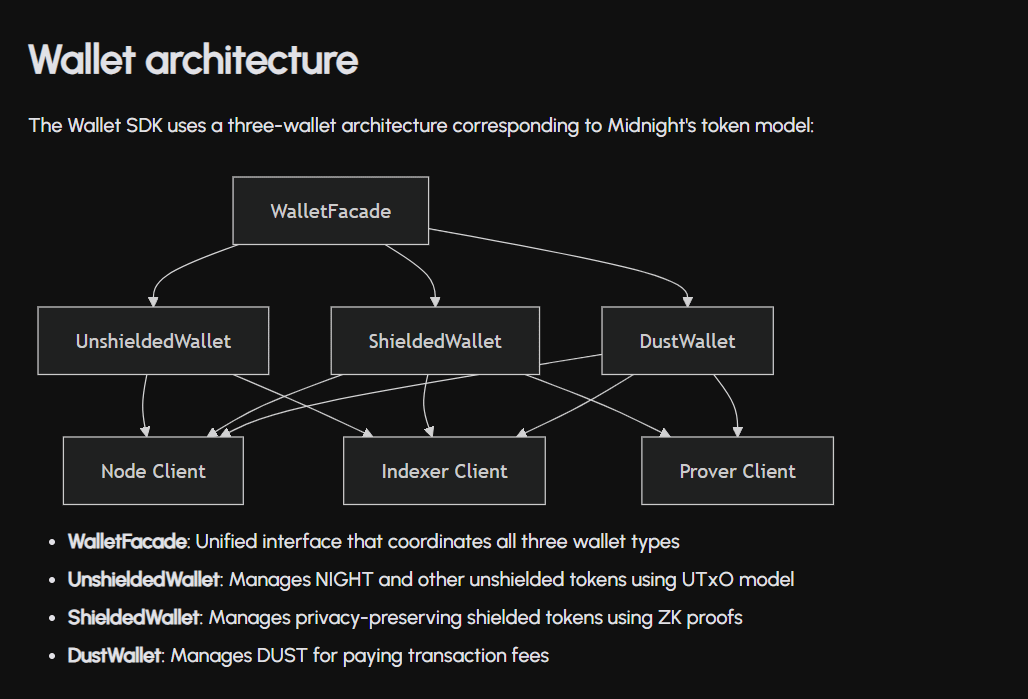
Wallet SDK 4.0.0 – Major Upgrade Just Dropped
This part is for the builders reading this.
Midnight released Wallet SDK 4.0.0 recently, and it's a significant upgrade . It's now considered production-ready and safe to deploy in public environments .
Key changes that matter:
Bech32m Addresses – This is the same format used by Cardano. It makes addresses human-readable and includes network identifiers, so you can't accidentally send testnet funds to mainnet . The legacy hex format is still supported but will be removed in future versions .
HD Wallet Support – There's now a dedicated package (@midnight-ntwrk/wallet-sdk-hd) that lets you deterministically derive different keys from a single seed . This is huge for wallet developers and exchanges .
Secret Keys Are Now Separate – Previously, secret keys were stored in the wallet state (security risk). Now they're completely separate – much safer .
Transaction Balancing Rewritten – The new balancer in TypeScript solves many previous issues . And if proving a transaction fails, the wallet now retries 3 times automatically before giving up .
Preview Network + midnight-js v3.0.0
For developers actually building dApps, the Preview Network is where you want to be right now .
Midnight released midnight-js v3.0.0 with some breaking changes, but also major improvements :
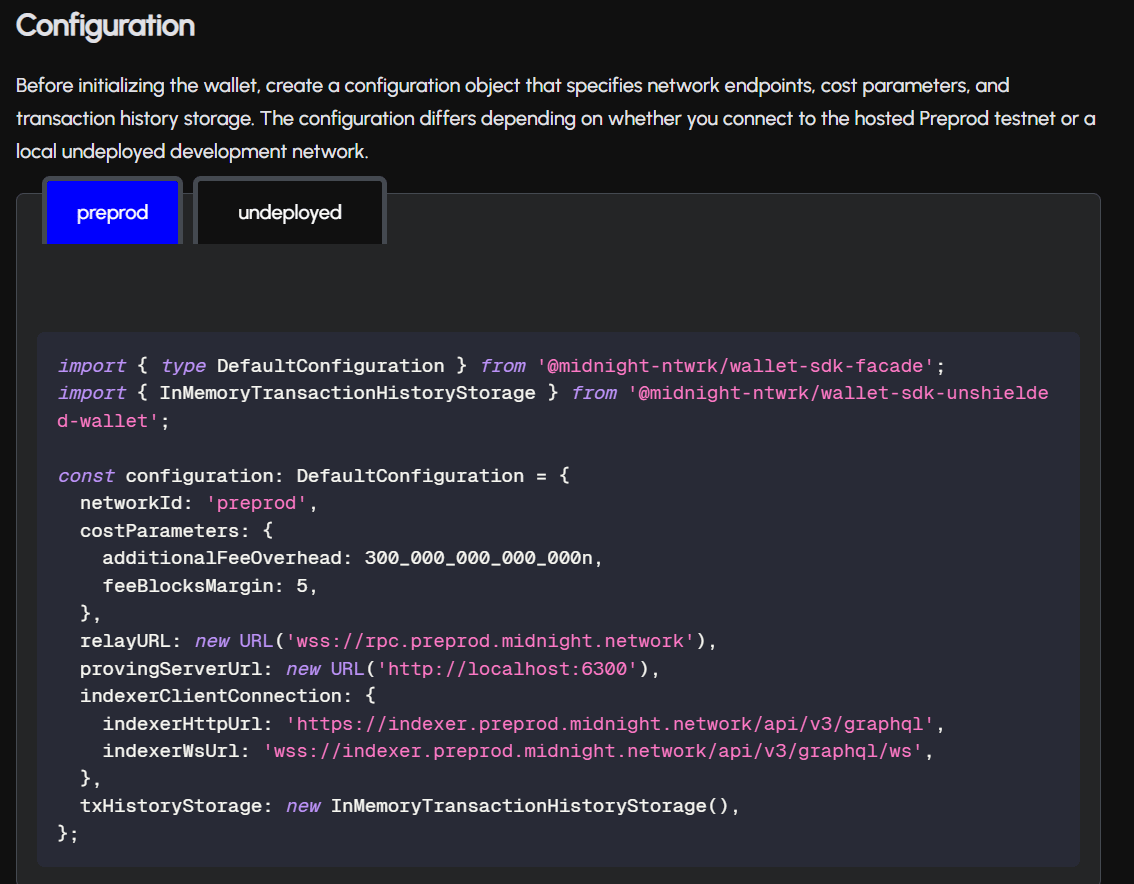
What's new:
Async transactions – submitTx now returns a Promise with the transaction ID
Better TypeScript support – Everything is properly typed
Storage encryption – AES-256-GCM for private state
Transaction TTL – You can set expiration times on transactions
The network endpoints have also been standardized :
text
RPC Node: rpc.preview.midnight.network
Indexer: indexer.preview.midnight.network/api/v3/graphql
Faucet: faucet.preview.midnight.network
And you can run the proof server locally with Docker:
bash
docker run -p 6300:6300 midnightnetwork/proof-server:6.1.0-alpha.6 \
-- midnight-proof-server --network preview
The Midday SDK – Community Tooling
Beyond the official tools, the community is already building. There's an SDK called @no-witness-labs/midday-sdk that simplifies dApp development even further .
It wraps the complexity and gives you a clean API:
javascript
import * as Midday from '@no-witness-labs/midday-sdk';
// Create client
const client = await Midday.Client.create();
// Load and deploy contract
const counter = await (await client.contractFrom('build/simple-counter')).deploy();
// Call actions
await counter.call('increment');
// Read state
const state = await counter.ledgerState();This is exactly the kind of community tooling that shows real developer interest .
Why This Matters for Mainnet
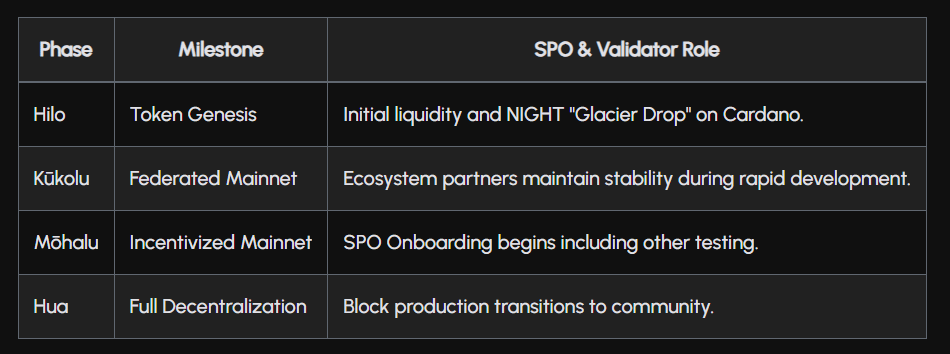
Mainnet launches in ~2 weeks . Here's what the current state tells us:
The economics are designed – The NIGHT/DUST model shows real thought about sustainable network economics
Tooling is production-ready – Wallet SDK 4.0.0 is marked as stable and safe for production
Multiple networks exist – Testnet-02, Preview, Devnet – developers have places to experiment
Community is building – Third-party SDKs like Midday show genuine developer interest
The Midnight City Simulation is stress-testing the network . The Preview Network lets builders deploy real dApps . The Wallet SDK is production-ready .
Everything is lining up for that late March launch.
My Take
I'm not a developer, but I played one for this article. And here's what impressed me: the documentation is actually good .
Midnight's docs are clear, well-organized, and include working code examples . The release notes explain breaking changes and exactly how to migrate . The community SDKs are already emerging .
Compare this to other "privacy coins" that launch with barely any developer tools. Midnight is taking the opposite approach – build the tools first, then launch .
That's a bet on long-term adoption over short-term hype. And honestly? I respect it.
For developers reading this: the Preview Network is live, the faucet is working, and the tools are ready . If you want to build privacy-focused dApps before everyone else floods in, now's the time.
For everyone else: understanding the DUST model helps you see why holding NIGHT isn't just speculation – it's literally buying compute capacity on the network.
Mainnet in two weeks. The infrastructure is ready. Are you?