

For most people who have watched cryptocurrency for a while, a pattern eventually becomes impossible to ignore. A new token appears, a new network launches, and the language surrounding it sounds strangely familiar. There are promises about speed, scalability, or throughput. Charts circulate across social feeds. Early traders talk about momentum. For a few weeks or months, the network feels alive. Then the attention shifts somewhere else.
After seeing that cycle repeat enough times, it becomes difficult to approach any new blockchain project without a certain amount of skepticism. Not hostility—just caution. Experience teaches you to assume that most projects are ultimately built around the same core incentive: speculation. Tokens move, prices change, and the network exists primarily as a financial arena.
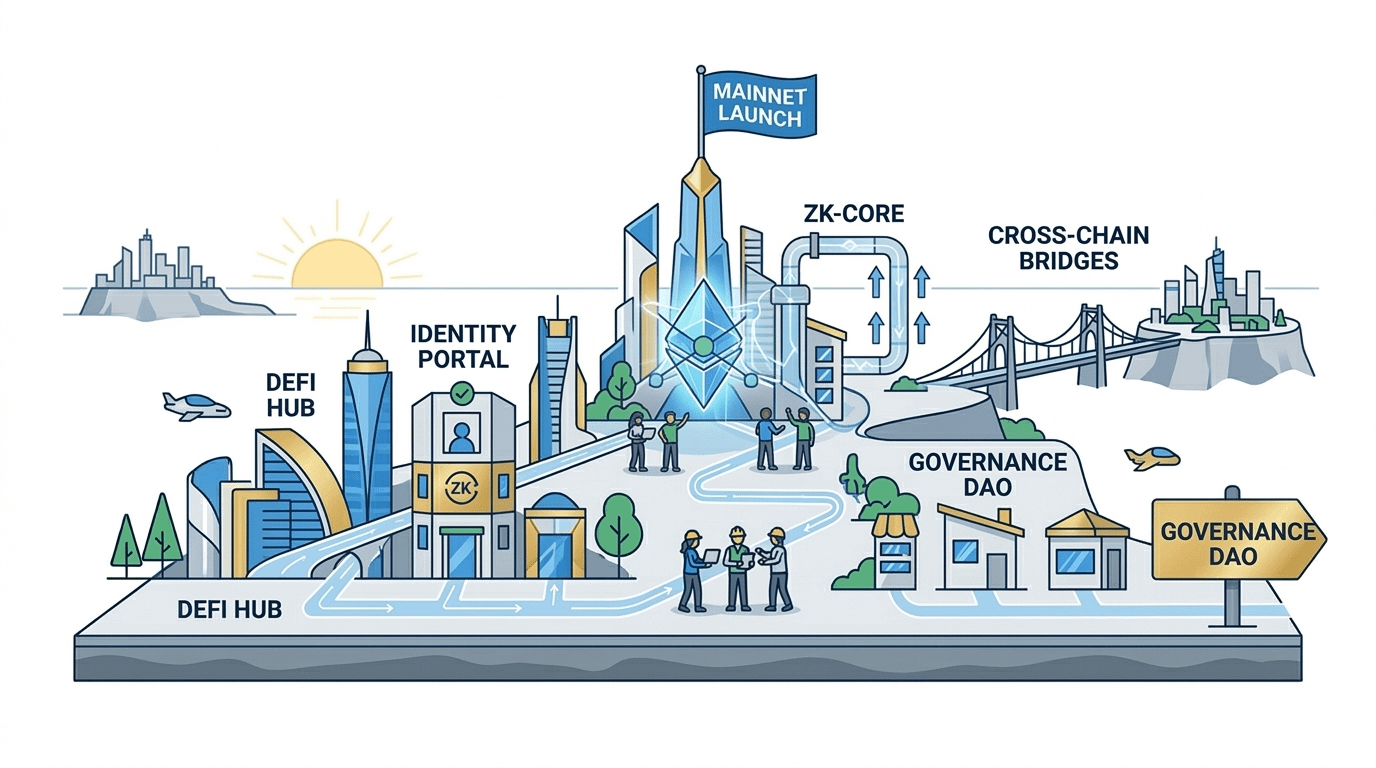
So when a blockchain claims that its central mission is privacy, the instinctive reaction is to wonder whether that is simply another narrative layer placed on top of the same market structure.
But occasionally a project appears that raises a different question entirely.
Not how fast transactions can move, or how many tokens exist, but something more fundamental:
Can a public digital system work if the people using it cannot keep anything private?
That question sits quietly behind a new class of blockchains built around Zero‑Knowledge Proofs. These systems attempt to solve a structural contradiction that has existed in blockchain design since the beginning. Public networks rely on transparency. Everything is visible, verifiable, and open. But most real human systems do not function that way.
Businesses keep trade secrets. Individuals protect personal data. Governments classify sensitive information. Even ordinary daily life depends on a certain level of controlled privacy.
Traditional blockchains never fully resolved this tension. Instead, they mostly ignored it.
The Transparency Problem Blockchains Created
When Bitcoin appeared in 2009, transparency was a feature. Every transaction was recorded on a public ledger. Anyone could inspect the network’s activity. In a world that had just experienced the 2008 Financial Crisis, that openness felt revolutionary.
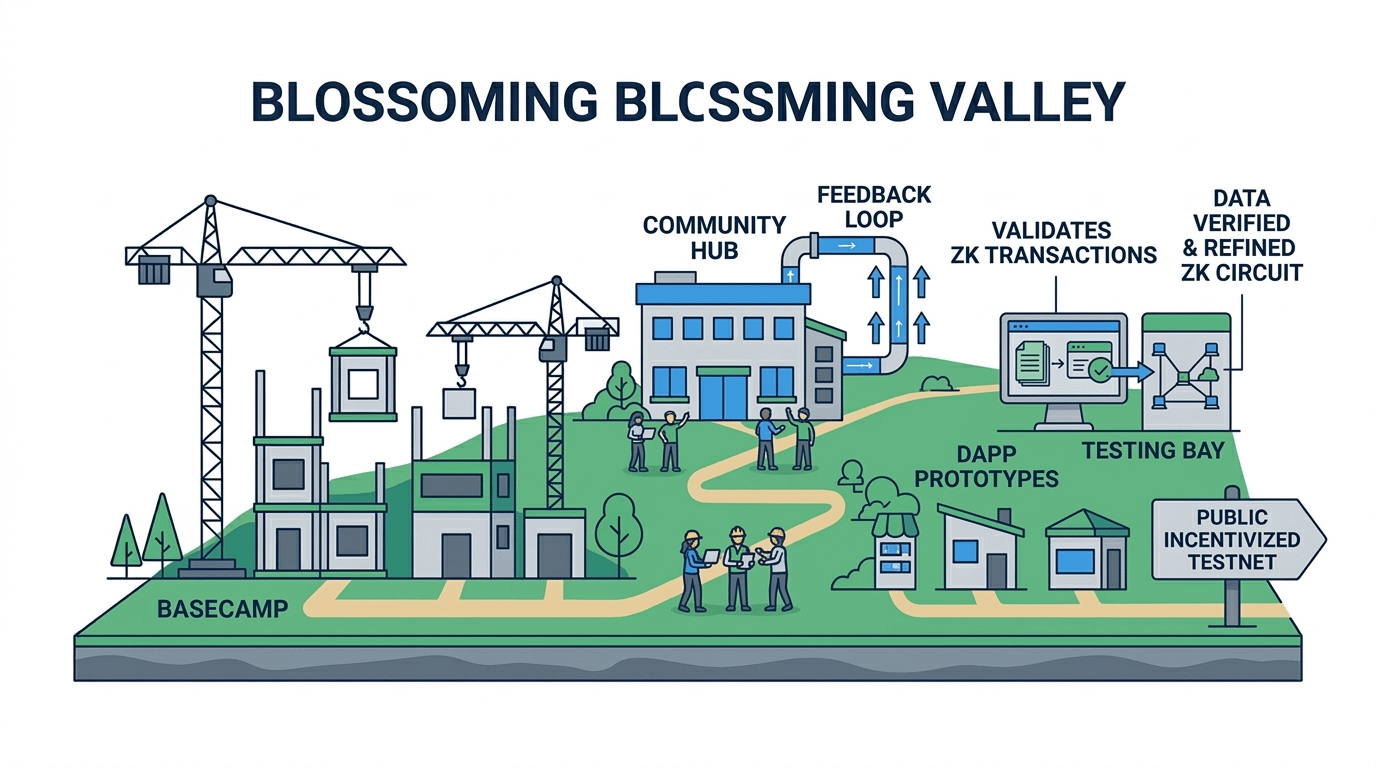
But transparency at a network level creates a strange paradox.
Imagine if your entire bank history were visible to anyone who cared to look. Every payment, every salary deposit, every purchase at a store or clinic. Technically you might still be anonymous, but patterns quickly reveal identities.
That is effectively how most blockchains operate.
Over time this reality limited the kinds of activity that could safely occur on these networks. Companies could not use them for sensitive transactions. Governments could not place regulated systems on them. Individuals often hesitated to expose financial behavior permanently on a public ledger.
Transparency created trust in the system—but it also restricted the system’s usefulness.
In other words, the technology that promised to decentralize financial infrastructure quietly introduced a new kind of exposure problem.
A Different Architectural Idea
This is where zero-knowledge technology begins to matter.
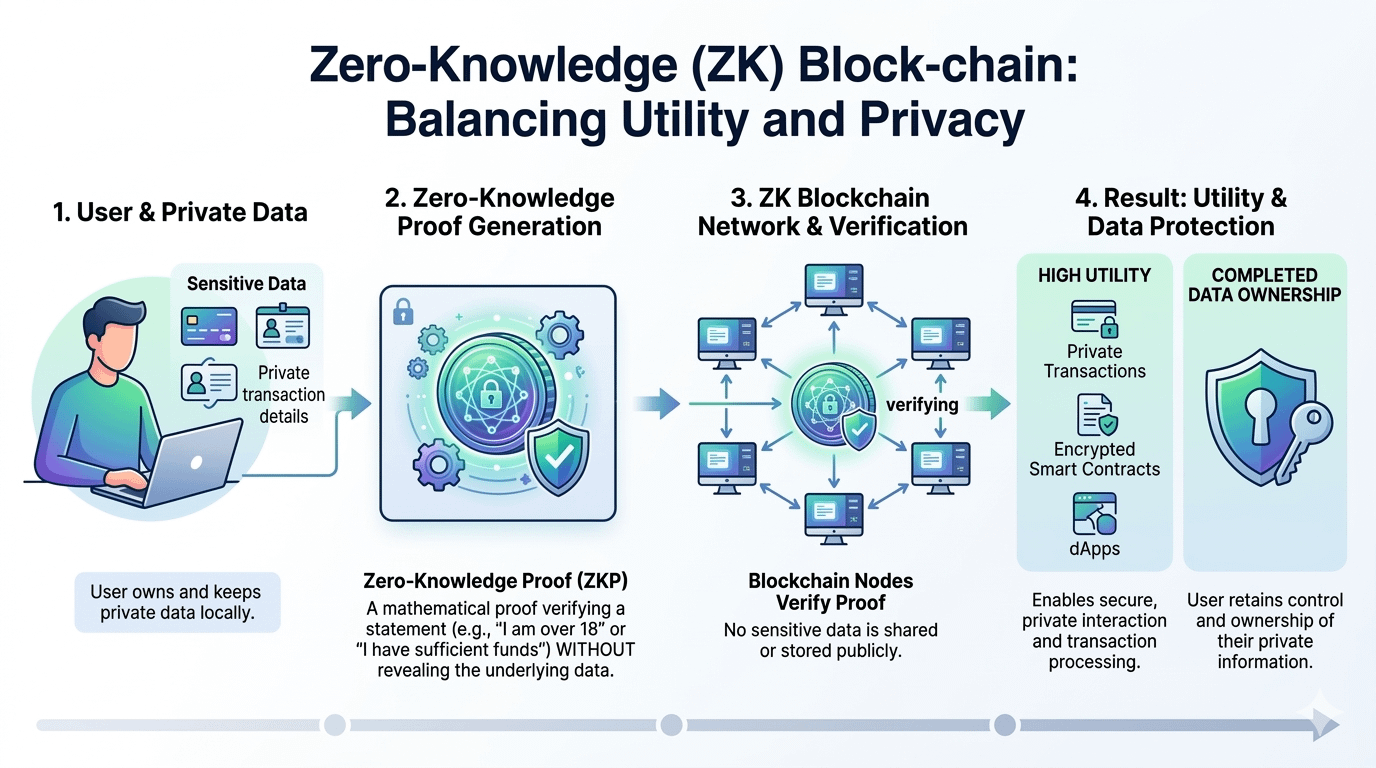
The basic concept behind Zero‑Knowledge Proofs sounds almost paradoxical: one party can prove that a statement is true without revealing the information behind it.
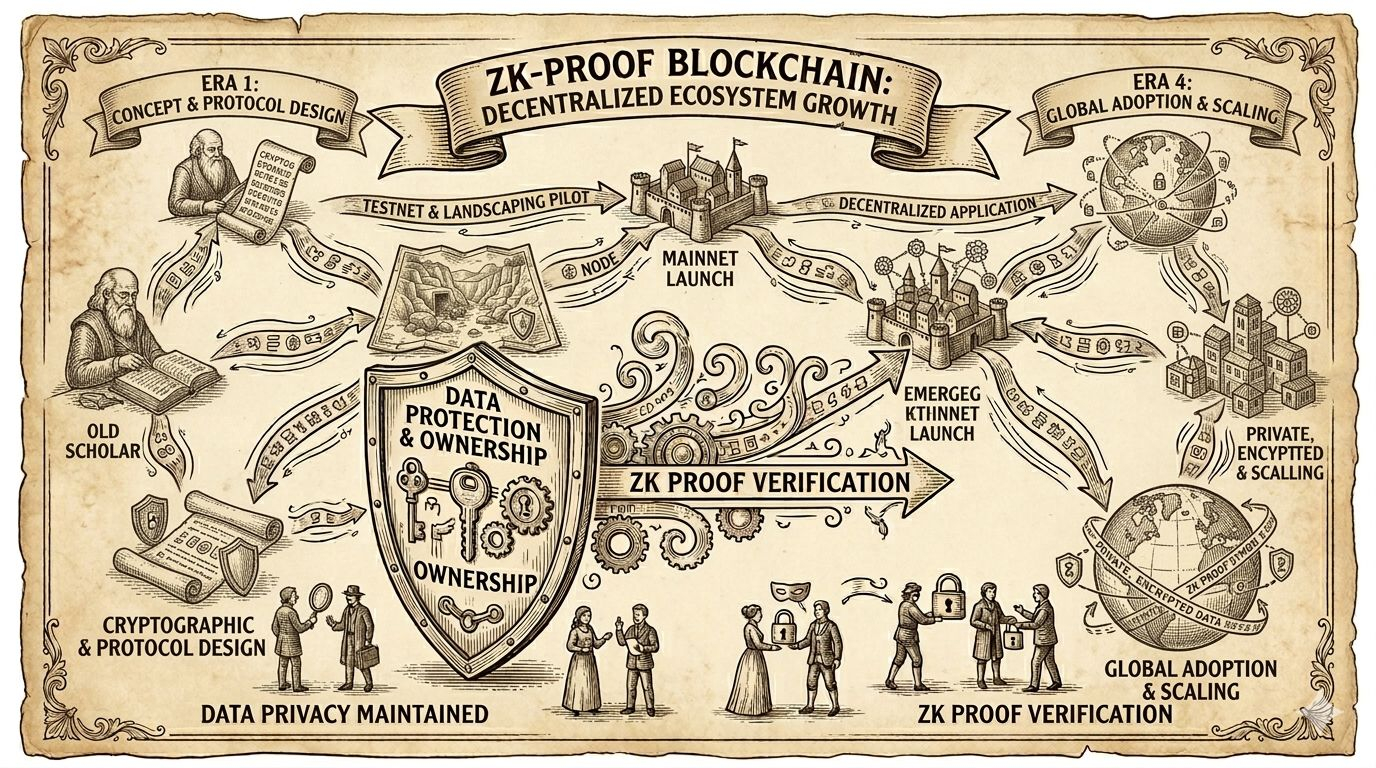
In practical terms, this means a blockchain could verify that something happened—such as a payment, a credential validation, or a computation—without exposing the underlying data.
If earlier blockchains functioned like a glass building where every activity is visible, zero-knowledge systems attempt to add walls and doors without removing the structural transparency of the building itself.
It is an elegant idea. Perhaps even an overdue one.
But elegance in theory does not always translate into usefulness in practice.
Where Privacy Actually Matters
To understand why privacy infrastructure might matter, it helps to step outside the crypto ecosystem for a moment and look at how ordinary human systems operate.
Take supply chains.
Companies move goods across continents every day. But they do not publish the exact details of those logistics routes or supplier contracts publicly. That information has competitive value. Yet regulators and partners still need to verify that certain standards are met—environmental compliance, labor rules, import regulations.
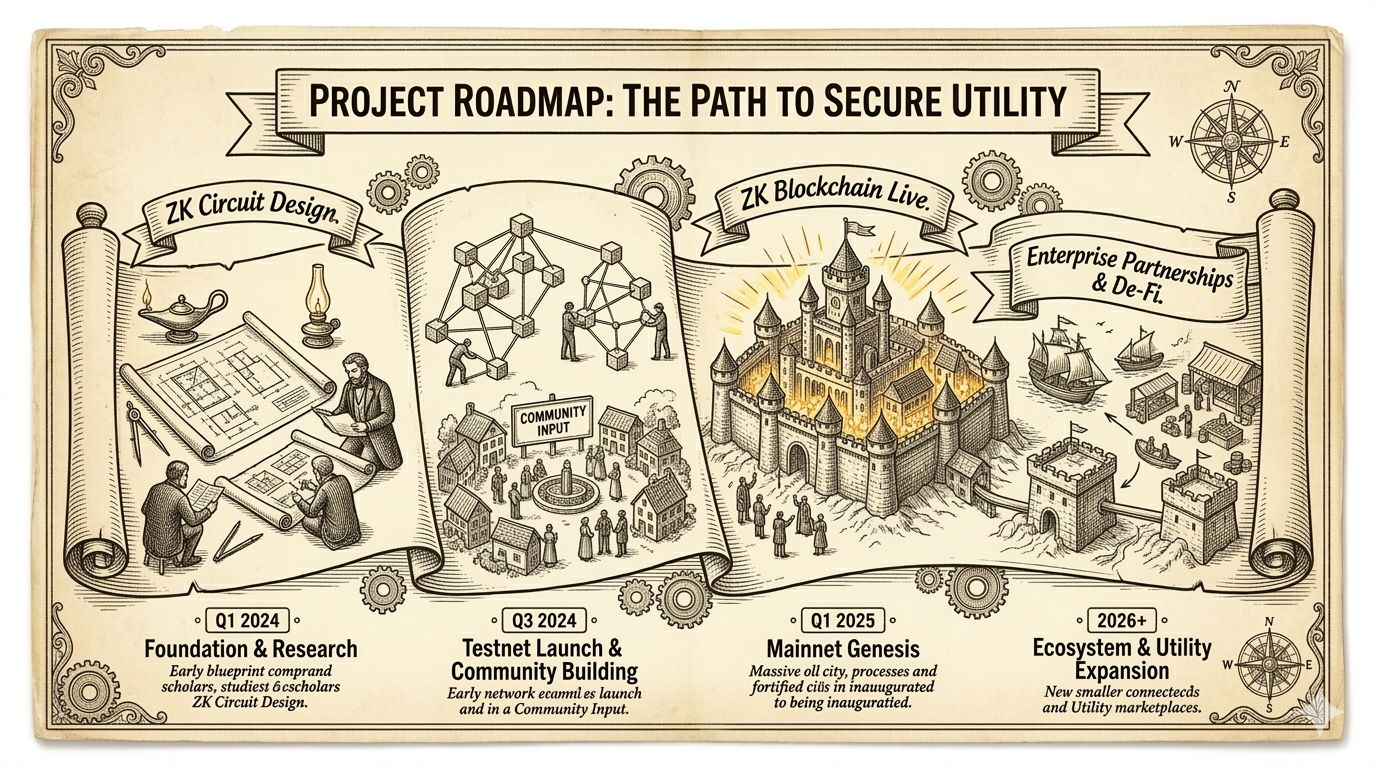
What organizations often want is verifiability without full exposure.
A similar pattern appears in healthcare. Hospitals must share certain information with regulators and insurers, but patient data cannot simply become public. Even financial institutions operate on layered disclosure systems: auditors see one level of data, regulators another, and the public something different entirely.
In almost every large human system, transparency is selective rather than absolute.
Traditional blockchains never really accommodated that nuance.
Zero-knowledge networks attempt to build it into the foundation.
A Conceptual Shift: From Tokens to Infrastructure
For someone who has spent years watching crypto narratives repeat, the interesting aspect of these privacy-focused blockchains is not the token at all.
It is the possibility that the network might function as infrastructure rather than as a trading venue.
Consider digital identity. Many people now interact with dozens of online systems every day—banking platforms, government portals, corporate services. Each system stores pieces of identity data. Passwords multiply. Data breaches occur. Control over personal information becomes fragmented.
A zero-knowledge blockchain could theoretically allow individuals to prove attributes about themselves—age, citizenship, credentials—without revealing the underlying data.
Instead of showing a full identity document, the system might simply prove that a requirement is satisfied.
In that sense, the network begins to resemble a kind of verification layer for digital society.
Not glamorous. But potentially useful.
The Real-World Friction
Still, the distance between an elegant cryptographic model and widespread adoption can be enormous.
One barrier is simply institutional inertia.
Large corporations often prefer closed ecosystems where they control infrastructure and data flows. Privacy-preserving public networks challenge that model. If verification can occur without centralized databases, some traditional gatekeeping roles become less necessary.
Resistance is therefore predictable.
Regulation introduces another layer of complexity. Governments are already cautious about cryptocurrency systems that enable anonymous transactions. Privacy-enhancing technologies raise obvious concerns about financial crime or tax evasion.
Even though zero-knowledge systems can theoretically support selective disclosure to regulators, the political narrative surrounding privacy technology is rarely that subtle.
In some jurisdictions the technology may face years of scrutiny before meaningful integration becomes possible.
And then there is the practical issue of technological adoption itself.
In many developing regions—including parts of South Asia—large segments of commerce still rely on manual processes. Paper records remain common. Digital identity infrastructure varies dramatically between countries.
A sophisticated cryptographic verification layer may be powerful, but it does not automatically solve these underlying infrastructure gaps.
The Long Horizon of Infrastructure
Technology history offers a useful reminder here: infrastructure often takes decades to mature.
The early internet of the 1990s did not immediately transform commerce. Broadband penetration was uneven. Online payment systems were unreliable. Regulatory frameworks were unclear.
Yet over time the infrastructure stabilized, and entirely new industries eventually grew on top of it.
Privacy-focused blockchain networks may follow a similar trajectory. The underlying cryptography is powerful, but the surrounding ecosystem—developers, institutions, regulators—must slowly align before the technology becomes truly useful.
That alignment process is rarely quick.
And sometimes it never fully happens.
Imagining the Use Cases
Still, the potential scenarios are intriguing enough to keep observers paying attention.
Imagine a smart city infrastructure where sensors monitor energy usage across thousands of buildings. Regulators need to verify compliance with environmental standards, but companies do not want to expose proprietary operational data.
A zero-knowledge verification system could allow compliance checks without revealing underlying energy consumption patterns.
Or consider cross-border trade.
Customs authorities must confirm that goods meet safety standards, origin requirements, and tariff classifications. But suppliers often guard manufacturing details carefully. Cryptographic proofs could allow regulators to verify compliance while preserving confidentiality.
Even financial services might benefit. Institutions frequently need to prove solvency or reserve levels to regulators and partners. A system that enables proof of financial integrity without exposing entire balance sheets could change how transparency works in finance.
None of these scenarios are guaranteed outcomes. They are simply possibilities.
But they illustrate why the concept attracts attention beyond speculative trading communities.
Governance Questions
Another dimension worth examining is governance.
Many privacy-focused blockchain projects operate under nonprofit foundations rather than purely commercial structures. The idea is to position the network as public infrastructure rather than as a corporate platform.
This model echoes the early governance structures behind the internet itself, where organizations like the Internet Engineering Task Force guided open protocols rather than proprietary systems.
But nonprofit governance introduces its own challenges.
Sustaining long-term development requires funding. Coordinating upgrades across decentralized communities can be slow. And maintaining neutrality while powerful stakeholders attempt to influence the network is rarely simple.
The philosophical tension is constant: should foundational digital infrastructure belong to public networks, or should corporations ultimately control it?
Zero-knowledge blockchains quietly push that debate forward.
Skepticism Still Matters
None of this guarantees success.
Crypto history is filled with technically sophisticated projects that never achieved meaningful adoption. Sometimes the problem is timing. Sometimes it is regulatory friction. Sometimes the market simply loses interest.
Privacy infrastructure might follow the same pattern.
Even if the technology works perfectly, human systems must still decide to trust it, regulate it, and build upon it.
And those decisions rarely occur quickly.
From the perspective of a long-time observer, that uncertainty is not a flaw. It is simply reality.
Ambitious infrastructure rarely arrives fully formed.
A Question That Remains
What makes zero-knowledge blockchain networks interesting is not that they promise immediate transformation. It is that they attempt to address a genuine structural problem: the conflict between verification and privacy in digital systems.
Traditional blockchains solved verification by making everything visible.
These newer systems attempt something subtler—proof without exposure.
Whether that idea becomes foundational infrastructure or simply another experimental branch of cryptography remains unclear.
But it raises a question that feels increasingly relevant as more of life moves into digital networks:
Can societies build systems that are both transparent enough to trust and private enough to live in?
Zero-knowledge blockchains are not the final answer to that question.
At best, they might be an early framework—one possible attempt among many.
And perhaps that is the most realistic way to view them: not as finished solutions, but as experiments in how cooperation, verification, and privacy might coexist in the digital world.
@MidnightNetwork #night $NIGHT #NIGHT
