As we move through 2026, the intersection of AI and physical robotics has reached a critical bottleneck: Trust. While we have robots capable of complex labor, we have lacked a decentralized infrastructure for machine identity and verifiable work. This is exactly where the Fabric Foundation (@FabricFND) steps in to bridge the gap.
The Role of $ROBO in Machine Autonomy:
The $ROBO token isn't just a medium of exchange; it is the operational lifeblood of a new machine-to-machine economy. Unlike humans, autonomous robots cannot open traditional bank accounts. By utilizing $ROBO, these agents gain a decentralized financial identity, allowing them to pay for their own charging, compute power, and maintenance autonomously.
Proof of Robotic Work (PoRW):
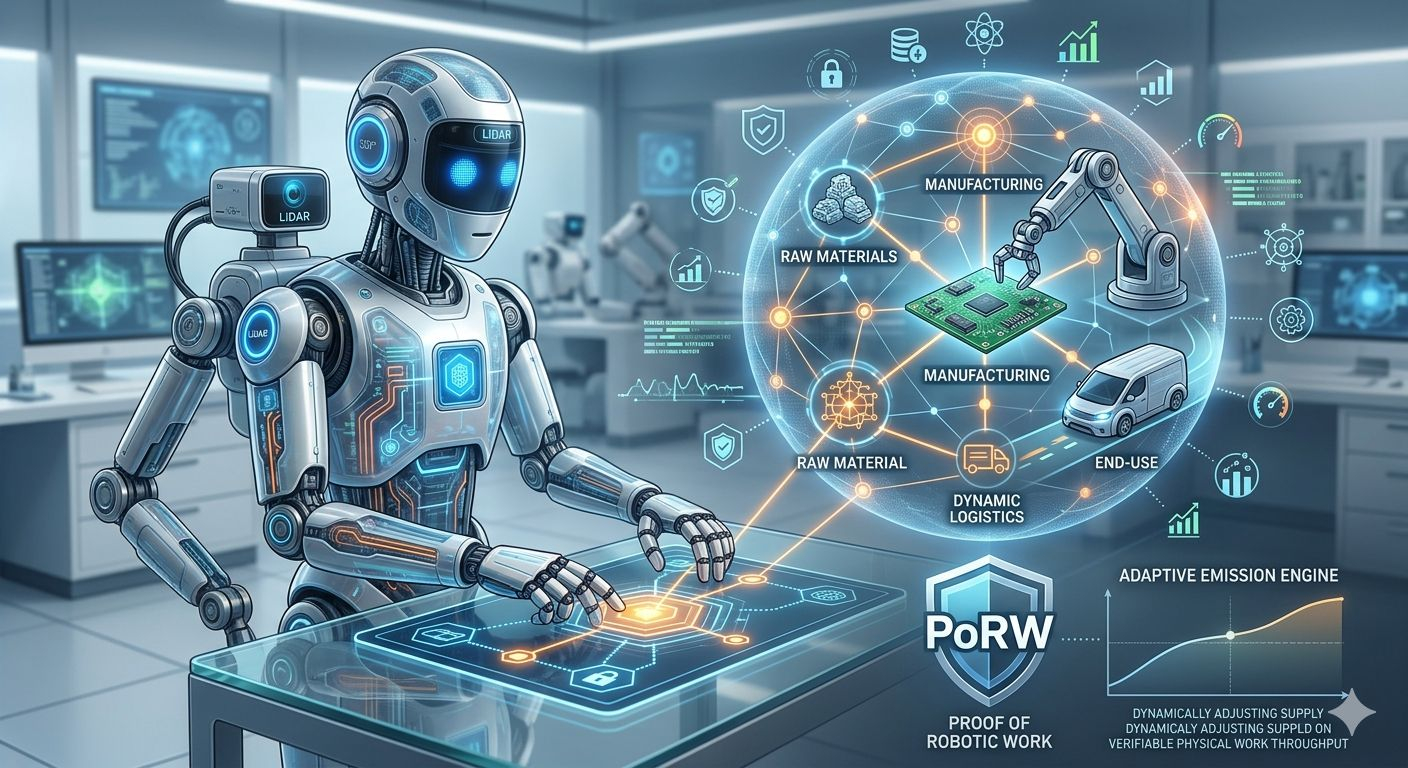
One of the most innovative aspects of the protocol is Proof of Robotic Work. Instead of relying on easily faked digital logs, @FabricFND uses physics-based verification. By cross-referencing sensor data like LiDAR maps and power consumption, the network can prove a robot actually completed a task in the physical world. This ensures that rewards in $ROBO are only distributed for genuine, high-quality contributions to the network.
Why I'm Bullish on #ROBO :
The "Adaptive Emission Engine" within the protocol ensures that token supply stays aligned with actual network utility. As more enterprises integrate autonomous logistics and AI agents, the demand for ROBO as a settlement and governance layer is poised to grow. We are witnessing the birth of an open standard for human-machine alignment that is transparent, community-governed, and built for scale.
#ROBO is more than a ticker—it’s the foundation of a future where machines and humans coexist in a verifiable, decentralized marketplace. 🚀🦾