
Introduction
In the world of blockchain, transparency is one of the most powerful features. Every transaction on networks like Bitcoin or Ethereum is recorded on a public ledger that anyone can view. While this transparency builds trust, it also means transactions can sometimes be traced back to specific wallets.
To address this privacy concern, a tool known as a cryptocurrency mixer (or crypto tumbler) was developed. Mixers aim to enhance transaction privacy by obscuring the connection between the sender and receiver of crypto funds.
This article explains what cryptocurrency mixers are, how they work, and their advantages and risks in the blockchain ecosystem.
What Is a Cryptocurrency Mixer?
A cryptocurrency mixer is a service that combines crypto transactions from multiple users and redistributes them in a way that makes it difficult to trace the original source of funds.
Wikipedia
Instead of coins moving directly from one wallet to another, mixers pool funds together and shuffle them before sending them back to users in different transactions.
Wikipedia
Because blockchain networks are transparent, mixers are designed to increase financial privacy by breaking the visible transaction trail.
How a Crypto Mixer Works (Step-by-Step)
1. Deposit Funds
A user sends cryptocurrency (for example, BTC or ETH) to the mixer’s address.
2. Pooling the Funds
The mixer collects coins from many users into a large shared pool.
3. Shuffling or Mixing
The service splits and recombines the funds into many smaller transactions, often with random delays and different amounts.
4. Redistribution
After mixing, the service sends the equivalent value (minus fees) to new wallet addresses specified by the users.
5. Result
The coins received are technically different from the original ones, making the transaction path difficult to trace on the blockchain.
Hudson Intelligence
Types of Cryptocurrency Mixers
1. Centralized Mixers
These are third-party services that handle the mixing process.
Advantages
Easy to use
Fast processing
Risks
Requires trust in the service operator
Possible loss of funds or logging of transactions
2. Decentralized Mixers
These use smart contracts or protocols to mix transactions without a central operator.
Example: Tornado Cash operates on the Ethereum network and mixes deposits through smart contracts. 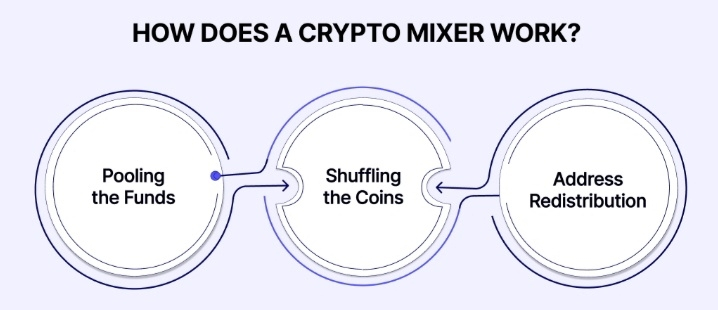
Wikipedia
Advantages
No central authority
Higher transparency in code
Challenges
Technical complexity
Regulatory scrutiny
Why People Use Crypto Mixers
1. Financial Privacy
Users may want to prevent others from tracking their wallet balances and spending habits.
2. Security
Large crypto holders may prefer to hide transaction history to reduce targeting risks.
3. Blockchain Transparency Issues
Because blockchains are public, even a small amount of information can reveal wallet activity.
Risks and Controversies
Despite their privacy benefits, crypto mixers are controversial.
Regulatory concerns Authorities monitor mixers because they can be used to hide illicit funds.
Potential for “tainted coins” Users may receive coins previously involved in suspicious activity.
Legal status In some jurisdictions, the use of mixers may be restricted or heavily monitored.
The Future of Privacy in Crypto
As blockchain adoption grows, privacy technologies are becoming an important discussion in the crypto ecosystem. Mixers are just one solution among many, alongside:
Zero-knowledge proofs
Privacy-focused protocols
Confidential transactions
Balancing privacy, transparency, and regulation will likely shape the future of digital finance.
Conclusion
A cryptocurrency mixer is a privacy tool designed to obscure the transaction trail on public blockchains. By pooling and redistributing funds from multiple users, mixers make it harder to trace the origin and destination of cryptocurrency transactions.
While they offer privacy benefits, they also come with regulatory and security considerations. As the industry evolves, new privacy-enhancing technologies may emerge to provide a safer and