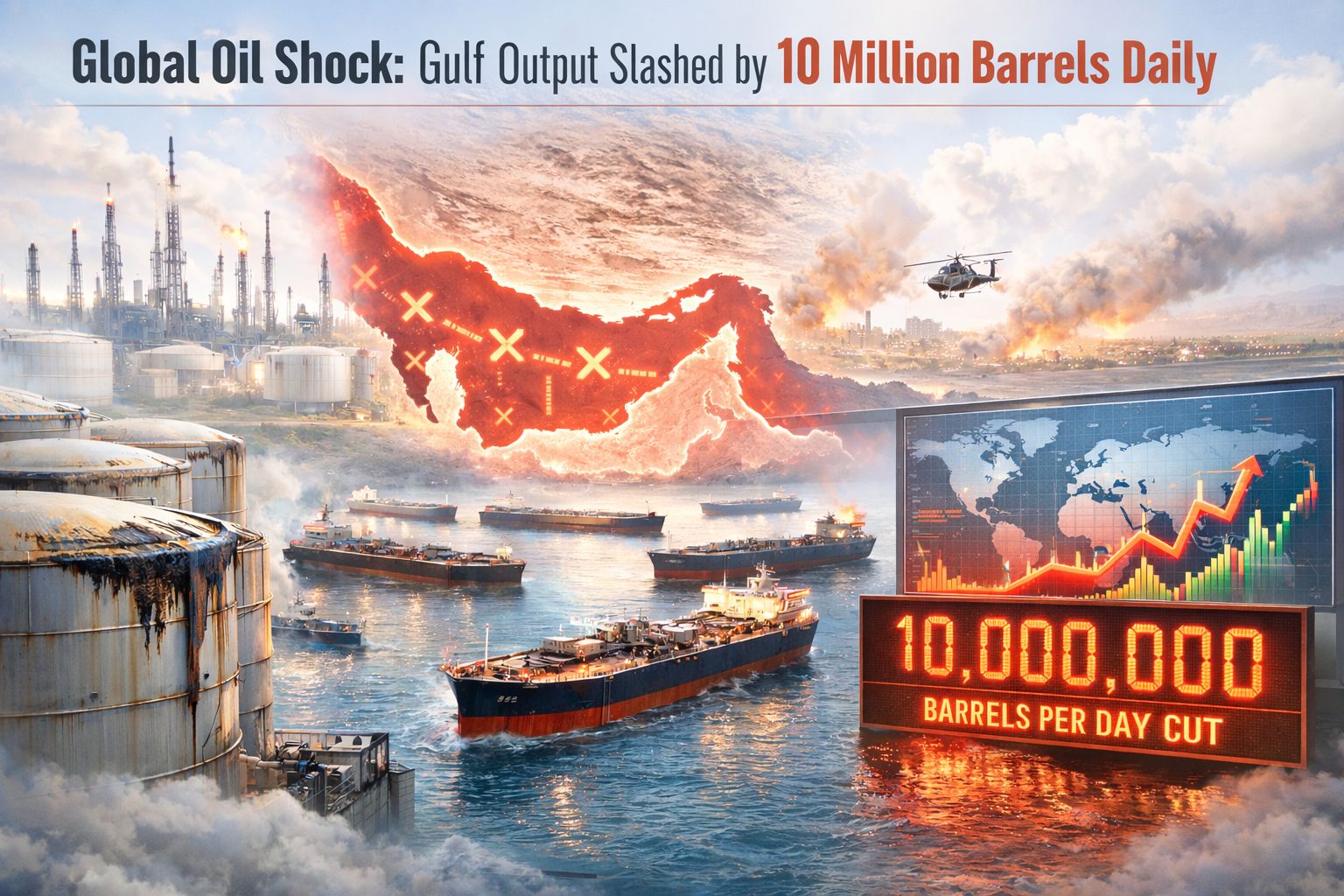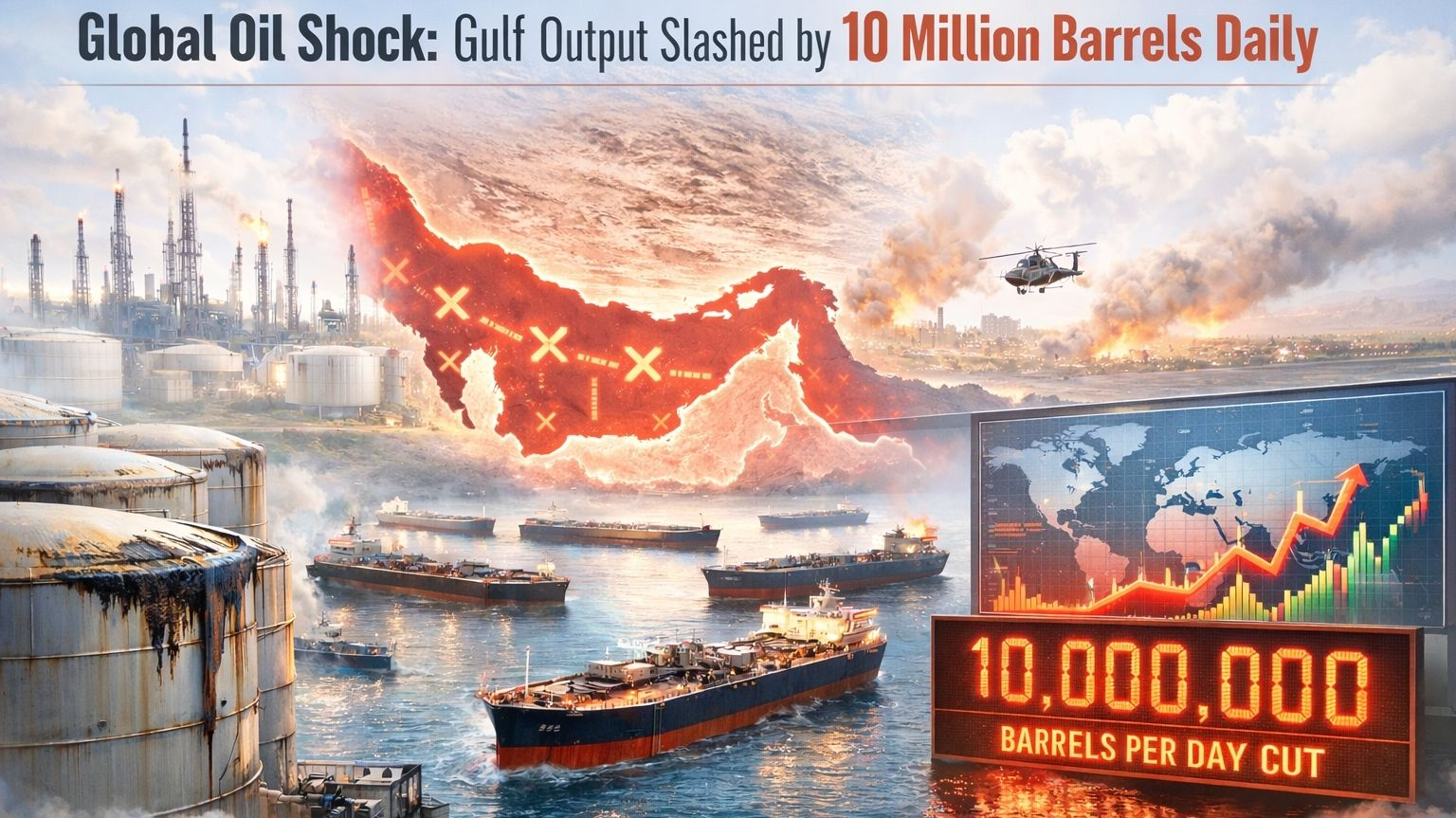
The global energy landscape is currently facing a seismic shift that could affect everything from the price at the pump to the stability of international trade. According to a recent report by the International Energy Agency (IEA), Gulf nations have been forced to slash their daily crude oil production by a staggering 10 million barrels. This massive reduction represents approximately 10 percent of total global demand, marking what the IEA describes as the largest supply disruption in the history of the global oil market.
The primary driver behind this unprecedented cut is the intensifying conflict in the Middle East. The war has created a high-risk environment for maritime transport, specifically within the Strait of Hormuz. Traditionally, this narrow waterway sees about 20 million barrels of oil flow through it every single day. However, due to the ongoing hostilities and the dangers posed to shipping vessels, that flow has slowed to what experts call a "trickle."
Because tankers are unable to safely navigate the region, major producers like Saudi Arabia, Iraq, and the United Arab Emirates initially began diverting their oil into storage. However, storage facilities have quickly reached their maximum capacity. With nowhere left to put the excess crude, these Gulf states have had no choice but to shut down production lines, leading to the massive 10-million-barrel deficit we see today.
While the situation in the Middle East is dire, there are some minor efforts to bridge the gap. The IEA noted that Kazakhstan and Russia—both of whom are members of OPEC Plus—have actually increased their output recently. While this extra production helps, it only partially offsets the losses from the Gulf. Even with these increases, the IEA still projects that the total global supply will fall by 8 million barrels a day throughout the month of March.
To help stabilize the market, the IEA has welcomed the decision of several member nations to release oil from their emergency stockpiles. While this provides some immediate relief, the agency is quick to warn that this is merely a "stopgap measure." The long-term solution requires more than just tapping into reserves; it requires a return to safe shipping conditions.
The IEA is now calling for urgent international cooperation to provide adequate insurance and physical protection for tankers operating in the region. Until maritime traffic can resume its normal pace, the world remains in a precarious position regarding energy security. This situation serves as a stark reminder of how interconnected the global economy is and how quickly regional conflicts can impact the entire world.
#BTCReclaims70k #PCEMarketWatch #BinanceTGEUP #TrumpSaysIranWarWillEndVerySoon #OilPricesSlide $SUI $XRP $TRUMP