
Over the past few years artificial intelligence has reached a point where its capabilities feel almost limitless. Models can write code, summarize research papers, generate creative work, and answer complex questions within seconds. But as these systems have grown more powerful, one issue has become increasingly difficult to ignore: confidence does not always equal correctness.
AI systems are remarkably good at sounding certain even when the information they provide is incomplete, misleading, or entirely wrong. These mistakes, often called hallucinations, are not just technical quirks. As people begin to rely on AI for research, development, financial analysis, and decision-making, the consequences of inaccurate outputs become more serious.
This is where Mira Network introduces a different perspective on the future of artificial intelligence.
Instead of focusing only on generating better answers, Mira focuses on something equally important: verifying whether those answers are actually correct.
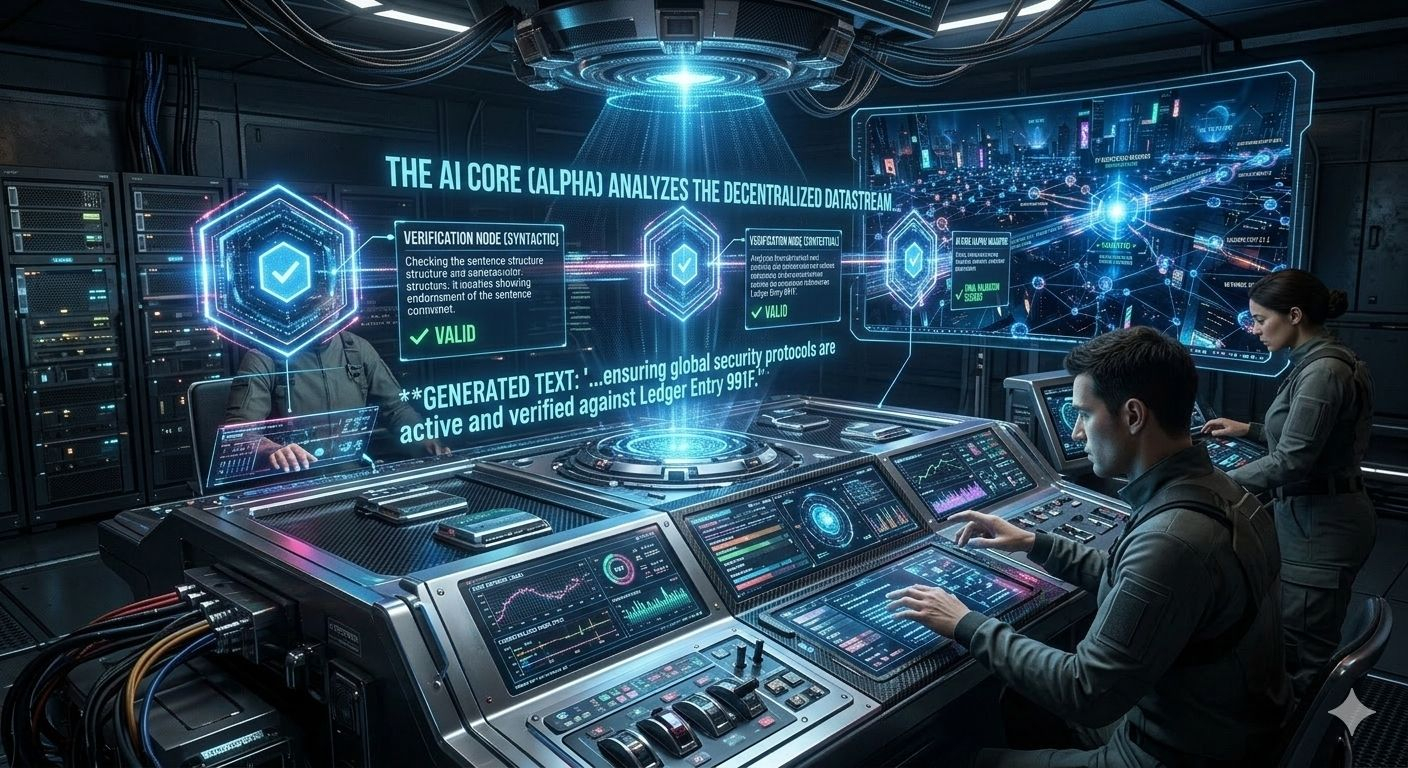
Generation vs Validation
Most AI innovation today revolves around improving generation. Bigger models, larger datasets, and more compute are all directed toward producing outputs that appear increasingly intelligent.
But generation alone does not solve the core reliability problem.
An AI system can produce thousands of words, lines of code, or analytical claims within seconds. Yet without a structured way to check those outputs, users are left in a difficult position: they must either trust the system blindly or verify everything manually.
Mira reframes the challenge by separating creation from verification.
Instead of assuming that a single model’s output should be trusted, Mira treats every answer as something that can be tested, validated, and confirmed through a broader process.
Breaking Answers Into Claims
One of the most interesting aspects of Mira’s design is how it handles AI outputs.
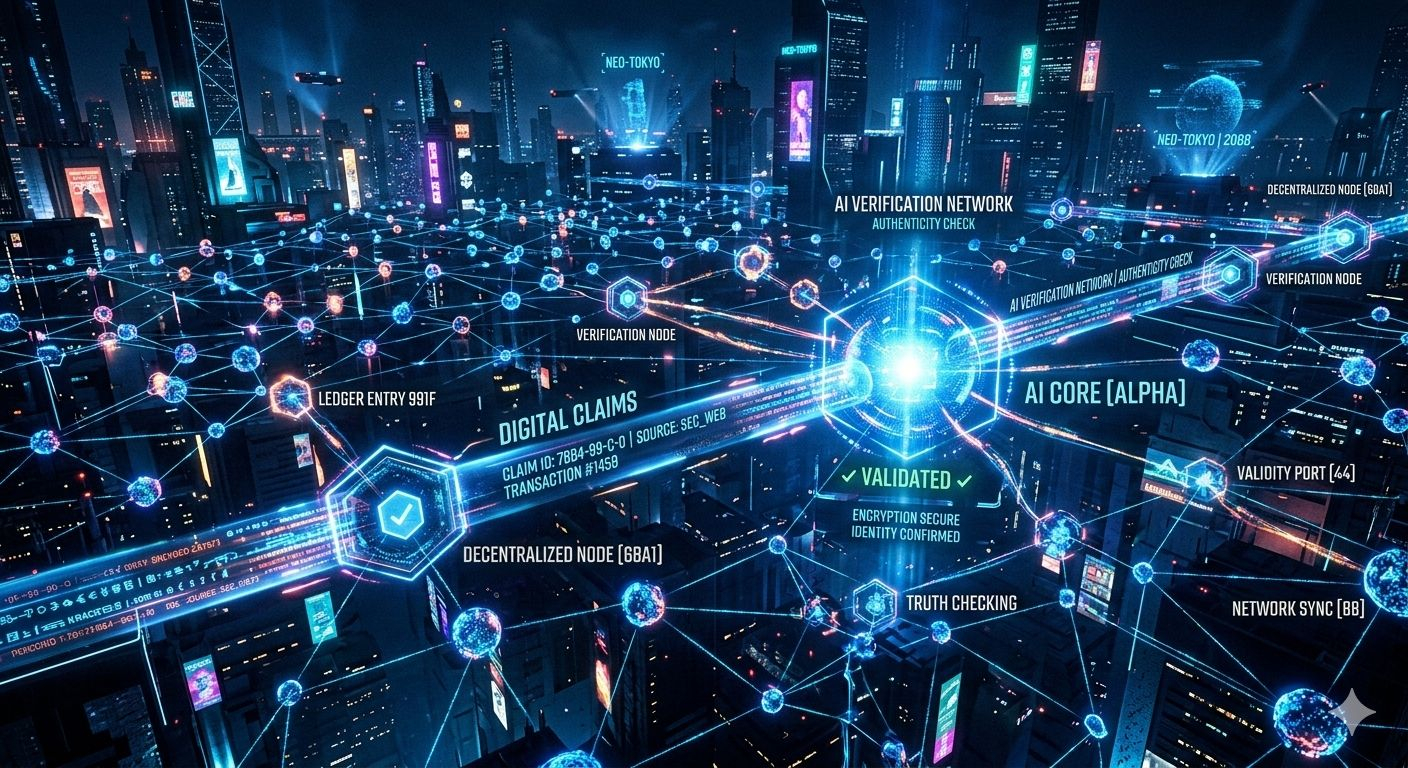
Rather than treating a response as one single block of information, Mira breaks the output into individual claims. Each claim can then be independently evaluated and checked through a decentralized verification process.
This approach introduces several advantages.
First, it allows errors to be isolated. Even if part of an answer is wrong, the entire response does not have to be discarded. Individual claims can be flagged, corrected, or verified separately.
Second, it creates transparency around reliability. Users are no longer forced to guess whether a response is trustworthy. Instead, the system can show which parts of the answer have been validated and which remain uncertain.
Third, it distributes the verification process across a broader network rather than relying on a single model or centralized authority.
Why Hallucinations Are Becoming a Critical Problem
When AI was mainly used for experimentation or entertainment, hallucinations were inconvenient but manageable.
Today the context is changing rapidly.
Developers rely on AI to generate code. Researchers use AI to summarize complex studies. Businesses are starting to integrate AI outputs into operational workflows.
In these environments, even small inaccuracies can create real consequences.
A misinterpreted dataset, an incorrect technical explanation, or an unreliable research summary can lead to flawed decisions. The more AI becomes embedded in professional environments, the more critical verification infrastructure becomes.
Intelligence Alone Does Not Create Trust
The core insight behind Mira’s approach is surprisingly simple.
Intelligence does not automatically create trust.
Trust emerges when information can be checked.
In traditional systems, trust is built through peer review, auditing, and independent verification. Scientific research, journalism, and financial reporting all rely on structured validation processes before conclusions are accepted.
AI systems, however, have largely skipped this layer.
Mira attempts to introduce a verification framework that mirrors these real-world trust systems, allowing outputs to be challenged, evaluated, and confirmed before people act on them.
The Emerging Verification Economy
As artificial intelligence continues to scale, the demand for reliable information will likely grow alongside it.
Generation may remain the most visible part of AI, but validation could become just as valuable.
In that sense, Mira represents an early attempt to build the trust infrastructure for AI systems.
Rather than competing directly with models that produce answers, it focuses on ensuring that the answers people receive can withstand scrutiny.
if AI is going to become a core tool for research, engineering, and decision-making, systems like Mira may play a crucial role in making those outputs dependable.
Because in the long run, the most valuable AI systems may not be the ones that generate the most information, but the ones that help us know which information we can trust.
@Mira - Trust Layer of AI #Mira $MIRA
