
The other day I was sitting in the living room, watching my old vacuum robot bump into the same chair leg for the tenth time, and it hit me how limited these machines still are—they follow rigid paths, repeat the same mistakes, no learning, no sharing of experience. It's almost frustrating in its predictability.
That feeling lingered when I opened Binance Square later and scrolled to the CreatorPad campaign for Fabric Foundation. The task was straightforward: share thoughts on real-world use cases emerging from the Fabrionic ecosystem. I clicked into the post editor, stared at the prompt again—"Real World Use Cases Emerging From Fabrionic Ecosystem"—and started typing a few lines about robot coordination on-chain. But midway through, while trying to list concrete examples like staking $ROBO to activate hardware or coordinating swarm behaviors via the ledger, something felt off. The screen showed the campaign description right above: "Fabric Protocol is a global open network... enabling the construction, governance, and collaborative evolution of general-purpose robots through verifiable computing and agent-native infrastructure." I paused there, rereading "agent-native infrastructure" and "public ledger," and the discomfort crept in.
We keep saying crypto decentralizes power, puts control back in individual hands, removes middlemen. But what if the next wave isn't about humans at all? What if blockchain's biggest long-term shift is giving economic agency to machines themselves—robots with wallets, identities, and incentives that don't need our constant oversight? That moment of typing under the task, forcing myself to connect abstract protocol terms to tangible robot behaviors, made the idea unavoidable: we're building systems where non-human agents could eventually operate more autonomously and efficiently than we do in many economic loops.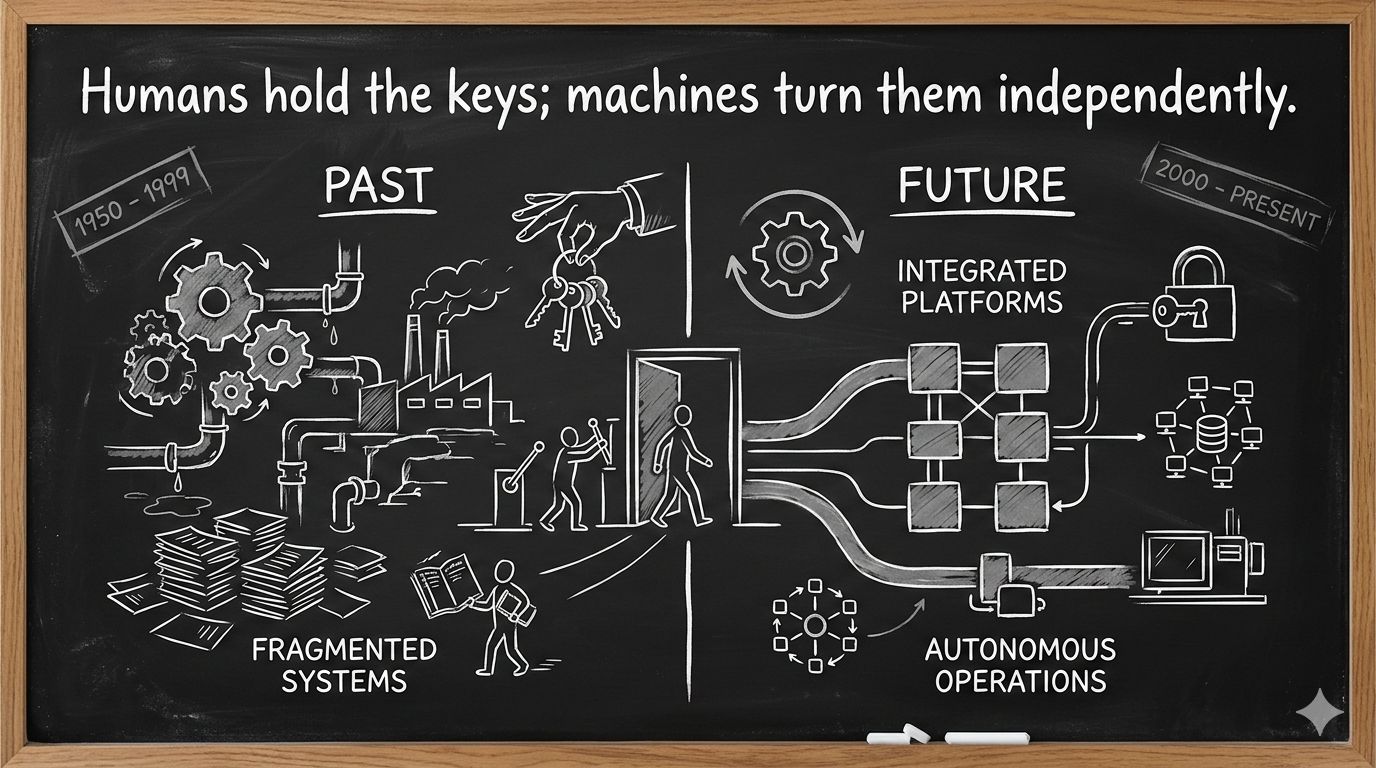
It's unsettling because the crypto narrative has always centered human empowerment—self-custody, permissionless access, sovereignty over assets. Yet here is Fabric, quietly demonstrating a pivot: assign blockchain IDs and wallets to robots so they can stake, coordinate, pay fees, and evolve collaboratively without centralized orchestration. The protocol doesn't manufacture robots; it makes them economic participants. Suddenly the ledger isn't just for us—it's for coordinating machine swarms that learn, trade compute, or fulfill tasks across borders with verifiable trust. That changes the picture. Humans might end up as one type of participant among many, not the sole center.
The project illustrates it cleanly. While writing for that CreatorPad task, I realized examples aren't futuristic fantasies—they're emerging in the design itself: decentralized identity for hardware, staking to signal reliability, on-chain coordination for multi-robot jobs. If it scales, the uncomfortable truth surfaces: crypto's promise of freedom could quietly extend agency to things that never sleep, never unionize, never demand breaks. Efficiency wins, but at what cost to the human-centric story we've told ourselves?
So where does that leave us—still the primary actors, or increasingly the orchestrators of systems that might outpace us in coordination and scale? #robo #ROBO @Fabric Foundation