

When we think about robots, the image that often comes to mind is of isolated machines performing tasks in specific industries, with their movements and actions controlled by a central authority. But the world of robotics is shifting. It's no longer about machines working within closed, proprietary systems controlled by a single company. Now, we are looking at a future where robots and intelligent machines can not only work in collaboration with humans but also interact with each other in a shared, transparent, and accountable ecosystem. This is where Fabric Protocol steps in.
Fabric Protocol is a revolutionary idea. It is a global open network designed to enable the construction, governance, and collaborative evolution of general-purpose robots through verifiable computing and agent-native infrastructure. The protocol coordinates data, computation, and regulation via a public ledger, ensuring that the actions of robots and agents can be verified and audited by anyone in the system. The goal is to create a world where robots are no longer seen as isolated tools but as active participants in a larger economic system, interacting with other machines and humans in a transparent and trustworthy way.
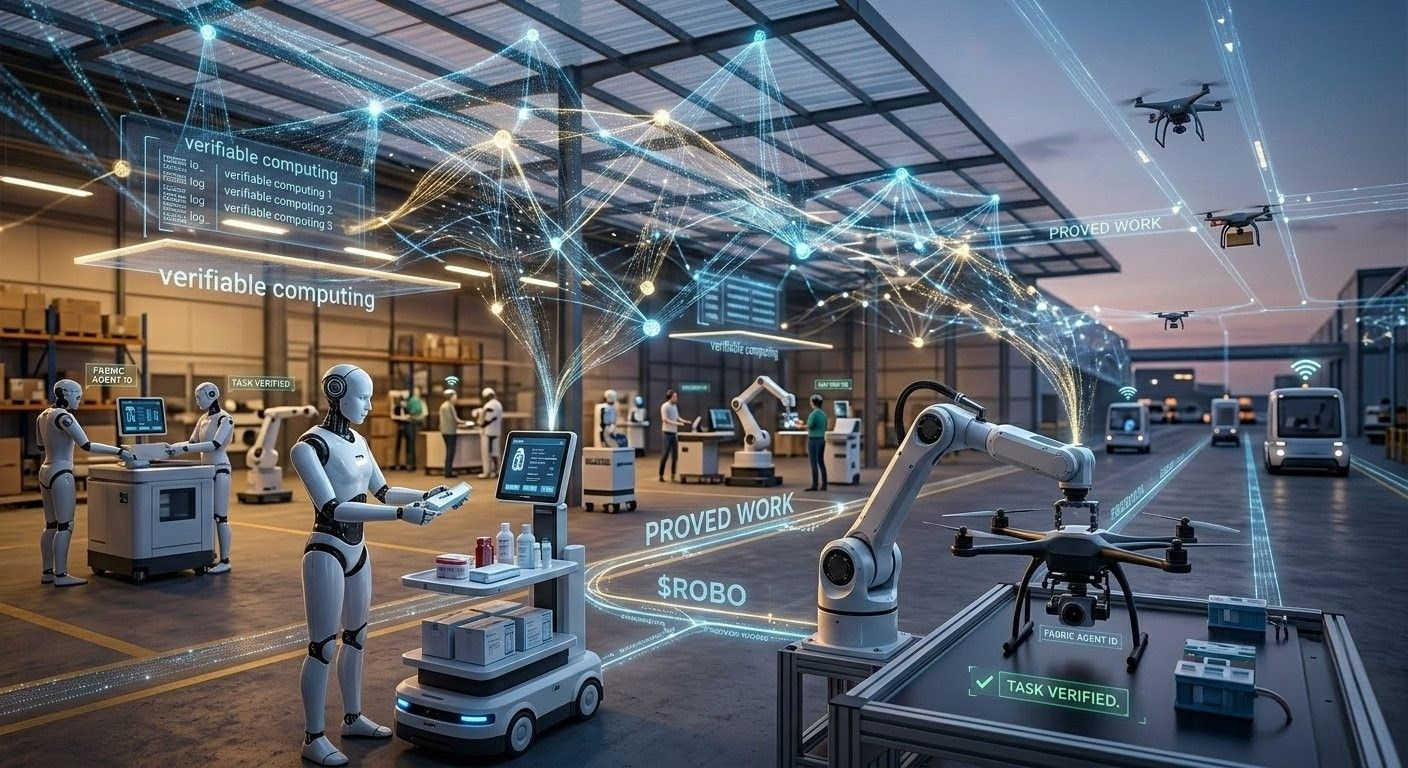
The heart of the Fabric Protocol lies in its decentralized approach. Unlike the traditional, centralized systems where a single entity controls everything, Fabric is built on an open network where anyone can participate, contribute, and benefit. This means that the protocol is not just about building robots or machines that can perform specific tasks; it is about creating an infrastructure that allows machines to collaborate, compete, and operate with one another across different industries and applications. With Fabric Protocol, the possibilities for autonomous systems are limitless.
One of the key components of this ecosystem is ROBO, the native token of the protocol. ROBO is used to pay for services, settle transactions, and reward participants who contribute to the network. More than just a digital currency, ROBO is the driving force behind the entire system, aligning the interests of robots, developers, operators, and human participants. It serves as a unit of measurement for access to resources, task execution, and economic interaction, ensuring that all actions are tied to tangible outcomes. Whether it is a robot completing a delivery, a machine learning agent solving a problem, or a human verifying a task, ROBO helps facilitate and reward the contributions made by all parties.
What sets Fabric apart from other robotic systems is its emphasis on verifiable computing. In today’s world, trust is one of the biggest obstacles to the widespread adoption of autonomous systems. We have machines performing tasks, but how can we be sure that they’re doing it correctly? How can we verify that they are following the rules and performing the work they claim to have completed? This is where Fabric Protocol comes in. By using blockchain technology, Fabric ensures that every action, task, and decision made by a robot is recorded on a public ledger, creating an immutable, verifiable record that anyone can check. This means that robots cannot hide mistakes, and their behavior can be independently verified by any participant in the network.
The use of blockchain also ensures that ROBO transactions and rewards are secure, transparent, and tamper-proof. When robots and agents interact with each other or with humans, the entire process is documented in a way that guarantees fairness and accountability. This trustless system removes the need for centralized oversight, as all participants in the network can independently verify the actions taken by the machines.
Fabric Protocol aims to create a truly decentralized ecosystem where robots are no longer just tools operated by humans but active agents that can earn value, buy services, and interact with one another in a meaningful way. Robots are given their own identity in the system, allowing them to participate in the economy in a way that reflects their abilities and value. By giving robots the ability to earn and spend ROBO tokens, Fabric opens up new possibilities for autonomous systems to become part of a broader economic network, working together in a shared space with humans and other machines.
At the core of this system is the concept of Proof of Robotic Work. This is where Fabric Protocol goes a step further in ensuring that the work robots do is verifiable. In traditional systems, the work completed by a machine is often recorded privately by the company that owns it, making it difficult to verify whether the task was completed correctly or not. With Fabric, every task is logged on a public ledger, providing a transparent and verifiable record of the work done. This verifiable proof of work allows for greater accountability, as machines cannot just claim to have done something without providing proof. If robots and machines are going to operate autonomously, it is essential that their actions be transparent, and Fabric makes this possible by ensuring that every task completed by a robot is verifiable by anyone in the system.
The vision for Fabric Protocol is not limited to a single robot or system. Instead, it seeks to create a network where a diverse range of machines, agents, and software can operate together in harmony. The goal is to build a shared ecosystem where robots, regardless of their manufacturer or purpose, can collaborate and interact with each other, sharing resources, tasks, and information in a seamless and transparent manner. This is particularly important in industries where robots and machines are already in use, such as logistics, healthcare, and manufacturing. By creating a common platform for robots to work together, Fabric Protocol helps break down the barriers that currently exist between different systems, creating an interconnected network where machines can operate in a way that benefits everyone.
One of the challenges in the world of robotics is ensuring that these machines can be trusted to perform tasks correctly and safely. Fabric Protocol addresses this challenge by building a system where verification, accountability, and governance are built into the very fabric of the network. Robots are not only required to perform tasks but are also held accountable for their actions through the use of ROBO tokens and verifiable computing. This ensures that robots operate in a way that is both transparent and accountable, building trust among users and participants.
The Fabric Foundation, the non-profit organization that supports the protocol, plays a crucial role in ensuring the long-term success of the project. By focusing on creating an open and collaborative ecosystem, the foundation helps guide the development of the protocol in a way that benefits all participants. Unlike traditional companies that may prioritize profit, the Fabric Foundation is focused on building a sustainable and trustworthy system that can support the growth of the robotic economy for years to come. The foundation’s mission is to create a system that is open to everyone, allowing robots, developers, and human participants to work together to create a better, more efficient future.
The integration of Fabric Protocol into existing robotic systems is not about replacing current technology; rather, it is about enhancing it. By adding a layer of transparency, accountability, and collaboration, Fabric provides a platform where robots can operate more effectively, share resources, and interact with other machines in a way that was not previously possible. This approach makes it easier for different robotic systems, regardless of their hardware or software, to work together in a way that benefits the broader ecosystem.
As the world of robotics continues to evolve, Fabric Protocol is positioned to play a central role in shaping the future of autonomous systems. By providing a trusted, transparent, and decentralized platform for machines to interact with each other and with humans, Fabric is helping pave the way for a future where robots can be trusted to perform tasks autonomously and economically. In this new world, robots are no longer just tools; they are active participants in a shared, transparent, and accountable ecosystem that benefits everyone involved.
In conclusion, Fabric Protocol represents a bold vision for the future of robotics. It is not just about building smarter robots or more efficient machines; it is about creating a system where trust, transparency, and collaboration are at the core of everything robots do. By using blockchain technology and verifiable computing, Fabric ensures that every action taken by a robot is transparent, accountable, and verifiable, allowing for a new era of collaboration between machines, humans, and intelligent systems. With its decentralized approach, Fabric Protocol is leading the way in creating a world where robots can work together in harmony, sharing resources and tasks to create a more efficient, interconnected, and trustworthy future.