
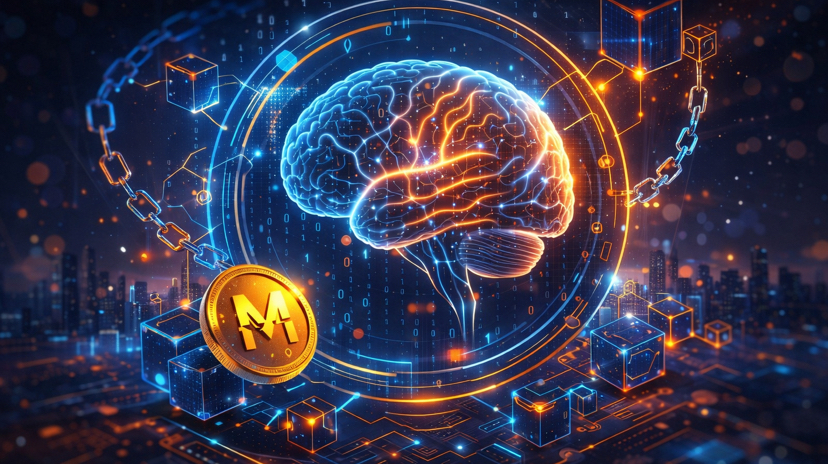
As blockchain technology evolves, the focus is shifting from simple token transfers to more advanced decentralized infrastructure. @Mira - Trust Layer of AI is exploring how artificial intelligence can work within Web3 while remaining transparent and verifiable. Instead of relying on centralized systems to process and validate AI results, Mira Network aims to create a framework where computation and verification can happen in a decentralized way.
One of the biggest challenges with AI today is trust. Most AI models operate behind closed systems, meaning users must rely on the provider’s claims about how the results are generated. In decentralized ecosystems, this approach does not align with the principle of trustless systems. Mira Network addresses this issue by combining AI computation with cryptographic verification so results can be validated rather than blindly accepted.
At the center of this ecosystem is $MIRA , the token that helps coordinate activity across the network. Tokens in decentralized networks are often used to align incentives between participants such as validators, developers, and users. Within Mira Network, $MIRA can help encourage honest participation and support the long-term sustainability of the ecosystem.
Another important aspect of the project is its potential impact on decentralized applications. As Web3 grows, applications will require more advanced data processing, automation, and intelligent systems. Infrastructure like Mira Network may allow developers to integrate AI-driven functionality into blockchain-based applications while maintaining transparency and decentralization.
By focusing on verifiable intelligence, @Mira - Trust Layer of AI is contributing to a broader movement in Web3 that aims to combine powerful technologies like AI with the transparency of blockchain systems. If this approach continues to evolve, it could help shape a future where decentralized applications rely on AI systems that are not only powerful but also trustworthy and verifiable.
