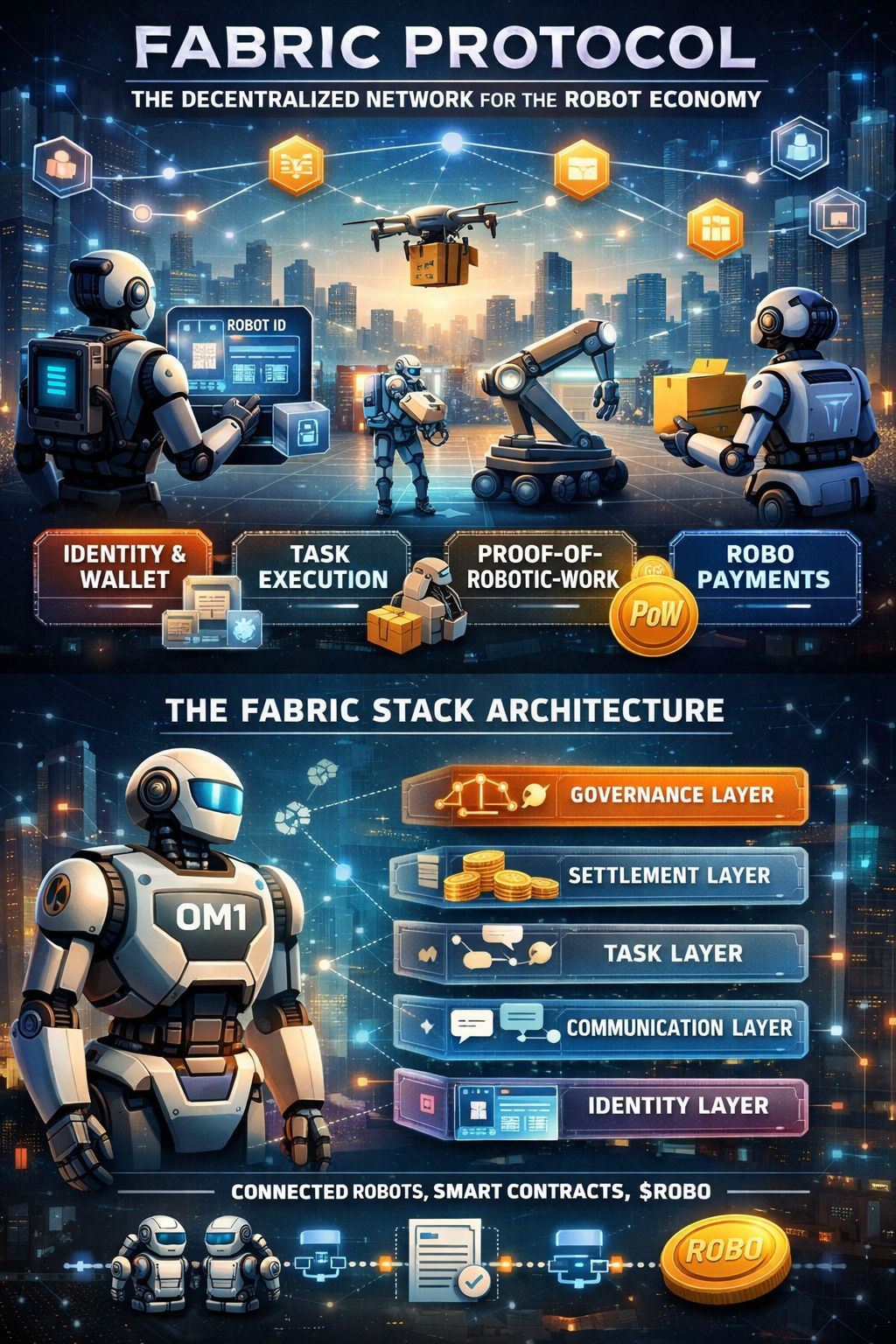
When I first came across Fabric Protocol, I assumed it was just another AI-crypto narrative. But after digging deeper, I realized it addresses a far more structural issue: robots today have no financial identity.
Humans can open bank accounts, sign contracts, take loans, and own assets. Companies can do the same. Robots — even when they perform real, productive labor — cannot. They have no wallet, no legal presence, and no way to participate directly in economic systems. Fabric Protocol proposes a solution: give every robot a blockchain identity and wallet so it can function as a true economic agent.
Rather than building robots, Fabric aims to build the infrastructure layer that connects robots, humans, and capital. Think of it as an “Ethereum for robots” — not a hardware manufacturer, but a coordination and settlement layer.
The Fabric Stack and OM1
At the core of Fabric’s architecture is OM1, a robot operating system developed by OpenMind. OM1 functions like Android for robots: any machine running OM1 can join the Fabric network and receive a blockchain-based identity.
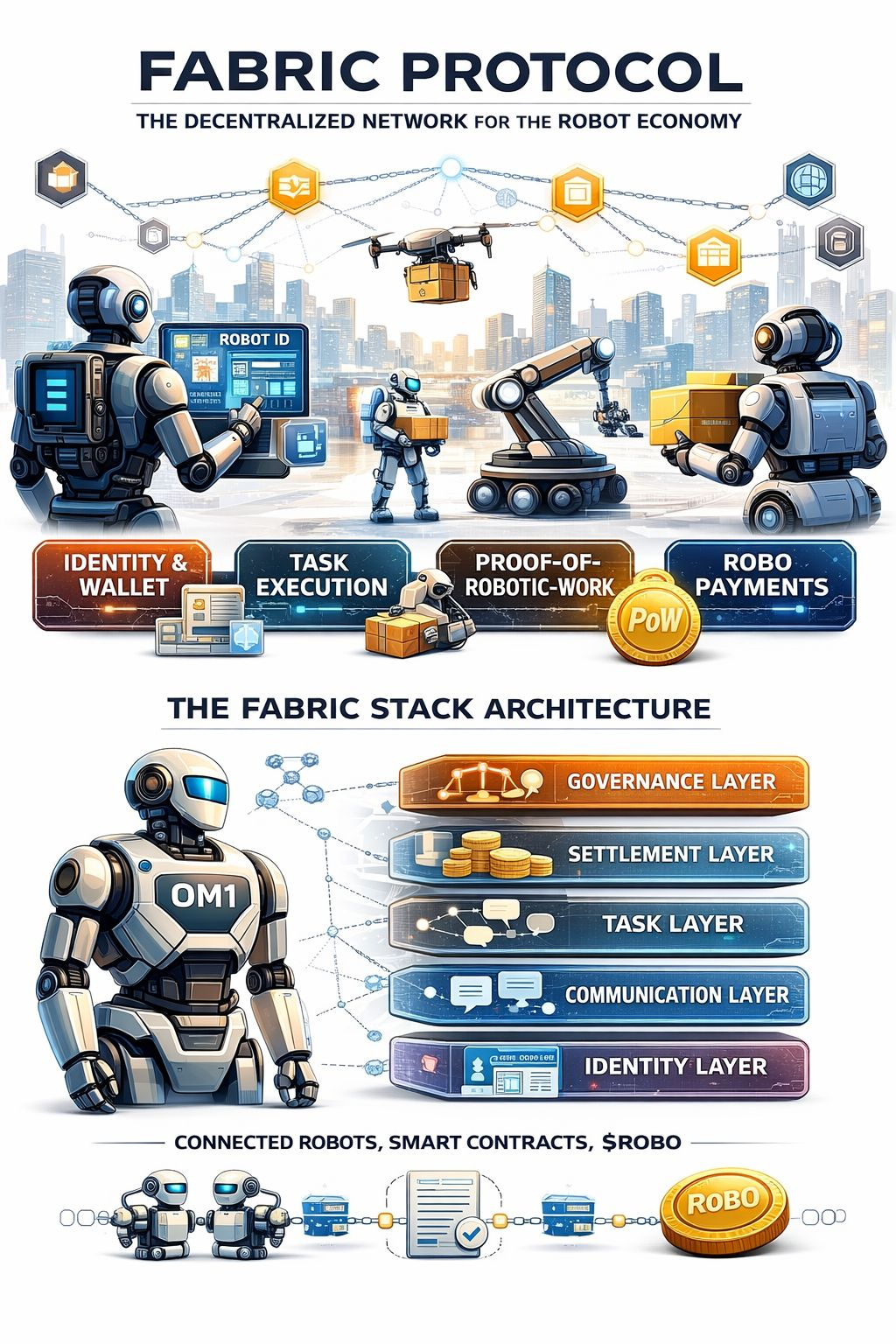
This is critical because robotics hardware is fragmented. Different manufacturers use different systems. OM1 attempts to unify them so applications and capabilities can move across machines.
On top of OM1, Fabric introduces five layers:
1. Identity Layer
Each robot receives a verifiable on-chain identity. Actions and performance can be linked to that identity, creating accountability and reputation.
2. Communication Layer
Robots can send peer-to-peer messages and receive network events.
3. Task Layer
Smart contracts define tasks, match robots to work, verify completion, and trigger rewards.
4. Governance Layer
Network rules — fees, slashing conditions, reputation parameters — are governed by participants.
5. Settlement Layer
Once work is verified, robots are paid in $ROBO tokens.
In simple terms: a robot completes a task (for example, picking a box), that action is recorded, validated, and compensated on-chain. Identity, verification, and payment are all integrated.
Proof-of-Robotic-Work (PoRW)
Fabric introduces Proof-of-Robotic-Work (PoRW), a consensus mechanism designed to reward verified physical labor.
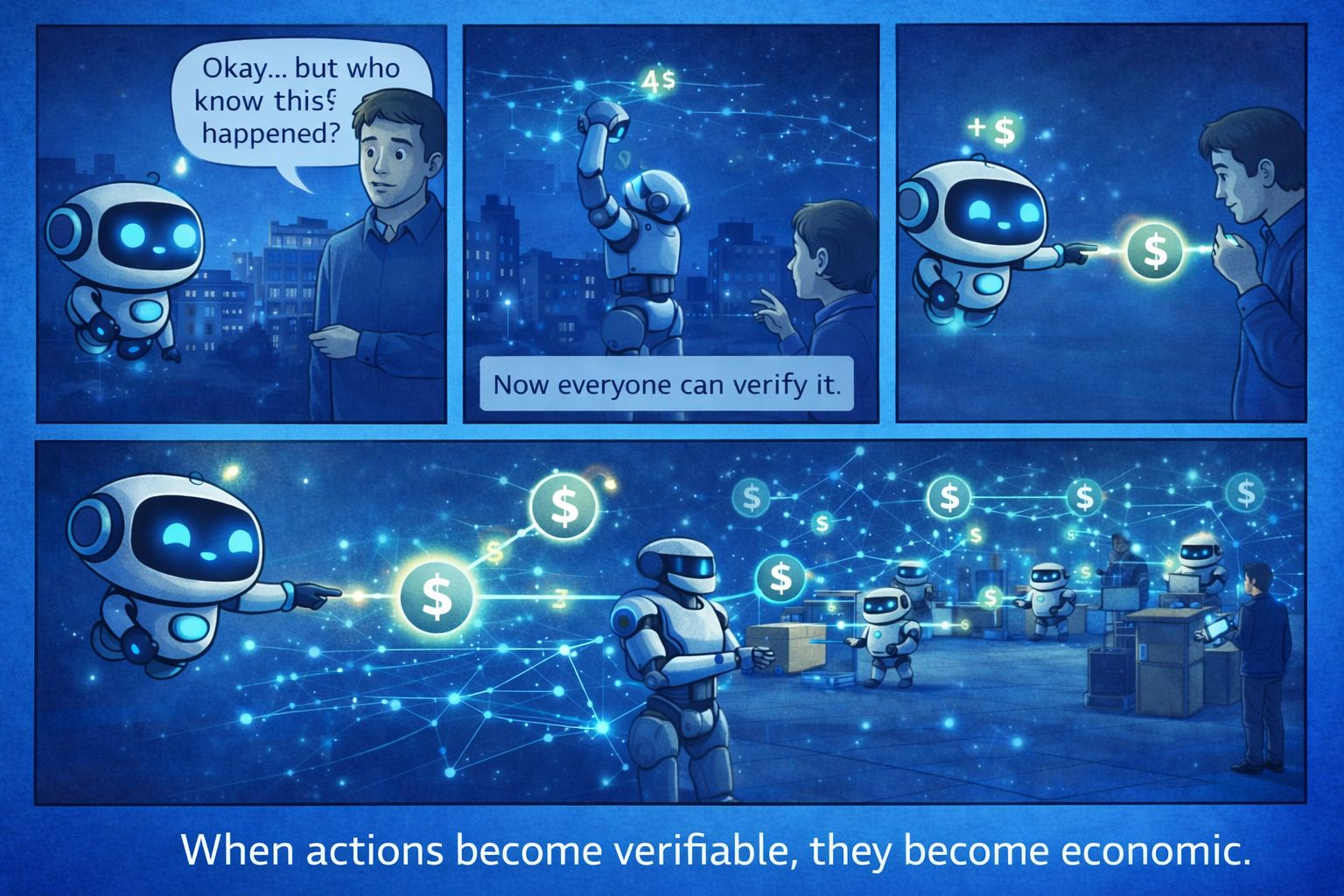
Unlike Proof-of-Stake — where holding tokens generates yield — PoRW pays only after real work is completed and validated. This shifts crypto rewards from passive capital to productive contribution.
The model resembles a contribution-based reward system. Participants earn tokens based on measurable output: task completion, useful data, or computational contribution. No verified work, no reward.
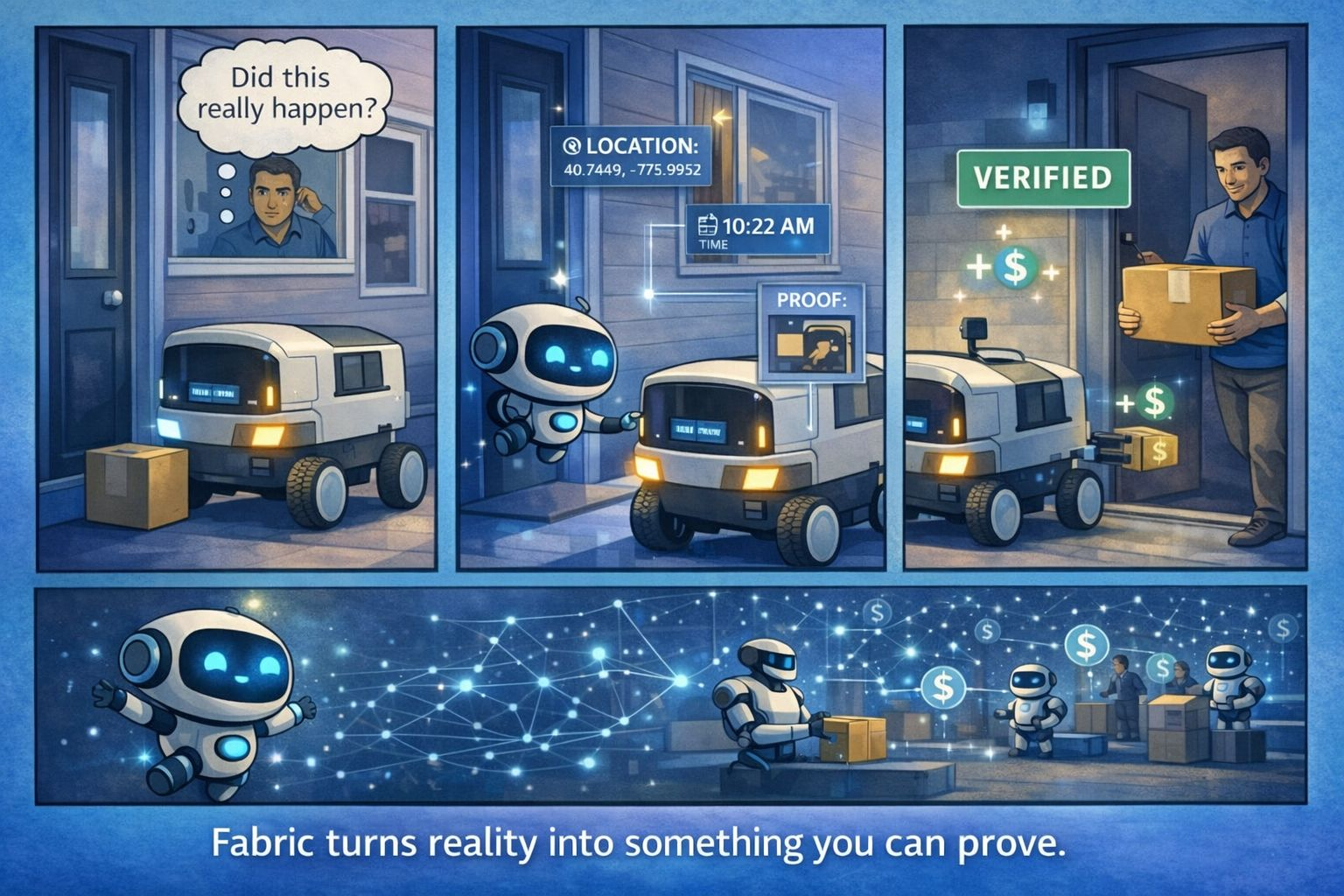
However, verification is the critical challenge. Who confirms that the robot actually performed the task? Fabric proposes validators, slashing, and potentially automated proofs (such as sensor data or video verification). But this remains a complex area. If verification becomes centralized or manipulable, the integrity of PoRW weakens.
The ROBO Token Economy
The $ROBO token sits at the center of the ecosystem.
Fixed supply: 10 billion tokens
Initially deployed on an Ethereum Layer-2
Later planned migration to a dedicated Fabric Layer-1 optimized for machine transactions
Utility includes:
Paying network fees
Staking bonds
Purchasing skills
Governance voting (via veROBO)
Fabric also proposes adaptive emissions — rewards scale based on network demand and contribution quality rather than fixed inflation.
Structural demand drivers include:
Robot registration staking
Task bonding requirements
Governance locks
Fee burns or buybacks
This model attempts to tie token demand directly to real robotic activity.
The open question remains distribution. If early investors hold large portions of supply, governance and reward flows may centralize — a common issue in token economies.
Governance and Structure
Fabric operates with a dual structure:
A non-profit Foundation guiding protocol development
A corporate entity handling token issuance
Token holders can vote on parameters such as fees, skill whitelisting, and network rules. In theory, this mirrors a DAO structure.
In practice, the key question is participation. Will actual robot operators hold and vote with tokens, or will governance be dominated by speculators? Decentralization depends on who shows up.
Partnerships and Signals
Fabric has demonstrated early integrations, including robots paying for services (e.g., charging stations) using stablecoins. This proves machines can transact autonomously.
OpenMind has also secured venture backing, signaling institutional confidence in the infrastructure vision.
However, large-scale industrial deployments remain limited. No major global fleet operators have publicly integrated yet. The ecosystem is still in pilot and proof-of-concept stages.
Risks and Failure Modes
Several challenges stand out:
Verification attacks:
If robots can fake task completion or validators collude, the reward system breaks.
Token manipulation:
Large holders could influence emission rules or governance parameters.
Technical fragmentation:
Building a universal robot OS is extremely difficult. If manufacturers do not adopt OM1, fragmentation persists.
Regulatory uncertainty:
Liability is unclear. If a Fabric-connected robot causes damage, who is responsible — the owner, the validator, the token holder?
Market adoption:
Enterprises may prefer closed systems over open, decentralized infrastructure due to liability and control concerns.
Societal Implications
Fabric’s broader vision touches employment and wealth distribution. If robots increasingly perform labor, who captures the value?
The protocol proposes a model where ownership and rewards can be distributed via tokens. But whether this meaningfully offsets labor displacement remains an open debate.
Traceability may appeal to regulators, as robot actions are recorded transparently. At the same time, privacy concerns arise if too much operational data is stored on-chain.
Adoption Outlook
A realistic trajectory could look like:
Short term: limited pilots in low-risk industries
Mid term: specialized industrial deployments
Long term: broader integration into logistics, warehousing, or public infrastructure
Success depends on technical execution, regulatory cooperation, and sustained developer adoption.
Final Thoughts
Fabric Protocol is ambitious. It does not merely propose a token — it proposes a financial and coordination system for machines.
The vision is compelling:
Robots with identity
Verified on-chain labor
Autonomous economic participation
Yet major questions remain:
Can PoRW scale securely?
Will OM1 achieve broad hardware adoption?
Can governance remain genuinely decentralized?
I remain cautiously optimistic. Fabric has capital, partnerships, and a clear thesis. But infrastructure visions succeed only when theory meets large-scale execution.
For now, it is a bold experiment in building the economic layer for autonomous machines.