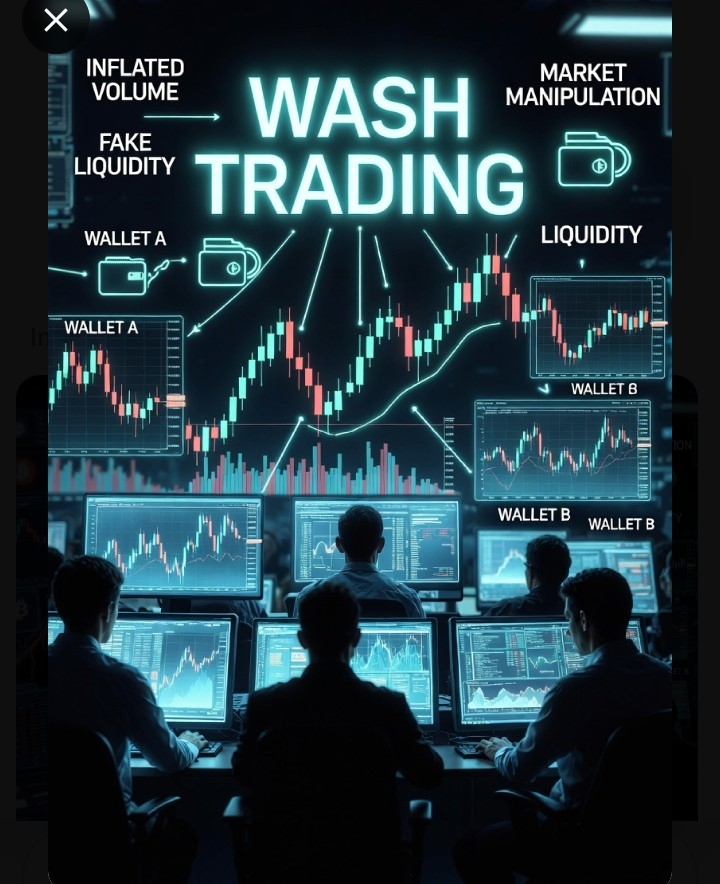
Wash trading is a manipulative practice in cryptocurrency markets where a trader (or group of traders) buys and sells the same asset repeatedly to themselves or coordinated accounts. The goal isn't to make a profit from the trades but to create the illusion of high trading volume and activity. This can mislead other investors into thinking the crypto is more popular or liquid than it actually is, potentially driving up the price or attracting more buyers.How It Works
Mechanics: A trader might use multiple wallets or accounts to execute buy and sell orders for the same token at similar prices. For example, selling 1,000 tokens from Wallet A to Wallet B (both controlled by the same person) and then reversing it.
Detection: Exchanges monitor for patterns like rapid back-and-forth trades between linked accounts. Tools like on-chain analysis can spot it by tracing wallet connections.
Legality: It's illegal in regulated markets (e.g., under U.S. SEC rules) as it violates anti-manipulation laws. In crypto, it's common in unregulated DEXs or shady CEXs, but major platforms like Binance ban it and use AI to detect it.
Why It Happens in Crypto
Inflating Metrics: Projects or exchanges use it to boost apparent volume, making a token seem more attractive for listings or investments.
Price Manipulation: It can stabilize or pump prices artificially, leading to schemes like pump-and-dumps.
Risks: For regular users, it creates fake liquidity, increasing slippage and volatility. It erodes trust in the market and can lead to rug pulls.
Real-world examples include some NFT markets or low-cap tokens where volume is faked to hype launches. Regulators like the CFTC have cracked down on it, fining offenders millions.To avoid it, stick to reputable exchanges, check real volume via tools like CoinGecko, and watch for suspicious spikes without news.#WashTrading #CryptoManipulation #MarketFraud #BlockchainEthics #TradingScams