

Today February 10, 2026, and I keep getting the same question on trading desks, in payment startups, among the folks actually building the rails. I’m Dr_MD_07, and I want to cut through the noise: here’s how stablecoin payments actually work on Plasma, and why this matters now.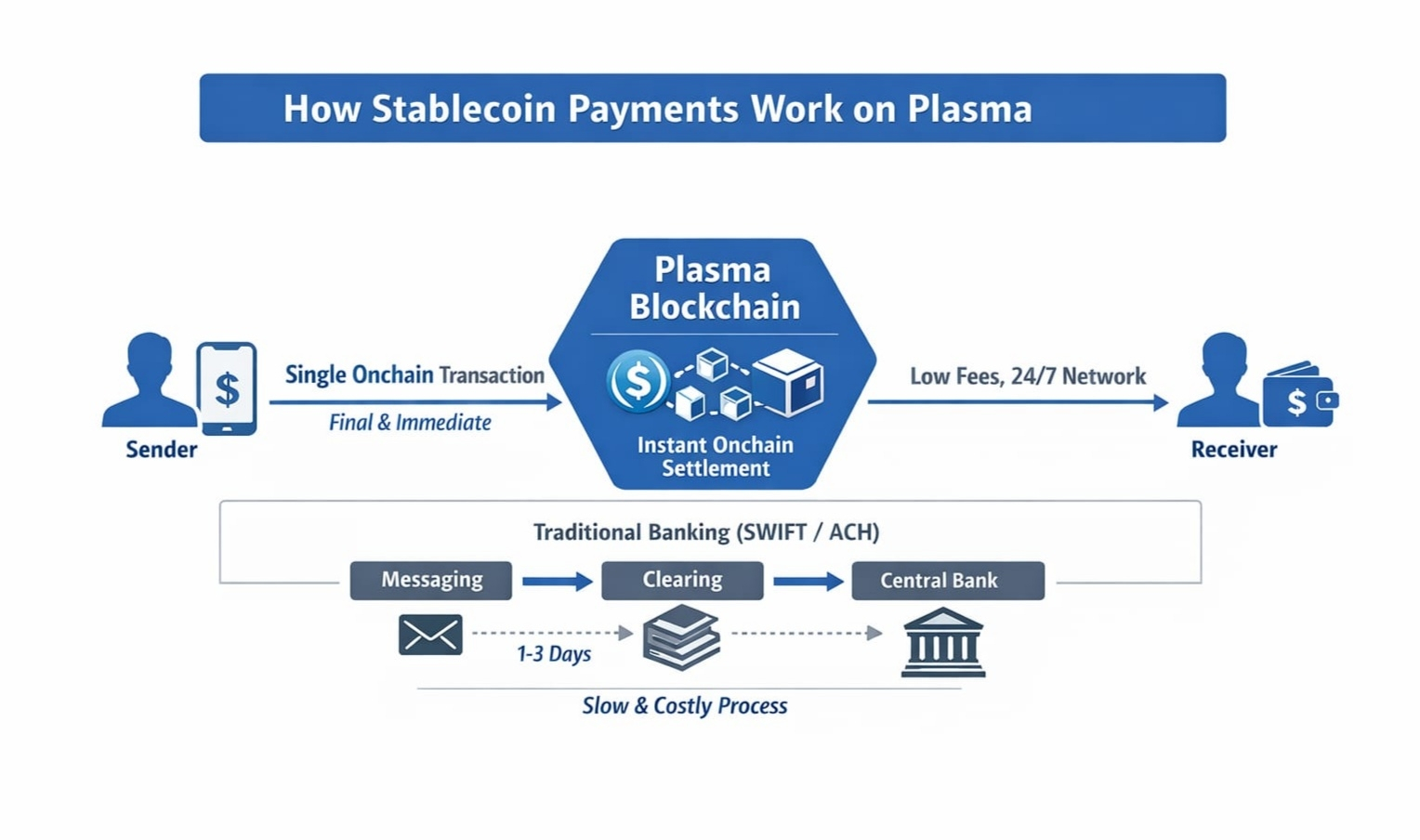
Plasma doesn’t just tack payments on as an afterthought. It’s built from the ground up with stablecoins in mind. That’s the difference. If you care about how digital dollars move not just in theory, but in the real world Plasma is worth a closer look.
Let’s start simple. Stablecoin payments use tokens pegged to fiat currencies like the US dollar. They aren’t for speculation. They’re digital cash, running on public blockchains. Plasma leans into this idea hard: stablecoins aren’t some side feature, they’re the main event.
On Plasma, when you send a payment, the instruction and the money move together, right on the chain. No separate messaging system, no waiting around for some back-office to reconcile later. The transaction itself is the settlement. That’s it.
This isn’t how legacy payments work. On SWIFT or ACH, or with international wires, you get layers first a message, then clearing, then final settlement (usually days later, buried in some central bank ledger or shuffled through correspondent banks). Every extra layer adds time, cost, headaches.
Take international wires. They drag on for days sometimes longer if there’s a weekend or a holiday in the mix. Fees are brutal, often $20 to $80 a pop, and that’s before you even factor in FX spreads.
Domestic payments aren’t much better. In the US, ACH still runs in batches. Banks submit files, net the positions, and settle later. For you, that means waiting one to three business days for funds to clear. If you’re running payroll or paying suppliers, this delay isn’t just annoying it’s a real problem. And tracking? Don’t get your hopes up. Payments can just disappear into the ether until they finally show up.
Plasma cuts out most of this friction. Payments settle directly onchain. Once confirmed, they’re final. No separate clearing, no “settlement window,” no cut-off times or weekend blackouts. The network runs nonstop. Depending on traffic, payments settle in seconds or minutes. Fees? Usually a few cents, maybe a couple bucks tops far cheaper than wires, though it does depend on network activity and design.
This setup makes the biggest difference for cross-border payments and remittances. The International Labour Organization pegged the number of international migrant workers at around 167.7 million in 2022. A lot of them send money home, and flat fees eat a painful chunk of smaller transfers. Stablecoins slash those costs and make settlement more predictable. Even if the end-user only sees their local currency, stablecoins are moving value behind the scenes.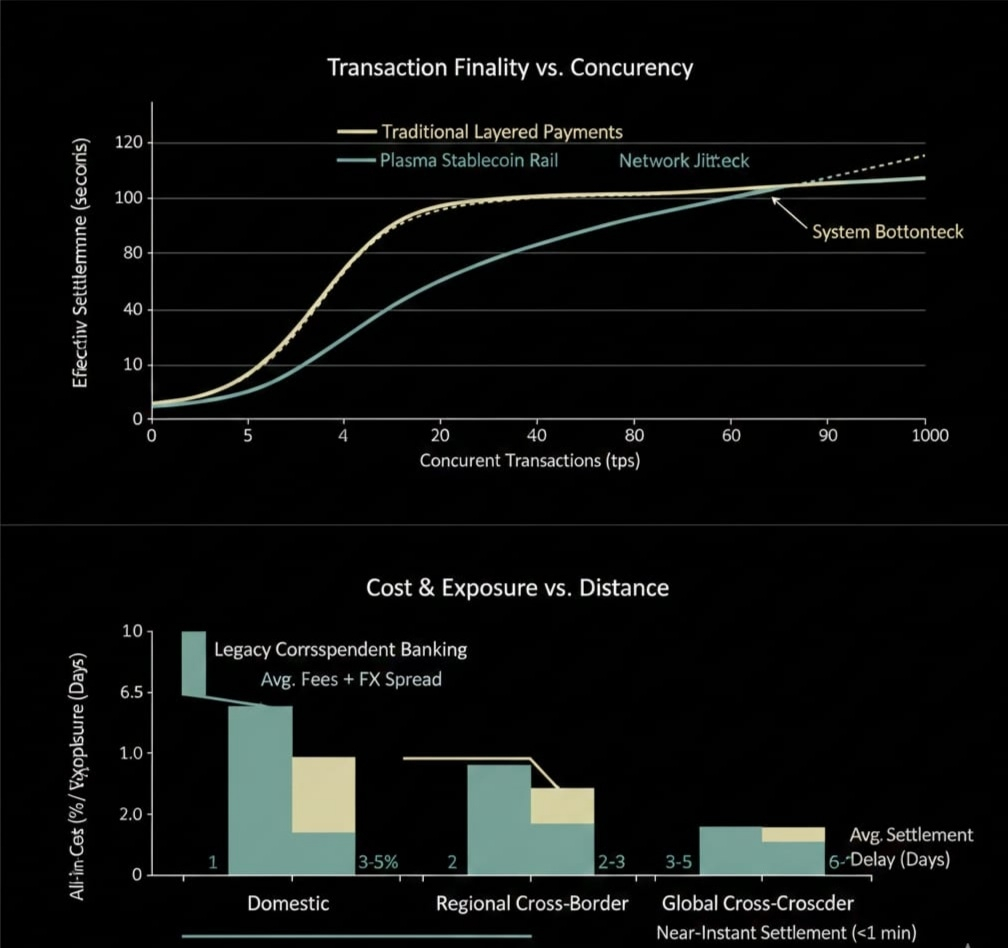
Zoom out, and the stablecoin market itself tells you why platforms like Plasma matter. By the end of 2025, stablecoin supply hit around $300 billion, mostly US dollar-backed. Onchain transaction volume in 2024 and 2025 soared into the trillions some estimates put it above $40 trillion once you count trading. Active stablecoin addresses exploded from about 19.6 million to 30 million in just a year. Early adopters aren’t alone anymore.
Institutions noticed. In 2025, Fireblocks found that 90% of surveyed financial institutions were actively using stablecoins, and almost half used them for payments already. Visa and Mastercard both piloted stablecoin settlements merchants still get fiat, but the rails are onchain. Adoption isn’t about replacing banks overnight. It’s a hybrid: onchain infrastructure working alongside what’s already there.
Regulation is catching up. The US passed the GENIUS Act last July, setting federal rules for payment stablecoins reserves, licensing, disclosures, the works. The EU’s MiCA has governed stablecoins since mid-2024, with full rollout by year’s end. The UK and Hong Kong are moving too. For platforms like Plasma, this matters. Payments run on trust as much as code.
So from where I sit, watching the infrastructure mature, Plasma’s focus makes sense. Businesses crave predictable settlement. Remote teams want to get paid without losing money in fees. Treasury teams demand fast liquidity. Plasma’s way of handling stablecoin payments? It’s not just new tech. It’s a shift in how money moves. And it’s happening right now.

