

Plasma is building a Layer 1 that treats stablecoin settlement as the main job. The promise is simple and practical. If someone holds USDT, they should be able to move it instantly, at very low cost, without learning how gas tokens work, and without the experience falling apart the moment traffic gets heavy. Plasma keeps full EVM compatibility so builders can bring familiar contracts and tooling, but the chain design and product direction stay anchored on payments.
Plasma This matters because stablecoins already behave like a global dollar rail, but the typical onchain experience still feels like a developer workflow. People receive stablecoins, then hit the same wall. They cannot send again unless they also hold a separate gas token, or they get stuck waiting through slow confirmations. Plasma is trying to remove that friction at the protocol level by making stablecoin movement the default experience, not a workaround.
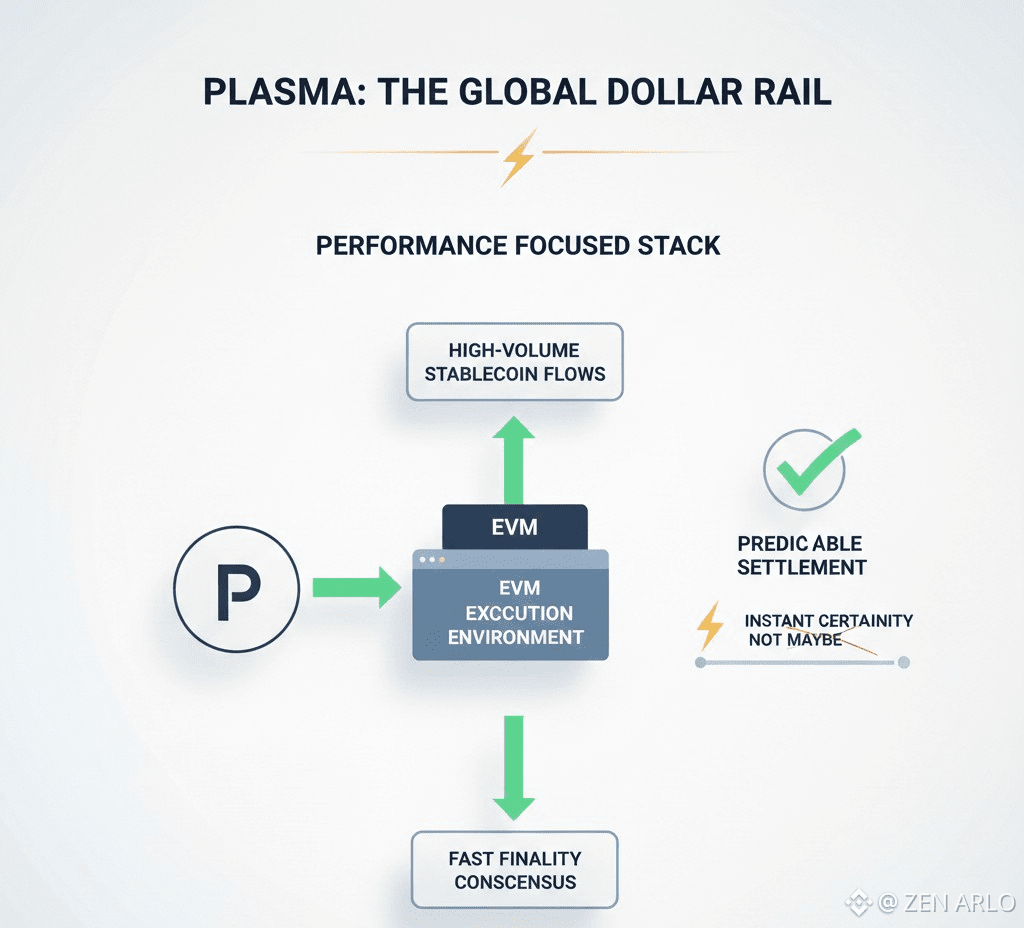
Plasma describes a performance focused stack that matches its payment goal. It pairs an EVM execution environment with a fast finality consensus design, and it frames this combination as purpose built for high volume stablecoin flows. The point is not just speed on a dashboard. The point is predictable settlement that feels final quickly, because payments need certainty, not maybe.
Plasma gets more interesting is the stablecoin native direction. The project repeatedly emphasizes gasless style USDT transfers and stablecoin first gas as core features, meaning the chain is aiming for a world where users pay fees in stable assets or do not deal with fees at all for common payment actions. That is not a small UX tweak. If it works safely at scale, it changes who can use stablecoins without extra steps, and it changes how payment apps integrate, because they do not have to design around gas token distribution.
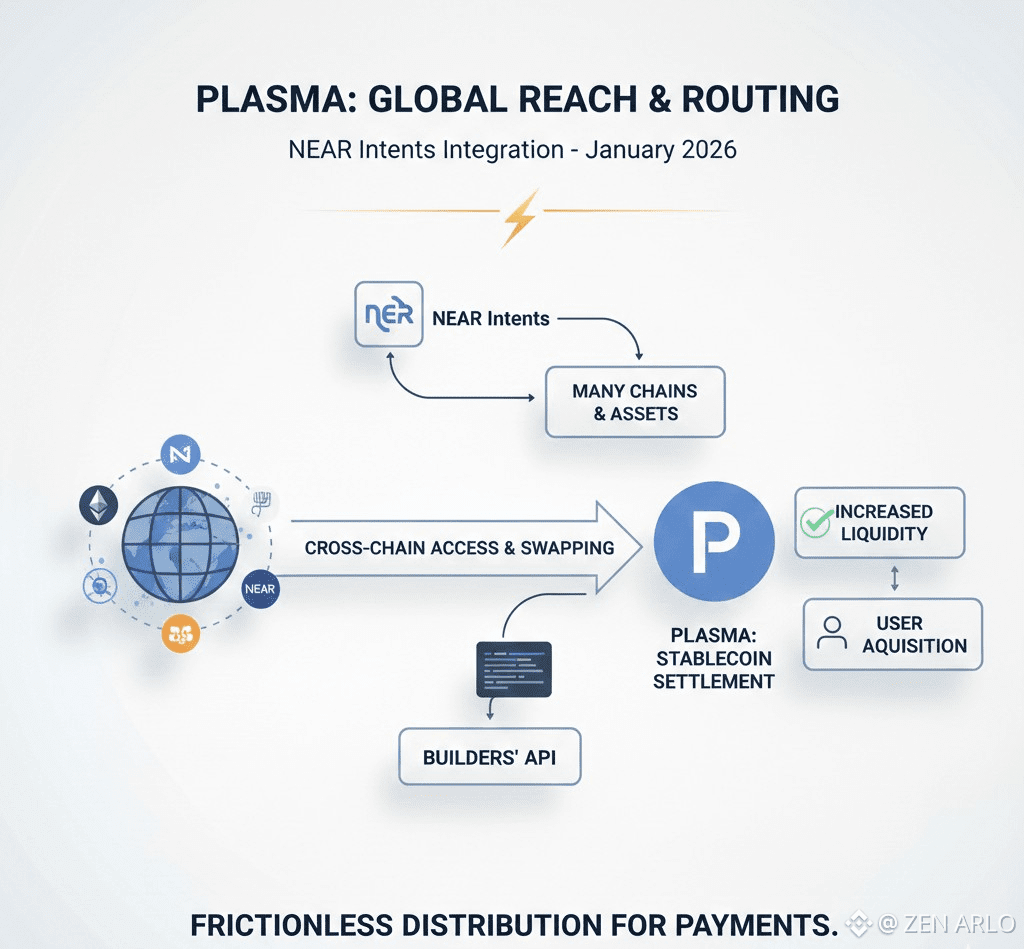
Plasma The latest meaningful update is the NEAR Intents integration announced in January 2026. The public messaging around this is focused on reach and routing, making it easier to swap across many chains and assets to and from Plasma, and giving builders an API path to bring that cross chain access inside their own products. For a payment oriented chain, this is not just a partnership headline. It is a distribution move, because stablecoin settlement wins when liquidity and users can reach the chain without friction.
Plasma scan, the charts page reports totals around 145.94 million transactions and highlights 24 hour activity including roughly 252,600 transactions and 5,419 new addresses. It also shows developer side movement with contracts deployed and verified during the last 24 hours, which is a useful signal that teams are actively shipping and validating code on the chain.
Plasma documents XPL tokenomics directly in its official docs. The stated initial supply is 10,000,000,000 XPL. The public sale allocation is 10 percent, with non US purchasers unlocked at mainnet beta and US purchasers under a 12 month lockup that fully unlocks on July 28 2026. Plasma also describes a large ecosystem and growth allocation and explains how that pool is intended to support adoption and network expansion.
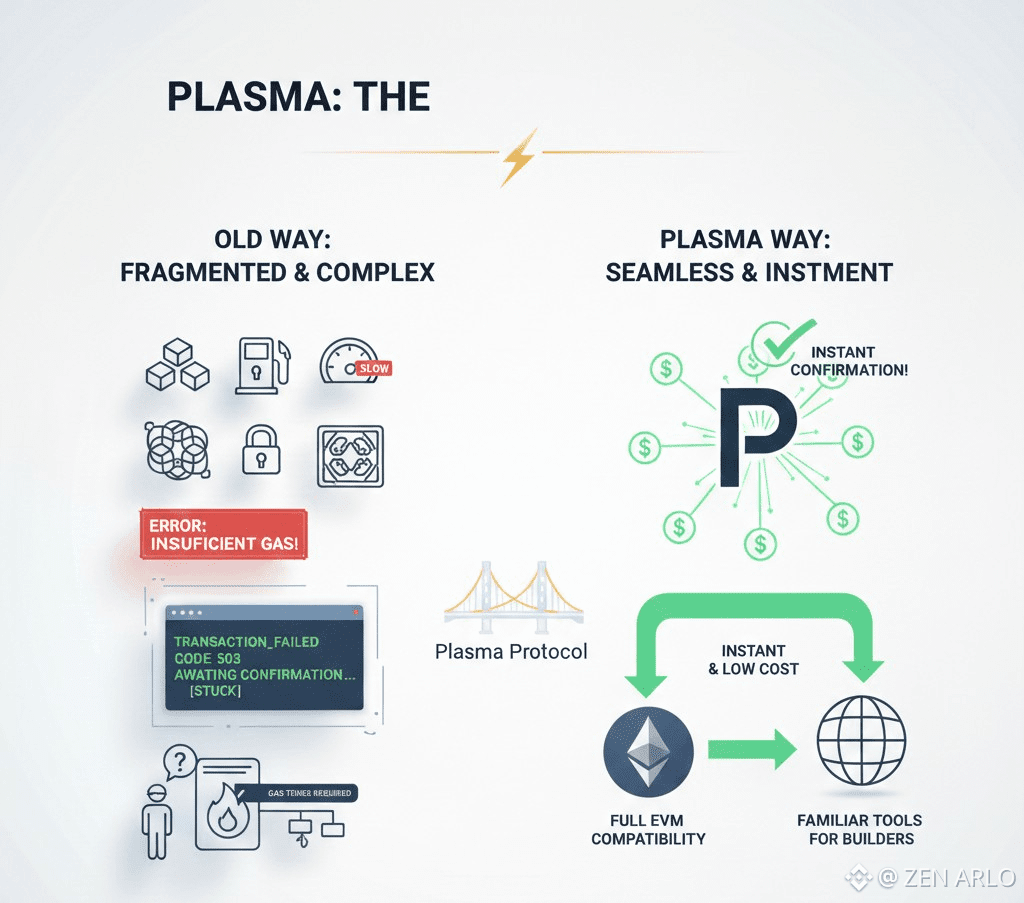
Plasma is aiming for are clear if you look at the design choices together. EVM compatibility keeps builder adoption realistic. Stablecoin first gas and gasless transfer ideas target the number one reason stablecoin payments fail for normal users. Fast settlement targets the reliability expectation that payments require. And the push toward broad routing through intents style integrations targets accessibility, because payment rails are only useful when people can reach them from where they already are.
Plasma is trying to make the exit simply the act of spending and settling. A user should be able to receive USDT and send again instantly. A business should be able to settle stablecoin flows at scale without building a complex gas token distribution layer. The intent is that stablecoin value can move through Plasma like a payment network, not like a trading loop.
Plasma becomes a real settlement layer or just a good concept. The most important next steps are shipping the stablecoin native experience into widely used products beyond first party examples, proving the gasless and stablecoin first fee path stays safe under abuse pressure, and expanding reach so cross chain access translates into repeat settlement volume. The NEAR Intents integration is an early signal of that direction, but the durable proof will be usage that keeps growing without the UX degrading.
