

Why Dusk Puts Zero-Knowledge Proofs Front and Center
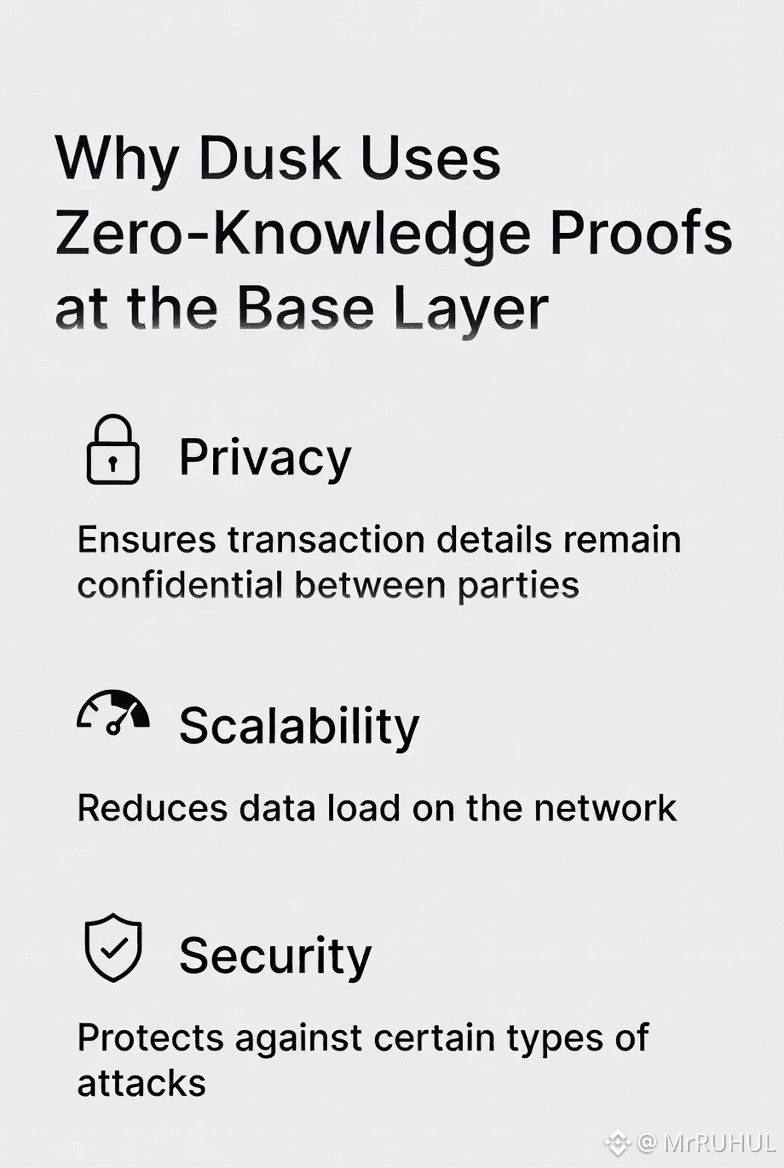
Dusk Network didn’t pick up zero-knowledge proofs (ZKPs) just for the buzz. They made a clear call to build their whole blockchain around ZKPs. It’s not some bolt-on feature or afterthought—it’s the backbone. They get where blockchain is headed, especially with finance and regulation entering the picture. While most blockchains treat privacy like an optional add-on, Dusk makes it a core ingredient. That choice shapes everything about how the network works and where it’s going.
Dusk’s focus is compliant on-chain financial markets—issuing securities, trading, settling, anything that mixes money, identity, and regulation. These aren’t areas where you can just let everything hang out in the open. You need to prove ownership, eligibility, or compliance without putting everyone’s private info on display. That’s exactly what zero-knowledge proofs make possible. With ZKPs at the foundation, Dusk bakes privacy and verifiability into the network itself instead of leaving them out on the edges.
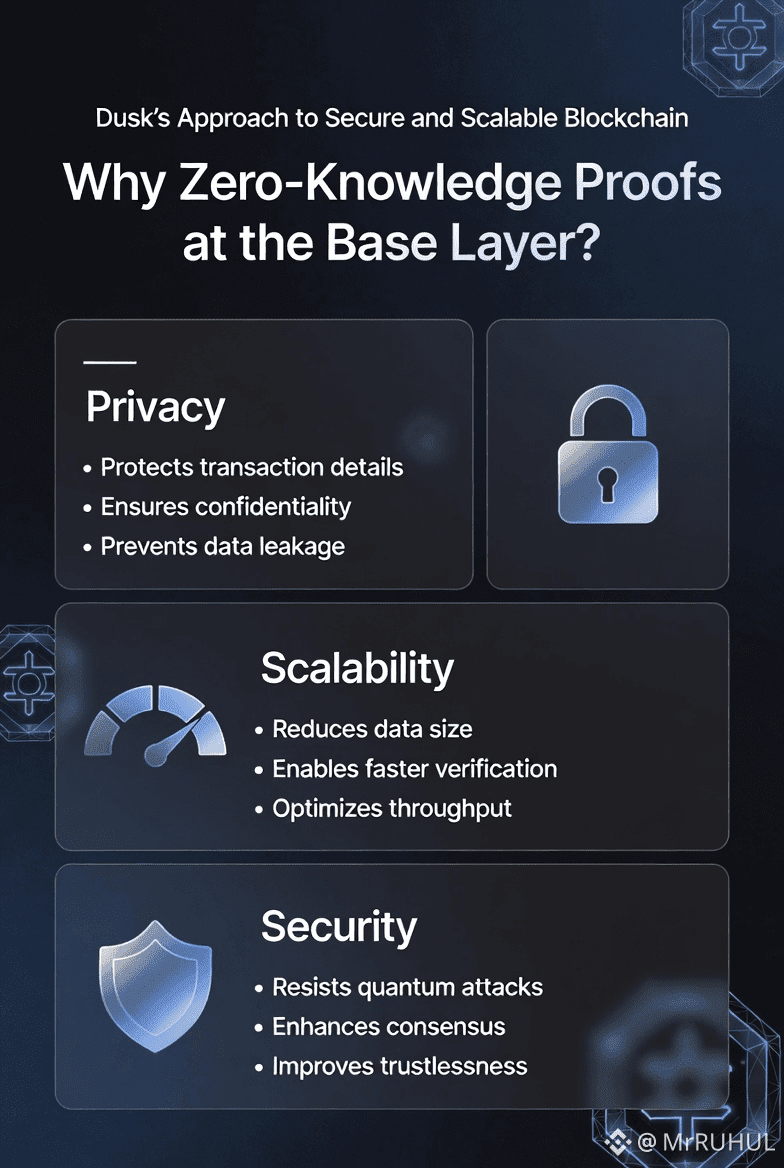
There’s another angle: composability without leaking data. On typical smart contract platforms, every transaction is public. That’s fine if all you’re doing is sending tokens, but it falls apart for anything more complex—private balances, positions, confidential trades, identities. If privacy comes later, apps get stuck in silos. Developers scramble to invent their own privacy hacks, and everyone keeps reinventing cryptography. Dusk skips that chaos by treating ZKPs as a standard tool. Apps can work together from the start, and confidentiality just comes with the territory.
Regulation isn’t the enemy here. Regulators don’t hate privacy—they hate black boxes with no accountability. Financial rules demand proof and auditability, but not full public exposure. ZKPs let users show “this transaction passed KYC and AML” or “this security transfer followed the rules” without revealing their paperwork. By wiring ZKPs into the protocol itself, Dusk makes these guarantees enforceable on-chain, not just promises off-chain or through some middleman.
Security matters, too. Push privacy up to the app layer, and suddenly every developer has to get cryptography right. That’s risky. One small error, and the whole system unravels. Dusk moves that job to the protocol, where cryptographic tools are standardized, checked, and kept up to date for everyone. That tightens security and gives both builders and users a stronger foundation.
People used to worry about speed or scalability with zero-knowledge tech, but honestly, that’s outdated. ZKPs are way faster to verify than they used to be, especially if you design for them from day one. By planning for ZKPs at the base layer, Dusk avoids the awkward slowdowns and messy fixes that hit networks trying to add privacy later. You get smooth performance and privacy, with no big trade-off.
There’s a bigger idea at play, too. Blockchains promised trustless systems, but total transparency created its own headaches—front-running, surveillance, MEV, all sorts of market manipulation. Zero-knowledge proofs fix some of that. When you can keep sensitive info private but still prove you’re following the rules, markets get more fair and a lot harder to game. Dusk doesn’t treat ZKPs as a side feature—it’s a structural upgrade.
In the end, Dusk’s choice is about the future. Blockchain isn’t just for day traders and hype cycles anymore. It’s about plugging into real financial and legal systems. Institutions want privacy, compliance, and infrastructure they can actually trust. Dusk’s architecture shows it’s built for that world, not just the next trend. Putting zero-knowledge at the base means the network can keep up with new regulations and stay decentralized.
Bottom line: Dusk weaves zero-knowledge proofs into its core because, in actual finance, privacy, compliance, and trust all go together. That’s the whole point.@Dusk #Dusk $DUSK
