

For a long time, blockchains have been described mainly as ledgers. A place to record things. A shared book that everyone can check. That idea was a good starting point, but real finance has never been just about writing things down. It is about systems: how things are created, how they move, how rules are applied, how mistakes are prevented, and how everything fits together into a reliable flow.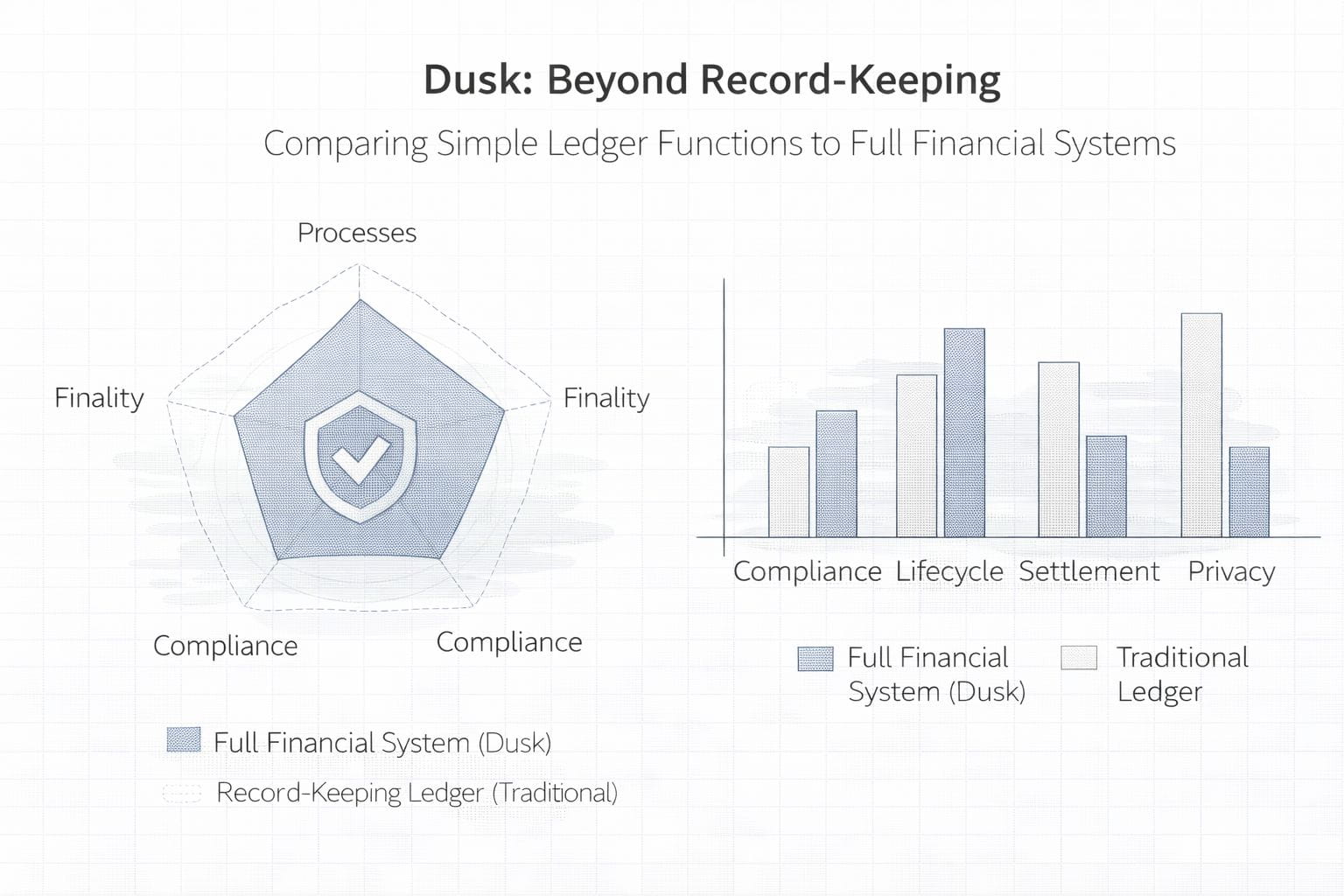
Dusk is built around this broader view. Instead of treating the blockchain as a simple record-keeping tool, it treats it as a full financial system. A place where processes live, not just data. Assets on Dusk are not only entries in a list. They follow rules, have lifecycles, and behave in ways that match real-world expectations.
This changes how you think about what a blockchain is for. It is no longer just “did this happen” but also “was this allowed,” “was this done the right way,” and “can we move on with certainty.” Things like privacy, proofs, and finality are not extras. They are part of how the system works every day.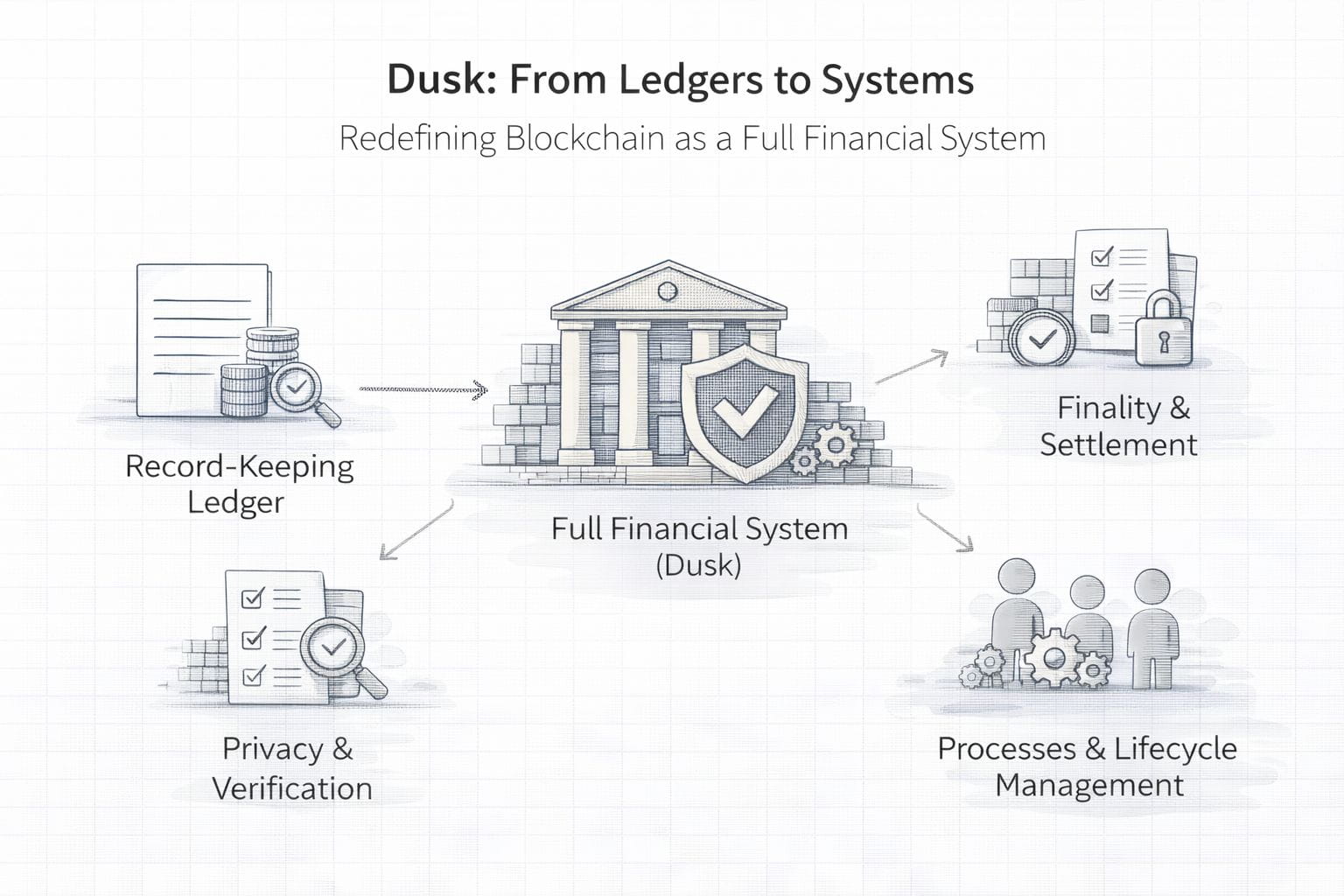
For builders, this means you can design real applications without rebuilding the same logic again and again. For users, it means the system feels calmer and more predictable, closer to how serious financial tools already work. And for the community, it means we are not just maintaining a ledger, but growing a shared piece of infrastructure that can support real use over time.
Moving from ledgers to systems is a quiet shift, but an important one. It is how blockchain stops being a simple record and starts becoming something you can actually rely on.
