Lately, I've been thinking less about what AI can do and more about what people are actually willing to trust.
Those aren't the same conversation.
Every week there's another headline about AI becoming faster, smarter, or more capable. It's impressive, no doubt. But finance has always had a way of bringing big ideas back to earth. The moment real money is involved, the questions become surprisingly ordinary.
Who made this decision?
Can anyone check it?
If something goes wrong, who's responsible?
I don't think those questions disappear just because AI enters the picture. If anything, they become even more important.
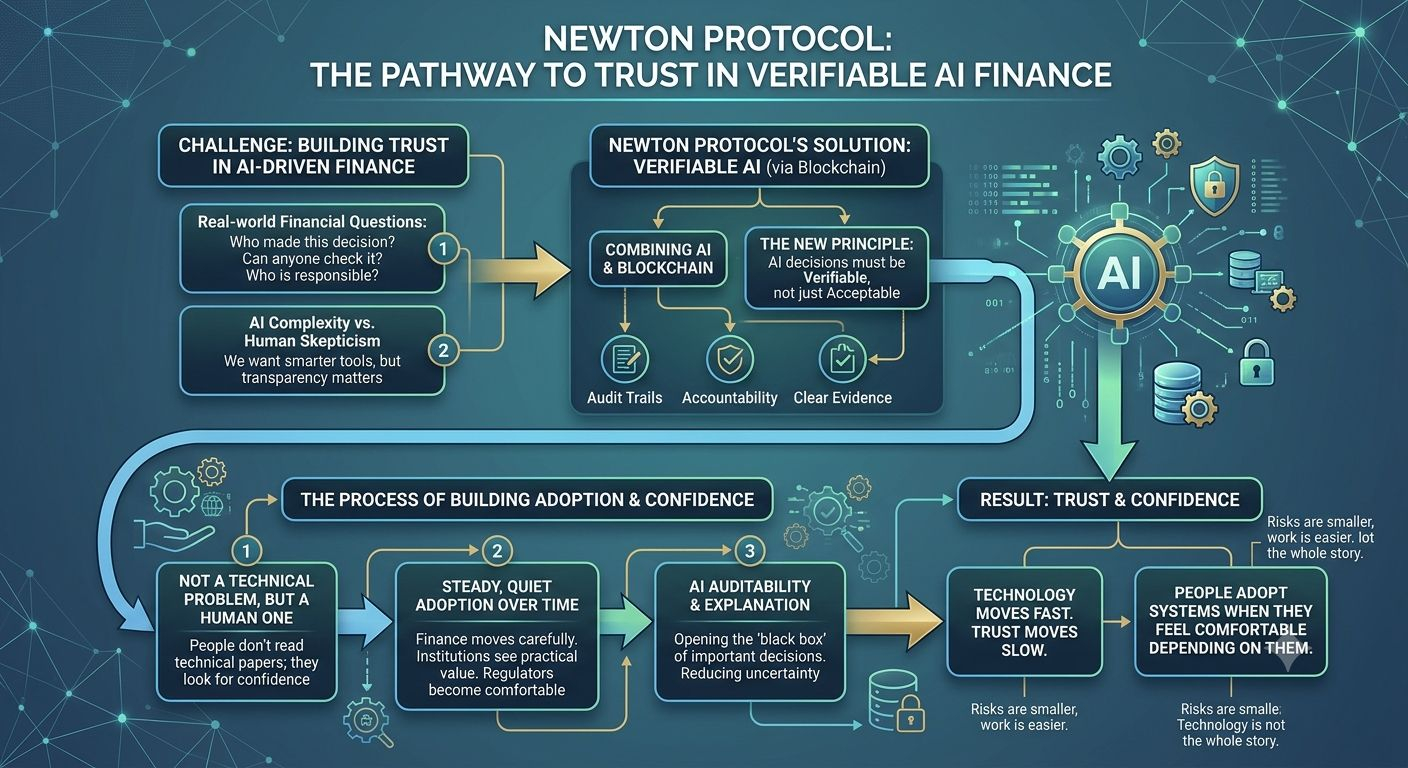
That's why Newton Protocol made me stop for a while. Not because it's mixing AI with blockchain—that's almost expected these days—but because it seems to start from a problem that feels real. If AI is going to make decisions that affect money, then maybe those decisions shouldn't be accepted just because a model is intelligent. Maybe they need to be verifiable.
The more I sit with that idea, the more reasonable it sounds.
We've spent years making AI more capable. Maybe the next step isn't making it even smarter. Maybe it's making it easier to trust.
And trust is a strange thing.
You can't code it into existence.
You can't announce it on launch day.
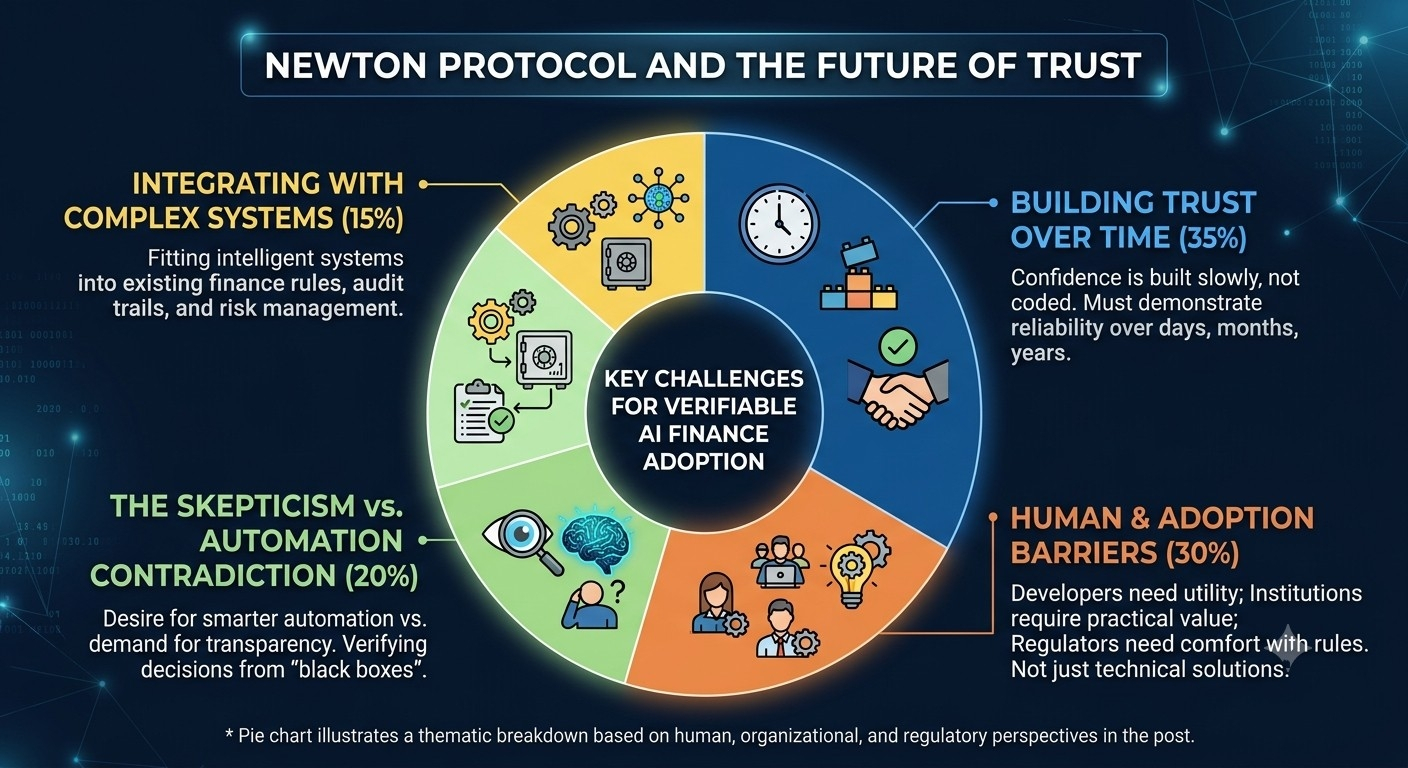
People trust financial systems because they've watched them work over time. They've seen them handle busy days, bad days, unexpected problems, and changing markets. Confidence builds slowly, almost quietly.
Technology doesn't work that way. Technology moves fast. Sometimes too fast.
That's probably why I don't think the biggest challenge for Newton Protocol is technical.
It's human.
Most people don't really care what's happening underneath the app they're using. They aren't reading technical papers before making a payment or placing an investment. They just want to know that the system works, that their money is safe, and that someone has thought about the risks before they had to.
Businesses aren't much different.
A bank doesn't replace infrastructure because something new looks interesting. It changes when the new system is clearly worth the cost, the effort, and the risk of switching. That's a high bar, and honestly, it should be.
Finance isn't an industry where moving first always wins.
Sometimes moving carefully is the smarter decision.
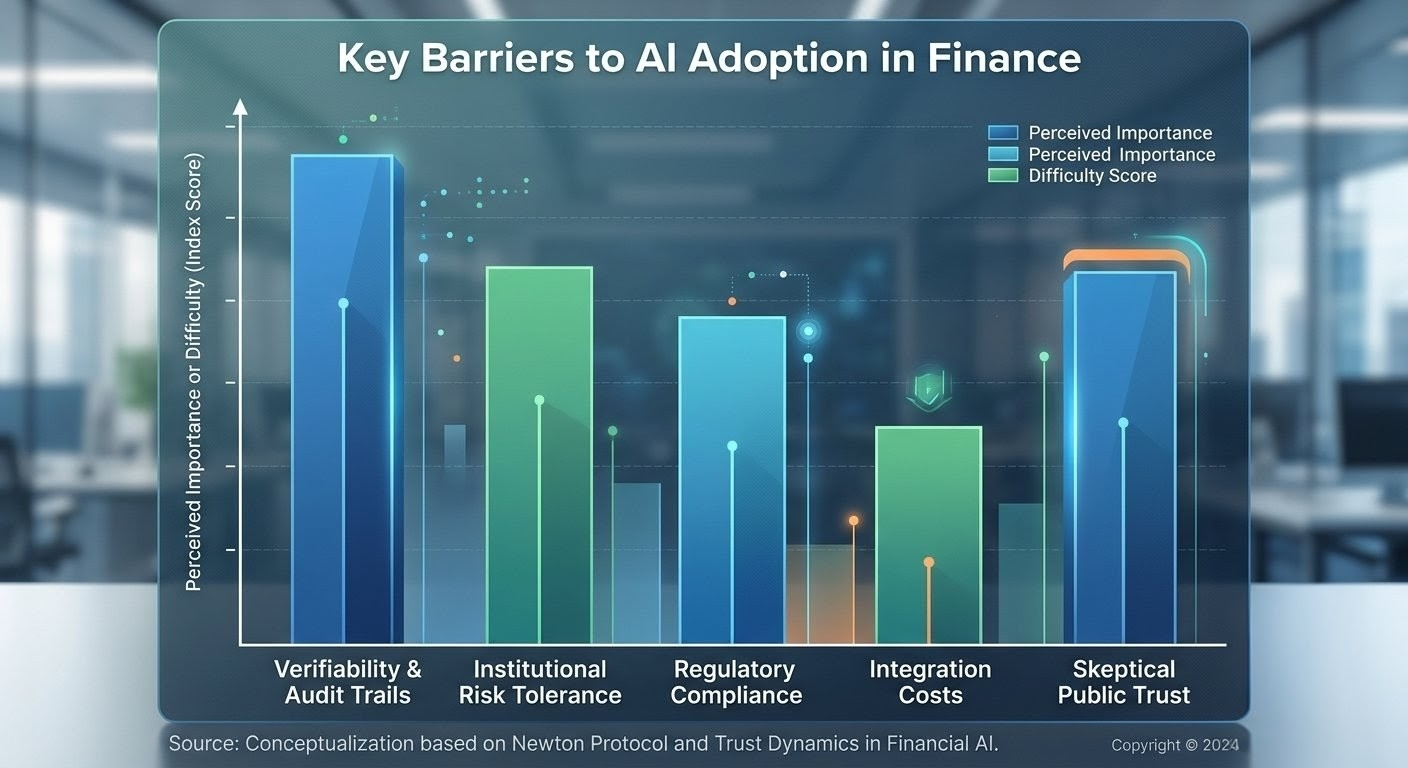
That's why I think adoption will depend on much more than the technology itself. Developers have to build useful products. Institutions have to see practical value. Regulators have to feel comfortable with how it fits into existing rules. None of those things happen because a white paper says they should.
They happen little by little.
There's another part of this that I don't think gets enough attention.
AI is becoming more capable at exactly the moment people are becoming more skeptical of systems they can't fully understand. That's an interesting contradiction. We want more automation, but we also want more transparency. We want smarter software, but we don't like feeling as though important decisions are happening inside a box we can't open.
Maybe that's where projects like Newton Protocol have an opportunity.
Not because they'll remove uncertainty. I don't think that's possible.
Markets will always surprise us. AI will still make mistakes. Regulations will keep changing.
But if a system can make those decisions easier to verify, easier to audit, and easier to explain, that's a meaningful improvement. It doesn't solve everything, but it solves something people genuinely worry about.
Whether that's enough, I honestly don't know.
Good ideas don't always become successful products. Sometimes the market isn't ready. Sometimes existing systems are simply too difficult to replace. Sometimes people stick with what they know because familiarity feels safer than improvement.
That has happened before, and it'll happen again.
Still, I think Newton Protocol is asking one of the more practical questions in AI finance. Instead of asking how much more intelligence we can build, it's asking how that intelligence can fit into a financial system that still depends on trust, accountability, and clear evidence.
To me, that's a much more grounded place to start.
If Newton Protocol eventually succeeds, I don't think it'll be because everyone suddenly became fascinated by verifiable AI. It'll be because, over time, enough developers, businesses, and institutions decided it made their work a little easier and their risks a little smaller.
And if it doesn't, I doubt the technology will be the whole story. More likely, it'll be another reminder that in finance, people don't adopt new systems simply because they're clever.
They adopt them when they feel comfortable enough to depend on them.
In the end, that has always been the hardest part. Technology can move quickly. Trust almost never does.