Lately, I've been wondering if we've been asking the wrong question in DeFi all along.
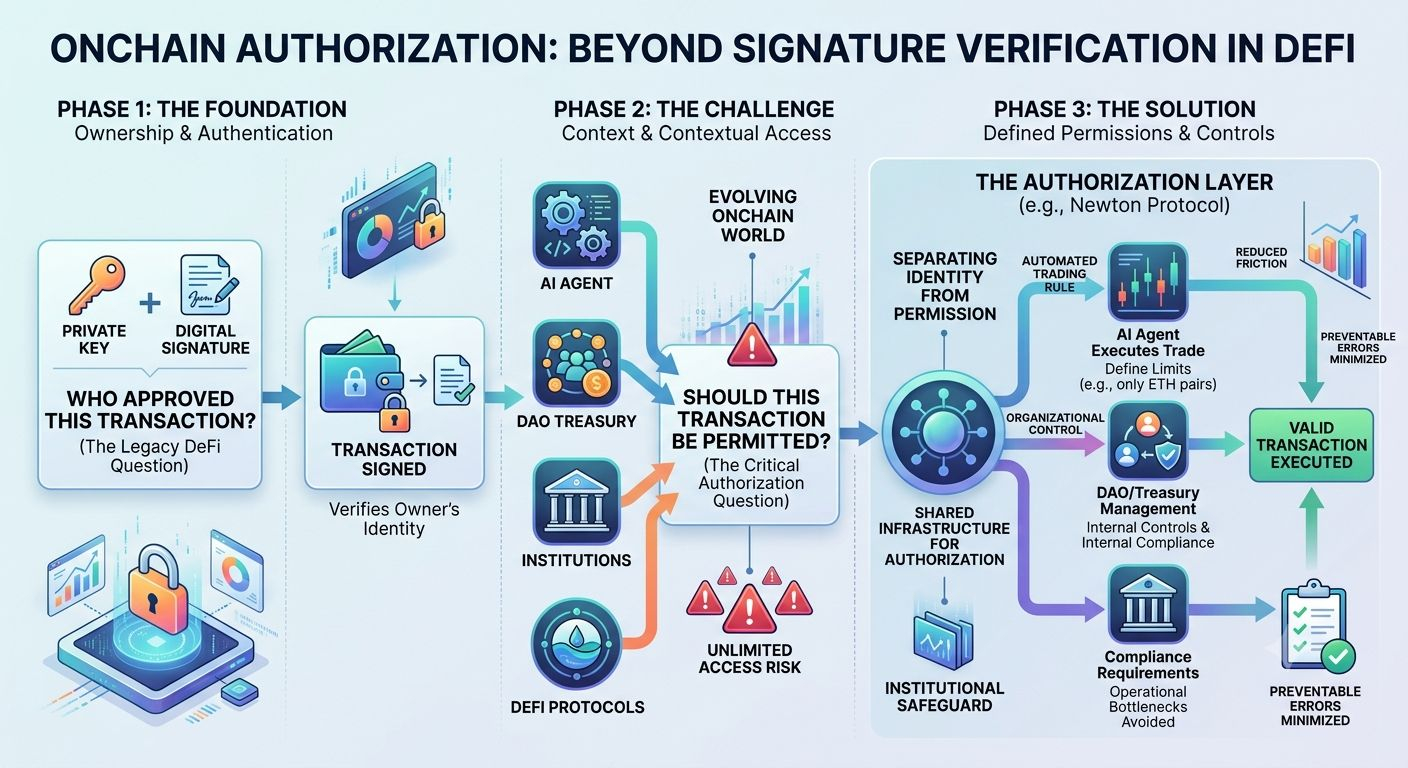
For years, we've focused on one thing: proving that the owner of a wallet approved a transaction. That was a massive step forward for blockchain, and it's still essential. But as the ecosystem has evolved, I'm starting to think that ownership isn't the part we're struggle with anymore.
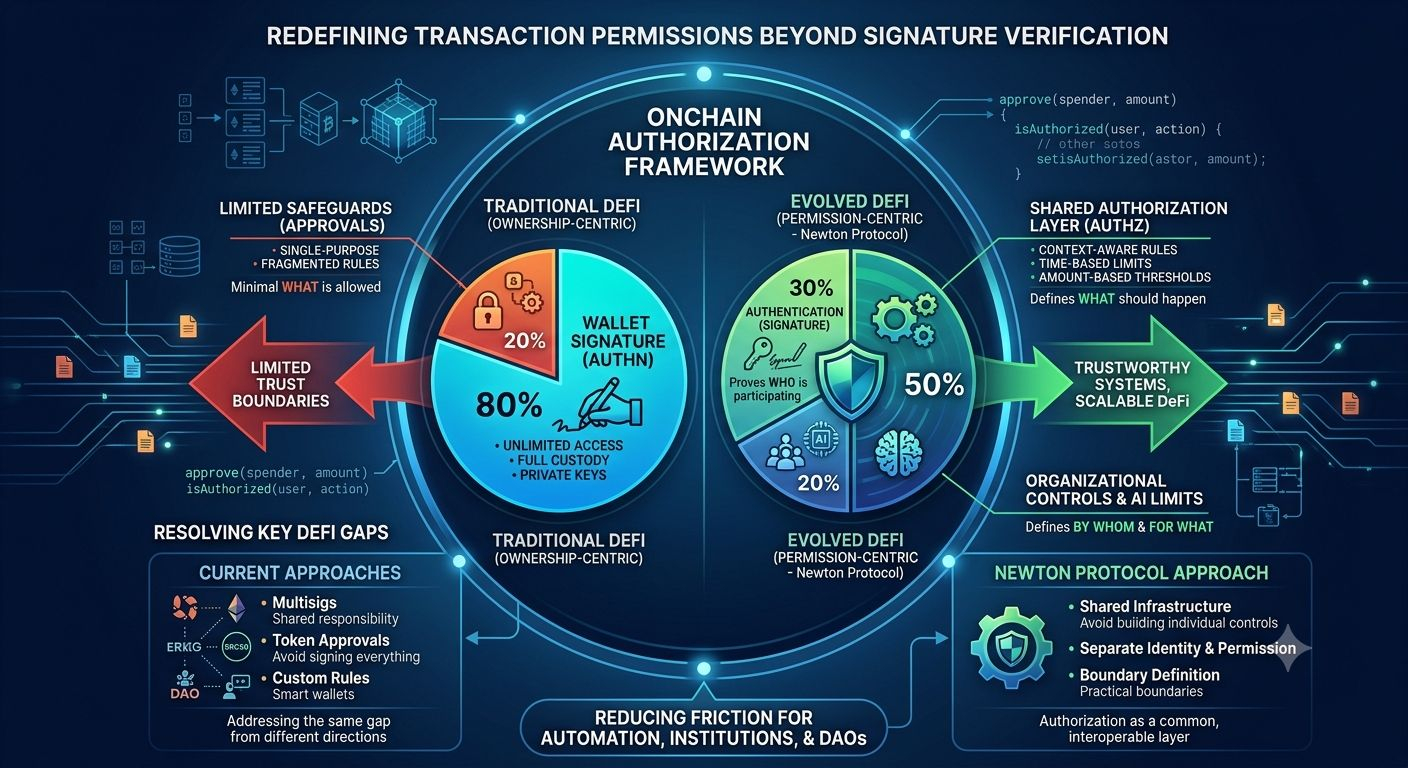
The real challenge is deciding what someone—or something—should actually be allowed to do after they're authenticated.
That distinction feels small at first, but I don't think it is.
In everyday life, trust is rarely unlimited. At work, people are given access based on their responsibilities, not because they're trusted with everything. Banks, businesses, and even the apps on our phones work this way. Permissions exist for a reason.
Crypto took a different path.
If a wallet holds the key, it often holds all the power. That was fine when most activity involved simple token transfers, but today's onchain world looks nothing like it did a few years ago.
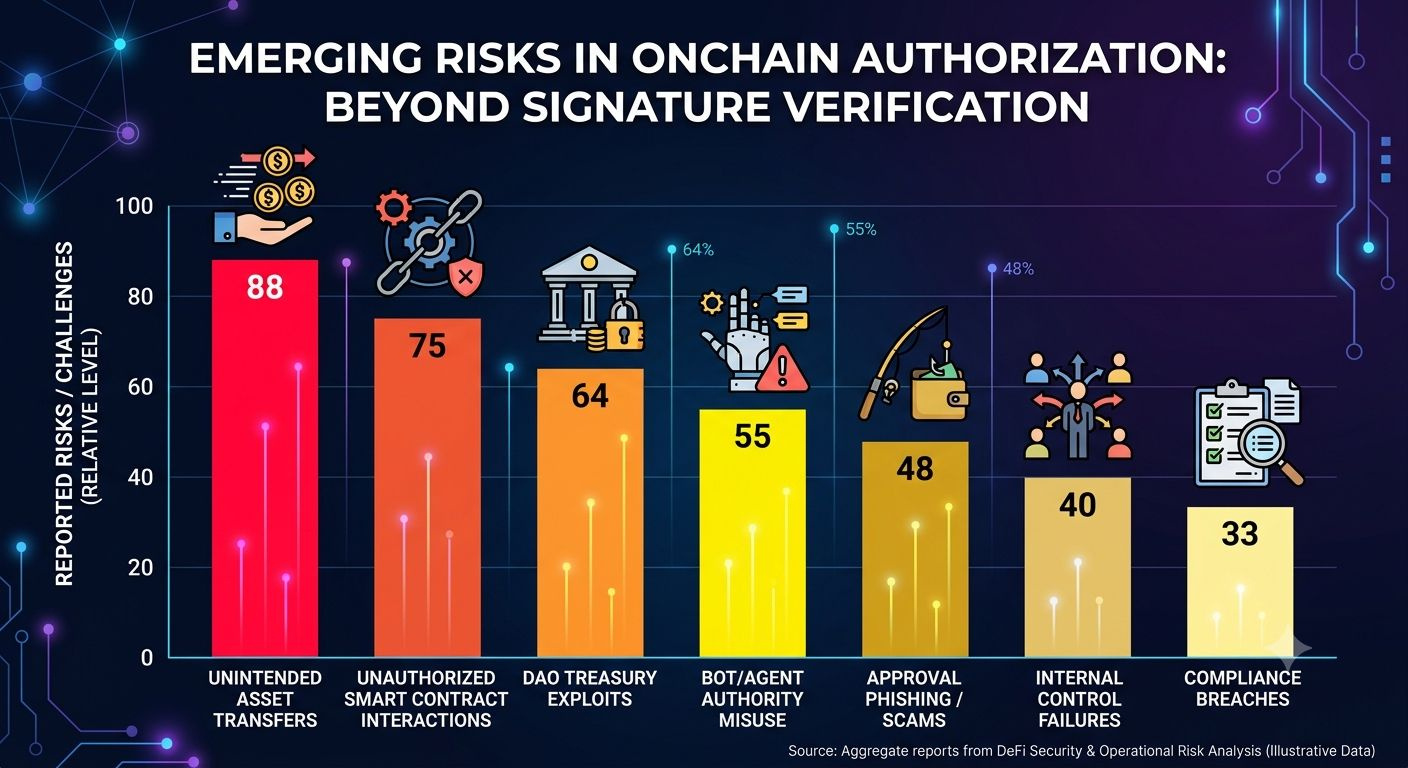
We're talking about AI agents executing trades, protocols managing billions in liquidity, DAOs controlling community treasuries, and companies trying to bring real financial operations onchain.
In that environment, unlimited access starts to feel outdated.
What's interesting is that we've already recognized this problem—we just keep solving it in pieces.
We use multisigs to spread responsibility. We rely on token approvals to avoid signing every action. Smart wallets introduce custom rules because basic wallets aren't flexible enough.
Each solution helps, but they're all addressing the same gap from different directions.
That's what made Newton Protocol stand out to me.
Not because it's promising another revolutionary DeFi product, but because it treats authorization as shared infrastructure instead of leaving every protocol to build its own version.
That idea feels more important than it first appears.
Instead of asking whether a transaction was signed correctly, it asks whether the transaction should have been permitted at all.
To me, that's a much more practical question.
A signature proves identity. It doesn't automatically prove intent or define limits.
If I allow software to manage part of my portfolio, I'm not giving it permission to do absolutely anything. If an organization gives someone authority to execute payments, that shouldn't automatically include access to every asset under management.
Those boundaries are what make systems trustworthy.
AI makes this conversation even more relevant.
There's a lot of excitement around autonomous agents handling financial tasks, but complete freedom isn't always the goal. Constantly asking for approval defeats the purpose of automation, while unlimited authority creates obvious risks.
What most people actually need sits somewhere between those extremes.
That's why the idea of an authorization layer makes sense to me. It separates identity from permission instead of treating them as the same thing.
Of course, adding another infrastructure layer doesn't magically remove complexity.
Poorly designed permission rules can become their own source of problems, just like poorly written smart contracts. More control usually comes with more responsibility.
So I don't see this as a perfect solution.
I see it as an attempt to solve a problem we've been quietly working around for years.
And maybe that's enough.
When people discuss blockchain efficiency, they usually focus on gas costs. But organizations often care about different kinds of costs—approval bottlenecks, operational mistakes, internal controls, compliance requirements, and the time spent fixing preventable errors.
Those costs don't always show up onchain, but they're real.
Reducing that kind of friction could end up being just as valuable as making transactions cheaper.
Most users probably won't ever think about authorization layers, and that's completely fine. The best infrastructure usually fades into the background.
The people who will care are developers building automated systems, teams managing shared assets, and institutions that need stronger safeguards before committing larger amounts of capital onchain.
Whether Newton Protocol becomes part of that future depends on adoption more than technology. Infrastructure only matters when other builders decide it's worth relying on.
Still, I think it's highlighting an important shift.
For a long time, blockchain has been built around answering one question:
Who approved this transaction?
As the ecosystem becomes more automated, I think another question is becoming just as important:
Was this transaction actually supposed to happen?
If we can answer both, onchain finance starts looking a lot more practical for the world that's being built—not the one we started with.