
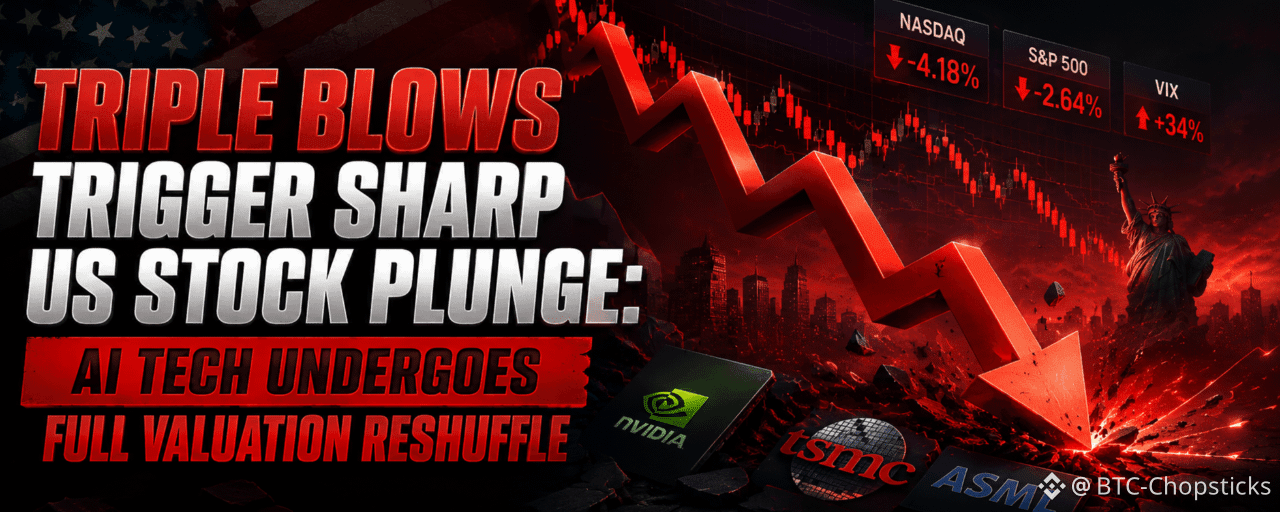
After nine consecutive weeks of rallies and record highs across major benchmarks, U.S. equities suffered their worst single-day slump in nearly a year on June 5, 2026. The Nasdaq Composite tumbled 4.18% (a drop of 1,121 points), while the S&P 500 fell 2.64%, marking its steepest decline since last October. The Dow Jones Industrial Average also retreated 1.35%. Market panic spread rapidly: the CBOE Volatility Index (VIX) jumped 34% and broke above 20, flipping market sentiment from extreme greed to fear in just days. This dramatic reversal was driven by three major negative catalysts that undermined the core pillars of the previous bull run.
Cooling AI Growth Expectations Sparks Semiconductor Meltdown
The first blow came from chip giant Broadcom. Its Q2 earnings report beat market estimates handily, with AI chip revenue surging 143% year-over-year. However, the company’s Q3 revenue guidance fell $1.2 billion short of analyst consensus.
Worries deepened during the earnings call. Executives revealed Google would diversify its chip suppliers, ending Broadcom’s exclusive partnership, while the booming AI chip business was also eating into the group’s gross margins. Having rallied 88% over the past year with fully priced-in optimistic forecasts, Broadcom plunged 12.6% the next trading day.
Panic soon swept through the entire semiconductor sector. Micron, AMD, Intel and Qualcomm all posted double-digit losses. The PHLX Semiconductor Index crashed 10.26%, with all 30 components in the red. U.S.-listed chip firms lost around $1.3 trillion in market value in a single session. The sector-wide selloff stemmed from investors re-evaluating growth prospects across the entire AI supply chain, as the once bullish narrative faced its first real test.
Red-Hot Jobs Data Dashes Rate Cut Hopes
U.S. May non-farm payrolls delivered the second major shock. The economy added 172,000 new jobs, nearly double market expectations. Figures for March and April were also revised sharply higher, pushing the three-month average well above the 150,000 threshold the Fed views as the neutral level for employment.
Combined with the Iran-related geopolitical crisis, crude oil prices remained elevated above $92 for WTI and $94 for Brent, stoking persistent supply-side inflation. Strong jobs data plus high inflation convinced investors the Federal Reserve would not only hold off on rate cuts, but could even raise rates. The 10-year U.S. Treasury yield climbed to 4.54%, and market odds for a year-end rate hike soared to 80%.
Higher interest rates dealt a double blow to high-growth tech stocks: valuations based on discounted future cash flows contracted notably, and attractive yields on risk-free bonds lured profit-taking capital away from equities. A clear rotation emerged: money flowed out of large-cap tech leaders into undervalued small-cap stocks, as shown by the Russell 2000’s 1.45% gain.
Employment data also revealed underlying weaknesses. New hires were concentrated in hospitality and public services, while jobs in finance and information technology continued to shrink. Wage growth lagged inflation, meaning household real purchasing power was on the decline.
Lingering Geopolitical Risks Keep Inflation Fears Alive
The military conflict between the U.S. and Iran, which erupted in late February, blocked the Strait of Hormuz and disrupted roughly 20% of global oil supplies. Though a temporary ceasefire framework was reached, renewed regional tensions stalled a final peace deal, keeping oil prices firmly above pre-war levels.
Persistent imported inflation put the Fed in a tough bind. Monetary policy cannot fix supply disruptions in oil shipments, yet runaway inflation would force policymakers to tighten anyway. Markets grew increasingly nervous that the Fed would adopt a hawkish stance at the upcoming FOMC meeting. Citigroup even warned that global stock valuations had hit their highest level since the 2008 financial crisis, amplifying market jitters.
Ripple Effects Spread Across Global Assets
The U.S. selloff quickly spilled over worldwide. Major stock markets in South Korea and Japan tumbled, while European chip leaders such as ASML and Infineon also posted deep losses. The cryptocurrency market was not spared either: Bitcoin dropped around 4% to $60,000, and crypto-related equities including Coinbase moved sharply lower. Gold, the traditional safe-haven asset, edged down slightly, as rising rate expectations diminished the appeal of non-yielding bullion.
Market Verdict & Key Trends to Watch
The market is debating whether the AI bubble has burst. A more reasonable conclusion is that this is a rational valuation reset, rather than a total collapse of the industry narrative. AI demand remains robust, but investors are no longer pricing in endless exponential growth. The S&P 500 has retreated roughly 5% from its recent peak, staying within the range of a normal technical correction.
Three key factors will dictate the market’s next move: the Fed’s policy stance at the June FOMC meeting, earnings guidance from bellwether AI firms like NVIDIA, and developments surrounding the Iran conflict and oil prices.
This sharp drop serves as a clear risk warning. The long-term value of the AI revolution remains intact, yet excessive valuations driven by pure speculation are being squeezed. As the market tide recedes, only companies with solid profitability and core technological moats will stand firm amid the ongoing industry reshuffle.