

I used to think attribution infrastructure was mostly about fairness because that is the version people naturally want to believe in when they first hear about projects like . The story sounds clean and emotionally satisfying because it presents AI as something that can finally reward contributors instead of quietly extracting from them. Data providers receive recognition. Developers receive economic visibility. Annotators stop becoming invisible labor hidden behind glossy interfaces and billion dollar valuations. Everything sounds like a correction to the broken structure we already have. I understood why that narrative became popular because compared to the current black box environment it feels morally cleaner and economically more modern. At first I believed that was probably the core reason attribution infrastructure would matter in the future. The more time I spent thinking about it though the more incomplete that explanation started to feel because mature infrastructure rarely becomes valuable only when things are working well. Infrastructure usually proves its importance when systems stop functioning smoothly and people suddenly realize nobody actually agrees on who owes what to whom anymore.
That shift in perspective happened slowly for me because most conversations around AI still sound strangely euphoric even when people pretend to be analytical. Almost every discussion focuses on acceleration and scale as if growth itself automatically validates the structure underneath it. People talk about agents replacing workflows. Autonomous execution replacing labor. Model ecosystems replacing software companies. Entire industries becoming intelligent coordination layers. The emotional tone behind all of it feels like permanent expansion where every graph points upward and every problem gets solved by more capability. Very few people stop to ask what happens when those systems encounter ordinary commercial failure because ordinary failure is still the most common outcome in business no matter how futuristic the technology sounds. Companies collapse every day for reasons that have nothing to do with intelligence. Revenue misses happen. Legal disputes appear. Investors lose patience. Markets tighten. Products fail to find sustainable demand. Entire sectors that once looked inevitable suddenly disappear quietly while attention moves elsewhere. AI will not escape that reality simply because the technology feels transformative right now.
That is the part that kept bothering me while looking deeper into because the project is usually framed as attribution infrastructure designed to reward contributors during success. That explanation is not wrong but I increasingly think it might be the less important side of the story. The more interesting question is what attribution infrastructure becomes during collapse because that is where economic systems reveal whether they were actually designed for durability or whether they were just optimized for optimistic marketing cycles. When a company fails the AI does not simply vanish into abstraction because behind every product there are still datasets licenses contributors infrastructure providers model dependencies annotation services cloud costs contractual obligations and intellectual property relationships that continue existing long after the product itself stops growing. Most people casually assume the economic responsibility disappears once the business disappears but historically that is not how mature systems work because financial systems survive by creating frameworks for unresolved obligations rather than pretending obligations disappear during stress.
Traditional finance understands this deeply even if people rarely think about it directly. Corporations have bankruptcy procedures because economies need structured ways to manage disagreement after failure. Supply chains maintain audit systems because nobody trusts memory once incentives collapse. Software licensing includes compliance mechanisms because commercial relationships become hostile under pressure. Entire legal industries exist because success hides conflict while failure exposes it. AI strangely still behaves like it can skip this institutional maturity phase as if scale itself will somehow replace the need for durable economic clarity. That assumption feels incredibly fragile to me because modern AI systems already contain dependency chains so complicated that most people inside the companies building them probably cannot fully map them themselves without internal chaos emerging.
Imagine a realistic situation where a healthcare AI company builds a diagnostic platform using licensed medical datasets proprietary fine tuning third party model architectures external annotation labor and retrieval systems connected to live clinical sources. Nothing about that structure is unusual anymore because modern AI products are layered combinations of inherited systems stacked on top of one another. Now imagine that same company burns through capital faster than expected and fails after a few difficult quarters. Investors begin liquidating assets while regulators start reviewing data handling procedures and former contributors question whether commercial dependencies were disclosed accurately. Suddenly attribution stops being a philosophical creator economy discussion and becomes something far heavier because economic survival now depends on reconstructing contribution history inside a highly fragmented technical environment. At that moment provenance becomes less about recognition and more about evidence.
That is where started looking fundamentally different to me because machine readable provenance changes the shape of disagreement itself. It does not magically solve legal conflict and anyone pretending otherwise is oversimplifying reality in the same way crypto often oversimplified governance during earlier cycles. Still there is an enormous difference between disputes built around fragile memory and disputes built around durable records because economic systems behave differently once information becomes structurally persistent instead of socially negotiable. Teams dissolve during failure. Employees leave. Documentation becomes selective. People reinterpret prior agreements to protect themselves financially. Services disappear. Contracts suddenly acquire new meanings depending on who currently holds leverage. Human memory becomes unreliable precisely when accuracy matters most. Durable provenance does not create objective truth but it creates continuity and continuity becomes economically powerful during stress.
The crypto market should understand this better than almost anyone because we have already watched invisible assumptions explode into conflict once incentives compressed hard enough. During expansion phases ecosystems look coordinated because optimism hides structural weakness. Validators appear aligned while token prices rise. Governance communities appear rational while treasury balances grow. Partnerships look stable while liquidity remains abundant. Then pressure arrives and suddenly every unresolved assumption becomes visible at the same time. People reinterpret agreements. Communities fracture. Economic priorities shift violently. Entire narratives that once sounded unified break into competing self interested interpretations overnight. AI infrastructure will not behave differently simply because the language around it sounds more professional and institutional today. Human incentives remain human incentives no matter how advanced the systems become.
What makes attribution infrastructure potentially important is not simply that it tracks contribution but that it may eventually shape how responsibility itself gets economically interpreted across AI ecosystems. If the token behind a system like exists only as a routing utility for network activity then the long term thesis feels much thinner because utility alone rarely sustains durable institutional importance. If however attribution begins affecting settlement permissions governance credibility access rights licensing priority staking trust or acquisition due diligence then the economic layer becomes dramatically more serious because the network stops pricing output alone and starts pricing coordination under uncertainty. That is a completely different market structure than most retail participants seem to understand today because coordination during disagreement historically becomes more valuable than acceleration during optimism.
Enterprise adoption already hints at this tension even if retail narratives rarely focus on it because excitement generates more attention than operational fear. Most large institutions are not primarily worried about whether AI can become intelligent enough because capability improvements are arriving quickly regardless. Their hesitation comes from exposure. They worry about ownership ambiguity. They worry about contaminated datasets. They worry about unresolved liability chains that appear years later after products have already scaled commercially. Procurement teams care about accountability because operational failure inside institutional environments can destroy reputations far faster than technical underperformance. That fear sounds boring compared to autonomous agents and explosive token speculation which is exactly why markets consistently underestimate it. Yet historically boring infrastructure tends to capture more durable value than emotionally exciting narratives because institutions pay heavily for systems that reduce uncertainty.
At the same time I think people inside crypto still underestimate how difficult attribution becomes once systems scale deeply enough. Every model interacts with thousands of micro contributions that vary wildly in importance. Some datasets meaningfully shape behavior while others barely matter at all. Some annotations create decisive improvements while others remain economically irrelevant despite existing technically within the dependency chain. If every microscopic contribution generated permanent recurring claims the entire system would collapse under administrative complexity because coordination costs would exceed productive value creation itself. That means any serious attribution framework eventually requires thresholds relevance filters governance standards and deliberate exclusion mechanisms that determine which contributions become materially recognized and which disappear into the background.
That immediately creates political tension because governance around relevance is never neutral. Somebody eventually decides what mattered and those decisions shape economic outcomes. People often speak about decentralization as if it removes politics when in reality it frequently redistributes politics into procedural systems that still require interpretation and enforcement. Attribution infrastructure cannot escape that reality because determining material contribution is fundamentally subjective once systems become complex enough. Even if records remain perfectly transparent disagreement over interpretation will still exist because visibility alone does not create consensus. Crypto repeatedly confuses observable data with resolved coordination when those are completely different things.
Enforcement also remains deeply unresolved no matter how elegant the infrastructure appears technologically. A blockchain can preserve records beautifully across time but preservation is not the same as compulsion. Off chain jurisdictions still control insolvency procedures commercial enforcement intellectual property disputes and regulatory authority. Courts still operate through national systems. Contracts still depend on institutional recognition. Many people inside crypto continue behaving as though putting something on chain automatically grants universal enforceability when historically that assumption keeps colliding with reality during moments of actual legal pressure. Still even with those limitations durable provenance may reshape negotiation dynamics simply because negotiations become structurally harder to manipulate once dependency history remains permanently visible.
That possibility keeps pulling me back toward because I increasingly suspect the market misunderstands where attribution infrastructure becomes economically necessary. Most people think necessity appears during growth because contributors want fair rewards while industries expand. I think necessity may emerge during breakdown instead because failure forces systems to confront unresolved responsibility directly. During acquisitions provenance suddenly matters. During restructurings dependency clarity matters. During disputes historical contribution trails matter. During distressed asset sales ownership visibility matters. During regulatory review documentation matters. During litigation continuity matters. Markets reveal their true architecture when nobody agrees anymore and incentives stop pointing in the same direction.
That is why I sometimes think about OpenLedger less like a creator economy network and more like an early institutional memory layer for AI economies that have not yet fully experienced systemic stress. Not a literal legal court and not some exaggerated futuristic governance fantasy but something quieter and possibly more durable than the market currently appreciates. Mature economies survive because they create structures capable of handling disagreement without collapsing into informational chaos. AI still feels economically immature because most conversations remain trapped inside acceleration narratives where growth itself supposedly solves governance. History usually moves differently than that because the systems that survive long term are rarely the systems that scale fastest emotionally. They are usually the systems that make uncertainty manageable once optimism disappears.
Maybe that interpretation ends up being wrong and attribution infrastructure remains mostly a niche coordination tool attached to speculative token activity. That possibility absolutely exists and pretending otherwise would just be another form of crypto romanticism. Still I cannot ignore how every major technological expansion eventually collides with institutional reality whether people want it to or not. Capital eventually asks harder questions. Regulators eventually intervene. Investors eventually demand accountability. Businesses eventually fail. Economic pressure eventually exposes hidden assumptions that once looked stable during easier conditions. When that moment arrives AI ecosystems will need more than intelligence because intelligence alone does not resolve conflict. Durable systems require memory structure evidence continuity and frameworks capable of surviving disagreement without forcing every participant back into chaos.
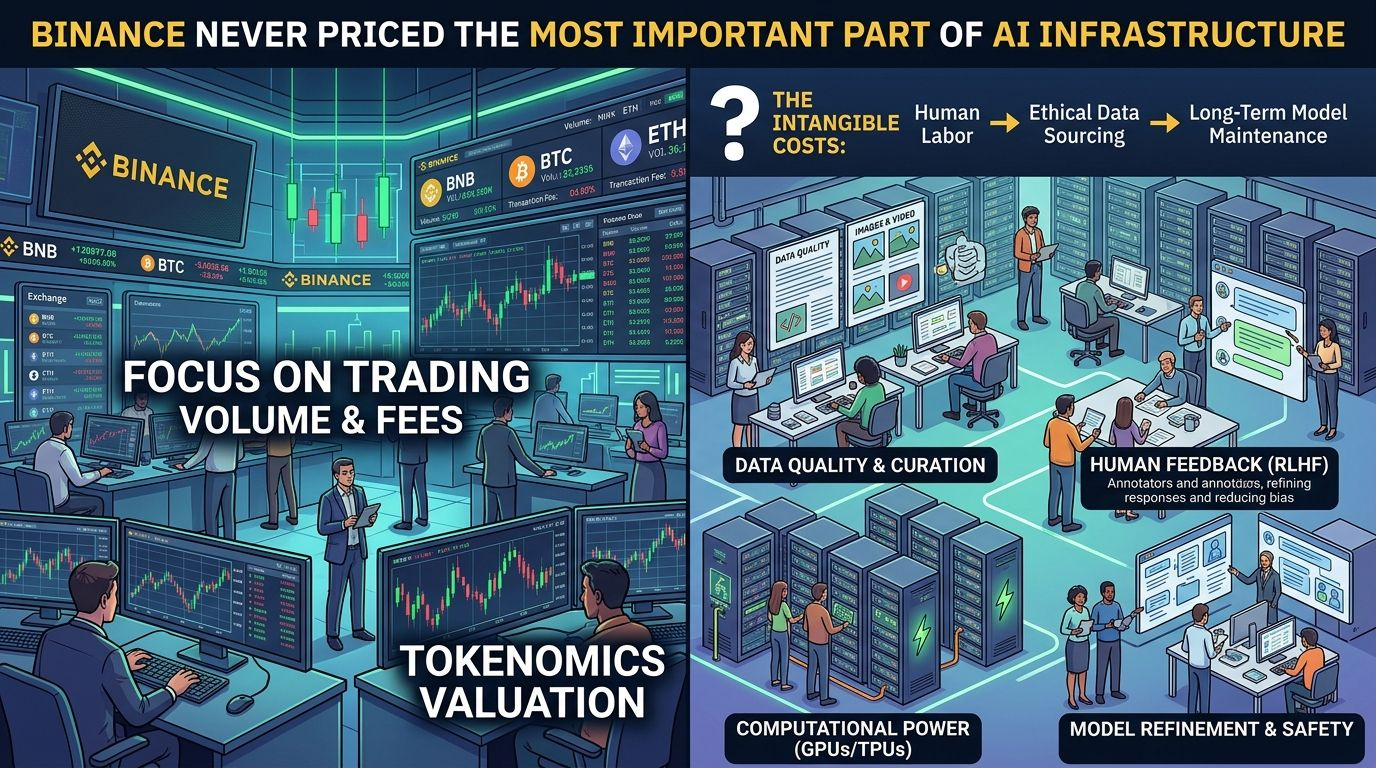
The strange thing is that this story feels emotionally smaller than the narratives dominating Binance discussions right now even though it may ultimately matter far more. Infrastructure designed for optimism always sounds exciting because optimism sells naturally to human psychology. Infrastructure designed for breakdown sounds uncomfortable because nobody likes imagining failure while markets are still expanding. Yet almost every mature industry quietly depends on systems built specifically for moments when trust disappears and incentives fracture. That is usually where real institutional value hides because coordination during stress becomes priceless once expansion stops masking structural weakness.
Maybe that is the deeper reason attribution infrastructure keeps pulling my attention lately because underneath all the AI excitement I keep sensing the same missing layer. Everyone talks about acceleration but very few people talk about survivability. Everyone talks about intelligence but almost nobody talks about unresolved obligation. Everyone talks about autonomous systems but very few ask what happens when those systems become economically disputed across fragmented stakeholders with conflicting incentives. Markets love imagining creation. Mature infrastructure usually emerges from managing collapse.
And honestly I think that emotional discomfort may be exactly why the subject matters more than people currently realize.
