

I have watched the crypto market for years.
One thing it has taught me is this.
Something becoming popular does not mean it is actually needed.
We are seeing this play out right now with Fabric Protocol.
In recent weeks, the project and its ROBO token have captured massive attention.
The token recently launched on major exchanges and generated millions in daily trading volume.
Suddenly, everyone is talking about the decentralized robot economy.
The narrative sounds very futuristic and compelling.
The idea is that autonomous AI agents and physical robots need their own blockchain network to interact, share data, and pay each other without human intervention.
But instead of reading social media posts or following the hype, I wanted to dig deeper.
I tried to understand the project by looking at the real-world industry it claims to serve.
I spent time talking to people who actually work in factory automation, robotics, and logistics.
I asked them if they needed a blockchain to coordinate their machines.
Their reactions were overwhelmingly skeptical.
One automation specialist pointed out that speed is everything in modern robotics.
A warehouse robot making split-second physical movements cannot wait for network consensus or block confirmations to proceed with a task.
A robotics engineer brought up the issue of legal responsibility.
If an autonomous drone uses an on-chain wallet to pay for a charging station and causes property damage, who is legally accountable?
Furthermore, they reminded me that existing systems already work perfectly well.
Robots from different manufacturers might be fragmented, but companies build centralized software and internal networks to coordinate them effectively.
They do not see any reason to put their expensive automated systems on a public ledger.
This brings up a deeper idea I see often in this space.
Crypto projects frequently try to solve problems they assume exist, rather than problems industries actually experience.
Historically, crypto has succeeded when it solved problems within its own ecosystem.
Decentralized finance tools, digital asset infrastructure, and wallet usability all thrive because they natively belong on a blockchain.
But when we look at industries outside crypto, we are dealing with environments that already have functioning systems.
A logistics company does not want to manage smart contract risks or token volatility just to get two machines to communicate.
This is the key challenge for Fabric Protocol.
It must prove not just that the idea of an on-chain robot economy is interesting.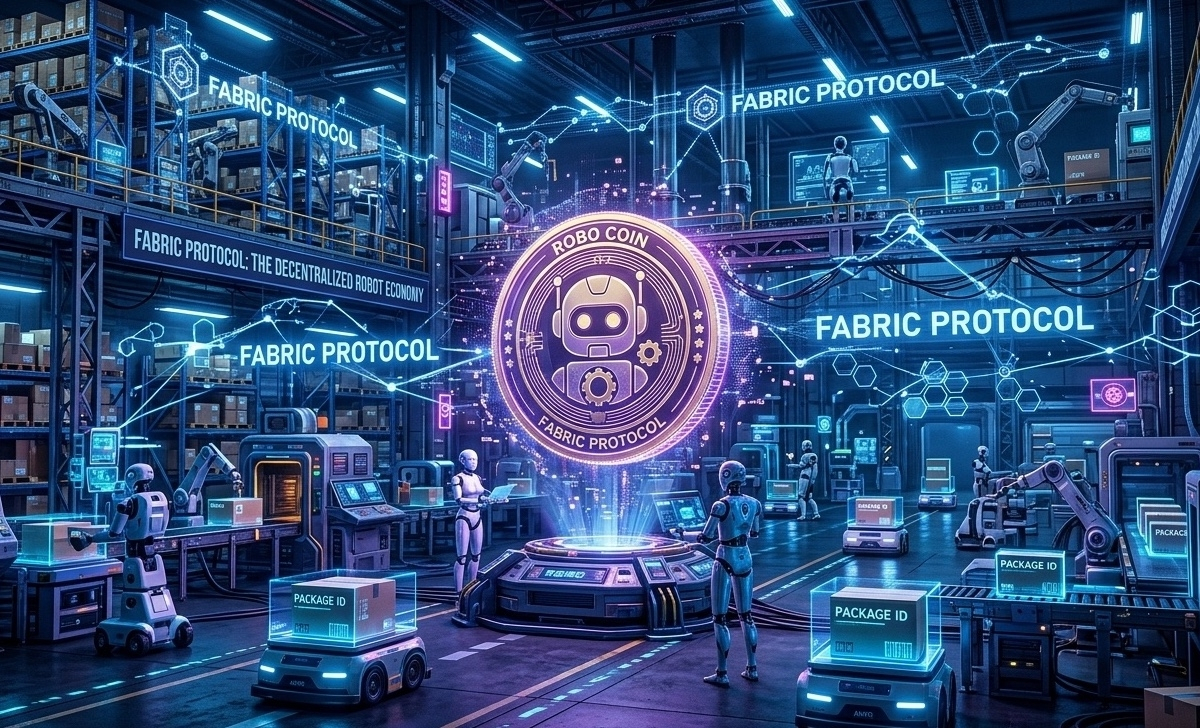
It must prove that it solves a real problem significantly better than existing systems for people entirely outside of crypto.
Right now, there is a massive gap between the price of the ROBO token and its real-world adoption.
Prices in this market frequently rise simply because of a strong narrative, speculation, and community belief.
The current token value reflects excitement about artificial intelligence and automation, even though actual usage of the protocol by physical robots is practically nonexistent.
When you buy the token today, you are not buying current utility.
You are simply placing a bet on a possible future where this specific decentralized infrastructure becomes strictly necessary.
Whenever I evaluate projects like this, I try to cut through the noise with a single investor principle.
It is a simple question that helps evaluate projects more realistically.
What real problem, experienced by people outside crypto, does this solve today?
Would you like me to analyze the tokenomics of the ROBO token or compare Fabric Protocol's infrastructure to traditional centralized robotics systems?