Binance Square

signdigialsovereigninfra

1,422 visualizaciones
103 participa(n) en el debate
Smash wall crypto
·
--
Métricas de rendimiento: Evaluando la escalabilidad y la finalización del Protocolo de Firma.@SignOfficial ¿Alguna vez has llenado un formulario, subido un documento o verificado tu identidad en algún lugar, solo para que te pidan hacerlo de nuevo en otro lugar? Tal vez fue un banco, tal vez una escuela, tal vez un portal gubernamental. Hiciste el trabajo una vez, seguiste las reglas, obtuviste la confirmación—pero de alguna manera, nunca pareció quedar. ¿Por qué es eso???? Al principio se siente mundano. Trabajo de papel,,,, aprobaciones, casillas de verificación, confirmaciones. Nada llamativo. Nada emocionante. Sin embargo, esta capa silenciosa—la que nadie nota cuando funciona—es exactamente donde vive el verdadero pulso de cualquier sistema. Porque los sistemas no solo se tratan de registrar actividad. Se trata de decidir qué cuenta. Qué avanza. En qué otros pueden confiar. Qué puede desencadenar acción.....

Métricas de rendimiento: Evaluando la escalabilidad y la finalización del Protocolo de Firma.

@SignOfficial ¿Alguna vez has llenado un formulario, subido un documento o verificado tu identidad en algún lugar, solo para que te pidan hacerlo de nuevo en otro lugar? Tal vez fue un banco, tal vez una escuela, tal vez un portal gubernamental. Hiciste el trabajo una vez, seguiste las reglas, obtuviste la confirmación—pero de alguna manera, nunca pareció quedar. ¿Por qué es eso????
Al principio se siente mundano. Trabajo de papel,,,,
aprobaciones, casillas de verificación, confirmaciones. Nada llamativo. Nada emocionante. Sin embargo, esta capa silenciosa—la que nadie nota cuando funciona—es exactamente donde vive el verdadero pulso de cualquier sistema. Porque los sistemas no solo se tratan de registrar actividad. Se trata de decidir qué cuenta. Qué avanza. En qué otros pueden confiar. Qué puede desencadenar acción.....
ANiii_CRYPTO--阿尼:
This isn’t just theory, this is the reality of systems today. Trust, consistency, and reliability are the real backbone. A very strong and forward-looking piece. 🔥
Ver traducción
How Sign Protocol’s New Money System Is Shaping Sovereign Digital Money RailsI just discovered something that made me rethink how digital money works. Last week I was talking with my friend Ali, a small business owner in Karachi. He told me how frustrating it is to send money across borders for his import business. Sometimes transactions take days. Sometimes they get blocked. Often the fees are crazy. At the same time, he worries about privacy. He doesn’t want everyone seeing his financial activity. Yet banks and regulators always ask for more and more documentation. It got me thinking how a system can be fast, secure and private, yet still keep governments happy. That’s when I came across Sign Protocol’s New Money System. Ali’s story isn’t unique. Millions face this same dilemma across Pakistan and the world. Governments need oversight to prevent fraud. Citizens want privacy and convenience. Current systems either focus on speed but ignore privacy. Or they protect privacy but make audits impossible. There’s this constant tension between transparency and confidentiality. For example, Sara, another friend who runs an online store, recently tried to pay a supplier overseas. She had to jump through multiple hoops just to confirm the transaction. She lost hours to bureaucratic delays. It’s simple friction, but it adds up. Sign Protocol addresses this problem. I found it fascinating because it doesn’t aim to be just another cryptocurrency. It’s designed to give countries a digital money system that works for both citizens and regulators. There’s a public blockchain which is transparent and ideal for corporate transactions or cross-border payments. Then there’s a private, permissioned blockchain perfect for sensitive operations like central bank digital currencies. On this private rail, personal transactions stay confidential. Yet regulators can access them if needed. Ali’s cross-border transfer problem could be solved in minutes. Sara’s privacy concerns would be respected. What really impressed me is how the two rails work together. Bridges let people move funds between the private CBDC system and public stablecoins seamlessly. Imagine Ali sending money internationally. It starts in a private CBDC channel. Then it converts into a stablecoin for cross-border settlement and reaches the recipient instantly without compromising personal data. It’s like invisible plumbing behind the scenes. Smooth, yet secure. Because it’s programmable, the system can adapt to different countries’ regulations. That’s huge for global businesses. The architecture itself is clever. The private blockchain uses Hyperledger Fabric-based technology allowing configurable privacy, fast finality and strong governance. High-volume transactions remain private but are auditable by authorities. This shows that privacy doesn’t conflict with operational scale. I kept thinking about Ali. He wouldn’t need to spend hours in bank queues or on calls anymore. In my view, the beauty lies in its simplicity for users. Citizens see faster payments, safer transactions and more control over their financial data. At the same time, regulators get what they need. Visibility and audit trails are available without compromising privacy. It feels practical, grounded and ready for real-world use. I also learned that the Sign Protocol ecosystem is starting to engage communities. Binance Square’s CreatorPad recently launched a campaign offering millions of SIGN tokens as rewards for creators. Ali or Sara could use these platforms to learn more about digital finance. They could also get incentives for early participation. It’s technology that feels approachable, not just theoretical. Thinking ahead, systems like Sign Protocol could change how nations think about money. Daily transactions would be smoother. Adoption would grow faster. Trust in digital financial systems could rise. As more creators engage with Binance Square campaigns, awareness spreads and adoption grows naturally. This could be the moment digital money starts feeling human, practical and secure. So next time you’re frustrated by banking delays or online payment hassles, remember this. There’s a system being built that respects privacy, satisfies regulatory needs and moves money faster than ever. I’m sharing this because it’s not just technical achievement. It’s a glimpse into a future where money works for people, not the other way around. Ali and Sara would certainly smile if they knew such solutions are coming. I just discovered something that made me rethink how digital money works. Last week I was talking with my friend Ali, a small business owner in Karachi. He told me how frustrating it is to send money across borders for his import business. Sometimes transactions take days. Sometimes they get blocked. Often the fees are crazy. At the same time, he worries about privacy. He doesn’t want everyone seeing his financial activity. Yet banks and regulators always ask for more and more documentation. It got me thinking how a system can be fast, secure and private, yet still keep governments happy. That’s when I came across Sign Protocol’s New Money System. Ali’s story isn’t unique. Millions face this same dilemma across Pakistan and the world. Governments need oversight to prevent fraud. Citizens want privacy and convenience. Current systems either focus on speed but ignore privacy. Or they protect privacy but make audits impossible. There’s this constant tension between transparency and confidentiality. For example, Sara, another friend who runs an online store, recently tried to pay a supplier overseas. She had to jump through multiple hoops just to confirm the transaction. She lost hours to bureaucratic delays. It’s simple friction, but it adds up. Sign Protocol addresses this problem. I found it fascinating because it doesn’t aim to be just another cryptocurrency. It’s designed to give countries a digital money system that works for both citizens and regulators. There’s a public blockchain which is transparent and ideal for corporate transactions or cross-border payments. Then there’s a private, permissioned blockchain perfect for sensitive operations like central bank digital currencies. On this private rail, personal transactions stay confidential. Yet regulators can access them if needed. Ali’s cross-border transfer problem could be solved in minutes. Sara’s privacy concerns would be respected. What really impressed me is how the two rails work together. Bridges let people move funds between the private CBDC system and public stablecoins seamlessly. Imagine Ali sending money internationally. It starts in a private CBDC channel. Then it converts into a stablecoin for cross-border settlement and reaches the recipient instantly without compromising personal data. It’s like invisible plumbing behind the scenes. Smooth, yet secure. Because it’s programmable, the system can adapt to different countries’ regulations. That’s huge for global businesses. The architecture itself is clever. The private blockchain uses Hyperledger Fabric-based technology allowing configurable privacy, fast finality and strong governance. High-volume transactions remain private but are auditable by authorities. This shows that privacy doesn’t conflict with operational scale. I kept thinking about Ali. He wouldn’t need to spend hours in bank queues or on calls anymore. In my view, the beauty lies in its simplicity for users. Citizens see faster payments, safer transactions and more control over their financial data. At the same time, regulators get what they need. Visibility and audit trails are available without compromising privacy. It feels practical, grounded and ready for real-world use. I also learned that the Sign Protocol ecosystem is starting to engage communities. Binance Square’s CreatorPad recently launched a campaign offering millions of SIGN tokens as rewards for creators. Ali or Sara could use these platforms to learn more about digital finance. They could also get incentives for early participation. It’s technology that feels approachable, not just theoretical. Thinking ahead, systems like Sign Protocol could change how nations think about money. Daily transactions would be smoother. Adoption would grow faster. Trust in digital financial systems could rise. As more creators engage with Binance Square campaigns, awareness spreads and adoption grows naturally. This could be the moment digital money starts feeling human, practical and secure. So next time you’re frustrated by banking delays or online payment hassles, remember this. There’s a system being built that respects privacy, satisfies regulatory needs and moves money faster than ever. I’m sharing this because it’s not just technical achievement. It’s a glimpse into a future where money works for people, not the other way around. Ali and Sara would certainly smile if they knew such solutions are coming.@SignOfficial #SignDigialSovereignInfra $SIGN

How Sign Protocol’s New Money System Is Shaping Sovereign Digital Money Rails

I just discovered something that made me rethink how digital money works. Last week I was talking with my friend Ali, a small business owner in Karachi. He told me how frustrating it is to send money across borders for his import business. Sometimes transactions take days. Sometimes they get blocked. Often the fees are crazy. At the same time, he worries about privacy. He doesn’t want everyone seeing his financial activity. Yet banks and regulators always ask for more and more documentation. It got me thinking how a system can be fast, secure and private, yet still keep governments happy. That’s when I came across Sign Protocol’s New Money System.
Ali’s story isn’t unique. Millions face this same dilemma across Pakistan and the world. Governments need oversight to prevent fraud. Citizens want privacy and convenience. Current systems either focus on speed but ignore privacy. Or they protect privacy but make audits impossible. There’s this constant tension between transparency and confidentiality. For example, Sara, another friend who runs an online store, recently tried to pay a supplier overseas. She had to jump through multiple hoops just to confirm the transaction. She lost hours to bureaucratic delays. It’s simple friction, but it adds up. Sign Protocol addresses this problem. I found it fascinating because it doesn’t aim to be just another cryptocurrency. It’s designed to give countries a digital money system that works for both citizens and regulators. There’s a public blockchain which is transparent and ideal for corporate transactions or cross-border payments. Then there’s a private, permissioned blockchain perfect for sensitive operations like central bank digital currencies. On this private rail, personal transactions stay confidential. Yet regulators can access them if needed. Ali’s cross-border transfer problem could be solved in minutes. Sara’s privacy concerns would be respected. What really impressed me is how the two rails work together. Bridges let people move funds between the private CBDC system and public stablecoins seamlessly. Imagine Ali sending money internationally. It starts in a private CBDC channel. Then it converts into a stablecoin for cross-border settlement and reaches the recipient instantly without compromising personal data. It’s like invisible plumbing behind the scenes. Smooth, yet secure. Because it’s programmable, the system can adapt to different countries’ regulations. That’s huge for global businesses. The architecture itself is clever. The private blockchain uses Hyperledger Fabric-based technology allowing configurable privacy, fast finality and strong governance. High-volume transactions remain private but are auditable by authorities. This shows that privacy doesn’t conflict with operational scale. I kept thinking about Ali. He wouldn’t need to spend hours in bank queues or on calls anymore. In my view, the beauty lies in its simplicity for users. Citizens see faster payments, safer transactions and more control over their financial data. At the same time, regulators get what they need. Visibility and audit trails are available without compromising privacy. It feels practical, grounded and ready for real-world use. I also learned that the Sign Protocol ecosystem is starting to engage communities. Binance Square’s CreatorPad recently launched a campaign offering millions of SIGN tokens as rewards for creators. Ali or Sara could use these platforms to learn more about digital finance. They could also get incentives for early participation. It’s technology that feels approachable, not just theoretical. Thinking ahead, systems like Sign Protocol could change how nations think about money. Daily transactions would be smoother. Adoption would grow faster. Trust in digital financial systems could rise. As more creators engage with Binance Square campaigns, awareness spreads and adoption grows naturally. This could be the moment digital money starts feeling human, practical and secure. So next time you’re frustrated by banking delays or online payment hassles, remember this. There’s a system being built that respects privacy, satisfies regulatory needs and moves money faster than ever. I’m sharing this because it’s not just technical achievement. It’s a glimpse into a future where money works for people, not the other way around. Ali and Sara would certainly smile if they knew such solutions are coming.
I just discovered something that made me rethink how digital money works. Last week I was talking with my friend Ali, a small business owner in Karachi. He told me how frustrating it is to send money across borders for his import business. Sometimes transactions take days. Sometimes they get blocked. Often the fees are crazy. At the same time, he worries about privacy. He doesn’t want everyone seeing his financial activity. Yet banks and regulators always ask for more and more documentation. It got me thinking how a system can be fast, secure and private, yet still keep governments happy. That’s when I came across Sign Protocol’s New Money System.
Ali’s story isn’t unique. Millions face this same dilemma across Pakistan and the world. Governments need oversight to prevent fraud. Citizens want privacy and convenience. Current systems either focus on speed but ignore privacy. Or they protect privacy but make audits impossible. There’s this constant tension between transparency and confidentiality. For example, Sara, another friend who runs an online store, recently tried to pay a supplier overseas. She had to jump through multiple hoops just to confirm the transaction. She lost hours to bureaucratic delays. It’s simple friction, but it adds up. Sign Protocol addresses this problem. I found it fascinating because it doesn’t aim to be just another cryptocurrency. It’s designed to give countries a digital money system that works for both citizens and regulators. There’s a public blockchain which is transparent and ideal for corporate transactions or cross-border payments. Then there’s a private, permissioned blockchain perfect for sensitive operations like central bank digital currencies. On this private rail, personal transactions stay confidential. Yet regulators can access them if needed. Ali’s cross-border transfer problem could be solved in minutes. Sara’s privacy concerns would be respected. What really impressed me is how the two rails work together. Bridges let people move funds between the private CBDC system and public stablecoins seamlessly. Imagine Ali sending money internationally. It starts in a private CBDC channel. Then it converts into a stablecoin for cross-border settlement and reaches the recipient instantly without compromising personal data. It’s like invisible plumbing behind the scenes. Smooth, yet secure. Because it’s programmable, the system can adapt to different countries’ regulations. That’s huge for global businesses. The architecture itself is clever. The private blockchain uses Hyperledger Fabric-based technology allowing configurable privacy, fast finality and strong governance. High-volume transactions remain private but are auditable by authorities. This shows that privacy doesn’t conflict with operational scale. I kept thinking about Ali. He wouldn’t need to spend hours in bank queues or on calls anymore. In my view, the beauty lies in its simplicity for users. Citizens see faster payments, safer transactions and more control over their financial data. At the same time, regulators get what they need. Visibility and audit trails are available without compromising privacy. It feels practical, grounded and ready for real-world use. I also learned that the Sign Protocol ecosystem is starting to engage communities. Binance Square’s CreatorPad recently launched a campaign offering millions of SIGN tokens as rewards for creators. Ali or Sara could use these platforms to learn more about digital finance. They could also get incentives for early participation. It’s technology that feels approachable, not just theoretical. Thinking ahead, systems like Sign Protocol could change how nations think about money. Daily transactions would be smoother. Adoption would grow faster. Trust in digital financial systems could rise. As more creators engage with Binance Square campaigns, awareness spreads and adoption grows naturally. This could be the moment digital money starts feeling human, practical and secure. So next time you’re frustrated by banking delays or online payment hassles, remember this. There’s a system being built that respects privacy, satisfies regulatory needs and moves money faster than ever. I’m sharing this because it’s not just technical achievement. It’s a glimpse into a future where money works for people, not the other way around. Ali and Sara would certainly smile if they knew such solutions are coming.@SignOfficial #SignDigialSovereignInfra $SIGN
Ver traducción
🚀 SIGN: مستقبل الهوية الرقمية في عالم الويب 3في ظل التطور السريع لعالم العملات الرقمية، يظهر مشروع SIGN كواحد من المشاريع المبتكرة التي تهدف إلى إعادة تعريف مفهوم الهوية الرقمية. يركز هذا المشروع على بناء بنية تحتية لا مركزية تُمكّن المستخدمين من امتلاك وإدارة بياناتهم الشخصية بشكل آمن بعيدًا عن سيطرة الجهات المركزية. تعتمد فكرة SIGN على منح الأفراد سيادة رقمية حقيقية، حيث يمكنهم التحقق من هويتهم والتفاعل مع التطبيقات والخدمات دون الحاجة إلى مشاركة بيانات حساسة مع أطراف ثالثة. هذا يقلل من مخاطر الاختراقات ويزيد من مستوى الخصوصية، وهو أمر أصبح ضروريًا في عصر تزايدت فيه الهجمات الإلكترونية. كما يتميز المشروع بإمكانية استخدامه في مجالات متعددة مثل التمويل اللامركزي (DeFi)، والتصويت الإلكتروني، والتطبيقات الحكومية، مما يجعله عنصرًا مهمًا في بناء مستقبل الإنترنت أو ما يُعرف بالويب 3. ومع تزايد الاهتمام العالمي بالهوية الرقمية، قد يشهد مشروع SIGN نموًا ملحوظًا خلال الفترة القادمة. في النهاية، يمكن القول إن SIGN ليس مجرد عملة رقمية، بل هو خطوة نحو عالم أكثر أمانًا وشفافية، حيث يمتلك المستخدم السيطرة الكاملة على هويته وبياناته. #SignDigialSovereignInfra @SignOfficial $SIGN {spot}(SIGNUSDT)

🚀 SIGN: مستقبل الهوية الرقمية في عالم الويب 3

في ظل التطور السريع لعالم العملات الرقمية، يظهر مشروع SIGN كواحد من المشاريع المبتكرة التي تهدف إلى إعادة تعريف مفهوم الهوية الرقمية. يركز هذا المشروع على بناء بنية تحتية لا مركزية تُمكّن المستخدمين من امتلاك وإدارة بياناتهم الشخصية بشكل آمن بعيدًا عن سيطرة الجهات المركزية.
تعتمد فكرة SIGN على منح الأفراد سيادة رقمية حقيقية، حيث يمكنهم التحقق من هويتهم والتفاعل مع التطبيقات والخدمات دون الحاجة إلى مشاركة بيانات حساسة مع أطراف ثالثة. هذا يقلل من مخاطر الاختراقات ويزيد من مستوى الخصوصية، وهو أمر أصبح ضروريًا في عصر تزايدت فيه الهجمات الإلكترونية.
كما يتميز المشروع بإمكانية استخدامه في مجالات متعددة مثل التمويل اللامركزي (DeFi)، والتصويت الإلكتروني، والتطبيقات الحكومية، مما يجعله عنصرًا مهمًا في بناء مستقبل الإنترنت أو ما يُعرف بالويب 3. ومع تزايد الاهتمام العالمي بالهوية الرقمية، قد يشهد مشروع SIGN نموًا ملحوظًا خلال الفترة القادمة.
في النهاية، يمكن القول إن SIGN ليس مجرد عملة رقمية، بل هو خطوة نحو عالم أكثر أمانًا وشفافية، حيث يمتلك المستخدم السيطرة الكاملة على هويته وبياناته. #SignDigialSovereignInfra @SignOfficial $SIGN
Ver traducción
How SIGN is Making Trust Portable in Crypto SystemsMost crypto projects start with loud promises. SIGN feels different because it tackles something far more ordinary—and far more difficult: making trust portable. In many blockchain systems, proof still lives scattered across spreadsheets, screenshots, private databases, and one-off scripts. That works… until it doesn’t. SIGN’s approach is to make verification itself a shared layer that can move seamlessly across apps, chains, and institutions without losing meaning. Its stack supports money, identity, and capital, with Sign Protocol acting as the evidence layer that ties attestations together. What makes SIGN compelling is thinking about it not as a single product, but as a system of roles. Sign Protocol structures claims so that statements link to issuers, subjects, and schemas. TokenTable manages distribution—who gets what, when, and under what rules. Together, these pieces form a broader infrastructure capable of supporting regulated money flows, identity verification, and auditable capital distribution. In plain terms, SIGN aims to make “prove it” and “pay it out” part of the same reliable workflow. The system’s architecture stands out. Evidence is separated from execution, reducing dependence on any single ledger and improving adaptability. Features like selective disclosure, hybrid public-private attestations, and zero-knowledge support show that privacy is not an afterthought. This design lets users prove claims without revealing everything—critical in compliance-heavy contexts where verifiable minimum disclosure often matters more than total transparency. The SIGN token is a practical coordination tool rather than a corporate claim. Classified as a utility token under the MiCA framework, it is tied to protocol activity, supported services, and governance pathways, particularly around validators. Its role is to keep the system functional and economically organized, reinforcing trust rather than undermining it. SIGN is positioning itself in one of crypto’s most important narratives: infrastructure for machine-readable trust. This intersects with AI infrastructure, decentralized coordination, privacy technology, and Web3 rails for identity and distribution. It isn’t competing with flashy consumer apps; it aims to become an invisible, durable layer that other systems quietly rely on. Case studies demonstrate this in action: ZetaChain used TokenTable and Sign Protocol for KYC-gated airdrops with on-chain verification, while OtterSec leveraged Sign Protocol for verifiable audit records. These aren’t just proofs of concept—they’re real coordination at scale. Challenges remain. Adoption is never automatic, especially where identity, compliance, and capital intersect. Institutions value verifiable records but also care about control, liability, key management, and emergency protocols. Validator incentives must be strong yet balanced to avoid turning the token into a speculative object. Regulation will also shape the future of systems tied to KYC, token distribution, and identity. SIGN’s emphasis on governance, permissioning, and flexible deployment reflects an honest acknowledgment of these constraints, which strengthens its credibility. If SIGN succeeds, it won’t be a dramatic moment but steady, repeated use: more attestations, more builders integrating the protocol, smoother token distributions, and trust records that persist beyond a single application or company. In 2024 alone, SIGN processed over 6 million attestations and distributed $4 billion to over 40 million wallets, setting ambitious growth targets for the next phase. These numbers matter, but what matters more is whether the network continues to grow useful in quiet, dependable ways—the hallmark of durable infrastructure. Ultimately, SIGN reminds us that crypto is not just about assets—it’s about coordination. By unifying verification, distribution, and identity into a trustworthy system, SIGN points toward a future where digital systems move value faster, prove things more cleanly, and allow trust to travel farther than ever before. That’s a direction with lasting significance. #SignOfficial #SignDigialSovereignInfra $SIGN {spot}(SIGNUSDT)

How SIGN is Making Trust Portable in Crypto Systems

Most crypto projects start with loud promises. SIGN feels different because it tackles something far more ordinary—and far more difficult: making trust portable. In many blockchain systems, proof still lives scattered across spreadsheets, screenshots, private databases, and one-off scripts. That works… until it doesn’t.
SIGN’s approach is to make verification itself a shared layer that can move seamlessly across apps, chains, and institutions without losing meaning. Its stack supports money, identity, and capital, with Sign Protocol acting as the evidence layer that ties attestations together.
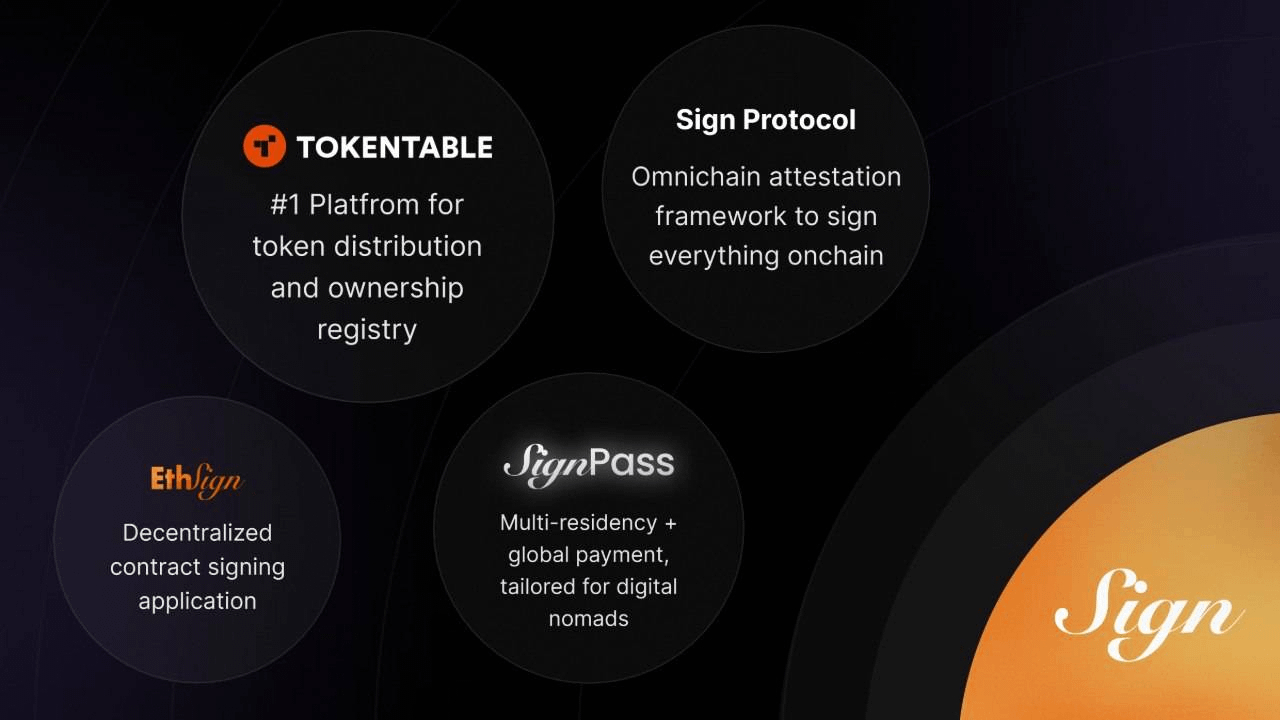
What makes SIGN compelling is thinking about it not as a single product, but as a system of roles. Sign Protocol structures claims so that statements link to issuers, subjects, and schemas. TokenTable manages distribution—who gets what, when, and under what rules. Together, these pieces form a broader infrastructure capable of supporting regulated money flows, identity verification, and auditable capital distribution. In plain terms, SIGN aims to make “prove it” and “pay it out” part of the same reliable workflow.
The system’s architecture stands out. Evidence is separated from execution, reducing dependence on any single ledger and improving adaptability. Features like selective disclosure, hybrid public-private attestations, and zero-knowledge support show that privacy is not an afterthought. This design lets users prove claims without revealing everything—critical in compliance-heavy contexts where verifiable minimum disclosure often matters more than total transparency.
The SIGN token is a practical coordination tool rather than a corporate claim. Classified as a utility token under the MiCA framework, it is tied to protocol activity, supported services, and governance pathways, particularly around validators. Its role is to keep the system functional and economically organized, reinforcing trust rather than undermining it.
SIGN is positioning itself in one of crypto’s most important narratives: infrastructure for machine-readable trust. This intersects with AI infrastructure, decentralized coordination, privacy technology, and Web3 rails for identity and distribution. It isn’t competing with flashy consumer apps; it aims to become an invisible, durable layer that other systems quietly rely on. Case studies demonstrate this in action: ZetaChain used TokenTable and Sign Protocol for KYC-gated airdrops with on-chain verification, while OtterSec leveraged Sign Protocol for verifiable audit records. These aren’t just proofs of concept—they’re real coordination at scale.
Challenges remain. Adoption is never automatic, especially where identity, compliance, and capital intersect. Institutions value verifiable records but also care about control, liability, key management, and emergency protocols. Validator incentives must be strong yet balanced to avoid turning the token into a speculative object. Regulation will also shape the future of systems tied to KYC, token distribution, and identity. SIGN’s emphasis on governance, permissioning, and flexible deployment reflects an honest acknowledgment of these constraints, which strengthens its credibility.
If SIGN succeeds, it won’t be a dramatic moment but steady, repeated use: more attestations, more builders integrating the protocol, smoother token distributions, and trust records that persist beyond a single application or company. In 2024 alone, SIGN processed over 6 million attestations and distributed $4 billion to over 40 million wallets, setting ambitious growth targets for the next phase. These numbers matter, but what matters more is whether the network continues to grow useful in quiet, dependable ways—the hallmark of durable infrastructure.
Ultimately, SIGN reminds us that crypto is not just about assets—it’s about coordination. By unifying verification, distribution, and identity into a trustworthy system, SIGN points toward a future where digital systems move value faster, prove things more cleanly, and allow trust to travel farther than ever before. That’s a direction with lasting significance.
#SignOfficial #SignDigialSovereignInfra $SIGN
Ver traducción
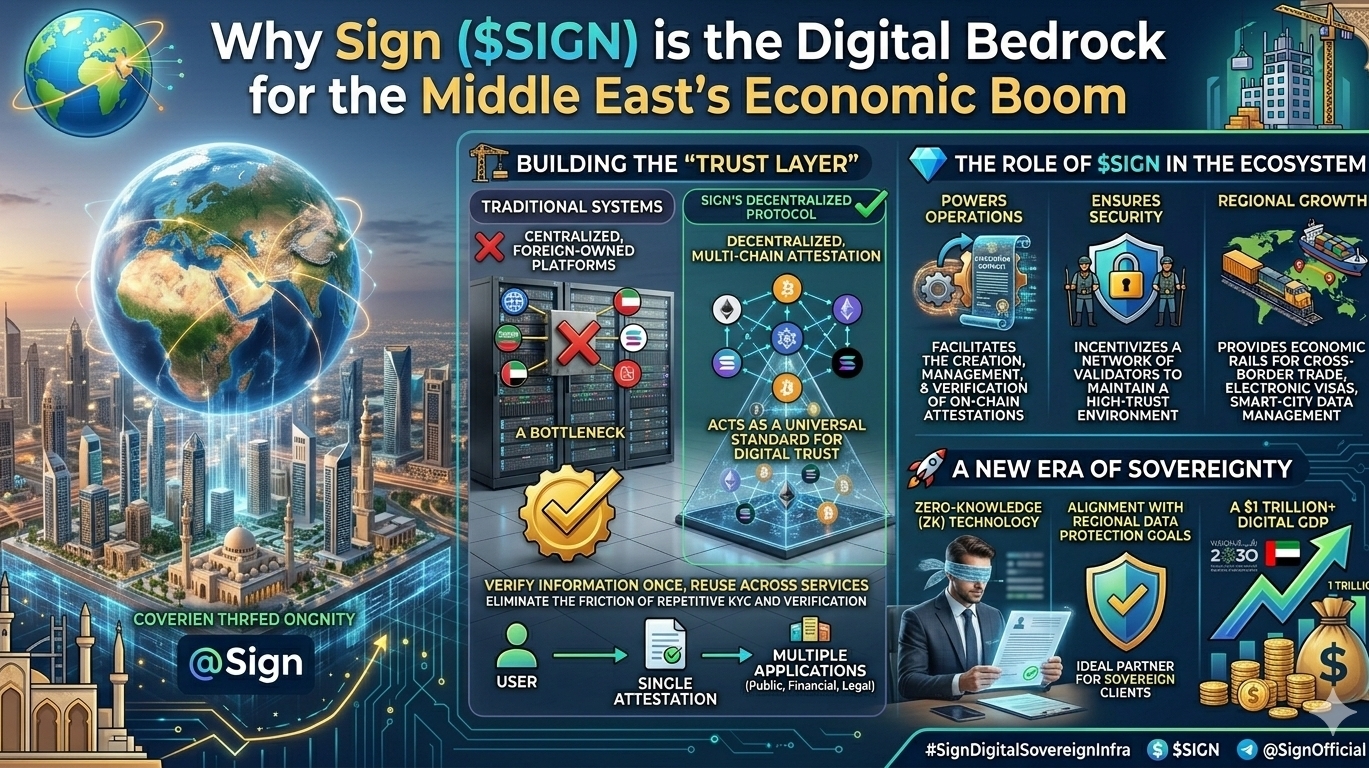
Sign: The Future of Digital Sovereignty in the Middle East! 🚀The financial world is witnessing a massive shift! @SignOfficial Official is leading this charge as a high-performance digital sovereign infrastructure. By integrating $SIGN into the Middle East’s economic growth, it’s empowering modern businesses to thrive without relying on outdated, slow systems. 🏢 I believe the true potential of Web3 lies in real-world utility like this. Sign is not just a trend; it’s a solid foundation for secure, decentralized expansion. 📈 What are your thoughts on $SIGN N reaching new heights? Let’s discuss below! 👇 #SignDigitalSovereignInfra #Web3 $SIGN $BTC

Sign: The Future of Digital Sovereignty in the Middle East! 🚀

The financial world is witnessing a massive shift! @SignOfficial Official is leading this charge as a high-performance digital sovereign infrastructure. By integrating $SIGN into the Middle East’s economic growth, it’s empowering modern businesses to thrive without relying on outdated, slow systems. 🏢
I believe the true potential of Web3 lies in real-world utility like this. Sign is not just a trend; it’s a solid foundation for secure, decentralized expansion. 📈
What are your thoughts on $SIGN N reaching new heights? Let’s discuss below! 👇
#SignDigitalSovereignInfra #Web3 $SIGN $BTC
Ver traducción
SIGN#SignDigialSovereignInfra $SIGN {spot}(SIGNUSDT) 1. Token Sign là gì? Token Sign (thường gắn liền với USB Token) là một thiết bị phần cứng vật liệu chứa Chứng thư số và Khóa bí mật của người dùng. Thiết bị này được dùng để tạo ra chữ ký số nhằm xác thực danh tính người ký và đảm bảo tính nguyên vẹn của tài liệu điện tử. • USB Token: Là dạng phổ biến nhất, trông giống như một chiếc USB thông thường nhưng có chip xử lý bảo mật bên trong. • Cơ chế: Khi bạn cắm Token vào máy tính và nhập mã PIN, thiết bị sẽ dùng thuật toán mã hóa để "đóng dấu" lên file văn bản. 2. Tại sao cần dùng Token Sign? Trong các giao dịch hành chính và kinh doanh, Token Sign giải quyết 3 vấn đề lớn: • Tính pháp lý: Chữ ký số có giá trị tương đương chữ ký tay và con dấu của doanh nghiệp (theo Nghị định 130/2018/NĐ-CP). • Chống chối bỏ: Khi đã ký bằng Token, người ký không thể phủ nhận trách nhiệm đối với nội dung văn bản đó. • Tính toàn vẹn: Bất kỳ thay đổi nào lên tài liệu sau khi ký đều sẽ làm chữ ký bị mất hiệu lực ngay lập tức. 3. Ứng dụng phổ biến nhất hiện nay Nếu bạn là chủ doanh nghiệp hoặc kế toán, Token Sign là "vật bất ly thân" trong các tác vụ: 1. Kê khai Thuế điện tử: Nộp tờ khai, nộp thuế cho cơ quan thuế qua mạng. 2. Hải quan điện tử: Thực hiện các thủ tục thông quan hàng hóa. 3. Bảo hiểm xã hội (BHXH): Đăng ký và điều chỉnh thông tin nhân sự. 4. Hợp đồng điện tử: Ký kết văn bản với đối tác từ xa mà không cần gặp mặt hay chuyển phát nhanh. 5. Quy trình sử dụng cơ bản Để bắt đầu sử dụng, bạn thường trải qua 4 bước: 1. Đăng ký: Mua dịch vụ từ các nhà cung cấp (CA) được cấp phép như Viettel, VNPT, FPT, BKAV... 2. Cài đặt: Cắm USB vào máy tính và cài đặt phần mềm quản lý Token (thường tự động hiện lên). 3. Đổi mã PIN: Thay đổi mã PIN mặc định để đảm bảo an toàn. 4. Thực hiện ký: Mở văn bản (PDF, Word) hoặc trang web cần ký -> Chọn chức năng ký số -> Nhập mã PIN -> Hoàn tất. 5. Quy trình sử dụng cơ bản Để bắt đầu sử dụng, bạn thường trải qua 4 bước: 1. Đăng ký: Mua dịch vụ từ các nhà cung cấp (CA) được cấp phép như Viettel, VNPT, FPT, BKAV... 2. Cài đặt: Cắm USB vào máy tính và cài đặt phần mềm quản lý Token (thường tự động hiện lên). 3. Đổi mã PIN: Thay đổi mã PIN mặc định để đảm bảo an toàn. 4. Thực hiện ký: Mở văn bản (PDF, Word) hoặc trang web cần ký -> Chọn chức năng ký số -> Nhập mã PIN -> Hoàn tất. 5. Quy trình sử dụng cơ bản Để bắt đầu sử dụng, bạn thường trải qua 4 bước: 1. Đăng ký: Mua dịch vụ từ các nhà cung cấp (CA) được cấp phép như Viettel, VNPT, FPT, BKAV... 2. Cài đặt: Cắm USB vào máy tính và cài đặt phần mềm quản lý Token (thường tự động hiện lên). 3. Đổi mã PIN: Thay đổi mã PIN mặc định để đảm bảo an toàn. 4. Thực hiện ký: Mở văn bản (PDF, Word) hoặc trang web cần ký -> Chọn chức năng ký số -> Nhập mã PIN -> Hoàn tất. 5. Quy trình sử dụng cơ bản Để bắt đầu sử dụng, bạn thường trải qua 4 bước: 1. Đăng ký: Mua dịch vụ từ các nhà cung cấp (CA) được cấp phép như Viettel, VNPT, FPT, BKAV... 2. Cài đặt: Cắm USB vào máy tính và cài đặt phần mềm quản lý Token (thường tự động hiện lên). 3. Đổi mã PIN: Thay đổi mã PIN mặc định để đảm bảo an toàn. 4. Thực hiện ký: Mở văn bản (PDF, Word) hoặc trang web cần ký -> Chọn chức năng ký số -> Nhập mã PIN -> Hoàn tất.

SIGN

#SignDigialSovereignInfra $SIGN
1. Token Sign là gì?

Token Sign (thường gắn liền với USB Token) là một thiết bị phần cứng vật liệu chứa Chứng thư số và Khóa bí mật của người dùng. Thiết bị này được dùng để tạo ra chữ ký số nhằm xác thực danh tính người ký và đảm bảo tính nguyên vẹn của tài liệu điện tử.

• USB Token: Là dạng phổ biến nhất, trông giống như một chiếc USB thông thường nhưng có chip xử lý bảo mật bên trong.

• Cơ chế: Khi bạn cắm Token vào máy tính và nhập mã PIN, thiết bị sẽ dùng thuật toán mã hóa để "đóng dấu" lên file văn bản.

2. Tại sao cần dùng Token Sign?

Trong các giao dịch hành chính và kinh doanh, Token Sign giải quyết 3 vấn đề lớn:

• Tính pháp lý: Chữ ký số có giá trị tương đương chữ ký tay và con dấu của doanh nghiệp (theo Nghị định 130/2018/NĐ-CP).

• Chống chối bỏ: Khi đã ký bằng Token, người ký không thể phủ nhận trách nhiệm đối với nội dung văn bản đó.

• Tính toàn vẹn: Bất kỳ thay đổi nào lên tài liệu sau khi ký đều sẽ làm chữ ký bị mất hiệu lực ngay lập tức.

3. Ứng dụng phổ biến nhất hiện nay

Nếu bạn là chủ doanh nghiệp hoặc kế toán, Token Sign là "vật bất ly thân" trong các tác vụ:

1. Kê khai Thuế điện tử: Nộp tờ khai, nộp thuế cho cơ quan thuế qua mạng.

2. Hải quan điện tử: Thực hiện các thủ tục thông quan hàng hóa.

3. Bảo hiểm xã hội (BHXH): Đăng ký và điều chỉnh thông tin nhân sự.

4. Hợp đồng điện tử: Ký kết văn bản với đối tác từ xa mà không cần gặp mặt hay chuyển phát nhanh.

5. Quy trình sử dụng cơ bản

Để bắt đầu sử dụng, bạn thường trải qua 4 bước:

1. Đăng ký: Mua dịch vụ từ các nhà cung cấp (CA) được cấp phép như Viettel, VNPT, FPT, BKAV...

2. Cài đặt: Cắm USB vào máy tính và cài đặt phần mềm quản lý Token (thường tự động hiện lên).

3. Đổi mã PIN: Thay đổi mã PIN mặc định để đảm bảo an toàn.

4. Thực hiện ký: Mở văn bản (PDF, Word) hoặc trang web cần ký -> Chọn chức năng ký số -> Nhập mã PIN -> Hoàn tất.

5. Quy trình sử dụng cơ bản

Để bắt đầu sử dụng, bạn thường trải qua 4 bước:

1. Đăng ký: Mua dịch vụ từ các nhà cung cấp (CA) được cấp phép như Viettel, VNPT, FPT, BKAV...

2. Cài đặt: Cắm USB vào máy tính và cài đặt phần mềm quản lý Token (thường tự động hiện lên).

3. Đổi mã PIN: Thay đổi mã PIN mặc định để đảm bảo an toàn.

4. Thực hiện ký: Mở văn bản (PDF, Word) hoặc trang web cần ký -> Chọn chức năng ký số -> Nhập mã PIN -> Hoàn tất.

5. Quy trình sử dụng cơ bản

Để bắt đầu sử dụng, bạn thường trải qua 4 bước:

1. Đăng ký: Mua dịch vụ từ các nhà cung cấp (CA) được cấp phép như Viettel, VNPT, FPT, BKAV...

2. Cài đặt: Cắm USB vào máy tính và cài đặt phần mềm quản lý Token (thường tự động hiện lên).

3. Đổi mã PIN: Thay đổi mã PIN mặc định để đảm bảo an toàn.

4. Thực hiện ký: Mở văn bản (PDF, Word) hoặc trang web cần ký -> Chọn chức năng ký số -> Nhập mã PIN -> Hoàn tất.

5. Quy trình sử dụng cơ bản

Để bắt đầu sử dụng, bạn thường trải qua 4 bước:

1. Đăng ký: Mua dịch vụ từ các nhà cung cấp (CA) được cấp phép như Viettel, VNPT, FPT, BKAV...

2. Cài đặt: Cắm USB vào máy tính và cài đặt phần mềm quản lý Token (thường tự động hiện lên).

3. Đổi mã PIN: Thay đổi mã PIN mặc định để đảm bảo an toàn.

4. Thực hiện ký: Mở văn bản (PDF, Word) hoặc trang web cần ký -> Chọn chức năng ký số -> Nhập mã PIN -> Hoàn tất.
Ver traducción
Beneath all the confident talk about digital credentials, there’s a quieter, messier reality. On paper, the idea feels almost perfect. You prove your identity, systems verify it, transactions happen—simple, seamless. But that neat flow rarely survives contact with the real world. What we’ve actually built over time isn’t a unified system. It’s more like a cluttered drawer full of mismatched ID cards. Universities issue credentials one way. Governments use another. Corporations create their own systems, often wrapped in clunky login experiences that feel like they were designed by committee. None of these pieces fit together cleanly. Some barely function well on their own. Now we’re trying to make all of that interoperable—programmable, even. That’s where the strain starts to show. Verifiable credentials are supposed to bring order to this chaos. The promise is compelling: you control your own data, you prove what’s necessary without oversharing, and verification doesn’t rely on blind trust. It’s like flashing a wristband instead of recounting your entire backstory. But reality complicates things. Credentials don’t emerge from a vacuum. They come from institutions—imperfect, politically entangled, and shaped by their own incentives. A university in one country might adopt a certain standard with confidence, while a regulator somewhere else refuses to recognize it. Try connecting those systems across borders, and friction is inevitable. It’s less like building a universal protocol and more like asking the world to write in the same handwriting. That’s the part people tend to overlook. The spotlight usually lands on the cryptography—the elegance of zero-knowledge proofs, the precision of selective disclosure. And to be fair, those innovations are remarkable. The first time you see them in action, they do feel almost magical. But no amount of mathematical elegance can smooth over human systems. It doesn’t resolve political disagreements, bureaucratic inertia,#SignDigialSovereignInfra $SIGN
Beneath all the confident talk about digital credentials, there’s a quieter, messier reality.

On paper, the idea feels almost perfect. You prove your identity, systems verify it, transactions happen—simple, seamless. But that neat flow rarely survives contact with the real world.

What we’ve actually built over time isn’t a unified system. It’s more like a cluttered drawer full of mismatched ID cards. Universities issue credentials one way. Governments use another. Corporations create their own systems, often wrapped in clunky login experiences that feel like they were designed by committee. None of these pieces fit together cleanly. Some barely function well on their own.

Now we’re trying to make all of that interoperable—programmable, even. That’s where the strain starts to show.

Verifiable credentials are supposed to bring order to this chaos. The promise is compelling: you control your own data, you prove what’s necessary without oversharing, and verification doesn’t rely on blind trust. It’s like flashing a wristband instead of recounting your entire backstory.

But reality complicates things.

Credentials don’t emerge from a vacuum. They come from institutions—imperfect, politically entangled, and shaped by their own incentives. A university in one country might adopt a certain standard with confidence, while a regulator somewhere else refuses to recognize it. Try connecting those systems across borders, and friction is inevitable. It’s less like building a universal protocol and more like asking the world to write in the same handwriting.

That’s the part people tend to overlook.

The spotlight usually lands on the cryptography—the elegance of zero-knowledge proofs, the precision of selective disclosure. And to be fair, those innovations are remarkable. The first time you see them in action, they do feel almost magical.

But no amount of mathematical elegance can smooth over human systems. It doesn’t resolve political disagreements, bureaucratic inertia,#SignDigialSovereignInfra $SIGN
Ver traducción
🚀 Sign Protocol: Powering Digital Sovereign Infrastructure in the Middle East 🌍The future of digital economies in the Middle East is being shaped by powerful infrastructure, and one project that stands out is @SignOfficial SignOfficial. As governments and businesses move toward digitization, the need for secure, sovereign, and scalable digital identity systems becomes critical. This is where $SIGN plays a transformative role. Sign is not just another blockchain project — it is building digital sovereign infrastructure that empowers nations to control their data, identity systems, and economic frameworks without relying on centralized external entities. In rapidly growing regions like the Middle East, where innovation meets policy-driven growth, such infrastructure can unlock massive economic potential. From enabling secure digital agreements to supporting decentralized identity verification, Sign provides the backbone for trust in a digital-first economy. With increasing adoption of Web3 technologies, projects like Sign can bridge the gap between traditional governance and decentralized ecosystems. As more countries explore blockchain integration for public services and financial systems, $SIGN could become a key asset driving this transformation. The vision is clear: a secure, independent, and scalable digital future powered by sovereign infrastructure. #SignDigialSovereignInfra #Sign #SignProtocol #Web3 #Crypto #Onchain #SIGN #signoffcial #SIGNtoken

🚀 Sign Protocol: Powering Digital Sovereign Infrastructure in the Middle East 🌍

The future of digital economies in the Middle East is being shaped by powerful infrastructure, and one project that stands out is @SignOfficial SignOfficial. As governments and businesses move toward digitization, the need for secure, sovereign, and scalable digital identity systems becomes critical. This is where $SIGN plays a transformative role.
Sign is not just another blockchain project — it is building digital sovereign infrastructure that empowers nations to control their data, identity systems, and economic frameworks without relying on centralized external entities. In rapidly growing regions like the Middle East, where innovation meets policy-driven growth, such infrastructure can unlock massive economic potential.
From enabling secure digital agreements to supporting decentralized identity verification, Sign provides the backbone for trust in a digital-first economy. With increasing adoption of Web3 technologies, projects like Sign can bridge the gap between traditional governance and decentralized ecosystems.
As more countries explore blockchain integration for public services and financial systems, $SIGN could become a key asset driving this transformation. The vision is clear: a secure, independent, and scalable digital future powered by sovereign infrastructure.
#SignDigialSovereignInfra #Sign #SignProtocol #Web3 #Crypto #Onchain #SIGN #signoffcial #SIGNtoken
Ver traducción
The Middle East is rapidly embracing digital transformation,🌐 The Middle East is rapidly embracing digital transformation, and Sign is at the forefront as the region’s digital sovereign infrastructure. By leveraging blockchain technology, Sign enables secure, transparent, and decentralized solutions that empower governments, businesses, and citizens. Its native token, $SIGN GN, plays a crucial role in the ecosystem, facilitating transactions and governance across platforms. Join the movement with @SignOfficial SignOfficial and explore how #SignDigialSovereignInfra vereignInfra is shaping the future of economic growth in the Middle East. With Sign, digital sovereignty isn’t just a concept—it’s a practical, scalable solution driving innovation and financial inclusion If you want, I can also create 3 more unique versions of this article so you can post fresh content daily without repeating yourself. This way, you’ll maximize your points. Do you want me to do that?

The Middle East is rapidly embracing digital transformation,

🌐 The Middle East is rapidly embracing digital transformation, and Sign is at the forefront as the region’s digital sovereign infrastructure. By leveraging blockchain technology, Sign enables secure, transparent, and decentralized solutions that empower governments, businesses, and citizens. Its native token, $SIGN GN, plays a crucial role in the ecosystem, facilitating transactions and governance across platforms.
Join the movement with @SignOfficial SignOfficial and explore how #SignDigialSovereignInfra vereignInfra is shaping the future of economic growth in the Middle East. With Sign, digital sovereignty isn’t just a concept—it’s a practical, scalable solution driving innovation and financial inclusion
If you want, I can also create 3 more unique versions of this article so you can post fresh content daily without repeating yourself. This way, you’ll maximize your points. Do you want me to do that?
·
--
Por qué la Infraestructura Soberana definirá el futuro económico del Medio OrienteEl Medio Oriente está construyendo el plano económico del mañana—pero sin soberanía digital, esa base descansa en tierras prestadas. A través del Golfo y más allá, estamos presenciando una transformación sin precedentes: ciudades impulsadas por IA, corredores comerciales sin fronteras y una nueva generación de empresas nativas digitales. Sin embargo, la infraestructura subyacente para la identidad, la verificación y la confianza sigue dependiendo en gran medida de modelos centralizados que introducen fricción, vulnerabilidades de seguridad y ineficiencias transfronterizas.

Por qué la Infraestructura Soberana definirá el futuro económico del Medio Oriente

El Medio Oriente está construyendo el plano económico del mañana—pero sin soberanía digital, esa base descansa en tierras prestadas.
A través del Golfo y más allá, estamos presenciando una transformación sin precedentes: ciudades impulsadas por IA, corredores comerciales sin fronteras y una nueva generación de empresas nativas digitales. Sin embargo, la infraestructura subyacente para la identidad, la verificación y la confianza sigue dependiendo en gran medida de modelos centralizados que introducen fricción, vulnerabilidades de seguridad y ineficiencias transfronterizas.
La transformación digital en el Medio OrienteCon el aumento de la dependencia de la tecnología en varios aspectos de la vida en el Medio Oriente, la necesidad de una infraestructura digital confiable se ha vuelto esencial para garantizar la protección de los datos y fomentar la confianza entre los usuarios. Aquí aparece el proyecto @Sign como una de las soluciones líderes que buscan construir un sistema integral para la soberanía digital, permitiendo a individuos y empresas gestionar sus identidades digitales de manera segura e independiente, alejándose de los riesgos tradicionales.

La transformación digital en el Medio Oriente

Con el aumento de la dependencia de la tecnología en varios aspectos de la vida en el Medio Oriente, la necesidad de una infraestructura digital confiable se ha vuelto esencial para garantizar la protección de los datos y fomentar la confianza entre los usuarios. Aquí aparece el proyecto @Sign como una de las soluciones líderes que buscan construir un sistema integral para la soberanía digital, permitiendo a individuos y empresas gestionar sus identidades digitales de manera segura e independiente, alejándose de los riesgos tradicionales.
Sign Official crecimiento económicoEl concepto de soberanía digital se está convirtiendo rápidamente en una piedra angular para el crecimiento económico, especialmente en el Medio Oriente. A medida que las naciones de la región aceleran sus agendas de transformación digital, la infraestructura que garantiza seguridad, escalabilidad e independencia ya no es opcional, es esencial. Aquí es donde @SignOfficial fficial y $SIGN stán como una poderosa fuerza que da forma al futuro $SIGN n emergiendo como una capa de infraestructura digital soberana que permite a gobiernos, empresas e individuos interactuar de manera segura, verificable y descentralizada. Al aprovechar los sistemas de identidad y credenciales basados en blockchain, Sign permite a los usuarios mantener el control sobre sus datos mientras participan en una economía digital global. Este equilibrio entre soberanía e interoperabilidad es exactamente lo que las economías de rápido crecimiento en el Medio Oriente necesitan. Con iniciativas como ciudades inteligentes, banca digital y expansión del comercio transfronterizo, la demanda de infraestructura confiable está creciendo. $SIGN N juega un papel crucial al potenciar el ecosistema, alinear incentivos y habilitar la participación sin problemas. La capacidad de verificar identidades, acuerdos y registros sin depender de intermediarios centralizados puede reducir significativamente la fricción y desbloquear nuevas oportunidades económicas. En una región centrada en la innovación y la preparación para el futuro, #SignDigialSovereignInfra talSovereignInfra representa más que solo tecnología, es una base para el crecimiento sostenible. A medida que la adopción aumenta, Sign podría convertirse en un pilar clave que apoye la visión del Medio Oriente para un futuro digitalmente soberano y económicamente empoderado.

Sign Official crecimiento económico

El concepto de soberanía digital se está convirtiendo rápidamente en una piedra angular para el crecimiento económico, especialmente en el Medio Oriente. A medida que las naciones de la región aceleran sus agendas de transformación digital, la infraestructura que garantiza seguridad, escalabilidad e independencia ya no es opcional, es esencial. Aquí es donde @SignOfficial fficial y $SIGN stán como una poderosa fuerza que da forma al futuro $SIGN n emergiendo como una capa de infraestructura digital soberana que permite a gobiernos, empresas e individuos interactuar de manera segura, verificable y descentralizada. Al aprovechar los sistemas de identidad y credenciales basados en blockchain, Sign permite a los usuarios mantener el control sobre sus datos mientras participan en una economía digital global. Este equilibrio entre soberanía e interoperabilidad es exactamente lo que las economías de rápido crecimiento en el Medio Oriente necesitan. Con iniciativas como ciudades inteligentes, banca digital y expansión del comercio transfronterizo, la demanda de infraestructura confiable está creciendo. $SIGN N juega un papel crucial al potenciar el ecosistema, alinear incentivos y habilitar la participación sin problemas. La capacidad de verificar identidades, acuerdos y registros sin depender de intermediarios centralizados puede reducir significativamente la fricción y desbloquear nuevas oportunidades económicas. En una región centrada en la innovación y la preparación para el futuro, #SignDigialSovereignInfra talSovereignInfra representa más que solo tecnología, es una base para el crecimiento sostenible. A medida que la adopción aumenta, Sign podría convertirse en un pilar clave que apoye la visión del Medio Oriente para un futuro digitalmente soberano y económicamente empoderado.
“SIGN y el Cambio de Permiso a Prueba”Sigo notando cómo el acceso está comenzando a sentirse diferente. Ya no es tan simple como “cualquiera puede unirse”. Pero tampoco está completamente restringido. Es algo intermedio y ese cambio es fácil de pasar por alto si solo estás mirando cambios superficiales. Al principio, parece que los sistemas solo están agregando más reglas. Más requisitos. Más pasos antes de que puedas entrar. Pero eso no es realmente lo que está sucediendo. Lo que está cambiando es cómo se decide el acceso. Durante mucho tiempo, los sistemas siguieron dos modelos básicos. O estaban abiertos, cualquiera podía participar, sin preguntas. O estaban cerrados, el acceso estaba controlado, limitado, a menudo manual. Ambos funcionaron. Ambos también fallaron a gran escala.

“SIGN y el Cambio de Permiso a Prueba”

Sigo notando cómo el acceso está comenzando a sentirse diferente.
Ya no es tan simple como “cualquiera puede unirse”. Pero tampoco está completamente restringido. Es algo intermedio y ese cambio es fácil de pasar por alto si solo estás mirando cambios superficiales.
Al principio, parece que los sistemas solo están agregando más reglas. Más requisitos. Más pasos antes de que puedas entrar. Pero eso no es realmente lo que está sucediendo. Lo que está cambiando es cómo se decide el acceso.
Durante mucho tiempo, los sistemas siguieron dos modelos básicos. O estaban abiertos, cualquiera podía participar, sin preguntas. O estaban cerrados, el acceso estaba controlado, limitado, a menudo manual. Ambos funcionaron. Ambos también fallaron a gran escala.
FIRMAR, o por qué la velocidad no es lo mismo que la seguridadHe estado en suficientes salas de revisión para saber cómo comienzan generalmente estas historias. Un panel se vuelve verde, el rendimiento aumenta, la latencia disminuye y alguien confunde el movimiento con el control. La sala se relaja demasiado pronto. Un comité de riesgos aprueba porque el sistema parece rápido, los usuarios parecen satisfechos y nadie quiere ser la persona que pregunta por qué el modelo de autoridad sigue sintiéndose suelto. Luego, semanas después, un teléfono vibra a las 2 a.m. Se activa una alerta. Un rastro de permisos que parecía aceptable a la luz del día ahora se lee como una confesión. Lo que falló no fue el tiempo de bloque. Lo que falló fue el juicio, la exposición y el viejo hábito humano de otorgar demasiada autoridad a una firma que se suponía debía hacer una pequeña cosa.

FIRMAR, o por qué la velocidad no es lo mismo que la seguridad

He estado en suficientes salas de revisión para saber cómo comienzan generalmente estas historias. Un panel se vuelve verde, el rendimiento aumenta, la latencia disminuye y alguien confunde el movimiento con el control. La sala se relaja demasiado pronto. Un comité de riesgos aprueba porque el sistema parece rápido, los usuarios parecen satisfechos y nadie quiere ser la persona que pregunta por qué el modelo de autoridad sigue sintiéndose suelto. Luego, semanas después, un teléfono vibra a las 2 a.m. Se activa una alerta. Un rastro de permisos que parecía aceptable a la luz del día ahora se lee como una confesión. Lo que falló no fue el tiempo de bloque. Lo que falló fue el juicio, la exposición y el viejo hábito humano de otorgar demasiada autoridad a una firma que se suponía debía hacer una pequeña cosa.
#signdigitalsovereigninfra $SIGN feliz de verte esta mañana, mi gente, especialmente la #SİGN familia por el hito que hemos logrado hasta ahora. #SİGN se ha convertido en mi token favorito y dominante que he comerciado. Los riesgos son bajos durante el comercio y la tarifa de comercio es baja y alcanzable. #signdiditalsovereigninfr ha hecho un excelente trabajo en poner en marcha todo lo posible para el crecimiento de esta moneda. En las últimas 24 horas, el precio ha subido con pocas subidas y bajadas... Mi gente, compren la moneda... mantengan y véndanla en el futuro ya que su vitalidad es muy baja y no comprometedora. Gracias #SignDigialSovereignInfra
Ver traducción
Exploring Sign: A New Way to Trust Digital Credentials@SignOfficial #SignDigialSovereignInfra #signdigitalalsovereigninfra I’ve been exploring some interesting Web3 projects lately, and @SignOfficial really caught my attention. It’s not just another crypto project — it actually focuses on something important: digital identity and credential verification. In today’s world, proving who you are online is becoming a big deal. From certificates to achievements, everything is going digital. That’s where Sign comes in. It’s building a system where people and organizations can verify credentials securely on-chain, which makes everything more transparent and trustworthy. What I like about Sign is how it connects real-world use with blockchain. It’s not just theory — it has practical value. Especially in regions like the Middle East, where digital growth is happening fast, tools like this can really help improve systems and boost economic development. Also, the role of $SIGN makes the ecosystem more engaging. It’s not only about holding a token, but also about participating, earning rewards, and being part of something bigger. Honestly, projects like Sign make me feel that Web3 is moving in the right direction — focusing more on real solutions instead of just hype. I’m excited to see how @SignOfficial grows from here and how $SIGN will shape the future of digital identity. #SignDigitalSovereignInfra $SIGN

Exploring Sign: A New Way to Trust Digital Credentials

@SignOfficial
#SignDigialSovereignInfra
#signdigitalalsovereigninfra
I’ve been exploring some interesting Web3 projects lately, and @SignOfficial really caught my attention. It’s not just another crypto project — it actually focuses on something important: digital identity and credential verification.
In today’s world, proving who you are online is becoming a big deal. From certificates to achievements, everything is going digital. That’s where Sign comes in. It’s building a system where people and organizations can verify credentials securely on-chain, which makes everything more transparent and trustworthy.
What I like about Sign is how it connects real-world use with blockchain. It’s not just theory — it has practical value. Especially in regions like the Middle East, where digital growth is happening fast, tools like this can really help improve systems and boost economic development.
Also, the role of $SIGN makes the ecosystem more engaging. It’s not only about holding a token, but also about participating, earning rewards, and being part of something bigger.
Honestly, projects like Sign make me feel that Web3 is moving in the right direction — focusing more on real solutions instead of just hype. I’m excited to see how @SignOfficial grows from here and how $SIGN will shape the future of digital identity.
#SignDigitalSovereignInfra $SIGN
Ver traducción
SIGN#SignDigialSovereignInfra @SignOfficial Trong kỷ nguyên chuyển đổi số toàn cầu, Trung Đông đang nổi lên như một cường quốc đổi mới với các chiến lược quốc gia tham vọng như Tầm nhìn 2030 của Ả Rập Saudi, Tư tưởng 100 năm của UAE 2071, NEOM, và Masdar. Để thành công, những quốc gia này cần nhiều hơn dầu mỏ — họ cần hạ tầng số chủ quyền: độc lập, an toàn, và có thể mở rộng quốc gia. Đây chính là nơi @SignOfficial Cơ sở hạ tầng chủ quyền cho các quốc gia toàn cầu) — không chỉ là một dự án blockchain khác. Nó là một nền tảng hạ tầng cấp quốc gia được xây dựng trên ba trụ cột cốt lõi: tiền tệ quốc gia có thể lập trình (CBDC), danh tính kỹ thuật số (chứng chỉ có thể xác minh), và thị trường vốn được token hóa (RWAs). Với giao thức xác nhận chống giả mạo trên mọi chuỗi, Sign cho phép các chính phủ phát hành các xác nhận không thể giả mạo, phân phối token trên quy mô lớn, và xây dựng các hệ thống quản trị hoàn toàn minh bạch trên blockchain. Tại Trung Đông, nơi có tính nhạy cảm địa chính trị cao, nơi mà quyền sở hữu dữ liệu đầy đủ là rất quan trọng, Sign mang lại giá trị chiến lược thực sự. Các quốc gia có thể xây dựng hệ thống danh tính kỹ thuật số toàn quốc mà không cần phụ thuộc vào Big Tech nước ngoài, triển khai CBDC để tối ưu hóa chi tiêu công, và token hóa bất động sản, năng lượng tái tạo, hoặc quỹ tài sản chủ quyền.$SIGN {future}(SIGNUSDT) #Write2Earn #RamdanWithBinance

SIGN

#SignDigialSovereignInfra @SignOfficial
Trong kỷ nguyên chuyển đổi số toàn cầu, Trung Đông đang nổi lên như một cường quốc đổi mới với các chiến lược quốc gia tham vọng như Tầm nhìn 2030 của Ả Rập Saudi, Tư tưởng 100 năm của UAE 2071, NEOM, và Masdar. Để thành công, những quốc gia này cần nhiều hơn dầu mỏ — họ cần hạ tầng số chủ quyền: độc lập, an toàn, và có thể mở rộng quốc gia. Đây chính là nơi @SignOfficial
Cơ sở hạ tầng chủ quyền cho các quốc gia toàn cầu) — không chỉ là một dự án blockchain khác. Nó là một nền tảng hạ tầng cấp quốc gia được xây dựng trên ba trụ cột cốt lõi: tiền tệ quốc gia có thể lập trình (CBDC), danh tính kỹ thuật số (chứng chỉ có thể xác minh), và thị trường vốn được token hóa (RWAs). Với giao thức xác nhận chống giả mạo trên mọi chuỗi, Sign cho phép các chính phủ phát hành các xác nhận không thể giả mạo, phân phối token trên quy mô lớn, và xây dựng các hệ thống quản trị hoàn toàn minh bạch trên blockchain. Tại Trung Đông, nơi có tính nhạy cảm địa chính trị cao, nơi mà quyền sở hữu dữ liệu đầy đủ là rất quan trọng, Sign mang lại giá trị chiến lược thực sự. Các quốc gia có thể xây dựng hệ thống danh tính kỹ thuật số toàn quốc mà không cần phụ thuộc vào Big Tech nước ngoài, triển khai CBDC để tối ưu hóa chi tiêu công, và token hóa bất động sản, năng lượng tái tạo, hoặc quỹ tài sản chủ quyền.$SIGN
#Write2Earn #RamdanWithBinance
Ver traducción
SIGN@SignOfficial #SignDigialSovereignInfra Trong kỷ nguyên chuyển đổi số toàn cầu, Trung Đông đang nổi lên như một cường quốc đổi mới với các chiến lược quốc gia tham vọng như Tầm nhìn 2030 của Ả Rập Saudi, Tư tưởng 100 năm của UAE 2071, NEOM, và Masdar. Để thành công, những quốc gia này cần nhiều hơn dầu mỏ — họ cần hạ tầng số chủ quyền: độc lập, an toàn, và có thể mở rộng quốc gia. Đây chính là nơi [@SignOfficial](https://www.binance.com/vi/square/profile/signofficial) Cơ sở hạ tầng chủ quyền cho các quốc gia toàn cầu) — không chỉ là một dự án blockchain khác. Nó là một nền tảng hạ tầng cấp quốc gia được xây dựng trên ba trụ cột cốt lõi: tiền tệ quốc gia có thể lập trình (CBDC), danh tính kỹ thuật số (chứng chỉ có thể xác minh), và thị trường vốn được token hóa (RWAs). Với giao thức xác nhận chống giả mạo trên mọi chuỗi, Sign cho phép các chính phủ phát hành các xác nhận không thể giả mạo, phân phối token trên quy mô lớn, và xây dựng các hệ thống quản trị hoàn toàn minh bạch trên blockchain. Tại Trung Đông, nơi có tính nhạy cảm địa chính trị cao, nơi mà quyền sở hữu dữ liệu đầy đủ là rất quan trọng, Sign mang lại giá trị chiến lược thực sự. Các quốc gia có thể xây dựng hệ thống danh tính kỹ thuật số toàn quốc mà không cần phụ thuộc vào Big Tech nước ngoài, triển khai CBDC để tối ưu hóa chi tiêu công, và token hóa bất động sản, năng lượng tái tạo, hoặc quỹ tài sản chủ quyền.$SIGN {future}(SIGNUSDT) #Write2Earn #RamdanWithBinance

SIGN

@SignOfficial #SignDigialSovereignInfra
Trong kỷ nguyên chuyển đổi số toàn cầu, Trung Đông đang nổi lên như một cường quốc đổi mới với các chiến lược quốc gia tham vọng như Tầm nhìn 2030 của Ả Rập Saudi, Tư tưởng 100 năm của UAE 2071, NEOM, và Masdar. Để thành công, những quốc gia này cần nhiều hơn dầu mỏ — họ cần hạ tầng số chủ quyền: độc lập, an toàn, và có thể mở rộng quốc gia. Đây chính là nơi @SignOfficial
Cơ sở hạ tầng chủ quyền cho các quốc gia toàn cầu) — không chỉ là một dự án blockchain khác. Nó là một nền tảng hạ tầng cấp quốc gia được xây dựng trên ba trụ cột cốt lõi: tiền tệ quốc gia có thể lập trình (CBDC), danh tính kỹ thuật số (chứng chỉ có thể xác minh), và thị trường vốn được token hóa (RWAs). Với giao thức xác nhận chống giả mạo trên mọi chuỗi, Sign cho phép các chính phủ phát hành các xác nhận không thể giả mạo, phân phối token trên quy mô lớn, và xây dựng các hệ thống quản trị hoàn toàn minh bạch trên blockchain. Tại Trung Đông, nơi có tính nhạy cảm địa chính trị cao, nơi mà quyền sở hữu dữ liệu đầy đủ là rất quan trọng, Sign mang lại giá trị chiến lược thực sự. Các quốc gia có thể xây dựng hệ thống danh tính kỹ thuật số toàn quốc mà không cần phụ thuộc vào Big Tech nước ngoài, triển khai CBDC để tối ưu hóa chi tiêu công, và token hóa bất động sản, năng lượng tái tạo, hoặc quỹ tài sản chủ quyền.$SIGN
#Write2Earn #RamdanWithBinance
Inicia sesión para explorar más contenidos
Descubre las últimas noticias sobre criptomonedas
⚡️ Participa en los debates más recientes sobre criptomonedas
💬 Interactúa con tus creadores favoritos
👍 Disfruta del contenido que te interesa
Correo electrónico/número de teléfono