
The U.S. Treasury’s announcement that it would not purchase Bitcoin caused its price to retreat and is currently trading below $120,000.
The current BTC price is approximately $118,612, down 4.1% from its all-time high of $124,000 reached earlier this week. The market is watching to see whether this consolidation phase will turn into a new upward momentum or continue the downward trend.
Meanwhile, blockchain data has recently drawn attention to the activities of Binance, the world’s largest cryptocurrency exchange.
The inflow of funds into Bitcoin exchanges and its possible impact
According to information provided by CryptoOnchain, a contributor to on-chain data provider CryptoQuant, Bitcoin’s exchange inflows in recent months have ranked among the top seven platforms.
This increase reflects more BTC being transferred into Binance wallets, likely in preparation for sale, as collateral for leveraged positions, or for institutional portfolio adjustments.
CryptoOnchain explained that sustained high inflows typically mean more Bitcoin is being transferred from private wallets to exchange accounts. If there is no corresponding buying demand to balance it, this increase in supply could lead to short-term selling pressure.
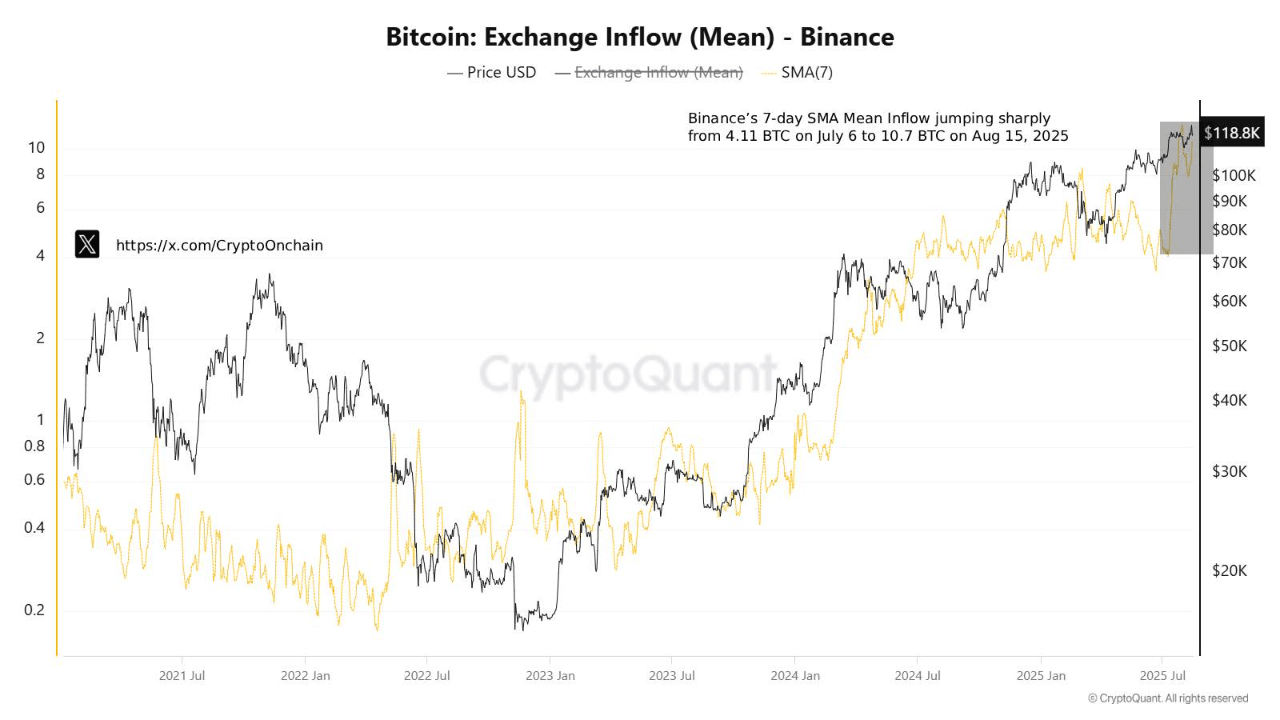
This view is supported by a positive net inflow trend, with inflows exceeding withdrawals, indicating that Binance's Bitcoin reserves are increasing. Historical data shows that similar patterns often precede periods of price volatility, especially when large investors decide to reduce their positions or hedge through the derivatives market.
Analysts point out that if capital inflows continue to grow at the current rate and demand fails to keep pace, the market may face greater short-term downside risks.
However, if these inflows can trigger strong buying interest, they could provide liquidity for further price fluctuations. The key question is whether the increase in BTC reserves by exchanges is an intentional sell-off or a strategic positioning for market developments.
Leverage trends suggest a decline in speculative risk
Separate analysis by CryptoQuant contributor Arab Chain examined Binance’s Bitcoin estimated leverage ratio (ELR), which measures open interest relative to exchange reserves. It recently dipped to around 0.25 from a high of 0.27 in early August, before recovering slightly.
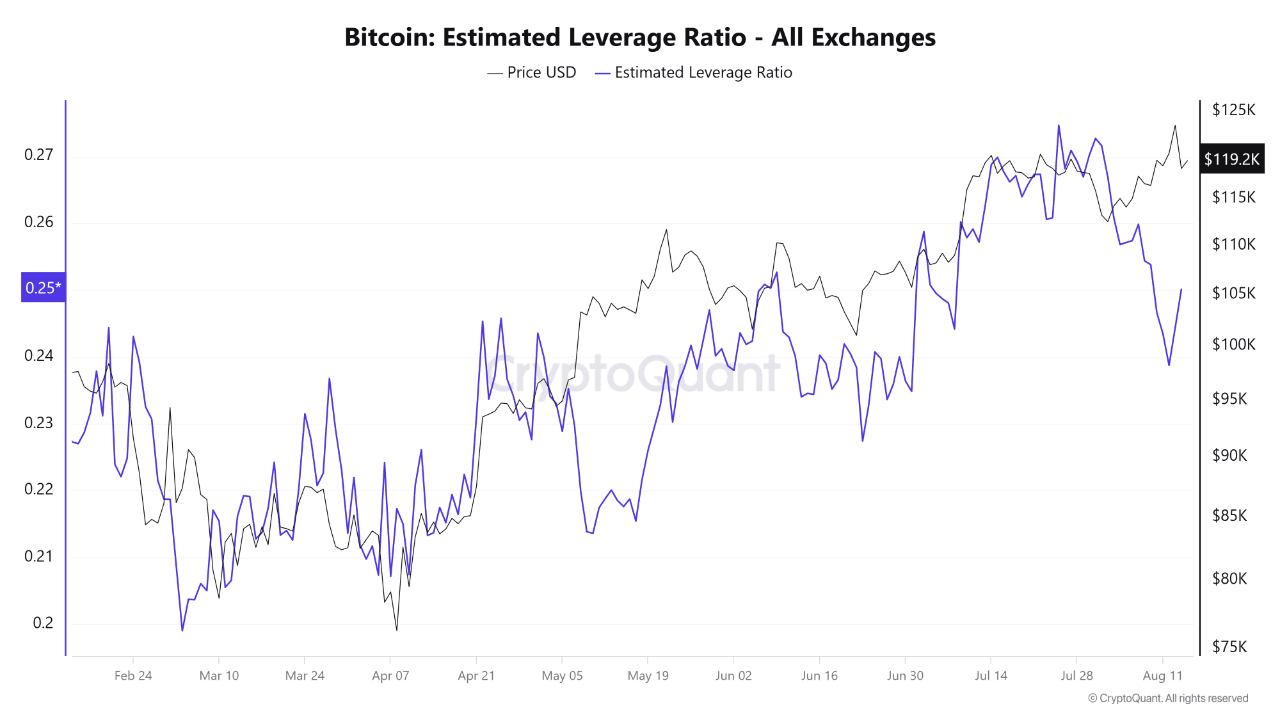
From May to late July, Bitcoin prices and leverage increased in tandem, indicating that more traders were participating in the market with larger positions. While Bitcoin prices have remained near $119,000, the recent decline in leverage suggests a reduction in speculative risk, likely due to the liquidation of high-risk positions or profit-taking following rapid price increases.
Arab Chain believes that the lower leverage ratio during the price stability period is a positive sign, indicating that the market support comes more from actual liquidity rather than excessive speculation.
Like and follow Xiao Ma, get on the car with the homepage profile, and eat meat together! !
