
Decentralized storage is becoming more critical as Web3 and blockchain applications grow. Traditional cloud storage services, like AWS, are centralized and don’t align with Web3’s principles of decentralization. Walrus Protocol offers an alternative with its blob storage solution, focusing on cost-effective, secure, and decentralized data storage for dApps and other blockchain projects.
@Walrus 🦭/acc Protocol works by dividing data into smaller chunks and distributing them across multiple nodes, ensuring high availability and redundancy. The network relies on its native token, WAL, to pay for storage and incentivize storage providers. Users store data using WAL tokens, while validators and storage providers earn WAL for offering their services. This model aligns the interests of all participants—users get cheaper storage, while providers earn rewards.
Governance of the network is decentralized through a DAO, where WAL token holders vote on changes to the protocol, such as fee structures or updates. This ensures that decision-making remains in the hands of the community.
Data from the network shows steady growth in wallet activity, transaction volume, and validator participation. As the protocol grows, so does its total value locked (TVL), showing increasing adoption.
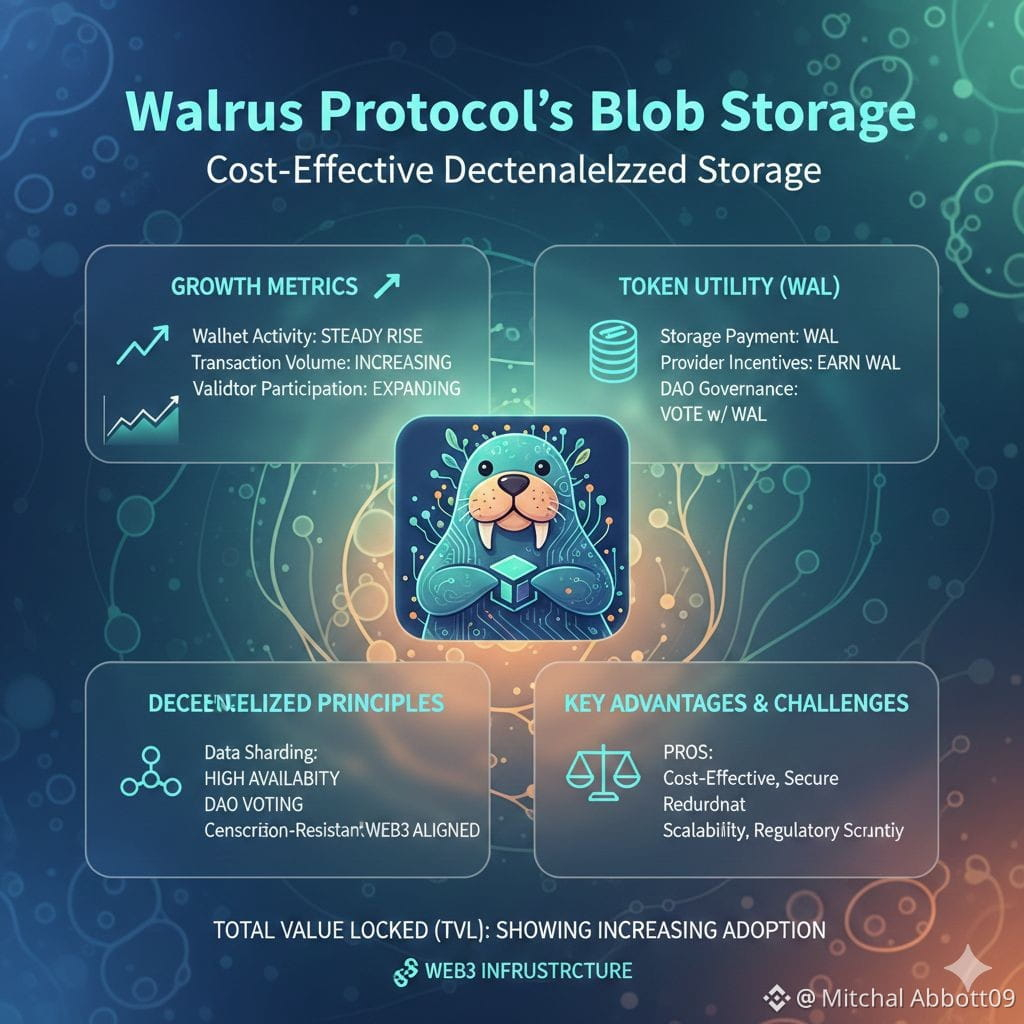
However, Walrus faces challenges, including scalability and the potential for regulatory scrutiny as decentralized storage grows. Still, its cost-effective and decentralized nature positions it well in the evolving Web3 space, offering developers and users a viable alternative to traditional cloud services.

