
1️⃣ Distributed Architecture & Scalability
The Walrus network stores files by splitting them into small pieces, known as slivers, and distributing them across many independent storage nodes. This design removes single points of failure and allows read requests to be shared across the network during high demand. Because network participation is permissionless, storage capacity can expand dynamically based on demand, supporting long-term scalability without centralized bottlenecks.
2️⃣ On-Network Verification & Trust Model
Walrus continuously verifies that data is actually being stored through periodic on-network challenges. Storage nodes respond with cryptographic proofs that demonstrate data possession. This verification process maintains network integrity while preserving performance. By aligning incentives with honest participation, Walrus aims to sustain a reliable and trust-minimized storage environment over time.
3️⃣ Efficiency Through Advanced Erasure Coding
To reduce storage overhead, Walrus uses advanced erasure coding techniques. Files are divided into slivers and replicated with carefully calculated redundancy. This approach ensures data durability and availability while using significantly less excess storage compared to traditional full-replication models. The result is a balanced trade-off between resilience and resource efficiency.
4️⃣ Red Stuff Scheme & Cost Optimization
The system employs a mechanism known as Red Stuff, designed to optimize both write and read operations. Users benefit from fast data access, while storage providers avoid unnecessary disk usage. This scheme improves overall network efficiency and supports cost-effective data placement without compromising reliability.
5️⃣ Access, Speed & Developer-Friendly Tooling
Walrus is built with usability in mind, offering HTTP-based access alongside CLI tools and SDKs for multiple programming environments. Developers can integrate storage functionality using workflows similar to Web2 infrastructure, enabling rapid adoption and minimal friction. This design significantly shortens the learning curve for teams transitioning into decentralized storage.
6️⃣ Content Delivery & Performance Layer
An integrated content distribution layer uses caching to reduce latency. Even large files can be delivered smoothly to end users. This makes Walrus suitable for a wide range of use cases, including media delivery, gaming assets, AI datasets, and blockchain-related data. Consistent performance across diverse workloads is a core objective of the network.
7️⃣ What Is WAL Coin?
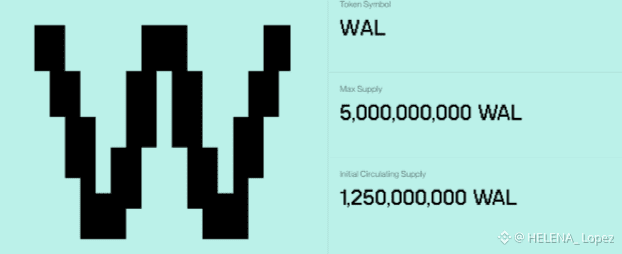
WAL is the native token of the Walrus network and is used to pay for storage services. Users prepay for data storage over a defined period, while storage nodes earn these payments gradually over time. The pricing model is designed to remain stable in fiat terms, helping users maintain predictable costs despite token market volatility. This structure supports sustainable incentives for long-term network participants.
Summary
Walrus combines decentralized architecture, continuous verification, efficient data encoding, and developer-friendly tools to deliver a scalable and reliable Web3 storage solution. With WAL as its utility token and a focus on predictable pricing, the network aims to provide cost-efficient, high-availability data storage for modern decentralized applications.

