

The real question is whether it keeps bad actions from happening when the pressure is on. That is what matters. Not the whitepaper language. Not the token hype. Not the usual crypto theater where every project claims it is changing everything. Most of them are not. Most of them are just trying to look important for a few months.
Newton also seems to understand that institutions are not going to touch this stuff if it feels sloppy. They want control. They want audit trails. They want to know why something happened, who approved it, and what rule allowed it. They do not want a black box with a cute logo. They want something that can be checked. That is why the policy engine angle makes sense. It gives the system a way to enforce rules before execution instead of hoping someone fixes the problem later. That is a better setup. It is also the kind of thing that should have existed earlier, if we are being honest.
The annoying part is that crypto loves to skip straight to the exciting part and leave out the plumbing. That is how you get fragile systems. Newton is trying to stay in the plumbing. It is trying to be the layer under the action, not the action itself. That may not sound sexy, but sexy is usually what gets people into trouble.
If AI agents are going to make decisions with real money attached, then the authorization layer is not optional. It is the whole point. Otherwise you are just handing a fast machine a wallet and hoping it behaves.
So yes, Newton is about AI, trading, developers, and all that. But underneath the marketing, the actual problem is much narrower and much more real. How do you let software act without giving it a blank check. How do you make sure the system follows the rules before the money leaves. How do you keep autonomy from turning into chaos. That is the mess Newton is trying to clean up. And that is the part worth paying attention to.
The big problem is simple. Crypto keeps acting like automation is the whole answer, and it is not. If you let software move money, trade on your behalf, or talk to smart contracts, you need hard rules. Not vibes. Not trust me bro security. Real rules. Because once an AI agent or some bot starts acting with a wallet behind it, one bad step can turn into a mess fast. Funds get drained. Bad trades get pushed through. Compliance gets skipped. People only notice after the damage is already done.
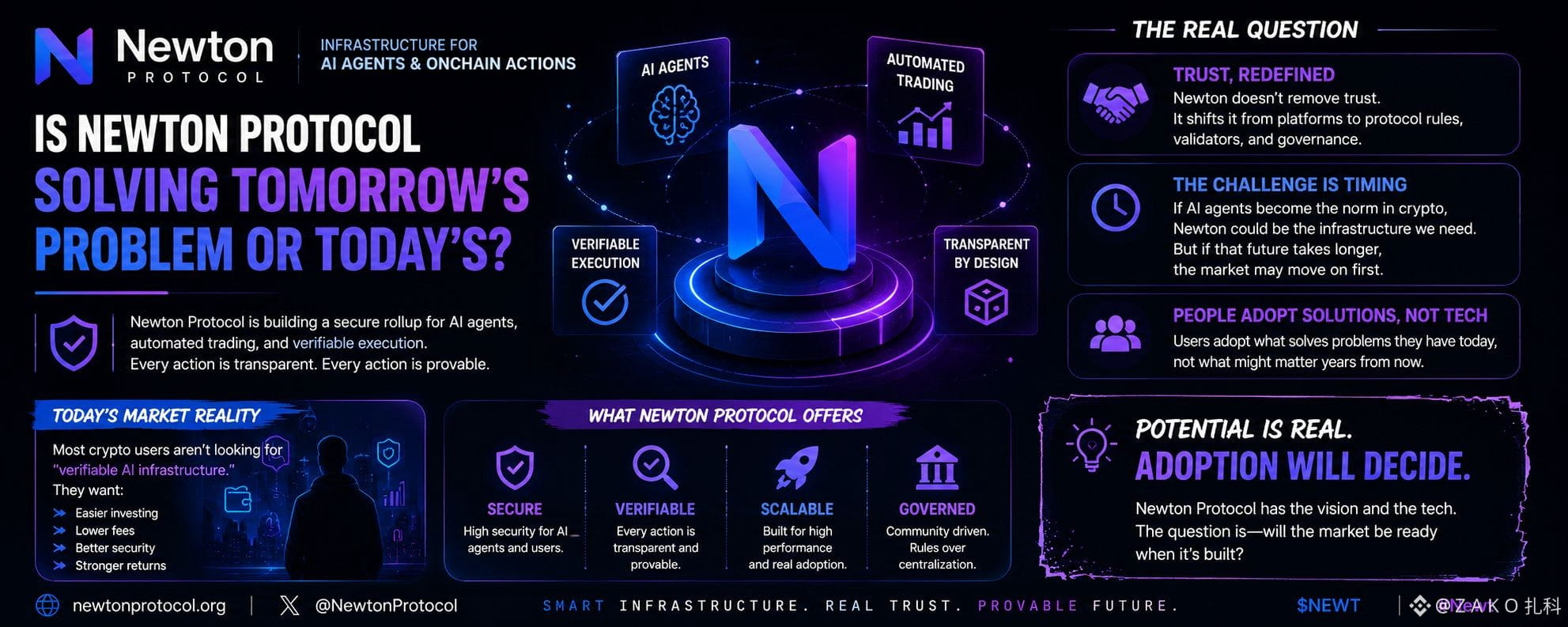
That is the hole Newton is trying to fill. At least that is the idea. It is not really trying to be another loud AI coin with a shiny pitch and a bunch of buzzwords slapped on top. It is trying to be the layer that says what an agent can and cannot do before the transaction happens. That is the part people usually ignore until things break. Newton is built around secure onchain authorization. The point is to make the rules programmable so a system can check them before it moves anything. Spend limits. Sanctions checks. Fraud protection. Policy rules. Stuff that sounds boring until you need it.
And honestly, boring is good here. Boring means it might work. The protocol is aimed at AI-driven strategies, automated trading, and a marketplace for AI developers,