I keep coming back to one simple thought: people talk about making AI smarter, but I think we're asking the wrong question.
Imagine hiring someone you've never met to manage your savings. They're incredibly talented, have an amazing track record, and can spot opportunities faster than almost anyone else. Would you immediately hand them full control of your bank account?
Probably not.
You'd set spending limits. You'd ask for approvals on large transactions. You'd want to know exactly what they're doing and why.
That's trust.
And strangely enough, as AI becomes more capable, we sometimes forget that trust isn't built by intelligence alone.
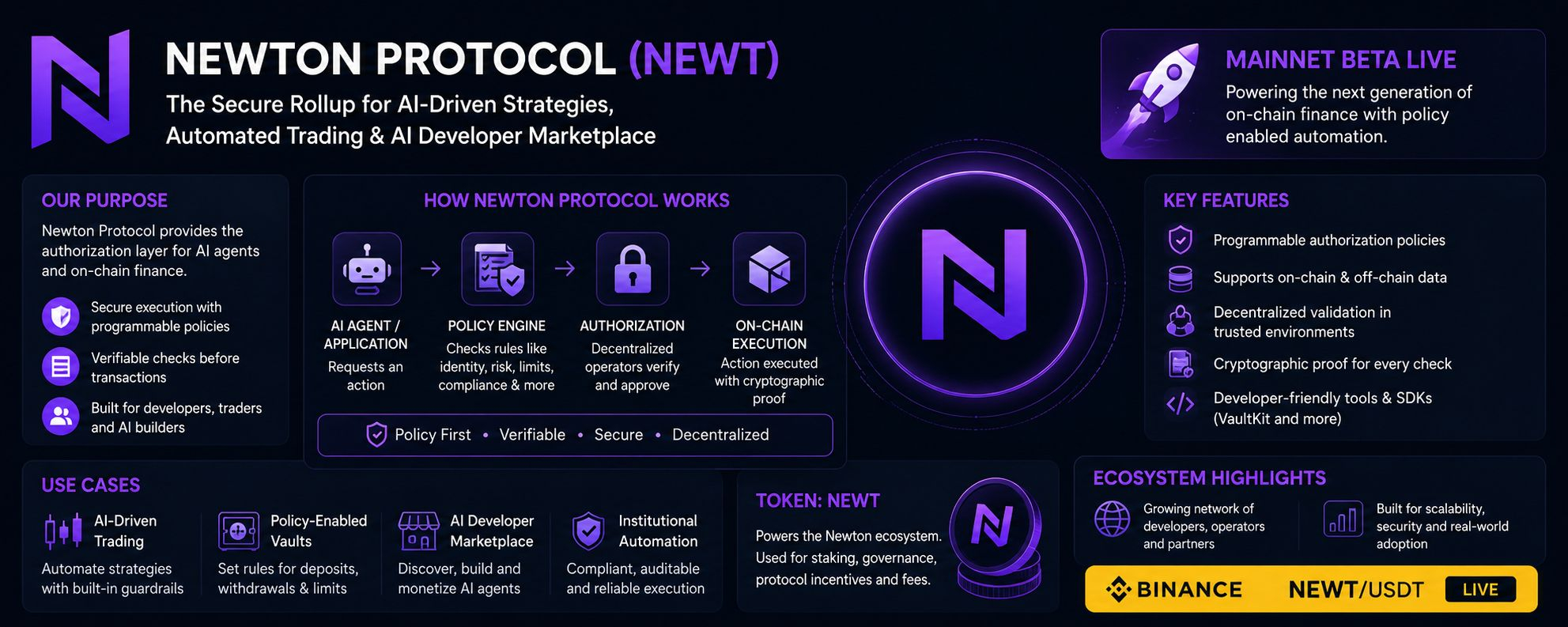
That's why Newton Protocol caught my attention.
Most conversations about AI in crypto focus on speed. Faster trades. Smarter strategies. Better automation. It sounds exciting, but real life isn't that simple. Markets don't always behave. Rules change. Regulations evolve. Unexpected events happen when nobody is prepared.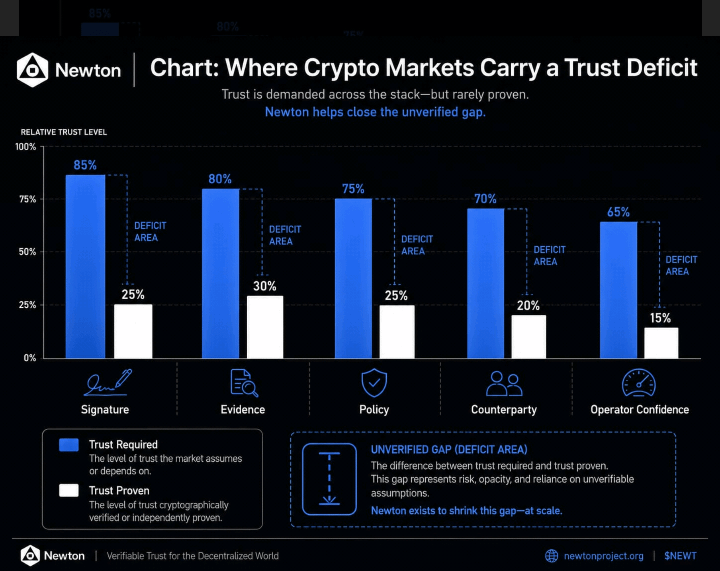
That's usually when systems reveal what they're really made of.
Think about your bank for a moment. If someone tries logging into your account from another country and immediately sends your entire balance somewhere else, the bank doesn't celebrate how quickly the transaction happened. It pauses. It asks questions. Sometimes it blocks the payment completely.
That delay isn't a flaw.
It's part of why people trust the system.
I think AI needs something similar.
Just because an AI can execute a transaction doesn't automatically mean it should. There's a huge difference between capability and permission, and that gap is becoming more important as AI agents begin handling real money.
From what I've been following, that's the direction Newton Protocol is exploring. Instead of focusing only on execution, it's building an authorization layer where policies can be checked before actions happen. Things like identity, risk limits, compliance rules, or organizational permissions become part of the decision instead of an afterthought. With its recent Mainnet Beta and VaultKit tools, the project seems to be moving from theory toward real developer experimentation.
I find that interesting because it mirrors how the real world already works.
Airplanes don't rely on a great pilot alone. They have checklists.
Hospitals don't rely only on experienced surgeons. They have verification procedures.
Banks don't rely only on secure software. They have approval workflows.
Those extra steps aren't there because people lack confidence.
They're there because mistakes become expensive under pressure.
Crypto often celebrates removing friction, and in many cases that's a genuine improvement. But I sometimes wonder whether we've confused removing unnecessary friction with removing every safeguard.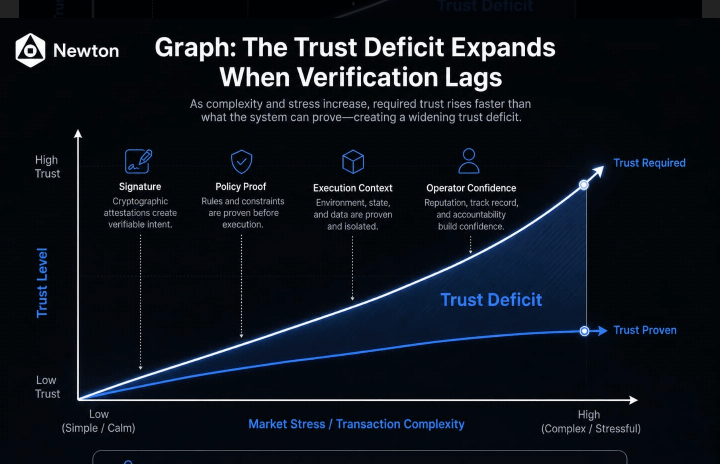
They're not the same thing.
As AI becomes more autonomous, guardrails may become just as valuable as intelligence itself.
Of course, no protocol can eliminate risk. Policies can be poorly written. External data can fail. Governance decisions can create disagreements. Real systems are always messy because the real world is messy.
But I think acknowledging that complexity is healthier than pretending technology can magically erase it.
The projects that last usually aren't the ones making the biggest promises. They're the ones quietly building systems that still behave predictably when markets become chaotic.
That's where I think Newton Protocol is trying to position itself—not as another AI project chasing smarter models, but as infrastructure asking a different question:
"How do we know an autonomous action should happen before it actually does?"
Maybe that's not the most exciting question.
But years from now, it might turn out to be one of the most important.