
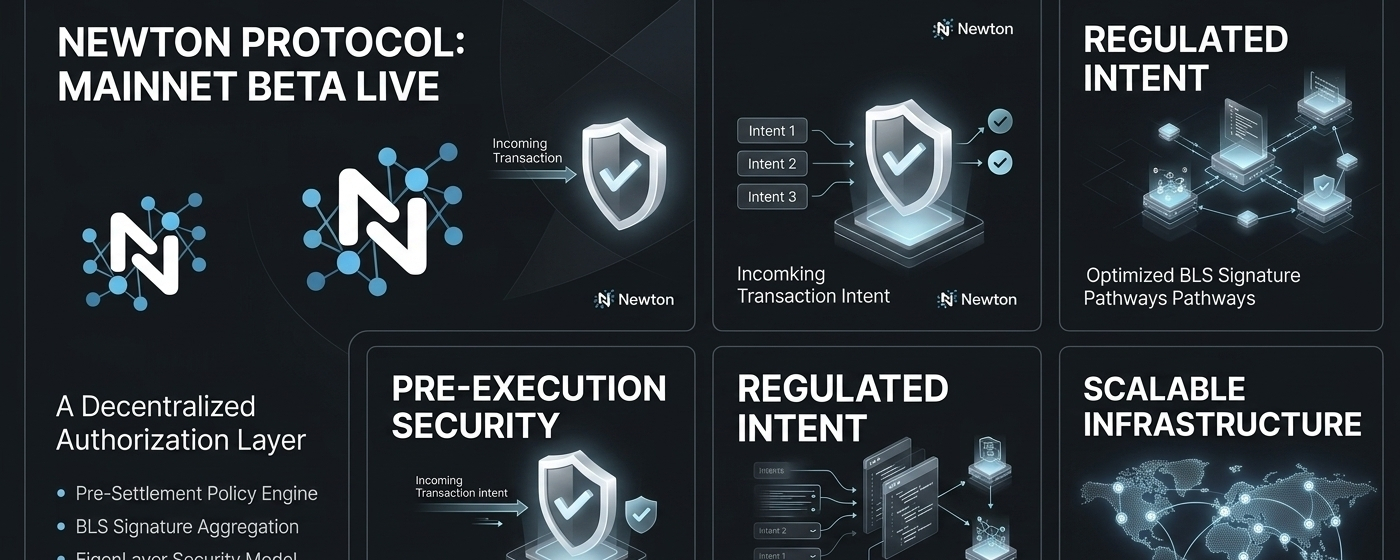
I’ve grown completely tired of seeing the same cycle in Web3 security: 🌐
a protocol gets drained, millions disappear, and then a post-mortem security report drops on my feed hours later. It’s entirely reactive.
🛸That specific frustration is what actually drove me to skip my usual market analysis and read through the @NewtonProtocol technical whitepaper this week.
I wanted to see if their Mainnet Beta layout offered something structural, or if it was just another marketing campaign wrapper.
✍️What I found underneath the standard documentation fluff is an architecture designed around pre-execution enforcement rather than post-exploit alerts.
Setting Parameters Before Execution.✍️
The main shift here is how the infrastructure treats transaction authorization.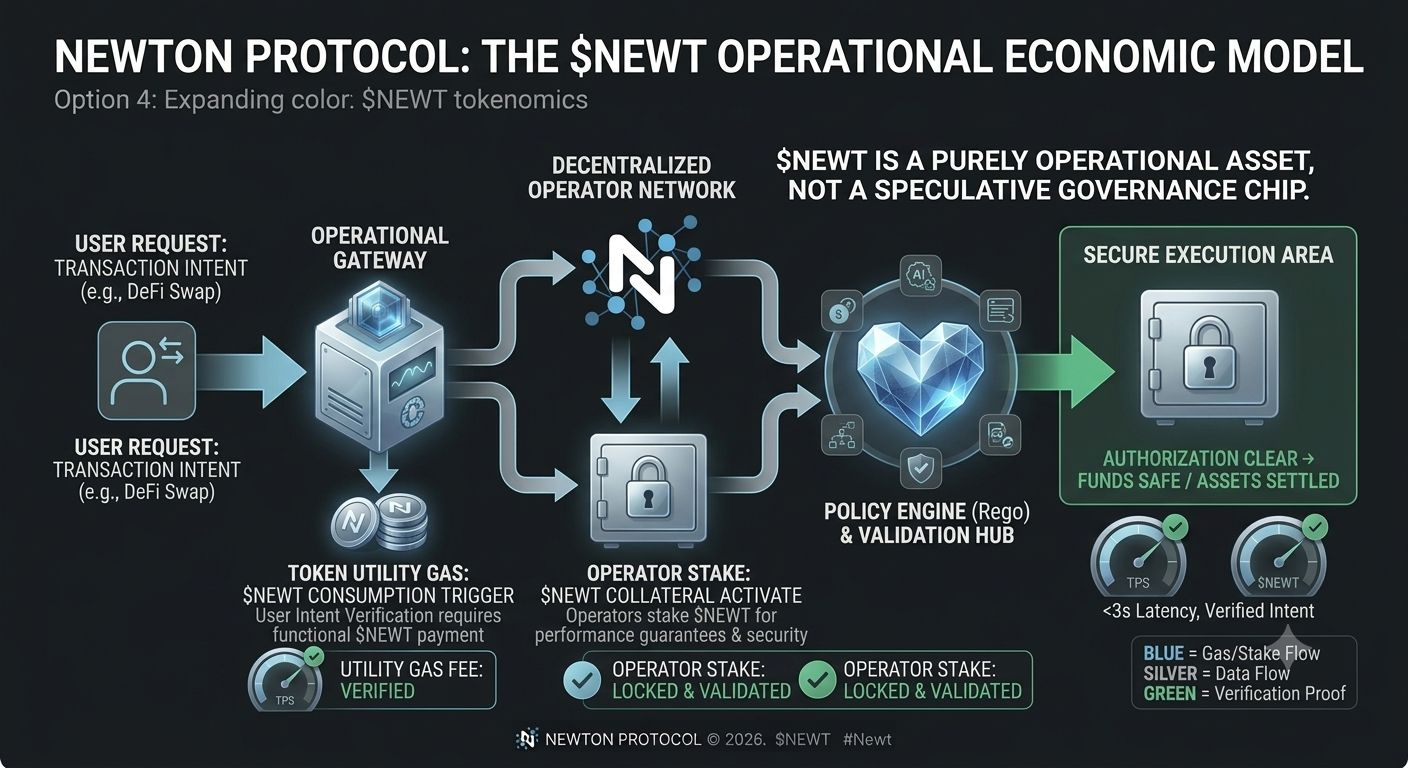
Instead of assuming a transaction is valid just because the cryptographic signature matches, the protocol intercepts the transaction intent before it hits final block settlement.
When you strip away the promotional language, three core whitepaper mechanics explain how this works:
The Rego Policy Engine: ,🤝
Instead of forcing developers to hardcode rigid security checks into complex smart contracts,
the protocol uses a Policy Engine running the Rego declarative language. 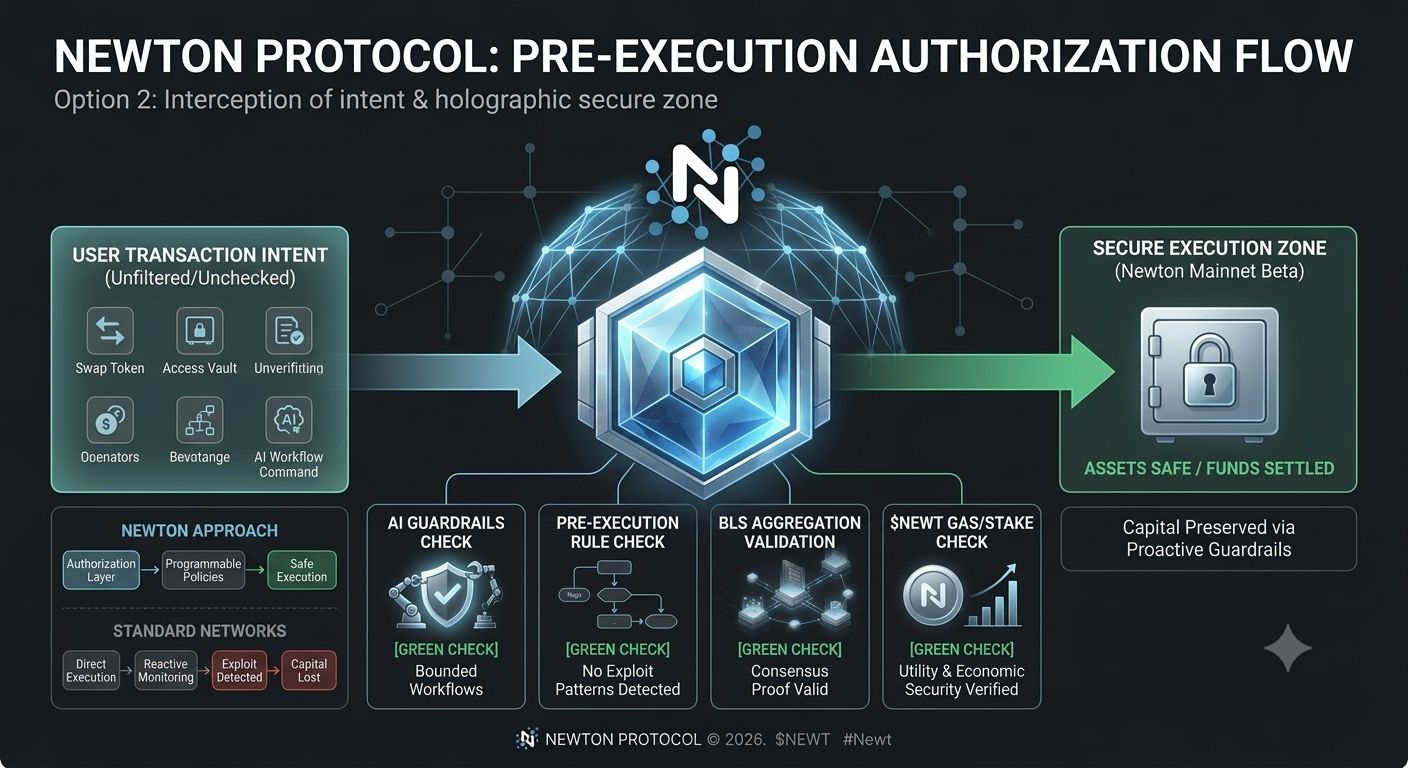
This means authorization rules can be updated dynamically to validate transaction parameters right before settlement.
Decentralized Operator Security: 👽
To ensure these authorization checks aren't centralized, the execution is handled by a decentralized Operator Network.
They bootstrap their underlying economic security model via EigenLayer restaking, meaning there is hard economic weight backing every pre-execution validation.
🌐BLS Signature Aggregation:
Running multiple programmable policies on every single transaction route usually kills throughput.
🤝The architecture handles this scaling issue by using BLS aggregation to compress multiple decentralized network signatures into a single proof, preventing latency spikes.
Restructuring the Native Asset Role.📄
Another aspect that caught my attention was how $NEWT is integrated into the system.
👉In most infrastructure setups, native tokens act purely as speculative governance chips.
Here, the asset is treated as the direct operational utility gas required to run the pre-execution policy engines.
🛸 Operators have to actively stake it to participate in the authorization network, turning the token into a functional tool for the plumbing of the system rather than an afterthought.
I’m keeping my expectations realistic—mainnet betas always face real-world friction, and building a flawless programmable trust layer is an uphill battle.
But shifting the infrastructure design from fixing exploits to preventing them at the authorization layer is a technical direction that genuinely deserves closer inspection.
🤔What’s your take on this?
Do you think pre-execution authorization can finally fix the reactive security mess in Web3, or will latency always be the enemy?
Let’s discuss in the comments below! 👇


#BOKWarnsSingleStockLeveragedETFRisks #BitcoinFallsOver50%FromOctoberHigh #VitalikOutlinesLeanEthereumRoadmap