
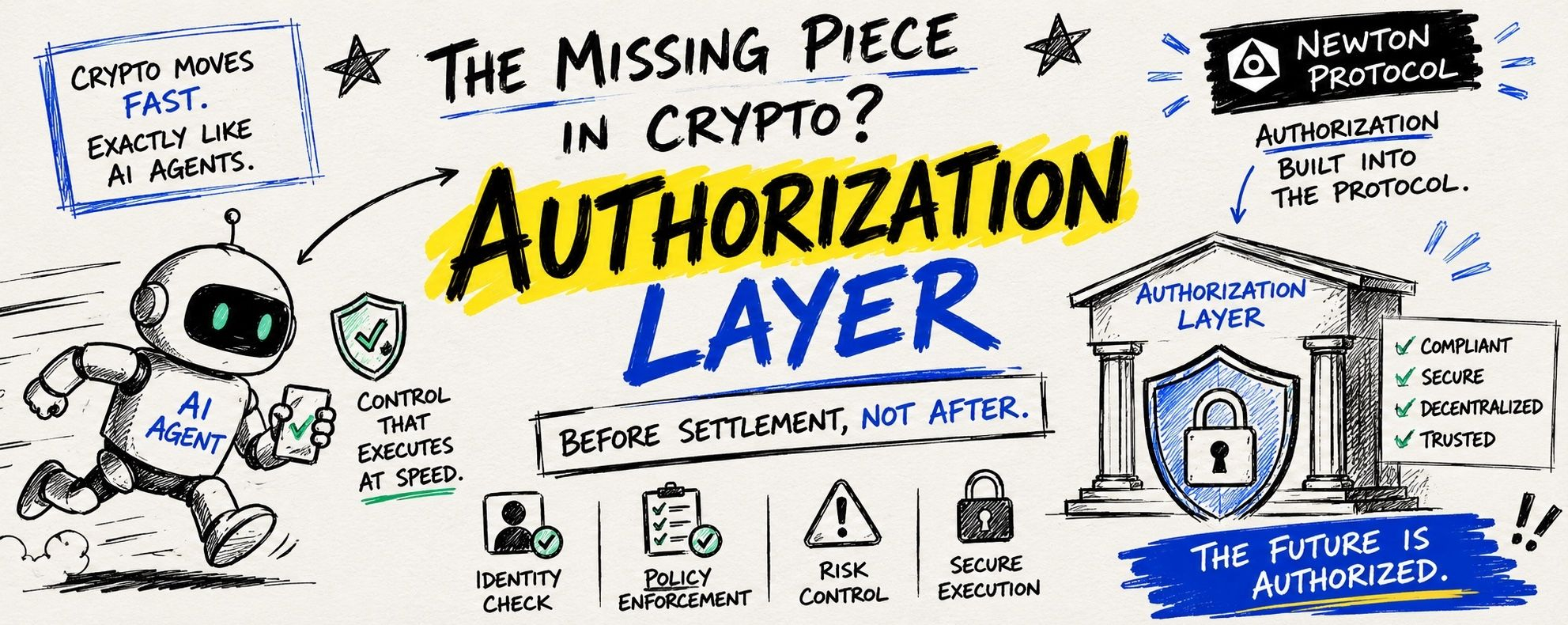

For years, the crypto industry focused on one goal: making transactions faster, cheaper, and more decentralized. We optimized block times, reduced gas fees, and built bridges across ecosystems. But while infrastructure evolved, one critical component remained largely unchanged—authorization.
In traditional finance, authorization isn’t an optional feature sitting at the edge of the system. It’s embedded into the infrastructure itself. Every payment, transfer, and settlement is validated before execution through compliance rules, identity checks, and risk controls.
Crypto took a different path.
Most blockchain applications perform checks at the interface level—wallet prompts, dApp permissions, or frontend restrictions. Once a transaction reaches the smart contract, there is often little preventing it from executing if the contract allows it. That creates a gap between decentralized execution and real-world compliance.
This is where Newton introduces a different vision.
Instead of treating authorization as an external checkpoint, Newton integrates it directly into the transaction flow. Rules are enforced before settlement, allowing policies, permissions, compliance, and security checks to become part of the protocol itself rather than relying solely on applications.
As AI agents begin handling wallets, making payments, and interacting autonomously with on-chain protocols, this shift becomes even more important. Machines operate in milliseconds—they cannot pause for manual approvals after a transaction has already been initiated. Authorization must happen instantly and natively within the protocol.
This approach could unlock a new generation of blockchain applications
AI agents with programmable spending limits.
Institutions requiring compliance before execution.
Businesses automating treasury operations safely.
Cross-border payments with built-in policy enforcement.
On-chain identity and security integrated into every transaction.
The next phase of blockchain won’t be defined only by higher TPS or lower fees. It will be defined by infrastructure that enables secure autonomous execution without sacrificing decentralization.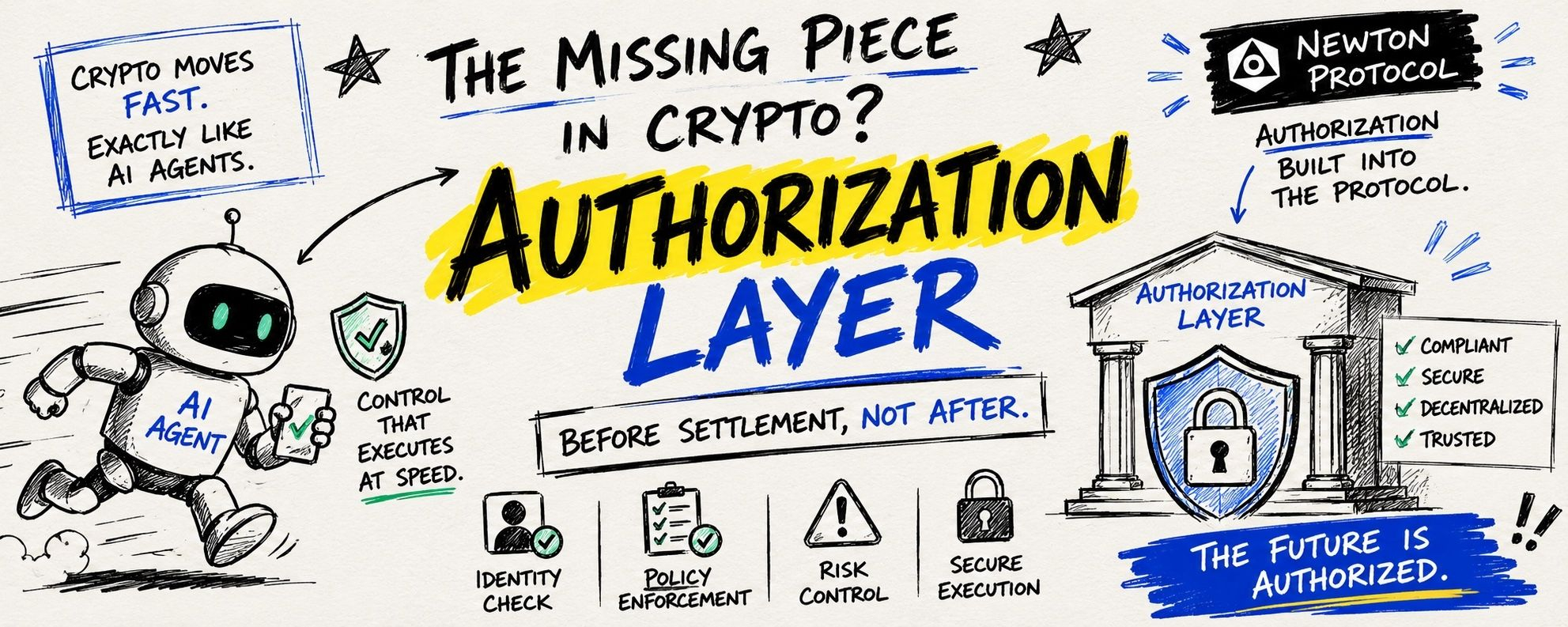
The future isn’t just about moving value faster.
It’s about ensuring every transaction is authorized before it moves.
Authorization isn’t friction—it’s the foundation of trusted autonomous finance. @NewtonProtocol #Newt $NEWT
