

The first time I had to prove I was a real person online, I realized something had quietly changed. I wasn't opening a bank account or applying for a government document. I was simply trying to use a digital service. Within minutes I had uploaded an ID, taken a selfie, and waited for software to decide whether I was human. At the time it felt like an inconvenience. Looking back, it feels more like a glimpse into the future.
As AI systems become increasingly capable, proving that someone is human is no longer a niche requirement. It is becoming part of the infrastructure of the internet itself.
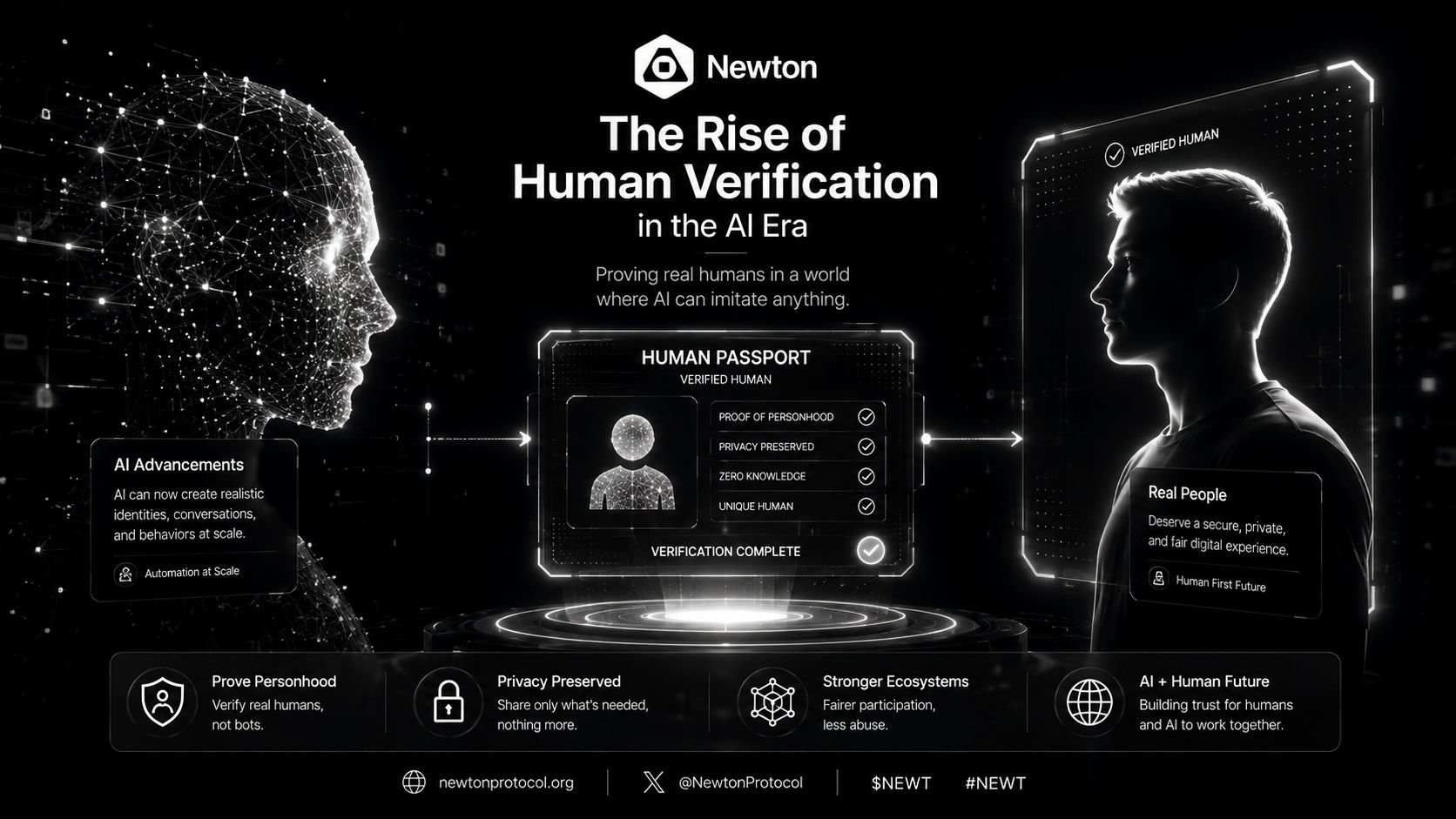
For years, the biggest challenge in blockchain was trust between strangers. Today, another challenge is emerging. It is becoming harder to distinguish genuine human participation from large networks of automated accounts. AI can now generate Convincing Conversations, realistic images and even complete digital identities. Those advances create exciting opportunities, but they also make abuse cheaper and easier to scale.
This is why the discussion around digital identity has changed. The question is no longer whether verification is useful. The more important question is where verification should exist and how it can be implemented without sacrificing the openness that made blockchain attractive in the first place.
Many existing systems rely on simple defenses such as CAPTCHAs, email confirmation, or phone verification. These methods reduce some forms of abuse, yet they are increasingly challenged by more sophisticated automation. At the same time, requiring everyone to repeatedly submit personal information creates its own problems. Users lose time, privacy concerns grow and developers face additional complexity.
The industry often presents privacy and verification as if they are opposites. I think that framing misses the real issue. Strong digital ecosystems need both. Privacy protects individuals. Verification protects the integrity of the network. The real design challenge is finding a balance instead of maximizing only one side.
A useful comparison comes from airport security. Most travelers would happily skip security checks if convenience were the only priority. Yet airports cannot function safely without some level of identity and screening. The objective is not to remove friction completely. It is to apply it only where it creates meaningful trust. Digital infrastructure faces a remarkably similar challenge.
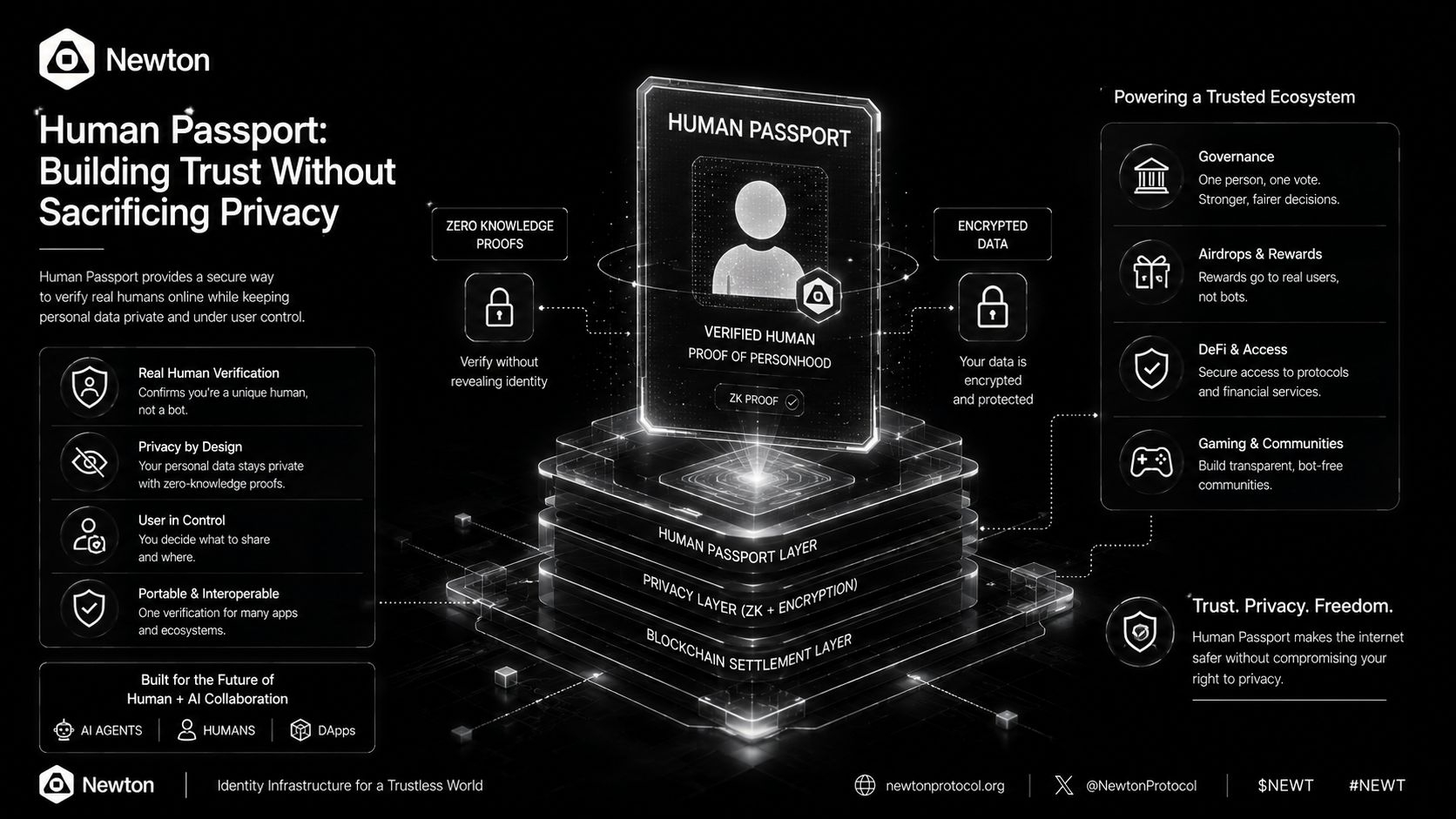
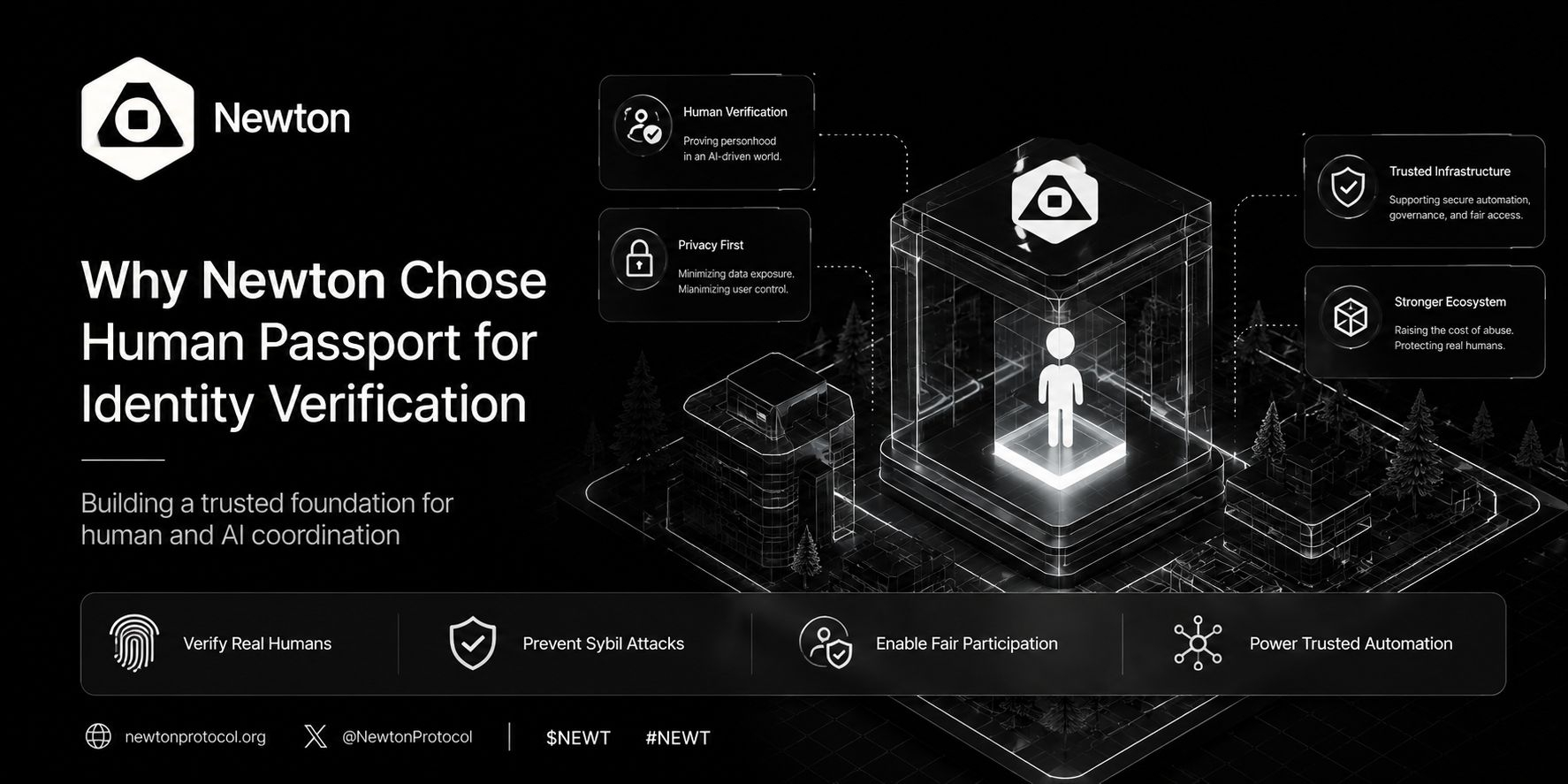
This broader context helps explain why @NewtonProtocol chose Human Passport as part of its identity verification approach. Rather than assuming every Wallet represents a Unique Person, the goal is to provide a way for users tO demonstrate Personhood when it matters. Human Passport is designed to help Applications assess whether an account is likely controlled by a real individual whiIe aiming to minimize unnecessary exposure of personal information. Like any identity system, its effectiveness depends On implementation, user adoption and continued improvement.
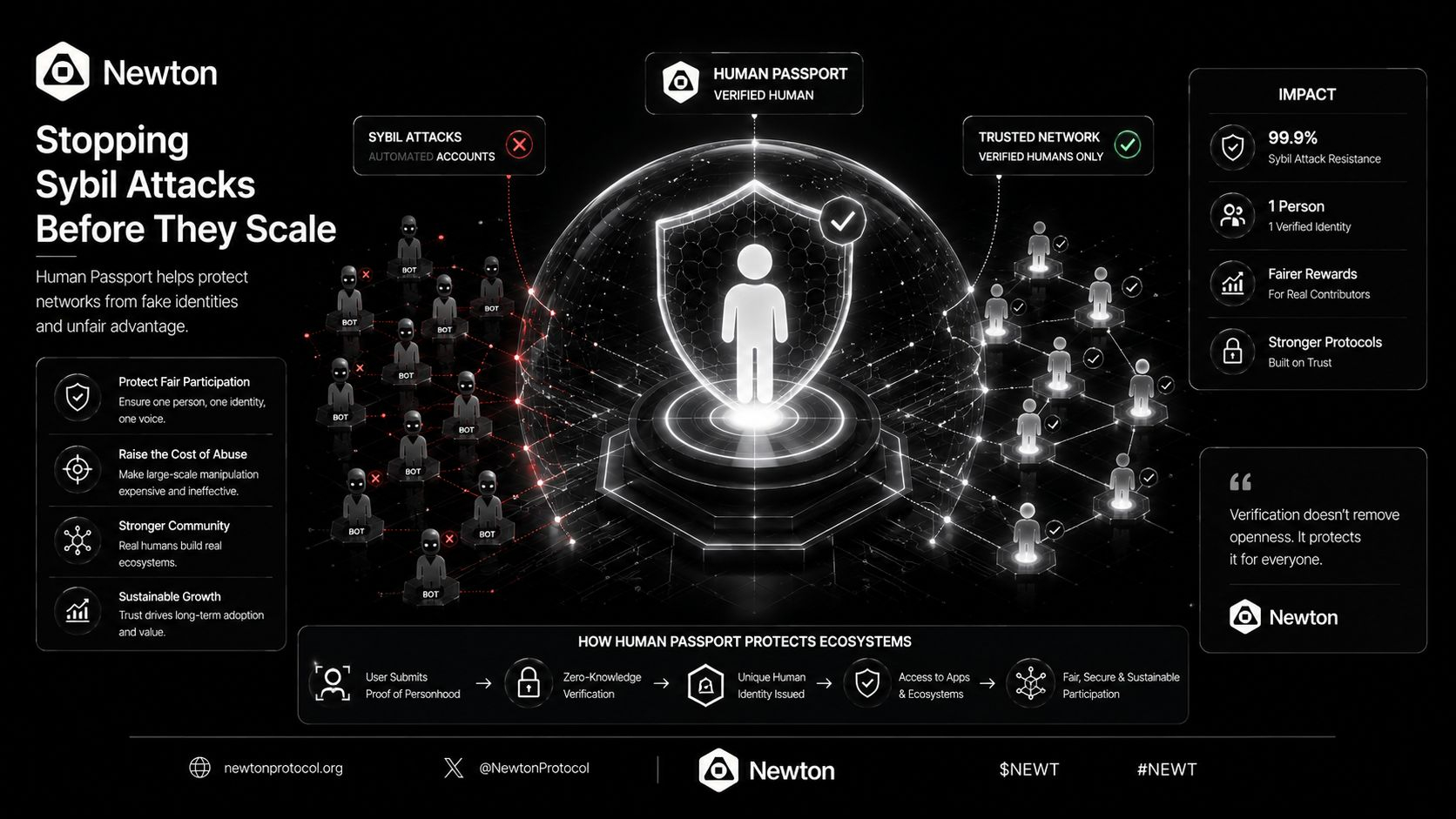
What makes this decision interesting is the underlying assumption. Newton is preparing for a future where AI agents may perform an increasing number of onchain actions, while some activities still require clear evidence of human intent. Instead of treating identity as an afterthought, it becomes part of the infrastructure that supports trusted automation.
Imagine a governance vote, an ecosystem rewards campaign, or an application distributing limited resources. If anyone can create thousands of convincing automated identities, fairness becomes difficult to maintain. Personhood verification does not eliminate abuse, but it raises the cost of large-scale manipulation. In security, increasing the cost of attacking a system is often just as valuable as making attacks impossible.
There is also a broader lesson here. Blockchain discussions often focus on transaction speed, scalability, or fees because these metrics are easy to measure. Trust is different. You rarely notice good trust infrastructure because its greatest success is preventing problems before they happen. Identity verification belongs in that category. When it works well, most people barely think about it.
That does not mean this approach is free from tradeoffs. Some users will always prefer complete anonymity, and those concerns deserve respect. Others worry that stronger identity layers could gradually introduce unnecessary centralization or exclude people who cannot easily complete verification. These are legitimate questions that every identity solution, including Human Passport, must continue addressing. No single approach should be viewed as a permanent answer.
Another uncertainty is whether the industry will converge On common identity standards or continue supporting multiple solutions. Different Ecosystems may choose different models depending on their goals, Regulatory environments and user expectations. Competition between approaches could Ultimately lead tO better privacy protections and more user-friendly verification methods.
What stands out to me is not simply that @NewtonProtocol integrated Human Passport. It is what that choice represents. Blockchain infrastructure is gradually moving beyond questions of speed and cost toward questions of trust, coordination, and responsible automation. Those are more difficult problems, but they are also the ones that may determine whether decentralized systems can support billions of users.
The next generation of the internet will likely include both humans and AI agents working together. If that future arrives, proving that an action reflects genuine human intent may become just as important as proving that a transaction is cryptographically valid. Identity, in that sense, is not replacing decentralization. It is becoming one of the tools that helps decentralized systems remain trustworthy as they grow.
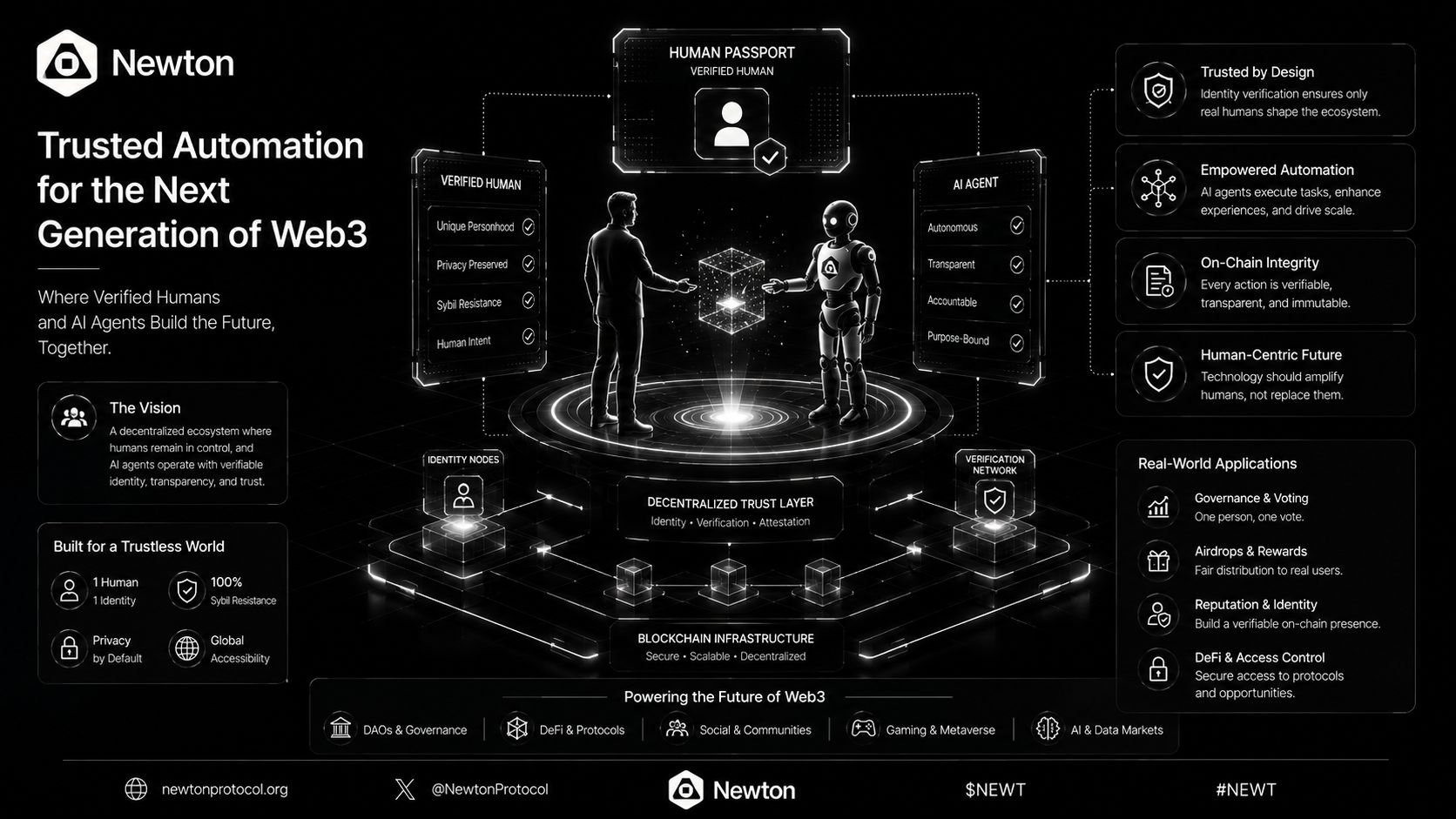
Perhaps the most valuable infrastructure of the AI era will not be the systems that automate everything. It will be the systems that know when automation should stop and a verified human should be part of the decision. That is the larger conversation behind NewtonProtocol's use of Human Passport, and it may be one of the most important questions Web3 will have to answer in the years ahead.